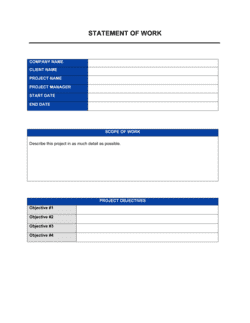
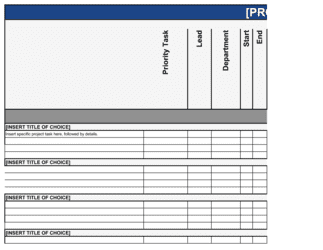
Work Breakdown Structure Template

Free Excel download β€’ Use online β€’ Print or share

4 pagesβ€’25–30 min to useβ€’Difficulty: Complexβ€’Signature requiredβ€’Legal review recommended
Learn more ↓
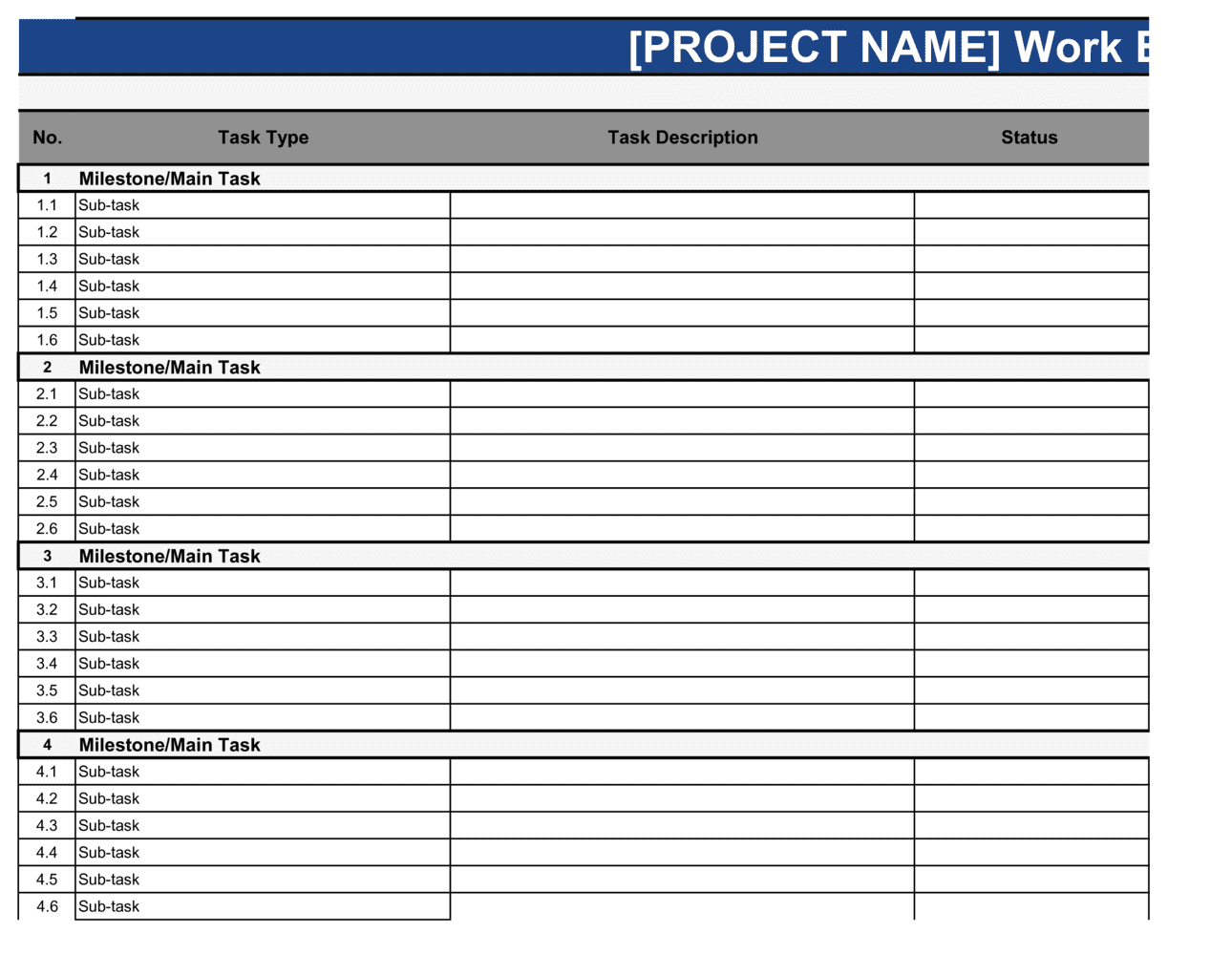
FreeXLSWork Breakdown Structure Template

At a glance

What it is
A Work Breakdown Structure (WBS) is a formal project document that decomposes the total scope of a project into a hierarchical set of deliverables, work packages, and tasks β€” each with defined ownership, effort estimates, and acceptance criteria. This free Word download gives you a structured, client-ready starting point you can edit online and export as PDF to attach to contracts, statements of work, or project charters.
When you need it
Use it at project initiation, before signing a contract or statement of work, whenever scope must be formally agreed between a client and a delivery team, or when a project involves multiple vendors, subcontractors, or departments whose work packages must be clearly delineated.
What's inside
Project identification and scope statement, hierarchical WBS levels from project to work package, deliverable descriptions with acceptance criteria, responsibility assignments, effort and duration estimates, dependencies, assumptions and exclusions, and a change-control reference clause.

What is a Work Breakdown Structure?

A Work Breakdown Structure (WBS) is a formal project document that decomposes the entire scope of a project into a numbered hierarchy of deliverables, sub-deliverables, and work packages β€” each assigned to a specific owner, estimated for effort, and tied to measurable acceptance criteria. It translates a high-level project objective into a concrete, assignable structure that both delivery teams and clients can review, approve, and enforce. When signed by authorized representatives and incorporated into a contract or statement of work, a WBS becomes a binding scope document that defines what will be produced, who is responsible for producing it, and the objective conditions under which it will be accepted as complete.

Why You Need This Document

Without a signed WBS, scope disputes are almost inevitable. When a client believes a deliverable was included and a contractor believes it was not, the absence of a formal scope baseline turns the disagreement into a credibility contest β€” one that is expensive to resolve and frequently damages the client relationship regardless of outcome. A properly executed WBS eliminates that ambiguity: anything not listed as in-scope is out of scope by default, any work added after signature requires a documented change request, and any deliverable rejected must be measured against objective acceptance criteria rather than subjective preference. For contractors, it protects margins by preventing unpaid scope additions. For clients, it creates accountability and a clear basis for progress measurement and payment approval. This template gives you a structured, client-ready starting point that covers every material element β€” scope statement, hierarchy, acceptance criteria, responsibility assignment, dependencies, assumptions, and change control β€” so you spend your time on project content rather than document structure.

Which variant fits your situation?

If your situation is…Use this template
Software development project with sprint-based deliveryAgile Work Breakdown Structure
Construction or infrastructure project with phased milestonesConstruction Work Breakdown Structure
Government or defense contract requiring MIL-STD-881 complianceDefense WBS Template
Small internal project needing a lightweight task list onlyProject Plan Template
Client engagement requiring scope and deliverables to be contractedStatement of Work
Multi-vendor project needing interface control between work packagesProject Charter with WBS Annex
Research or academic project with phased reporting requirementsResearch Project Work Breakdown Structure

Common mistakes to avoid

❌ No explicit exclusions list

Why it matters: Clients interpret the absence of an exclusion as an implicit inclusion. Scope disputes almost always center on work that was not listed either way.

Fix: Add a dedicated exclusions section immediately after the in-scope list. Review it with the client at kickoff and get written acknowledgment.

❌ Subjective acceptance criteria

Why it matters: Phrases like 'client satisfaction' or 'industry standard quality' give clients unlimited discretion to reject deliverables β€” and give contractors no objective basis to demand payment.

Fix: Replace every subjective criterion with a measurable threshold: a test pass rate, a word count, a regulatory reference, or a named approval authority with a response deadline.

❌ Effort estimates presented as fixed prices

Why it matters: When estimates are based on assumptions that later prove false β€” late client inputs, changed requirements, unavailable infrastructure β€” the contractor absorbs the cost with no contractual remedy.

Fix: Label all estimates as estimates based on stated assumptions, and link the change-control clause explicitly to unmet assumptions.

❌ Omitting client-input dependencies

Why it matters: If the WBS only documents internal task dependencies, a client who delays providing access, data, or approvals faces no formal consequence, and the contractor has no documented basis for a schedule extension.

Fix: List every client input as a named dependency with a required-by date. Include a clause stating that delays in client inputs extend the project timeline day-for-day.

❌ No named change-approval authority

Why it matters: Without a named authority, verbal scope changes accumulate β€” approved informally by whoever the team talked to last β€” and surface as payment disputes at project close.

Fix: Name the specific individual (by title and name) authorized to approve change requests in writing. Confirm this in the change-control clause and at kickoff.

❌ WBS not formally attached to the contract

Why it matters: A WBS that exists as a standalone document but is not incorporated by reference into the contract has no binding force β€” the contractor can be held to the contract scope statement alone.

Fix: Reference the WBS as a numbered exhibit or schedule in the contract body ('Exhibit B: Work Breakdown Structure, dated [DATE], is incorporated herein by reference') and ensure both documents are signed.

The 10 key clauses, explained

Project Identification and Parties

In plain language: Names the project, the client, the delivery organization, the project manager, and the effective date β€” establishing who is accountable for the scope defined below.

Sample language
This Work Breakdown Structure forms part of the agreement between [CLIENT LEGAL NAME] ('Client') and [CONTRACTOR LEGAL NAME] ('Contractor') for the [PROJECT NAME] project, effective [DATE]. Project Manager: [NAME], [TITLE].

Common mistake: Using informal project nicknames instead of the legal entity names that appear in the underlying contract β€” creating a mismatch that complicates dispute resolution.

Scope Statement and Objectives

In plain language: Defines what the project will produce, the business objective it serves, and β€” critically β€” what is explicitly excluded from scope.

Sample language
The project objective is to [OBJECTIVE]. In-scope: [LIST OF INCLUDED DELIVERABLES]. Out-of-scope: [LIST OF EXCLUDED ITEMS]. Any work not listed as in-scope is excluded unless added through the change-control process.

Common mistake: Omitting the exclusions list. Without it, clients reasonably assume that anything related to the project is included, leading to scope creep and billing disputes.

WBS Hierarchy and Level Definitions

In plain language: Establishes the decomposition structure β€” how many levels exist, what each level represents, and how work packages are identified and numbered.

Sample language
The WBS is organized as follows: Level 1 β€” [PROJECT NAME] (total project); Level 2 β€” [MAJOR DELIVERABLE CATEGORIES]; Level 3 β€” Work Packages. Each element is identified by a unique WBS code (e.g., 1.2.3).

Common mistake: Decomposing to an excessive number of levels (beyond 4) for a project of moderate complexity β€” creating administrative overhead without improving control.

Deliverable Descriptions and Acceptance Criteria

In plain language: Lists each deliverable at the work-package level with a description of what will be produced and the specific, measurable conditions the client must verify before acceptance.

Sample language
WBS 1.2.1 β€” [DELIVERABLE NAME]: Description: [WHAT WILL BE PRODUCED]. Acceptance Criteria: [MEASURABLE CONDITIONS β€” e.g., 'Approved in writing by Client within 10 business days of submission; zero critical defects per agreed testing protocol.'].

Common mistake: Using subjective acceptance criteria like 'client satisfaction' or 'professional quality.' Without measurable thresholds, acceptance disputes are nearly impossible to resolve objectively.

Responsibility Assignment

In plain language: Maps each work package to the responsible party β€” person, team, or subcontractor β€” using a RACI or equivalent matrix so ownership is unambiguous.

Sample language
Responsibility for each WBS element is assigned as set out in Schedule [X] (RACI Matrix). [CONTRACTOR NAME] is Responsible for WBS elements [LIST]; Client is Accountable for final approval of WBS elements [LIST].

Common mistake: Assigning a team rather than a named individual as Responsible. When a team owns a deliverable, no one individual ensures it gets done.

Effort and Duration Estimates

In plain language: Records the estimated person-hours and calendar duration for each work package, forming the basis for the project schedule and budget.

Sample language
WBS 1.2.1 β€” Estimated Effort: [X] person-hours. Estimated Duration: [X] calendar days. These estimates are based on [ASSUMPTIONS] and are subject to revision through the change-control process if assumptions change.

Common mistake: Presenting effort estimates as fixed commitments rather than estimates based on stated assumptions β€” locking the contractor into targets that shift when client inputs are late or incomplete.

Dependencies and Constraints

In plain language: Documents which work packages depend on others being completed first, and any external constraints β€” regulatory approvals, client inputs, or third-party deliveries β€” that affect the sequence.

Sample language
WBS 1.3.1 is dependent on completion of WBS 1.2.2 and receipt of [CLIENT INPUT] no later than [DATE]. The following external constraints apply: [LIST β€” e.g., 'Building permit approval from [AUTHORITY] required before WBS 2.1 commences.'].

Common mistake: Documenting internal task dependencies but omitting client-input dependencies β€” leaving no formal record when a client delay extends the project schedule.

Assumptions and Exclusions

In plain language: Lists the conditions the contractor assumed to be true when building the WBS, and any items explicitly outside the project scope that might otherwise be ambiguous.

Sample language
This WBS is based on the following assumptions: [LIST β€” e.g., 'Client will provide access to [SYSTEM] within 5 business days of project kickoff; existing infrastructure meets [SPECIFICATION].']. The following items are excluded: [LIST].

Common mistake: Treating assumptions as background context rather than contract terms. Unmet assumptions should trigger a formal change request β€” but only if they are documented as the basis for the estimate.

Change Control Reference

In plain language: States that any modification to the agreed WBS β€” added deliverables, changed scope, extended timelines β€” must follow the project's formal change-control process and receive written approval before work proceeds.

Sample language
Any modification to this WBS, including additions to scope, changes to deliverable specifications, or removal of work packages, must be submitted as a Change Request and approved in writing by [AUTHORIZED CLIENT REPRESENTATIVE] before the Contractor is obligated to perform the modified work.

Common mistake: Including a change-control clause but not naming the client-side authority who can approve changes β€” resulting in changes being verbally authorized by someone without authority, creating payment disputes later.

Governing Law and Dispute Resolution

In plain language: Specifies which jurisdiction's law governs the WBS and the project agreement, and how disputes over scope, acceptance, or payment will be resolved.

Sample language
This Work Breakdown Structure is governed by the laws of [STATE / PROVINCE / COUNTRY]. Any dispute arising under this document shall be resolved by [mediation / arbitration / litigation] in [CITY / JURISDICTION] before either party pursues further legal action.

Common mistake: Omitting a governing law clause when the WBS is incorporated by reference into a contract that already has one β€” creating ambiguity about which document's clause controls if they conflict.

How to fill it out

  1. 1

    Identify the project and all parties

    Enter the full legal names of the client and contractor, the project's formal name, the effective date, and the assigned project manager. Confirm these match the names in the underlying contract or statement of work.

    πŸ’‘ Copy entity names directly from the signed contract β€” any variation can create a mismatch that weakens enforceability.

  2. 2

    Write the scope statement with explicit exclusions

    Describe the project objective in one to two sentences, then list all in-scope deliverables. Immediately below, list everything that is explicitly excluded β€” even if it seems obvious.

    πŸ’‘ Clients read inclusion lists; they often skip exclusion lists. Bold or box the exclusions to ensure they are noticed before signature.

  3. 3

    Build the WBS hierarchy top-down

    Start at Level 1 (the total project), decompose into Level 2 major deliverable categories, then break each into Level 3 work packages. Assign a unique numeric code to every element (e.g., 1.1, 1.2, 1.2.1).

    πŸ’‘ Stop decomposing when a work package can be assigned to a single owner and estimated independently β€” going deeper creates overhead without control benefit.

  4. 4

    Write measurable acceptance criteria for each deliverable

    For every work package, specify what 'done' looks like in objective, testable terms β€” a word count, a test pass rate, a signed approval, or a measurable performance threshold.

    πŸ’‘ If two people would disagree on whether the criteria are met after reading them cold, rewrite until they would agree.

  5. 5

    Assign responsibility using a RACI matrix

    Map each work package to a named individual or organization as Responsible, Accountable, Consulted, or Informed. Attach the RACI as Schedule A to the WBS.

    πŸ’‘ Every work package must have exactly one Responsible party. Two names in the Responsible column means no one is actually responsible.

  6. 6

    Document effort estimates and stated assumptions

    Enter person-hour estimates and calendar durations for each work package. List, in writing, every assumption those estimates depend on β€” client input timing, infrastructure readiness, third-party availability.

    πŸ’‘ Date-stamp your assumption list. If a client disputes an estimate change months later, a timestamped assumption document is your strongest evidence.

  7. 7

    Map dependencies and external constraints

    For each work package that depends on another being complete first, or on a client input, record the dependency explicitly. Include the latest acceptable date for external inputs.

    πŸ’‘ Send the dependency list to the client for written acknowledgment before kickoff β€” their signature on it converts a project assumption into a client commitment.

  8. 8

    Execute the WBS and attach it to the contract

    Have authorized representatives of both parties sign and date the WBS, then attach it as a numbered schedule or exhibit to the governing contract or statement of work.

    πŸ’‘ If the contract has an order-of-precedence clause, confirm the WBS ranks correctly β€” it should govern scope but the master agreement should govern payment and liability terms.

Frequently asked questions

What is a Work Breakdown Structure?

A Work Breakdown Structure (WBS) is a hierarchical decomposition of a project's total scope into deliverables, sub-deliverables, and work packages β€” each with a unique identifier, owner, effort estimate, and acceptance criteria. It converts a high-level project objective into a concrete, assignable task structure that both the delivery team and the client can review, approve, and hold each other accountable to.

What is the difference between a WBS and a project plan?

A WBS defines what will be produced β€” deliverables and work packages organized hierarchically. A project plan defines how and when those deliverables will be produced β€” schedules, resources, milestones, and risk responses. The WBS is the foundation that the project schedule and budget are built on. You complete the WBS first, then build the plan around it.

How many levels should a Work Breakdown Structure have?

Most projects use three to four levels: Level 1 is the total project, Level 2 is major deliverable categories, Level 3 is work packages, and Level 4 is individual tasks within complex packages. Stop decomposing when a work package can be assigned to a single owner and estimated independently. Going beyond four levels typically creates administrative overhead without improving project control.

Who should approve and sign the WBS?

The authorized representative of the client organization and the project manager or authorized representative of the contractor should both sign the WBS before work begins. For large projects, the client's project sponsor or procurement officer is typically the approving authority. Internal WBS documents may require only the project sponsor's sign-off.

What is the WBS dictionary and do I need one?

A WBS dictionary is a companion document that provides detailed descriptions, assumptions, constraints, resource requirements, and acceptance criteria for each WBS element. For complex projects β€” especially those with multiple subcontractors or regulatory requirements β€” the dictionary is essential because it prevents different parties from interpreting the same WBS code differently. For small projects, the detail can be embedded directly in the WBS template.

How does a WBS help prevent scope creep?

A signed WBS creates a documented baseline of what is included in the project and what is not. Any work not listed in the WBS is out of scope by default, and adding it requires a formal change request. This makes scope creep visible β€” the client must request a change in writing, and the contractor can price it before proceeding β€” rather than allowing informal additions to accumulate unpaid.

Can I use the same WBS template for different types of projects?

The same template structure works across most project types, but the content of the hierarchy differs significantly. A software project structures work packages around features, modules, and test phases. A construction project organizes around site preparation, structural work, MEP systems, and finishing. Adapt the Level 2 categories to your industry, but keep the core structure β€” scope statement, hierarchy, acceptance criteria, responsibility assignment, and change control β€” consistent across all projects.

What happens if work is completed but not listed in the WBS?

Work performed outside the agreed WBS creates an ambiguous payment situation. The contractor may have a quantum meruit claim for the reasonable value of work done, but enforcing it requires proving the client requested or accepted the work. A signed WBS and a formal change-control process eliminate this ambiguity β€” work done outside the WBS without an approved change request is performed at the contractor's risk.

How this compares to alternatives

vs Statement of Work

A Statement of Work (SOW) describes the overall scope, objectives, timeline, and payment terms of a project engagement at a high level. A WBS decomposes that scope into a numbered hierarchy of deliverables and work packages with assigned owners and acceptance criteria. The SOW tells you what the project is; the WBS tells you exactly what will be built and by whom. Most formal project contracts include both β€” the SOW governs commercial terms, and the WBS governs scope.

vs Project Plan

A project plan organizes the schedule, resources, budget, and risk responses for delivering a project. A WBS defines the deliverable structure that the plan is built around. You cannot build a credible project schedule without a complete WBS, because the schedule is simply the WBS elements arranged in sequence with start and end dates. The WBS is the foundation; the project plan is the execution roadmap built on top of it.

vs Project Charter

A project charter formally authorizes the project, names the project manager, defines high-level objectives, and provides the authority to allocate resources. A WBS is a detailed scope document that follows charter approval. The charter gives the project its mandate; the WBS defines precisely what the project will produce. Both are typically required for formally governed projects.

vs Gantt Chart

A Gantt chart is a time-based visual schedule showing when each task starts and ends. It is derived from the WBS β€” each WBS work package becomes a task or task group on the chart. A Gantt chart tells you when work happens; a WBS tells you what work is in scope and who owns it. The two documents work together: complete the WBS first, then build the Gantt from it.

Industry-specific considerations

Construction and Engineering

WBS structures follow phases β€” site preparation, foundation, structural, MEP, and finishing β€” with each phase tied to payment milestones and lien-waiver triggers.

Information Technology

Work packages map to software modules, sprints, or releases; acceptance criteria reference test case pass rates, defect counts, and performance benchmarks.

Government and Defense

Federal contracts often mandate WBS compliance with MIL-STD-881 or PMI standards; WBS codes are referenced directly on invoices and progress reports.

Professional Services and Consulting

Billable work packages define the boundary between included and additional services; client-approval checkpoints at each deliverable protect against non-payment disputes.

Jurisdictional notes

United States

In the US, a signed WBS incorporated by reference into a contract is enforceable under general contract law in all states. Federal government contracts must comply with the WBS requirements of MIL-STD-881 or agency-specific standards (e.g., NASA WBS Handbook). State law governs dispute resolution for commercial contracts; California, Texas, and New York courts have well-developed case law on scope-dispute and quantum meruit claims arising from informal scope changes.

Canada

Canadian courts in common-law provinces enforce WBS documents incorporated into construction and services contracts under standard contract principles. Quebec's civil law framework (Civil Code of Quebec) treats scope documents similarly but requires particular care with French-language requirements for contracts with Quebec-based clients under the Charter of the French Language. Federal procurement contracts (PWGSC / PSPC) have specific WBS formatting and reporting requirements.

United Kingdom

A WBS attached to a UK construction or professional services contract is enforceable as part of the contract terms under the Contracts (Rights of Third Parties) Act 1999 where third parties are involved. The UK Construction Industry's JCT and NEC contract families have specific provisions for scope annexes that a WBS should align with. The Housing Grants, Construction and Regeneration Act 1996 affects payment and dispute rights on construction projects regardless of what the WBS says.

European Union

EU member states apply their own national contract law to WBS documents, but cross-border projects should specify governing law explicitly to avoid conflicts between civil law systems. Horizon Europe and other EU-funded research and infrastructure programs mandate WBS submission as part of grant reporting, with specific decomposition requirements. GDPR considerations apply when WBS documents include personal data such as named individuals assigned to work packages.

Template vs lawyer β€” what fits your deal?

PathBest forCostTime
Use the templateInternal projects, small client engagements under $50K, and teams with an experienced project managerFree2–6 hours depending on project complexity
Template + legal reviewClient-facing contracts over $50K, multi-vendor projects, or engagements where scope disputes carry material financial risk$300–$800 for a contracts lawyer or senior PM review1–3 days
Custom draftedGovernment contracts, defense programs, regulated industries, or multi-year enterprise engagements over $500K$1,500–$5,000+1–3 weeks

Glossary

Work Package
The lowest level of a WBS β€” a defined unit of work with a single owner, measurable output, effort estimate, and acceptance criteria.
WBS Level
A tier in the WBS hierarchy: Level 1 is the total project, Level 2 are major deliverables, and deeper levels decompose those deliverables into progressively smaller work packages.
Scope Statement
A written description of what the project will and will not produce, serving as the baseline against which changes are measured.
Deliverable
Any tangible or verifiable output β€” a document, software build, physical structure, or approved report β€” that the project must produce.
Acceptance Criteria
Specific, measurable conditions a deliverable must satisfy for the client or sponsor to formally accept it as complete.
Responsibility Assignment Matrix (RAM)
A grid that maps each WBS work package to the team member or organization responsible for completing it β€” often expressed as a RACI chart.
Scope Creep
The uncontrolled expansion of project scope beyond what was originally agreed, typically caused by undocumented changes or poorly defined work packages.
Change Control
A formal process for evaluating, approving, and documenting any modification to the agreed project scope, schedule, or budget.
Effort Estimate
The number of person-hours or person-days required to complete a specific work package, independent of calendar duration.
WBS Dictionary
A companion document that provides detailed descriptions, assumptions, constraints, and acceptance criteria for each element in the WBS.
Baseline Scope
The approved version of the WBS and scope statement that serves as the reference point for measuring project performance and evaluating change requests.
Work Breakdown Structure Code
A numeric or alphanumeric identifier assigned to each WBS element (e.g., 1.2.3) to enable unambiguous reference in contracts, schedules, and invoices.

Part of your Business Operating System

This document is one of 3,000+ business & legal templates included in Business in a Box.

  • Fill-in-the-blanks β€” ready in minutes
  • 100% customizable Word document
  • Compatible with all office suites
  • Export to PDF and share electronically

Create your document in 3 simple steps.

From template to signed document β€” all inside one Business Operating System.
1
Download or open template

Access over 3,000+ business and legal templates for any business task, project or initiative.

2
Edit and fill in the blanks with AI

Customize your ready-made business document template and save it in the cloud.

3
Save, Share, Send, Sign

Share your files and folders with your team. Create a space of seamless collaboration.

Save time, save money, and create top-quality documents.

β˜…β˜…β˜…β˜…β˜…

"Fantastic value! I'm not sure how I'd do without it. It's worth its weight in gold and paid back for itself many times."

Managing Director Β· Mall Farm
Robert Whalley
Managing Director, Mall Farm Proprietary Limited
β˜…β˜…β˜…β˜…β˜…

"I have been using Business in a Box for years. It has been the most useful source of templates I have encountered. I recommend it to anyone."

Business Owner Β· 4+ years
Dr Michael John Freestone
Business Owner
β˜…β˜…β˜…β˜…β˜…

"It has been a life saver so many times I have lost count. Business in a Box has saved me so much time and as you know, time is money."

Owner Β· Upstate Web
David G. Moore Jr.
Owner, Upstate Web

Run your business with a system β€” not scattered tools

Stop downloading documents. Start operating with clarity. Business in a Box gives you the Business Operating System used by over 250,000 companies worldwide to structure, run, and grow their business.

Start freeΒ Β·Β No credit card required