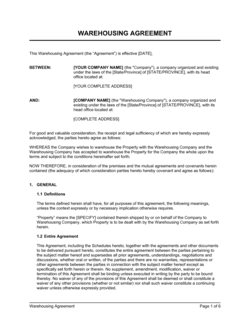
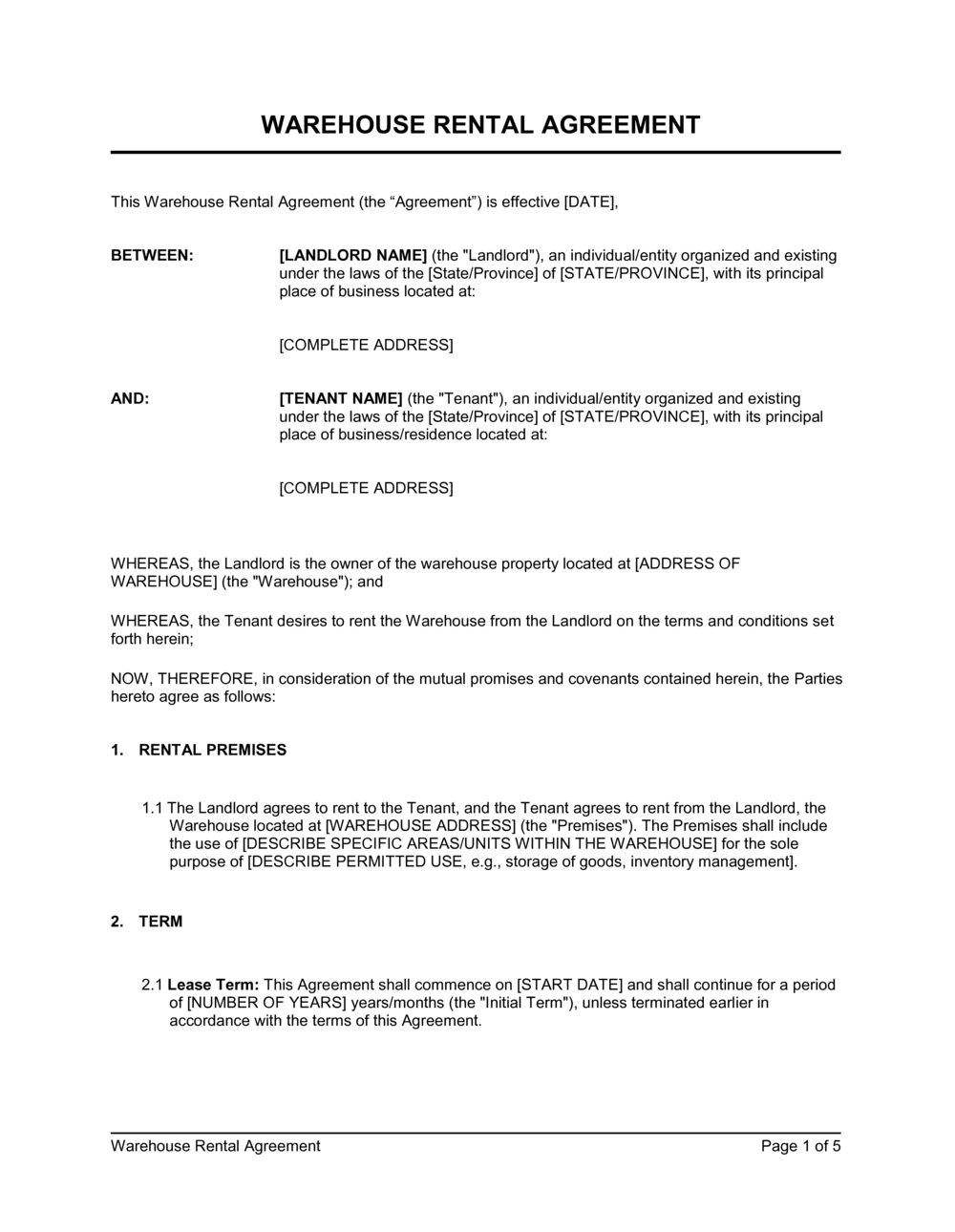
Warehouse Rental Agreement Template

Free Word download • Edit online • Save & share with Drive • Export to PDF

5 pages25–35 min to fillDifficulty: ComplexSignature requiredLegal review recommended
Learn more ↓
FreeWarehouse Rental Agreement Template

At a glance

What it is
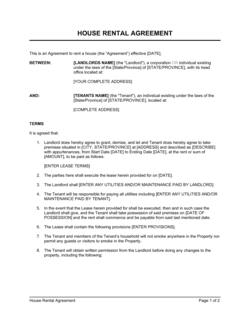
A Warehouse Rental Agreement is a legally binding commercial lease between a property owner (landlord) and a business (tenant) for the use of warehouse or industrial storage space. This free Word download covers rent, lease term, permitted use, loading dock and access-hour rules, structural and fit-out responsibilities, insurance obligations, and operating expenses — giving both parties a clear, enforceable framework before keys are handed over.
When you need it
Use it any time a business is taking on warehouse, distribution, or industrial storage space under a commercial lease — whether for a short-term seasonal arrangement or a multi-year operational facility. Landlords also use it to protect their property and establish clear tenant obligations before occupancy begins.
What's inside
Parties and premises description, lease term and rent schedule, permitted use and prohibited activities, loading dock and access-hour provisions, tenant and landlord maintenance responsibilities, fit-out and alterations rules, insurance requirements, operating expenses and CAM charges, and termination and holdover provisions.

What is a Warehouse Rental Agreement?

A Warehouse Rental Agreement is a legally binding commercial lease between a property owner (landlord) and a business (tenant) that grants the tenant the right to occupy and operate within a defined warehouse or industrial space for a specified term in exchange for regular rent payments. Unlike a residential tenancy or a generic commercial lease, a warehouse rental agreement addresses the operational realities of industrial use: loading dock scheduling, vehicle weight limits, floor load tolerances, racking and mezzanine fit-out rights, hazardous materials restrictions, and the precise allocation of maintenance responsibility for systems such as HVAC, dock levellers, and sprinklers. It creates enforceable obligations on both sides and establishes a clear record of the agreed condition of the premises at the start of the tenancy.

Why You Need This Document

Operating from a warehouse without a properly drafted rental agreement exposes both landlord and tenant to significant financial and legal risk. Tenants who rely on verbal arrangements or informal emails have no enforceable protection if the landlord sells the property, raises rent without notice, or demands they fund a structural repair they never agreed to cover. Landlords without a signed agreement cannot enforce permitted-use restrictions, collect CAM charges, or pursue a tenant for dilapidations at lease end — and their insurance may be voided if the premises are used for activities not documented in a formal lease. A warehouse rental agreement closes these gaps before they become disputes: it fixes the rent and escalation schedule so both parties can budget accurately, assigns every maintenance obligation so no system falls into a grey zone, and sets the reinstatement standard so the landlord knows exactly what they are getting back at lease end. This template gives landlords and tenants a professionally structured starting point for any warehouse or industrial tenancy, with the clause coverage needed to protect both sides throughout the full lease term.

Which variant fits your situation?

If your situation is…Use this template
Short-term seasonal storage for 3–12 monthsShort-Term Warehouse Rental Agreement
Full office and warehouse combination spaceCommercial Lease Agreement (Office/Warehouse)
Month-to-month flexible warehouse occupancyMonth-to-Month Commercial Lease Agreement
Tenant subletting part of a warehouse to another businessCommercial Sublease Agreement
Cold storage or refrigerated warehouse facilityCold Storage Warehouse Lease Agreement
Long-term industrial facility with major tenant fit-outIndustrial Lease Agreement
Shared or co-warehousing with multiple tenantsCo-Warehousing Space Agreement

Common mistakes to avoid

❌ Leaving HVAC and dock leveller responsibility unallocated

Why it matters: Warehouse HVAC and dock equipment failures are expensive — replacement costs routinely run $20,000–$80,000. Courts default to the landlord when the lease is silent, creating unbudgeted liability.

Fix: Explicitly assign each major system — including HVAC, dock levellers, and sprinkler systems — to either landlord or tenant in the maintenance clause, distinguishing between routine repairs and full replacement.

❌ No CAM audit right for the tenant

Why it matters: Without an audit right, landlords can estimate operating expenses significantly above actual costs and the tenant has no contractual mechanism to challenge the discrepancy.

Fix: Include a clause giving the tenant the right to audit CAM statements within 90 days of receiving the annual reconciliation, with overpayments credited or refunded within 30 days of confirmed discrepancy.

❌ Commencement date tied to an undefined condition

Why it matters: If the lease starts 'upon completion of landlord's fit-out works' with no long-stop date, the term may technically never begin — leaving rent obligations and expiry dates permanently ambiguous.

Fix: Always include a fixed long-stop date by which the commencement condition must be satisfied, and specify which party bears the risk if it is not.

❌ No reinstatement clause for tenant fit-out and racking

Why it matters: A tenant who installs a mezzanine level or heavy racking system and leaves it — or removes it and damages the concrete floor — creates a costly dispute if the lease does not state the required end-of-lease condition.

Fix: Specify in writing, at the time of approving any fit-out, whether the improvement must remain or be removed, and hold a security deposit or bond sufficient to cover the cost of reinstatement.

❌ Overly broad or undefined permitted use

Why it matters: A permitted use defined as 'general commercial purposes' gives the tenant latitude to conduct activities that breach zoning, void the landlord's insurance, or violate obligations to other tenants in a multi-tenanted facility.

Fix: Define permitted use by product category and process type, and include an explicit prohibition on hazardous materials storage without prior written consent and applicable permits.

❌ No rent escalation clause in a multi-year lease

Why it matters: A fixed rent over a 3–5 year lease term erodes the landlord's real return in inflationary conditions and cannot be corrected without a formal lease amendment requiring tenant agreement.

Fix: Include an annual escalation mechanism — CPI-linked, fixed percentage (typically 2–4%), or market rent review — operative from the first anniversary of the commencement date.

The 10 key clauses, explained

Parties and premises description

In plain language: Identifies the landlord and tenant as legal entities and describes the leased premises by address, unit number, and total square footage.

Sample language
This Warehouse Rental Agreement is entered into on [DATE] between [LANDLORD LEGAL NAME], a [STATE/PROVINCE] [ENTITY TYPE] ('Landlord'), and [TENANT LEGAL NAME], a [STATE/PROVINCE] [ENTITY TYPE] ('Tenant'), for the premises located at [ADDRESS], Unit [UNIT NUMBER], comprising approximately [SQUARE FOOTAGE] square feet of warehouse space ('Premises').

Common mistake: Using a trade name or personal name instead of the registered legal entity. If the landlord entity does not match the title holder on the property deed, enforcement of the lease — including eviction — becomes procedurally complicated.

Lease term and commencement date

In plain language: States the fixed start and end date of the lease, any renewal options, and what happens if the tenant takes possession early or late.

Sample language
The lease term shall commence on [START DATE] and expire on [END DATE] ('Initial Term'). Tenant shall have [one (1)] option to renew for a further [TERM] upon [90] days' written notice prior to expiry, subject to rent adjustment per Section [X].

Common mistake: Leaving the commencement date tied to a condition (e.g., 'upon substantial completion of fit-out') without a long-stop date. If the condition is never formally satisfied, the term never officially begins, creating ambiguity about when rent is due.

Base rent, escalation, and payment terms

In plain language: Sets the monthly or annual base rent, states when and how it must be paid, and establishes how and when rent increases over the term.

Sample language
Tenant shall pay base rent of $[MONTHLY AMOUNT] per month ([ANNUAL AMOUNT] per year), due on the [1st] day of each calendar month to [LANDLORD PAYMENT ADDRESS / ACCOUNT]. Rent shall escalate by [X]% per annum on each anniversary of the commencement date.

Common mistake: Omitting a rent escalation mechanism entirely. A fixed rent over a 3–5 year term can erode the landlord's real return significantly in inflationary periods, and adding escalation mid-lease typically requires a formal amendment.

Permitted use and prohibited activities

In plain language: Defines exactly what the tenant may use the warehouse for and explicitly prohibits uses that could create liability, damage the property, or violate zoning.

Sample language
The Premises shall be used solely for [DESCRIPTION OF PERMITTED USE, e.g., warehousing, storage, and distribution of non-hazardous consumer goods] and for no other purpose without the prior written consent of the Landlord. Tenant shall not store flammable, hazardous, or regulated materials on the Premises without written approval and applicable permits.

Common mistake: Describing permitted use too broadly — for example, 'general commercial purposes.' An overly wide definition prevents the landlord from refusing a subsequent use that conflicts with zoning, increases insurance premiums, or breaches obligations to other tenants.

Loading dock access, operating hours, and site rules

In plain language: Specifies which loading docks the tenant may use, the permitted hours for deliveries and collections, truck weight limits, and any shared-access scheduling requirements.

Sample language
Tenant shall have access to Loading Dock(s) [NUMBER(S)] during the hours of [TIME] to [TIME], Monday through [DAY], excluding public holidays. Vehicles accessing the Premises shall not exceed [WEIGHT LIMIT] kg gross vehicle weight. Tenant shall comply with the Site Rules attached as Schedule [X].

Common mistake: No access-hour or weight-limit clause for shared facilities. Without it, a single tenant running 24-hour operations or using overweight vehicles can damage shared infrastructure and create liability disputes with no contractual basis for remedy.

Maintenance, repairs, and structural responsibilities

In plain language: Allocates responsibility for maintaining the structure, roof, HVAC, plumbing, electrical systems, and interior finishes between landlord and tenant.

Sample language
Landlord shall maintain the structure, roof, foundation, and external walls in good repair. Tenant shall maintain the interior of the Premises — including flooring, internal partitions, lighting, HVAC filters, and dock levellers — in good condition and repair at Tenant's expense.

Common mistake: Leaving HVAC responsibility unallocated. Warehouse HVAC systems are expensive to repair and replace. Courts in most jurisdictions default to the landlord when the lease is silent, which can impose significant unbudgeted cost.

Fit-out, alterations, and reinstatement

In plain language: States what modifications the tenant may make, what requires prior written landlord consent, and whether alterations must be removed and the premises reinstated at lease end.

Sample language
Tenant shall not make any structural alterations or additions to the Premises without the prior written consent of Landlord, not to be unreasonably withheld. Approved alterations shall [remain / be removed at Tenant's cost and the Premises restored] at the expiry or earlier termination of this Agreement.

Common mistake: No reinstatement obligation for racking or mezzanine installations. A tenant who installs a multi-level mezzanine system and leaves it behind — or removes it, damaging the floor — creates a costly dispute if the lease does not address the end-state expectation.

Insurance requirements

In plain language: Requires the tenant to maintain specified minimum insurance coverages — public liability, contents, and workers' compensation — and to name the landlord as an additional insured where applicable.

Sample language
Tenant shall maintain, at its own expense, throughout the lease term: (a) commercial general liability insurance with limits of not less than $[AMOUNT] per occurrence; (b) property insurance covering Tenant's contents and fit-out at replacement cost; and (c) workers' compensation insurance as required by applicable law. Tenant shall provide Landlord with certificates of insurance on request.

Common mistake: Specifying coverage limits in dollar amounts that are not reviewed at renewal. A $1M liability limit written in 2019 may be materially inadequate for the same risk in 2026. Include a clause requiring limits to be adjusted to commercially reasonable levels upon each renewal.

Operating expenses, CAM charges, and utilities

In plain language: Defines which operating expenses the tenant must pay directly or contribute to via CAM charges, including property taxes, insurance, and common area upkeep.

Sample language
In addition to base rent, Tenant shall pay Tenant's proportionate share ([X]%) of annual Operating Expenses, estimated at $[AMOUNT] per year, reconciled annually against actual costs. Tenant shall pay all utility charges — electricity, gas, water, and waste removal — attributable to the Premises directly to the applicable utility provider.

Common mistake: No CAM reconciliation obligation or audit right. Without an annual reconciliation and a tenant right to audit, landlords can estimate CAM costs far above actual expenses with no accountability mechanism.

Default, remedies, and termination

In plain language: States what constitutes a breach, the notice and cure period the tenant receives before remedies are triggered, and the landlord's rights upon default — including re-entry and termination.

Sample language
If Tenant fails to pay rent within [5] business days of the due date, or breaches any other material obligation and fails to remedy such breach within [30] days of written notice from Landlord, Landlord may terminate this Agreement by written notice and re-enter the Premises, without prejudice to any claim for arrears or damages.

Common mistake: No cure period for non-monetary breaches. Immediate termination rights for any breach — regardless of severity or remediability — are frequently struck down as unconscionable by courts, leaving the landlord with no enforceable termination right at all.

How to fill it out

  1. 1

    Enter the legal entity names and premises details

    Use the landlord's registered entity name and the tenant's registered business name — not trading names or personal names. Include the full civic address, unit number, and total square footage of the leased area.

    💡 Confirm the landlord's entity against the property title or land registry record before signing — a mismatch between the lease landlord and the title holder complicates enforcement.

  2. 2

    Set the lease term, commencement date, and any renewal options

    Enter a fixed start and end date. If commencement depends on an event (fit-out completion, permit issuance), include a long-stop date after which either party may walk away.

    💡 Renewal options should specify the rent applicable in the renewal term — either a fixed amount, a CPI-linked adjustment, or a market rent review process — not leave it undefined.

  3. 3

    Complete the rent, escalation, and payment terms

    State the monthly base rent, the annual escalation percentage or index, the payment due date, and accepted payment methods. Include a late-payment interest rate for overdue amounts.

    💡 A 1.5% per-month late-payment rate is common in North America. Check the applicable jurisdiction's usury or commercial lending limits before setting a rate above 2% per month.

  4. 4

    Define the permitted use with specificity

    Describe exactly what goods or activities are permitted in the warehouse — product category, processes, and any hazardous material restrictions. Cross-reference the applicable zoning classification.

    💡 Check local zoning bylaws before drafting permitted use. If the tenant's intended use requires a conditional use permit, confirm it is in place before execution.

  5. 5

    Specify loading dock access, hours, and site rules

    Identify the specific dock numbers assigned to the tenant, permitted operating hours, vehicle weight limits, and any shared-access booking procedures. Attach detailed site rules as a schedule.

    💡 For multi-tenant facilities, a separate dock scheduling protocol — referenced in the lease but managed operationally — prevents access conflicts without requiring a lease amendment.

  6. 6

    Allocate maintenance, HVAC, and repair responsibilities

    List every major system — roof, structure, HVAC, plumbing, electrical, dock levellers, sprinklers — and assign each clearly to landlord or tenant. Do not leave any system unallocated.

    💡 HVAC and dock levellers are the two most common sources of commercial warehouse lease disputes. Be explicit about who funds repairs versus who funds replacement.

  7. 7

    Set insurance minimums and reconcile CAM charges

    Enter the required liability and property insurance coverage amounts. State the tenant's proportionate share percentage for CAM charges, the annual reconciliation date, and confirm the tenant's right to audit.

    💡 Request the landlord's most recent CAM reconciliation statement before agreeing to the proportionate share percentage — estimated CAM can diverge significantly from actuals.

  8. 8

    Execute before occupancy and retain fully signed copies

    Both parties must sign before the tenant takes possession or begins fit-out. Retain one fully executed original each. Note any conditions precedent — permits, fit-out completion — in the agreement.

    💡 For leases over three years in most jurisdictions, a notarized or registered form may be required for the agreement to be enforceable against third parties such as a new property owner.

Frequently asked questions

What is a warehouse rental agreement?

A warehouse rental agreement is a commercial lease contract between a property owner (landlord) and a business (tenant) that grants the tenant the right to occupy and use a specified warehouse or industrial space for a defined period in exchange for rent. It sets out the lease term, rent and escalation schedule, permitted use, maintenance responsibilities, insurance requirements, and termination conditions — creating enforceable obligations on both sides from the date of execution.

What should a warehouse lease agreement include?

At minimum: legal entity names and premises description, lease term and commencement date, base rent and escalation schedule, permitted use and prohibited activities, loading dock and access-hour provisions, landlord and tenant maintenance responsibilities, fit-out and reinstatement obligations, insurance requirements with minimum coverage amounts, operating expenses and CAM charges with an audit right, and default, cure period, and termination provisions. Omitting any of these creates gaps that courts fill using jurisdiction-specific defaults — often unfavorable to the party that drafted the agreement.

What is the difference between a warehouse rental agreement and a commercial lease?

A warehouse rental agreement is a type of commercial lease tailored to industrial and storage space. It addresses warehouse-specific issues — loading dock access, truck weight limits, racking and mezzanine fit-out, hazardous materials restrictions, and operating-hours rules — that a generic commercial lease template does not cover in adequate detail. Using a general commercial lease for warehouse space often leaves these critical operational terms undefined.

Does a warehouse lease need to be registered or notarized?

In most US states, commercial leases for terms exceeding one year must be in writing to be enforceable under the Statute of Frauds, but notarization is not generally required. For leases exceeding three to five years in many jurisdictions — including several Canadian provinces and UK — registration against the property title may be required for the lease to bind a future purchaser of the property. Always check the specific requirements for the jurisdiction where the property is located.

Who is responsible for repairs and maintenance in a warehouse lease?

Responsibility depends entirely on the lease terms. In a gross lease, the landlord typically covers structural repairs, roof, and major systems. In a triple-net (NNN) lease, the tenant pays operating costs including maintenance and repairs in addition to base rent. Regardless of lease type, the agreement should explicitly assign every major system — HVAC, dock levellers, plumbing, sprinklers, and electrical — to landlord or tenant, because silence on any system defaults to landlord responsibility in most jurisdictions, which may not reflect the commercial intent.

What are CAM charges in a warehouse lease?

Common Area Maintenance (CAM) charges are costs the landlord passes through to tenants to cover the upkeep of shared areas — parking lots, loading bays, landscaping, and exterior lighting. In a multi-tenanted facility, each tenant pays a proportionate share based on their leased square footage as a percentage of total leasable area. Tenants should negotiate an annual CAM reconciliation and an audit right so they can verify that estimated charges reflect actual costs.

Can a tenant sublease warehouse space to another business?

Only if the lease expressly permits it. Most commercial warehouse leases require prior written landlord consent before the tenant can sublease any portion of the premises. Subleasing without consent is typically a material breach that entitles the landlord to terminate. If subletting is a possibility, negotiate sublease rights — with or without landlord consent — into the original agreement before signing.

What security deposit is typical for a warehouse lease?

Security deposits for commercial warehouse leases in North America typically range from one to three months' base rent, depending on the tenant's credit profile and the lease term length. For longer-term leases or tenants with limited operating history, landlords may require a bank guarantee or letter of credit instead of, or in addition to, a cash deposit. The lease should state the conditions for return of the deposit and any deductions the landlord may make.

What happens at the end of a warehouse lease term?

If the tenant vacates and the premises are returned in the agreed condition, the landlord returns the security deposit (less any permitted deductions) and the lease ends. If the tenant continues to occupy after the term expires without a new agreement, most leases convert the arrangement to a month-to-month holdover tenancy — often at a premium rent of 125–150% of the last month's base rent. The tenant remains responsible for dilapidations, meaning restoring the premises to the condition specified at lease commencement, accounting for fair wear and tear.

Do I need a lawyer to draft a warehouse rental agreement?

For straightforward single-tenant warehouse leases with standard terms, a high-quality template reviewed by the parties is usually sufficient. Engage a commercial real estate lawyer when the lease term exceeds five years, the tenant is undertaking major structural fit-out, there are complex CAM or NNN structures, the property is in a jurisdiction with strict commercial tenancy legislation, or the landlord is refinancing the property and the lease must meet lender requirements. A 2–3 hour legal review typically costs $500–$1,500 and is worthwhile for any lease with an annual rent above $100,000.

How this compares to alternatives

vs Commercial Lease Agreement

A commercial lease agreement covers office, retail, and general commercial space but does not address warehouse-specific provisions such as loading dock access, vehicle weight limits, floor load tolerances, and racking fit-out rules. A warehouse rental agreement includes all standard commercial lease terms plus the industrial-specific clauses that protect both parties in a storage or distribution context. Use the warehouse-specific template any time the primary use of the space involves goods storage, handling, or distribution.

vs Sublease Agreement

A sublease agreement governs the relationship between an existing tenant and a subtenant — it does not create a direct relationship between the subtenant and the property owner. A warehouse rental agreement is a direct lease between landlord and tenant. If a tenant wants to share warehouse space with another business, they need both: the original warehouse rental agreement (with sublease rights) and a separate sublease agreement with the subtenant.

vs Storage Space Rental Agreement

A storage space rental agreement covers passive, self-storage arrangements — typically short-term, limited-access units with minimal landlord involvement. A warehouse rental agreement covers active commercial operations: loading docks, operating hours, fit-out rights, HVAC responsibility, and complex CAM structures. Any business running operational activities from the space — not just storing goods — needs a warehouse rental agreement, not a basic storage contract.

vs Equipment Rental Agreement

An equipment rental agreement covers the temporary use of a physical asset — a forklift, racking system, or pallet truck — not the real property in which it operates. A warehouse rental agreement covers the building and land. Businesses often need both: the warehouse rental agreement for the facility, and a separate equipment rental agreement for any landlord-owned machinery provided as part of the tenancy.

Industry-specific considerations

E-commerce and retail

High-volume inbound and outbound goods movement requires explicit loading dock scheduling, 24/7 access provisions, and clear permitted-use language covering pick-and-pack operations.

Logistics and distribution

Multi-tenanted facilities require proportionate CAM allocation, strict truck weight and access-hour rules, and sublease or assignment rights to accommodate network restructuring.

Manufacturing

Fit-out and alteration clauses must cover heavy equipment anchoring, utility upgrades, floor load tolerances, and reinstatement obligations for specialized infrastructure.

Food and beverage

Temperature-controlled or cold storage facilities require HVAC responsibility clearly allocated, food-safety compliance obligations on the tenant, and sanitation standard references in the permitted-use clause.

Jurisdictional notes

United States

Commercial warehouse leases are primarily governed by state contract and property law, not federal law. Most states follow the Uniform Commercial Code for goods-related disputes but rely on common law for lease enforcement. Under the Statute of Frauds, leases exceeding one year must be in writing to be enforceable. California, New York, and Texas have significant commercial landlord-tenant case law that can affect remedies and holdover terms — review state-specific requirements before execution. Zoning compliance for warehouse and industrial use (typically I-1 or I-2 zones) must be confirmed at the municipal level.

Canada

Commercial leases in Canada are governed primarily by provincial legislation. Ontario's Commercial Tenancies Act and British Columbia's Law and Equity Act set baseline rules for commercial leases, though parties have significant freedom to contract out of many defaults. Quebec leases for commercial premises must comply with the Civil Code of Quebec, and French-language requirements may apply to contracts with provincially-regulated entities. Leases exceeding three years may need to be registered against the property title to bind future purchasers.

United Kingdom

Commercial warehouse leases in England and Wales are governed by the Landlord and Tenant Act 1954, which gives business tenants a statutory right to lease renewal unless the landlord successfully opposes it on specified grounds. Parties can contract out of this protection through a formal 'section 38A' exclusion process. Scotland has separate commercial lease legislation. Leases exceeding seven years must be registered at HM Land Registry. Dilapidations at lease end are a significant source of commercial dispute — clear schedules of condition at commencement are strongly recommended.

European Union

Commercial lease law in the EU is set at the member-state level with no harmonised framework. France, Germany, the Netherlands, and Belgium each have distinct commercial tenancy statutes that may impose minimum lease terms, rent review procedures, and tenant protections that cannot be excluded by contract. In France, the Bail Commercial regime applies mandatory 9-year minimum terms for commercial leases (with 3-year break options). GDPR obligations may be relevant if CCTV or access-control data is collected on the premises. Always confirm local requirements with a qualified commercial property lawyer in the relevant member state.

Template vs lawyer — what fits your deal?

PathBest forCostTime
Use the templateSingle-tenant warehouse leases under 3 years with standard terms and no major fit-outFree30–60 minutes
Template + legal reviewLeases over 3 years, significant tenant fit-out, NNN structures, or properties in jurisdictions with strict commercial tenancy laws$500–$1,5002–5 days
Custom draftedLarge-footprint industrial facilities, build-to-suit arrangements, sale-leaseback transactions, or multi-tenanted developments with complex CAM structures$2,500–$8,000+2–6 weeks

Glossary

Gross Leasable Area (GLA)
The total floor area of a warehouse that can be leased to tenants, measured in square feet or square metres, excluding common areas and structural elements.
Triple Net Lease (NNN)
A lease structure in which the tenant pays base rent plus their proportionate share of property taxes, building insurance, and maintenance costs.
Common Area Maintenance (CAM)
Charges passed from landlord to tenant to cover the upkeep of shared areas such as parking lots, loading bays, and landscaping.
Permitted Use
The specific activities the tenant is contractually allowed to carry out on the premises — any activity outside this definition may constitute a breach.
Holdover Tenancy
The situation where a tenant continues to occupy the premises after the lease term expires without a new agreement, typically converting to a month-to-month arrangement at a higher rent.
Fit-Out
Physical modifications or improvements a tenant makes to the warehouse interior to suit their operational needs, such as racking systems, mezzanine floors, or office partitions.
Dilapidations
The obligation on a tenant at lease end to restore the premises to the condition agreed at the start of the lease, accounting for fair wear and tear.
Rent Escalation Clause
A provision that automatically increases base rent at defined intervals, typically tied to CPI, a fixed percentage, or market rent reviews.
Security Deposit
A sum held by the landlord to cover unpaid rent, damage beyond normal wear and tear, or other tenant defaults, returned at lease end if conditions are met.
Force Majeure
A clause excusing one or both parties from performance obligations when extraordinary events beyond their control — such as natural disasters or government shutdowns — prevent performance.
Loading Dock
A dedicated platform or bay area in a warehouse used for the loading and unloading of goods from trucks or other vehicles, often subject to access-hour restrictions in the lease.
Operating Expenses
Recurring costs associated with running and maintaining the warehouse property, which may be paid by the landlord and recovered from tenants or billed directly under a NNN structure.

Part of your Business Operating System

This document is one of 3,000+ business & legal templates included in Business in a Box.

  • Fill-in-the-blanks — ready in minutes
  • 100% customizable Word document
  • Compatible with all office suites
  • Export to PDF and share electronically

Create your document in 3 simple steps.

From template to signed document — all inside one Business Operating System.
1
Download or open template

Access over 3,000+ business and legal templates for any business task, project or initiative.

2
Edit and fill in the blanks with AI

Customize your ready-made business document template and save it in the cloud.

3
Save, Share, Send, Sign

Share your files and folders with your team. Create a space of seamless collaboration.

Save time, save money, and create top-quality documents.

★★★★★

"Fantastic value! I'm not sure how I'd do without it. It's worth its weight in gold and paid back for itself many times."

Managing Director · Mall Farm
Robert Whalley
Managing Director, Mall Farm Proprietary Limited
★★★★★

"I have been using Business in a Box for years. It has been the most useful source of templates I have encountered. I recommend it to anyone."

Business Owner · 4+ years
Dr Michael John Freestone
Business Owner
★★★★★

"It has been a life saver so many times I have lost count. Business in a Box has saved me so much time and as you know, time is money."

Owner · Upstate Web
David G. Moore Jr.
Owner, Upstate Web

Run your business with a system — not scattered tools

Stop downloading documents. Start operating with clarity. Business in a Box gives you the Business Operating System used by over 250,000 companies worldwide to structure, run, and grow their business.

Free Forever Plan · No credit card required