Subcontractor Release Of Lien Template

Free Word download β€’ Edit online β€’ Save & share with Drive β€’ Export to PDF

1 pageβ€’20–30 min to fillβ€’Difficulty: Standardβ€’Signature requiredβ€’Legal review recommended
Learn more ↓
FreeSubcontractor Release Of Lien Template

At a glance

What it is
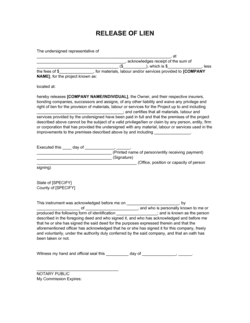
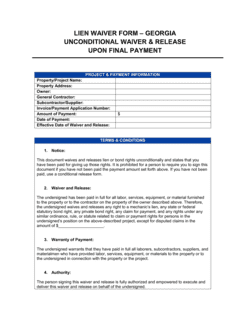
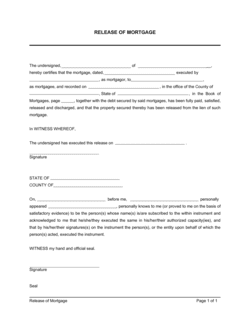
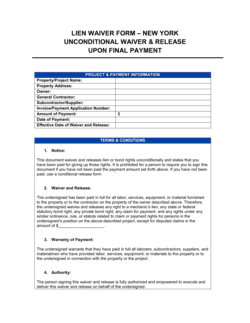
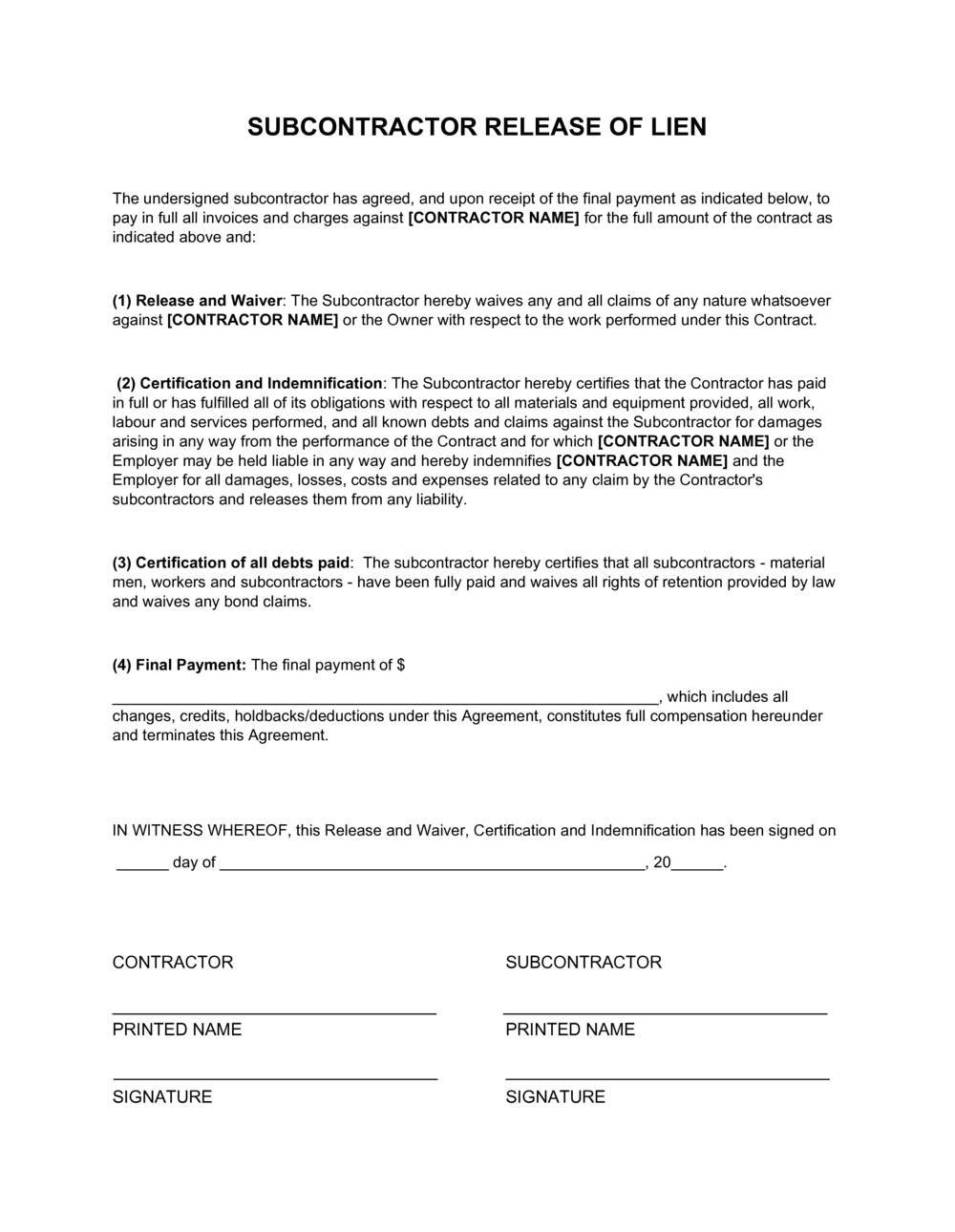
A Subcontractor Release of Lien is a legally binding document in which a subcontractor waives their right to file a mechanic's lien against a property in exchange for payment received for labor, materials, or services. This free Word download lets you edit the form online, insert project-specific details, and export as PDF for execution at each payment milestone.
When you need it
Use it each time a subcontractor receives a progress payment or final payment on a construction project. General contractors typically require a signed release before releasing funds, and property owners require one before closing out a project or refinancing.
What's inside
Parties and project identification, payment amount and date, description of work covered, waiver and release language, conditional or unconditional election, representations and warranties, governing law, and notarization or witness blocks where required by state or provincial statute.

What is a Subcontractor Release of Lien?

A Subcontractor Release of Lien is a legally binding document in which a subcontractor formally waives their statutory right to file a mechanic's lien against a property, in exchange for payment received for labor performed, materials furnished, or services rendered. Mechanic's lien rights arise automatically under state and provincial construction statutes and give unpaid contractors and suppliers a security interest in the property itself β€” making a properly executed lien release essential for clearing title and confirming that each payment in a project's payment chain has been received and acknowledged. Releases come in two operative forms: conditional, which takes effect only upon clearance of a specific payment, and unconditional, which is effective immediately upon signing regardless of payment status. This free Word download gives general contractors, property owners, and subcontractors a structured, editable form they can tailor to each draw or final payment and export as PDF for execution.

Why You Need This Document

Without signed lien releases at each payment milestone, a property owner or general contractor has no documentary proof that subcontractors have been paid and have surrendered their right to encumber the title. A single unfiled lien claim β€” even from a subcontractor who was paid β€” can delay a refinancing, block a sale closing, or trigger a title insurance dispute that stalls a project for months. Construction lenders require executed lien releases as a hard condition before funding each draw; failing to collect them can freeze the entire payment chain. For subcontractors, a properly executed conditional release protects lien rights until payment is confirmed while satisfying the GC's documentation requirements. For general contractors, collecting per-draw releases with lower-tier payment warranties closes the gap between paying a sub and ensuring that sub's suppliers and laborers have also been paid β€” preventing surprise liens from parties the GC never directly contracted with. This template gives every party in the payment chain the right form to use at the right time.

Which variant fits your situation?

If your situation is…Use this template
Subcontractor has received a check but it has not yet clearedConditional Lien Waiver (Progress Payment)
Subcontractor has confirmed cleared payment for a progress drawUnconditional Lien Waiver (Progress Payment)
Subcontractor has received final payment and is closing out the projectUnconditional Final Lien Release
Payment has not yet been made and GC needs a waiver contingent on future paymentConditional Lien Waiver (Final Payment)
General contractor releasing lien rights against the project ownerContractor Release of Lien
Supplier or material dealer releasing lien rights on delivered materialsSupplier Lien Waiver
Project involves a public works contract where lien rights differBond Release / Stop Notice Waiver

Common mistakes to avoid

❌ Signing an unconditional release before payment clears

Why it matters: An unconditional release is effective the moment it is signed. If the check bounces or the wire is reversed, the subcontractor has already surrendered their lien rights and must pursue a breach-of-contract claim instead β€” a slower, costlier remedy.

Fix: Use a conditional release form tied to check clearance for any payment not yet confirmed received. Convert to an unconditional release only after verifying the funds have posted.

❌ Using a non-statutory form in a state that mandates one

Why it matters: California (Civil Code Β§8132–§8138), Texas (Property Code Β§53.281), and several other states require specific statutory waiver language. Non-compliant forms may be unenforceable, leaving the property exposed to liens despite the signed release.

Fix: Before using any template, verify whether the project state mandates a statutory form. If it does, use the prescribed language verbatim and append only non-conflicting additions.

❌ No carve-out for retainage on a progress release

Why it matters: Without an express retainage exclusion, a broadly worded progress release may be construed as waiving the subcontractor's right to collect the withheld percentage β€” an amount typically equal to 5–10% of the contract value.

Fix: Include a specific retention carve-out: state the dollar amount currently withheld and confirm it is expressly excluded from the current release.

❌ Wrong entity name on the release

Why it matters: A release signed in the name of a trade name, DBA, or the wrong legal entity does not extinguish the lien rights of the correct legal entity that performed the work β€” leaving the property still exposed.

Fix: Require the subcontractor to provide their exact registered legal entity name before preparing any lien release documents and confirm it matches their subcontract.

❌ No lower-tier payment warranty

Why it matters: Without a warranty that lower-tier subs and suppliers have been paid, the GC and owner have no direct contractual recourse if a supplier files a lien for materials included in the released draw β€” the release protects only against claims from the signing party.

Fix: Include an express warranty clause in which the subcontractor confirms all lower-tier claimants for the released scope have been paid, and attach a lower-tier lien waiver requirement for significant sub-subcontractors.

❌ Collecting a single final release without per-draw releases

Why it matters: Waiting until project completion to collect one blanket final release leaves the property exposed to liens throughout the project. If a subcontractor becomes insolvent mid-project, earlier payments have no release documentation.

Fix: Require a conditional or unconditional progress release with every draw payment, and a final release upon project completion. File each in the project record immediately upon execution.

The 9 key clauses, explained

Parties and project identification

In plain language: Identifies the subcontractor releasing lien rights, the general contractor or owner receiving the release, and the specific project β€” including property address or legal description.

Sample language
This Release of Lien is executed by [SUBCONTRACTOR LEGAL NAME] ('Claimant') in favor of [GENERAL CONTRACTOR / OWNER NAME] ('Owner/GC') with respect to the project known as [PROJECT NAME] located at [PROPERTY ADDRESS / LEGAL DESCRIPTION].

Common mistake: Using a trade name instead of the subcontractor's registered legal entity name. A release signed by the wrong entity fails to extinguish the lien rights held by the legal entity that filed or could file the lien.

Payment amount and check or wire reference

In plain language: Specifies the exact dollar amount being paid in exchange for the release, and references the check number, wire reference, or draw number so the release is tied to a specific transaction.

Sample language
In consideration of payment in the amount of $[AMOUNT] (Check No. [XXXXXX] / Wire Ref. [XXXXXX] dated [DATE]), the receipt of which is hereby acknowledged, Claimant agrees to the following release.

Common mistake: Omitting the check number or wire reference. Without a transaction tie-in, a dispute over whether payment was actually made for this specific draw becomes a credibility contest rather than a documentary fact.

Through date and scope of released work

In plain language: Defines the date through which the release covers work performed and the categories of labor, materials, and services being released β€” preventing accidental release of future work.

Sample language
Claimant releases all claims and lien rights for labor performed, materials furnished, and services rendered through [THROUGH DATE] under the subcontract dated [SUBCONTRACT DATE] for [DESCRIPTION OF SCOPE OF WORK].

Common mistake: Using 'all work on the project' without a through date on a progress release. This inadvertently releases lien rights for work not yet performed or paid, leaving the subcontractor with no recourse for future unpaid draws.

Conditional or unconditional election

In plain language: Clearly states whether the release is conditional (effective only upon payment clearance) or unconditional (effective immediately upon signing) β€” the most legally significant distinction in a lien waiver.

Sample language
This release is [CONDITIONAL upon the actual receipt and collection of the payment identified above / UNCONDITIONAL and effective upon execution regardless of payment status].

Common mistake: Signing an unconditional release before the check has cleared. If the check is subsequently dishonored, the subcontractor has already waived their lien rights with no recourse on the property.

Waiver and release of lien rights

In plain language: The operative clause β€” the subcontractor formally waives, releases, and relinquishes all mechanic's lien rights, stop notice rights, and bond claims arising from the covered work and payment.

Sample language
Claimant hereby waives, releases, and relinquishes any and all mechanic's lien rights, materialman's lien rights, stop notice rights, and bond claim rights against the above-referenced property and project, to the extent of the payment and scope described herein.

Common mistake: Omitting stop notice and bond claim rights from the waiver language. On bonded or public projects, lien rights do not apply β€” but stop notice and bond claim rights do β€” leaving a gap in the release.

Retention and excluded claims

In plain language: Expressly carves out retainage not yet due and any disputed claims not covered by the current payment, so the subcontractor does not inadvertently release amounts that have not been paid.

Sample language
This release does not cover retainage currently withheld in the amount of $[RETAINAGE AMOUNT], nor any claims for [DESCRIBE EXCLUDED DISPUTES OR CHANGE ORDERS], which are expressly reserved.

Common mistake: No carve-out for retainage. If a subcontractor signs a final release before retainage is released, recovering that amount requires a breach-of-contract claim rather than a lien β€” a significantly weaker position.

Representations and warranties

In plain language: The subcontractor warrants that they have paid all sub-subcontractors, suppliers, and laborers for the released work β€” protecting the GC and owner from lower-tier lien claims.

Sample language
Claimant represents and warrants that all sub-subcontractors, suppliers, and laborers engaged by Claimant for the work covered herein have been paid in full and that no claims for lien exist or will arise from lower-tier parties for the released scope.

Common mistake: No warranty of lower-tier payment. Without it, the GC and owner have no contractual recourse against the subcontractor if a lower-tier supplier files a lien for materials included in the released draw.

Governing law and venue

In plain language: Specifies which state or province's mechanic's lien statute and contract law governs the release, and where any dispute will be resolved.

Sample language
This Release shall be governed by and construed in accordance with the laws of the State of [STATE], and any dispute arising hereunder shall be resolved in the courts of [COUNTY / DISTRICT], [STATE].

Common mistake: Choosing a governing law state that differs from the project's location. Mechanic's lien rights are governed by the law of the state where the property is situated β€” a choice-of-law clause selecting a different state does not override this.

Signature, notarization, and witness block

In plain language: Execution block for the subcontractor's authorized signatory, including title, date, and β€” where required by statute β€” a notarization block or witness signature line.

Sample language
Executed by: [SUBCONTRACTOR LEGAL NAME] By: [AUTHORIZED SIGNATORY NAME], Title: [TITLE], Date: [DATE]. State of [STATE], County of [COUNTY]. Subscribed and sworn before me on [DATE]. Notary Public: [NAME], My Commission Expires: [DATE].

Common mistake: Having an unauthorized employee sign the release. Only an officer, member, or person with documented signing authority can bind the entity β€” a signature by a field superintendent is routinely challenged and may void the release.

How to fill it out

  1. 1

    Confirm the subcontractor's legal entity name

    Retrieve the subcontractor's registered business name from their contract, corporate filing, or W-9. Enter this exact name in the Claimant field β€” not a trade name or DBA.

    πŸ’‘ Cross-check the name on the lien waiver against the name on the subcontract to confirm they match before the subcontractor signs.

  2. 2

    Identify the project and property accurately

    Enter the project name, physical address, and β€” for final releases or where required by statute β€” the legal description of the property from the title report or deed.

    πŸ’‘ On large developments with multiple parcels, use the legal description rather than the street address to avoid ambiguity about which parcel is being released.

  3. 3

    Choose conditional or unconditional and set the through date

    For progress payments where the check has not yet cleared, select conditional. For verified cleared payments, select unconditional. Set the through date to match the last date of work covered by this draw.

    πŸ’‘ Never sign an unconditional release on behalf of a subcontractor before confirming the payment has posted to their bank account β€” not just that a check was issued.

  4. 4

    Enter the exact payment amount and transaction reference

    Record the dollar amount being paid, the check number or wire reference number, and the payment date. This ties the release to a specific transaction and prevents it from being applied to a different payment later.

    πŸ’‘ If the payment includes retainage release, itemize it separately β€” retainage released versus progress payment β€” so the amounts are auditable.

  5. 5

    Specify retained amounts and excluded claims

    List any retainage still being withheld and any disputes, unapproved change orders, or future work not covered by this payment. These items are expressly reserved and not waived.

    πŸ’‘ Be specific β€” 'all future claims' is too broad as an exclusion and may be unenforceable. Name the specific disputed change orders by number.

  6. 6

    Obtain the subcontractor's authorized signature

    Confirm that the person signing holds the authority to bind the subcontractor entity β€” an officer, managing member, or someone with a documented power of attorney. Record their title and the date of signing.

    πŸ’‘ For corporate subcontractors, request a copy of a corporate resolution or operating agreement excerpt confirming signing authority if the signatory is not the owner or president.

  7. 7

    Notarize where required by statute

    Some states β€” including Texas, Mississippi, and Louisiana β€” require notarization for a lien waiver to be enforceable. Check the statutory requirements for the project's location before execution.

    πŸ’‘ Even where notarization is not legally required, having the release notarized adds evidentiary weight and deters later challenges to the authenticity of the signature.

  8. 8

    Retain the original and file in the project record

    Store the fully executed original in the project file alongside the corresponding pay application and payment documentation. On bonded projects, provide a copy to the surety.

    πŸ’‘ Maintain a lien release log by subcontractor and draw number so you can confirm at project close-out that every sub and supplier has provided a release for every payment.

Frequently asked questions

What is a subcontractor release of lien?

A subcontractor release of lien is a legal document in which a subcontractor waives their statutory right to file a mechanic's lien against a property in exchange for payment received for labor, materials, or services. It protects the property owner and general contractor from having a lien encumber the title after payment has been made. Releases can be conditional (effective only upon payment clearance) or unconditional (effective immediately upon signing).

What is the difference between a conditional and unconditional lien waiver?

A conditional lien waiver becomes effective only after the specific payment it references has actually cleared the subcontractor's bank. An unconditional waiver takes effect the moment it is signed, regardless of payment status. Subcontractors should avoid signing unconditional waivers until they have confirmed the payment has posted β€” a dishonored check after an unconditional waiver leaves no lien remedy against the property.

Is a subcontractor required to sign a lien release?

No statute requires a subcontractor to sign a lien waiver as a condition of receiving payment. However, general contractors and owners routinely make it a contractual requirement under the subcontract agreement β€” and courts generally enforce these provisions. A subcontractor who refuses to provide a release may be in breach of their subcontract and can be withheld payment on that basis.

Can a lien release be used to waive future claims?

Generally, no. A lien release should be limited to work performed through a specific through date and payment amounts identified in the document. Courts in most jurisdictions are reluctant to enforce broad prospective waivers of future lien rights for work not yet performed or paid. Attempting to include broad future-waiver language in a progress release can render the entire document unenforceable in some states.

Do I need to notarize a subcontractor lien release?

It depends on the state. Texas, Mississippi, and Louisiana require notarized lien waivers to be enforceable. Most other US states do not mandate notarization for a waiver to be valid, but notarization adds evidentiary weight and deters later challenges. Always check the mechanic's lien statute of the state where the project is located before finalizing the form.

What happens if a subcontractor signs a lien release but is not paid?

The consequence depends entirely on whether the release was conditional or unconditional. A conditional release tied to payment clearance remains unenforceable if payment never clears β€” the subcontractor retains full lien rights. An unconditional release extinguishes lien rights regardless of payment, leaving the subcontractor with only a breach-of-contract claim against the GC or owner, which is slower and more expensive to pursue than a lien.

Does a lien release also cover lower-tier subcontractors and suppliers?

A lien release signed by a subcontractor releases only that subcontractor's own lien rights β€” it does not automatically release the rights of their sub-subcontractors, laborers, or material suppliers. To protect against lower-tier claims, general contractors should require the subcontractor to provide a warranty of lower-tier payment and, on larger scopes, collect separate lien releases from significant sub-subcontractors and suppliers.

What states require a statutory lien waiver form?

California, Texas, Arizona, Nevada, and Mississippi are among the states that mandate specific statutory lien waiver forms or language. Using a non-compliant form in these states can render the waiver unenforceable, even if signed. Other states allow custom forms so long as they meet minimum content requirements. Always verify the applicable statute for the project's state before using any template.

How does a lien release differ from a lien release bond?

A lien release β€” also called a lien waiver β€” extinguishes the claimant's right to file a lien in the first place. A lien release bond (or discharge bond) is a surety instrument posted after a lien has already been filed, substituting the bond for the lien to clear the property title while the underlying payment dispute is resolved. A lien waiver prevents the lien; a discharge bond removes one that already exists.

How this compares to alternatives

vs Contractor Release of Lien

A contractor release of lien is executed by the general contractor waiving lien rights against the owner, while a subcontractor release is executed by a sub waiving rights against the property. Both documents protect the owner's title but operate at different tiers of the payment chain. On most projects, both are required β€” the GC release does not cover subcontractor claims.

vs Mechanic's Lien Form

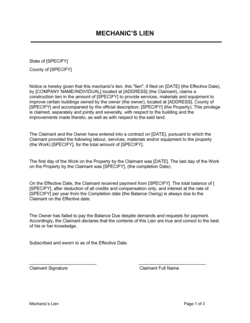
A mechanic's lien is filed by an unpaid party to encumber the property title and force payment. A subcontractor release of lien is the opposite β€” it removes or prevents that encumbrance after payment is made. You file a mechanic's lien when payment is refused; you sign a release of lien when payment is received.

vs Final Lien Waiver

A progress lien release covers work through a specific draw date while preserving future lien rights. A final lien waiver extinguishes all remaining lien rights for the entire project upon receipt of the last payment including retainage. Use a progress release at each draw and a final waiver only after all amounts β€” including retainage β€” have been confirmed received.

vs Subcontract Agreement

A subcontract agreement is the governing contract that establishes the scope, price, and payment terms for a subcontractor's work. A release of lien is a transaction-level document executed at each payment to document the waiver of lien rights for amounts paid. The subcontract creates the obligation; the lien release documents its discharge.

Industry-specific considerations

Commercial construction

Progress releases required at each AIA G702 pay application; final releases collected before certificate of substantial completion and retainage disbursement.

Residential homebuilding

Title companies routinely require lien releases from all subs and suppliers before funding draws from construction loans or issuing title insurance at closing.

Infrastructure and public works

Mechanic's liens cannot attach to public property; stop notice and payment bond waivers replace lien releases β€” correct form selection is critical.

Real estate development

Lenders condition each construction loan draw on delivery of conditional releases from all subcontractors for the prior draw, and unconditional releases before final funding.

Jurisdictional notes

United States

Mechanic's lien law is entirely state-governed in the US, with significant variation in form requirements, timing, and enforceability. California, Texas, Arizona, Nevada, and Mississippi mandate specific statutory waiver forms β€” non-compliant forms are void. Notice requirements, preliminary lien notice deadlines, and notarization requirements vary by state. Always verify the statute for the project's specific state before using any template.

Canada

Construction lien rights in Canada are governed by provincial legislation β€” the Construction Act in Ontario, the Builders' Lien Act in British Columbia and Alberta, and equivalent statutes in other provinces. Each province sets its own lien preservation and perfection deadlines. Ontario's 2018 Construction Act reforms introduced prompt payment and adjudication provisions that interact with lien waiver timing. Quebec operates under a distinct legal framework including the legal hypothec on immovables.

United Kingdom

The UK does not have a mechanic's lien regime equivalent to North American practice. Unpaid subcontractors in England, Wales, and Scotland rely on contractual remedies, retention of title clauses, and adjudication under the Housing Grants, Construction and Regeneration Act 1996 rather than property liens. A 'release of lien' in the UK context typically refers to releasing a contractual retention or security interest rather than a statutory property encumbrance.

European Union

EU member states do not share a uniform construction lien or charge system. Germany recognizes a contractor's right to demand a security interest (Bauhandwerkersicherheit) under Β§650f BGB; France provides a privilege du constructeur; the Netherlands has a similar builders' lien. A US-style lien waiver document is generally not applicable in EU jurisdictions β€” local legal counsel should be engaged for construction payment security in any specific member state.

Template vs lawyer β€” what fits your deal?

PathBest forCostTime
Use the templateStandard domestic subcontractor payments in states without mandatory statutory forms, where the release is conditional and covers a straightforward scopeFree10–15 minutes per release
Template + legal reviewProjects in California, Texas, or other states with mandatory statutory forms, or releases involving retainage disputes or unapproved change orders$150–$400 for a construction attorney review1–2 days
Custom draftedLarge commercial developments, multi-party disputes, final releases on contracts exceeding $1M, or bonded public works projects$500–$2,000+3–7 days

Glossary

Mechanic's Lien
A statutory security interest placed on a property by a contractor, subcontractor, or supplier who has not been paid for labor or materials provided to improve that property.
Lien Waiver
A document in which a claimant voluntarily relinquishes their right to file a mechanic's lien, typically in exchange for payment.
Conditional Lien Waiver
A waiver that becomes effective only upon receipt and clearance of a specific payment β€” it does not extinguish lien rights until the payment actually clears.
Unconditional Lien Waiver
A waiver that takes immediate effect upon signing, regardless of whether the associated payment has actually cleared β€” the highest-risk waiver for the signing party.
Progress Payment Release
A lien release covering work performed and paid for through a specific date or draw, while preserving lien rights for future unpaid work.
Final Release
A lien release covering all work performed on a project through completion, extinguishing all remaining lien rights of the signing party.
Claimant
The subcontractor, supplier, or laborer who holds or has the right to file a mechanic's lien against the property.
Through Date
The specific calendar date through which the lien waiver covers work performed β€” work completed after this date is not released.
Statutory Lien Waiver Form
A prescribed lien waiver form mandated by state law in jurisdictions such as California and Texas β€” using a non-statutory form in these states can render the waiver void.
Retainage
A percentage of each progress payment β€” typically 5–10% β€” withheld by the owner or GC until project completion, which is usually addressed in a separate final lien release.
Bond Claim
A claim against a payment bond posted by the GC or owner on a bonded project, which substitutes for a mechanic's lien on public works projects where property liens are unavailable.

Part of your Business Operating System

This document is one of 3,000+ business & legal templates included in Business in a Box.

  • Fill-in-the-blanks β€” ready in minutes
  • 100% customizable Word document
  • Compatible with all office suites
  • Export to PDF and share electronically

Create your document in 3 simple steps.

From template to signed document β€” all inside one Business Operating System.
1
Download or open template

Access over 3,000+ business and legal templates for any business task, project or initiative.

2
Edit and fill in the blanks with AI

Customize your ready-made business document template and save it in the cloud.

3
Save, Share, Send, Sign

Share your files and folders with your team. Create a space of seamless collaboration.

Save time, save money, and create top-quality documents.

β˜…β˜…β˜…β˜…β˜…

"Fantastic value! I'm not sure how I'd do without it. It's worth its weight in gold and paid back for itself many times."

Managing Director Β· Mall Farm
Robert Whalley
Managing Director, Mall Farm Proprietary Limited
β˜…β˜…β˜…β˜…β˜…

"I have been using Business in a Box for years. It has been the most useful source of templates I have encountered. I recommend it to anyone."

Business Owner Β· 4+ years
Dr Michael John Freestone
Business Owner
β˜…β˜…β˜…β˜…β˜…

"It has been a life saver so many times I have lost count. Business in a Box has saved me so much time and as you know, time is money."

Owner Β· Upstate Web
David G. Moore Jr.
Owner, Upstate Web

Run your business with a system β€” not scattered tools

Stop downloading documents. Start operating with clarity. Business in a Box gives you the Business Operating System used by over 250,000 companies worldwide to structure, run, and grow their business.

Start freeΒ Β·Β No credit card required