- Event Brief
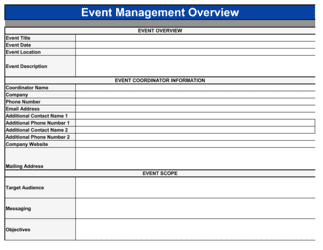
- A concise summary of the event's purpose, audience, scope, and constraints — the foundation that informs every other section of the proposal.
- Run of Show
- A minute-by-minute timeline of every activity, speaker, and transition during the event, used by production staff and emcees to keep the program on schedule.
- Call to Action (Proposal)
- The specific next step the proposal asks the reader to take — typically approving the budget, signing a contract, or scheduling a follow-up meeting.
- Contingency Budget
- A reserved percentage of total event spend — typically 10–15% — set aside to cover unexpected costs such as last-minute vendor changes or weather-related needs.
- Stakeholder Approval
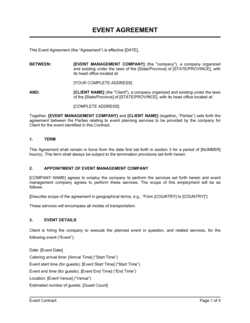
- Formal sign-off from the decision-maker — client, executive, or board — authorizing the event to proceed as proposed.
- In-Kind Sponsorship
- A contribution of goods or services rather than cash — such as donated catering, AV equipment, or printing — counted at fair market value in the event budget.
- Attrition Clause
- A venue or hotel contract provision requiring the organizer to guarantee a minimum number of sleeping rooms or food-and-beverage spend or pay a penalty.
- Net Promoter Score (NPS)
- A post-event attendee survey metric measuring how likely participants are to recommend the event, used to evaluate success against pre-set benchmarks.
- Breakout Session
- A smaller, topic-specific session that runs parallel to the main program, allowing attendees to self-select into content relevant to their role or interest.
- Force Majeure
- An unforeseeable event — natural disaster, pandemic, or government order — that prevents the event from proceeding and typically triggers cancellation provisions in vendor contracts.