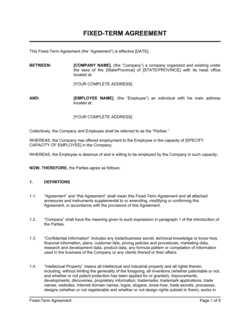
Software Quality Assurance Tester Job Description Template

Free Word download β€’ Edit online β€’ Save & share with Drive β€’ Export to PDF

2 pagesβ€’20–30 min to fillβ€’Difficulty: Standardβ€’Signature requiredβ€’Legal review recommended
Learn more ↓
FreeSoftware Quality Assurance Tester Job Description Template

At a glance

What it is
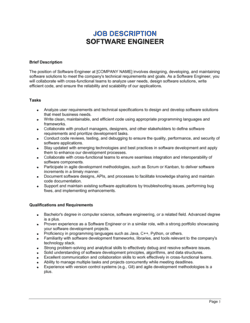
A Software Quality Assurance Tester Job Description is a formal employment document that defines the scope of a QA tester role, the testing methodologies required, reporting structure, performance expectations, and terms of engagement. This free Word download gives hiring managers and HR teams a structured, editable starting point they can tailor to their tech stack and release cadence, then attach to an employment contract or offer letter.
When you need it
Use it when opening a new QA tester position, backfilling a departing tester, or formalizing the duties of a contractor or employee who has been performing QA work without a written role definition. It is also required when a staffing agency needs a written brief to source and screen candidates on your behalf.
What's inside
Role title and department, reporting line, core testing duties (manual and automated), required tools and methodologies, qualifications and certifications, compensation band, working location and hours, performance metrics, and conditions of employment including confidentiality and IP assignment references.

What is a Software Quality Assurance Tester Job Description?

A Software Quality Assurance Tester Job Description is a formal employment document that defines the full scope of a QA tester's role within a software development team β€” covering core testing duties, required tools and methodologies, performance standards, reporting structure, compensation band, and conditions of employment. It functions as both a recruiting instrument and a legally relevant reference document: when signed and incorporated into an employment contract, its contents become enforceable obligations that anchor onboarding, performance reviews, and, where necessary, disciplinary proceedings. Unlike a generic job posting, a properly structured QA tester job description distinguishes between manual and automated testing responsibilities, names the specific tools in use, and sets measurable quality benchmarks the hire is expected to meet.

Why You Need This Document

Hiring a QA tester without a written job description creates three immediate risks. First, without defined duties, disputes about whether automation, API testing, or performance testing is in scope begin at the first sprint retrospective rather than being resolved before the offer is signed. Second, the absence of measurable performance standards β€” defect escape rate, test coverage target, mean time to close β€” makes it legally difficult to manage underperformance or terminate for cause when quality goals are consistently missed. Third, in jurisdictions with active pay-transparency enforcement (California, Colorado, New York, and Ontario), publishing a role without a salary range exposes the company to regulatory complaints before a single application is received. This template gives engineering managers and HR teams a structured, editable starting point that covers every material clause β€” from role title and tool requirements to compensation disclosure and EEO compliance β€” so the hire is set up for accountability from day one.

Which variant fits your situation?

If your situation is…Use this template
Hiring a QA engineer who will build and maintain automated test suitesAutomation QA Engineer Job Description
Engaging a freelance tester for a fixed-scope projectIndependent Contractor Agreement
Defining a senior QA lead who will manage a testing teamQA Team Lead Job Description
Hiring a tester focused exclusively on mobile app qualityMobile QA Tester Job Description
Bringing on a performance or load testing specialistPerformance Test Engineer Job Description
Filling a temporary QA role for a product launch sprintFixed-Term Employment Contract
Documenting QA tester duties as part of a broader SDLC process documentSoftware Development Policy

Common mistakes to avoid

❌ Treating the job description as a standalone binding agreement

Why it matters: A job description defines the role but lacks the clauses β€” IP assignment, confidentiality, non-solicit, termination β€” needed to protect the company. Relying on it alone leaves critical obligations unenforceable.

Fix: Always execute a full employment contract alongside the job description. The job description should reference and attach to the contract, not replace it.

❌ Listing 10+ required tools when only 3 are used daily

Why it matters: Overloaded requirements screens out qualified mid-level testers, extends time-to-fill, and creates a credibility gap when candidates ask which tools are actually in use.

Fix: Separate tools into 'required' (used every sprint) and 'preferred' (nice to have). Limit the required list to the tools the tester will touch in their first 30 days.

❌ Publishing a salary range that doesn't reflect the actual offer

Why it matters: In pay-transparency jurisdictions including California, Colorado, and New York, a posted range that excludes the real offer triggers regulatory complaints and erodes candidate trust.

Fix: Confirm the approved compensation band with HR before inserting it into the job description. The posted range must include the salary you will actually offer.

❌ Omitting measurable performance standards

Why it matters: Without defined KPIs, performance disputes become subjective, making performance improvement plans and termination-for-cause decisions legally difficult to defend.

Fix: Include at least two quantified performance expectations β€” such as defect escape rate below 5% and test coverage above 80% β€” tied to the company's current baseline.

❌ Failing to specify time zone requirements for remote roles

Why it matters: A QA tester hired with no overlap requirement creates sprint-blocking delays when defect triage requires real-time communication with the engineering team across incompatible time zones.

Fix: State the minimum required daily overlap window in UTC and any mandatory sprint ceremony attendance hours before the role is posted.

❌ Using an EEO statement that doesn't cover local protected classes

Why it matters: A US-only EEO statement used for UK or EU postings omits protected characteristics like religion, sexual orientation, and pregnancy under the Equality Act 2010 and EU Employment Equality Directive, creating compliance exposure.

Fix: Maintain jurisdiction-specific EEO statement variants and apply the correct one based on where the role is based, not where the company is incorporated.

The 10 key clauses, explained

Role Title, Department, and Reporting Line

In plain language: Establishes the official job title, which team or department the tester belongs to, and who they report to directly.

Sample language
Position: Software Quality Assurance Tester | Department: Engineering | Reports to: [QA LEAD / ENGINEERING MANAGER NAME/TITLE]

Common mistake: Using an informal title like 'QA Guy' or 'Bug Hunter' instead of a standardized title. Inconsistent titles create compensation-band mismatches and complicate performance reviews.

Position Summary

In plain language: A 2–4 sentence overview of why the role exists, what problems it solves, and how it fits into the product delivery lifecycle.

Sample language
The Software Quality Assurance Tester is responsible for designing, executing, and documenting tests that validate software against defined acceptance criteria. Working within the [PRODUCT/SQUAD NAME] team, the Tester ensures that releases meet quality standards before reaching [INTERNAL USERS / CUSTOMERS / PRODUCTION ENVIRONMENT].

Common mistake: Writing a position summary that is indistinguishable from a generic IT role. The summary should reference your specific product type and release cadence to attract relevant candidates.

Core Duties and Responsibilities

In plain language: Lists the specific day-to-day tasks β€” test case creation, execution, defect logging, regression testing, and collaboration activities β€” the tester is expected to perform.

Sample language
Responsibilities include: (a) writing and executing manual and automated test cases against acceptance criteria; (b) logging, triaging, and tracking defects in [JIRA / AZURE DEVOPS / TOOL]; (c) participating in sprint planning and review ceremonies; (d) producing test summary reports for each release.

Common mistake: Listing only manual testing duties when the role requires automation skills β€” or vice versa. Misaligned duty lists lead to mis-hires and performance disputes within the first 90 days.

Required Skills, Tools, and Methodologies

In plain language: Specifies the technical tools (e.g., Selenium, Postman, JIRA), testing methodologies (Agile, waterfall, BDD), and programming languages the candidate must know.

Sample language
Required: [2+] years of experience with [SELENIUM / CYPRESS / PLAYWRIGHT]; proficiency in [JIRA] for defect tracking; familiarity with [REST API] testing using [POSTMAN]; working knowledge of [AGILE / SCRUM] methodology.

Common mistake: Listing every tool in the market as 'required' when only two or three are actually used. Overloaded requirements screens out qualified candidates and is difficult to enforce in a performance review.

Qualifications and Certifications

In plain language: States the minimum educational background and any professional certifications β€” such as ISTQB Foundation Level β€” required or preferred for the role.

Sample language
Required: Bachelor's degree in Computer Science, Information Technology, or a related field, or equivalent practical experience. Preferred: ISTQB Foundation Level certification. Experience with [INDUSTRY]-specific compliance testing (e.g., [HIPAA / PCI-DSS]) is an asset.

Common mistake: Making a four-year degree mandatory when the role genuinely requires ISTQB certification and two years of hands-on experience. Unnecessarily restrictive education requirements expose employers to adverse-impact claims in several jurisdictions.

Performance Standards and KPIs

In plain language: Defines measurable expectations β€” defect escape rate, test coverage percentage, test execution cycle time β€” so both parties agree in advance what 'good' looks like.

Sample language
The Tester is expected to maintain a defect escape rate below [X]% per release, achieve test case coverage of [X]% against sprint acceptance criteria, and close assigned defects within [X] business days of fix deployment.

Common mistake: Setting no measurable performance standards at all, leaving disputes about quality output to be resolved subjectively. Vague standards make performance improvement plans legally difficult to defend.

Working Hours, Location, and Travel

In plain language: Specifies whether the role is on-site, remote, or hybrid; core working hours or shift requirements; and any travel obligations for UAT at client sites.

Sample language
This is a [REMOTE / HYBRID / ON-SITE] position based in [CITY/COUNTRY]. Core hours are [9 AM–3 PM, TIME ZONE]. Occasional travel to [CLIENT SITES / HEAD OFFICE] may be required, estimated at [X] days per quarter.

Common mistake: Omitting time zone requirements for remote roles. A QA tester hired globally without a defined overlap window creates sprint-blocking delays when the team cannot synchronize on defect triage.

Compensation, Benefits, and Employment Type

In plain language: States the salary range or hourly rate, employment classification (full-time, part-time, or fixed-term), and reference to the company's standard benefits.

Sample language
Annual salary range: [$X]–[$X] [CURRENCY], commensurate with experience. Employment type: [Full-Time / Fixed-Term to DATE]. Eligible for the Company's standard benefits program including [HEALTH / DENTAL / RETIREMENT] as amended from time to time.

Common mistake: Publishing a salary range that does not reflect what the company will actually pay. In jurisdictions with pay-transparency laws (California, Colorado, New York), a posted range that excludes the actual offer creates legal and reputational exposure.

Confidentiality and IP Assignment Reference

In plain language: Puts the candidate on notice that the role involves access to proprietary systems and code, and that full confidentiality and IP obligations are governed by the employment contract.

Sample language
By accepting this role, the Employee acknowledges access to Confidential Information including source code, test environments, and unreleased product features. Confidentiality and IP assignment obligations are governed by the Employment Agreement executed contemporaneously with this Job Description.

Common mistake: Treating the job description as a standalone IP and confidentiality agreement. It is not β€” omitting a reference to the governing employment contract leaves a gap if the job description is the only signed document.

Equal Opportunity and Non-Discrimination Statement

In plain language: A standard clause confirming the employer does not discriminate on protected characteristics and invites applications from diverse candidates.

Sample language
[COMPANY NAME] is an equal opportunity employer. We do not discriminate on the basis of race, color, religion, sex, national origin, disability, age, or any other characteristic protected by applicable law. We encourage applications from candidates of all backgrounds.

Common mistake: Copying a boilerplate EEO statement without verifying it covers all protected classes in the applicable jurisdiction. UK and EU employers must include additional protected characteristics beyond the US Title VII baseline.

How to fill it out

  1. 1

    Define the role title and reporting structure

    Enter the exact job title that will appear in the employment contract, payroll system, and any staffing agency briefs. Confirm the direct manager's current title and name.

    πŸ’‘ Align the title to your company's existing engineering career ladder before publishing β€” inconsistent titles across teams create pay-equity complaints.

  2. 2

    Write the position summary in product-specific terms

    Replace generic language with specifics: name the product, the squad or team the tester joins, and whether they support a web, mobile, API, or embedded system.

    πŸ’‘ A position summary that names your actual product type and release cadence (e.g., '2-week sprints for a B2B SaaS platform') attracts experienced candidates and screens out those unfamiliar with your environment.

  3. 3

    List only the tools and methodologies you actually use

    Pull your current tech stack from the engineering team and list only tools the tester will use in their first 90 days. Mark each as 'required' or 'preferred.'

    πŸ’‘ Limiting required tools to three to five core items increases qualified applicant volume by roughly 30% compared to a 15-item required list.

  4. 4

    Set measurable performance standards

    Work with the QA lead or engineering manager to agree on KPIs β€” defect escape rate, test coverage target, and mean time to close. Enter specific numbers, not vague descriptors.

    πŸ’‘ KPIs written into the job description become the foundation of the 90-day review and any future performance improvement plan β€” make sure the targets are realistic for the current team baseline.

  5. 5

    Confirm working hours and time zone requirements

    For remote or hybrid roles, specify the required daily overlap window in UTC and any mandatory on-call or after-hours release support expectations.

    πŸ’‘ State the overlap requirement in UTC rather than a city-based time zone to avoid confusion during daylight saving transitions.

  6. 6

    Enter the salary range and employment type

    Confirm the approved compensation band with HR before inserting it. State the employment type (full-time, fixed-term, or contract) and reference the benefits program.

    πŸ’‘ In pay-transparency jurisdictions (CA, CO, NY, UK from 2026), the posted range must reflect the actual offer range β€” not a floor-to-ceiling spread designed to anchor negotiations.

  7. 7

    Attach and cross-reference the employment contract

    Ensure the job description is executed alongside β€” not instead of β€” a full employment contract covering IP assignment, confidentiality, non-solicit, termination, and severance.

    πŸ’‘ Have both documents signed on the same day, before the employee's first day of work, to avoid the fresh-consideration problem for restrictive covenants.

  8. 8

    Have legal or HR review before publishing

    Before posting the role externally, have an HR or legal reviewer confirm the qualifications section does not impose unjustified barriers and the EEO statement covers all required protected classes in the target jurisdiction.

    πŸ’‘ A 30-minute HR review before posting costs far less than responding to an adverse-impact complaint after 200 applications are received.

Frequently asked questions

What is a software quality assurance tester job description?

A software quality assurance tester job description is a formal document that defines the duties, required skills, tools, performance expectations, and employment terms for a QA tester role. It serves as both a recruiting tool β€” attracting qualified candidates β€” and a legal reference that anchors performance reviews and, when attached to an employment contract, creates enforceable obligations on both sides of the employment relationship.

What should a QA tester job description include?

At minimum: role title and reporting line, position summary, core responsibilities (manual and automated testing, defect logging, regression testing), required tools and methodologies, qualifications and certifications, measurable performance standards, working hours and location, salary range, employment type, and references to confidentiality and IP obligations in the governing employment contract. Missing performance standards or tool requirements are the two most common gaps.

Is a job description legally binding?

A job description alone is generally not a legally binding contract in most jurisdictions. However, when signed and attached to an employment contract, its contents β€” duties, performance standards, compensation β€” can be incorporated by reference and become enforceable. Courts in the UK, Canada, and Australia have found that specific promises in job descriptions can create implied contractual terms, so accuracy matters even before the contract is executed.

What is the difference between a QA tester and a QA engineer?

A QA tester typically focuses on executing test cases, logging defects, and verifying fixes β€” often with an emphasis on manual testing. A QA engineer has broader responsibilities including designing automation frameworks, writing test scripts in code, and integrating testing into CI/CD pipelines. The job description should reflect which profile the role actually requires, as the compensation bands and qualification expectations differ significantly.

Should I require ISTQB certification in the job description?

Mark ISTQB Foundation Level as 'preferred' rather than 'required' unless your industry or a regulatory framework specifically mandates it. Many experienced QA testers have equivalent practical skills without the certification. Making it a hard requirement narrows your candidate pool without a corresponding quality benefit in most commercial software environments. It is more valuable as a differentiator in scoring candidates than as a screening gate.

How do pay transparency laws affect job descriptions for QA roles?

California, Colorado, New York, Washington, and several other US states now require employers to include a salary range in any public job posting. The UK is moving toward similar requirements. The posted range must reflect what you will actually offer β€” not an artificially wide band. For QA tester roles, confirm the approved compensation band with HR before publishing and update the range if the approved budget changes between postings.

Can I use one job description for both an employee and a contractor?

No. An employee and an independent contractor operate under fundamentally different legal relationships. Using an employment-style job description for a contractor strengthens the argument that the worker is actually an employee, which triggers payroll tax liability, benefit entitlements, and wrongful termination exposure. Create a separate scope-of-work document for contractors and pair it with an Independent Contractor Agreement, not an employment contract.

How often should a QA tester job description be updated?

Review it whenever the tech stack changes significantly, when a new testing methodology (e.g., shifting from waterfall to Agile or from manual to automated testing) is adopted, or when a new hire is hired into the role. A job description that references deprecated tools or outdated processes undermines performance reviews and creates confusion during onboarding.

Do I need a lawyer to write a QA tester job description?

For most standard domestic hires, a high-quality template reviewed by HR is sufficient. Engage an employment lawyer when the role involves access to regulated data (HIPAA, PCI-DSS, financial records), when posting across multiple jurisdictions with different pay-transparency and EEO requirements, or when the job description will be incorporated by reference into a senior executive employment agreement with material compensation and IP clauses.

How this compares to alternatives

vs Employment Contract

A job description defines the role, duties, and expectations used to recruit and onboard the hire. An employment contract creates the binding legal relationship β€” covering IP assignment, confidentiality, non-solicit, termination, and severance. The job description supports the contract; it does not replace it. Both should be signed before day one.

vs Independent Contractor Agreement

An independent contractor agreement governs a self-employed tester engaged for project-based work with no employment entitlements. A job description paired with an employment contract is appropriate for a staff hire. Using a job description format for a contractor strengthens misclassification claims and should be avoided β€” use a scope-of-work document instead.

vs Software Development Policy

A software development policy defines the team-wide processes, standards, and governance rules that all engineers and testers must follow. A job description defines what one role holder is individually responsible for. They work in tandem β€” the policy sets the framework; the job description assigns accountability within it.

vs Offer Letter

An offer letter confirms compensation and start date to secure a candidate's acceptance. A job description defines the full scope of duties, performance standards, and working conditions. The offer letter triggers acceptance; the job description governs day-to-day expectations. Both are needed β€” neither substitutes for a full employment contract.

Industry-specific considerations

SaaS / Technology

Agile sprint cadence, CI/CD pipeline integration, automated regression testing, and cloud environment access controls are central to QA tester role definitions in SaaS teams.

Healthcare / MedTech

QA testers in healthcare software must demonstrate familiarity with HIPAA compliance testing, FDA software validation guidelines (21 CFR Part 11), and audit trail verification requirements.

Financial Services / Fintech

PCI-DSS compliance testing, penetration test coordination, and strict change management documentation requirements make fintech QA roles more regulated than general software roles.

E-commerce / Retail Tech

Peak-load and performance testing around sales events, payment gateway integration testing, and cross-browser and cross-device checkout validation are defining duties in this sector.

Jurisdictional notes

United States

California, Colorado, New York, and Washington require salary ranges in public job postings β€” the posted range must reflect the actual offer. FLSA classification (exempt vs. non-exempt) must be determined before publishing; most QA testers qualify as exempt under the computer employee exemption if paid above $27.63/hour, but the duties test must be met. State-specific EEO requirements vary β€” California and New York add protected classes beyond the federal Title VII baseline.

Canada

Ontario's Pay Transparency Act requires salary ranges in publicly advertised positions. Quebec requires that job postings directed at Quebec applicants be available in French. Human rights legislation across all provinces prohibits asking about age, marital status, and disability during recruitment β€” the job description must not include any criterion that screens on these characteristics. Employment Standards Acts set minimum qualifications disclosure requirements.

United Kingdom

The Equality Act 2010 expands protected characteristics beyond the US baseline to include age, religion or belief, sexual orientation, gender reassignment, and pregnancy. Job descriptions must not include requirements that indirectly discriminate against any protected group without objective justification. The UK is moving toward mandatory pay transparency in job adverts; confirm current status before publishing. IR35 rules apply if engaging QA testers through personal service companies.

European Union

The EU Pay Transparency Directive (effective 2026 for large employers) requires salary ranges in job postings and prohibits asking candidates about prior pay history. GDPR applies to candidate data collected during recruitment β€” job descriptions must not request personal data beyond what is necessary for assessing the role. The Employment Equality Directive prohibits discrimination on religion, disability, age, and sexual orientation across all member states, with some variations in national implementation.

Template vs lawyer β€” what fits your deal?

PathBest forCostTime
Use the templateStandard domestic QA tester hires at small to mid-size software companies posting in a single jurisdictionFree30–45 minutes
Template + legal reviewRoles involving regulated data (HIPAA, PCI-DSS), multi-state or multi-country postings, or pay-transparency compliance$200–$500 for an HR or employment lawyer review1–2 business days
Custom draftedSenior QA leads or architects with material IP, equity, or cross-border employment considerations$800–$2,5003–7 business days

Glossary

Test Case
A documented set of inputs, execution conditions, and expected results designed to verify that a specific software feature behaves correctly.
Regression Testing
Re-running previously passing tests after code changes to confirm that new commits have not broken existing functionality.
Test Plan
A formal document outlining the scope, approach, resources, and schedule of intended testing activities for a release or sprint.
Defect Life Cycle
The sequence of states a reported bug moves through β€” from discovery and logging, through triage, assignment, fix, retest, and closure.
Automation Framework
A set of tools, libraries, and conventions (e.g., Selenium, Cypress, Playwright) that enable testers to write and execute scripts that run tests without manual intervention.
Acceptance Criteria
Conditions defined by the product owner that a feature must meet for the QA tester to mark a user story as passed and ready for release.
Shift-Left Testing
A practice of involving QA testers earlier in the development cycle β€” during requirements and design β€” rather than only after code is complete.
UAT (User Acceptance Testing)
A final testing phase in which end users or stakeholders validate that the software meets business requirements before go-live.
Smoke Test
A shallow, rapid set of checks run after each build to confirm the application starts and core functions are not broken before deeper testing begins.
Test Coverage
The percentage of code paths, requirements, or user stories that have corresponding test cases β€” used as a proxy for quality assurance completeness.
Severity vs. Priority
Severity describes how badly a defect impacts the system; priority describes how urgently it must be fixed. A cosmetic bug in a checkout page may be low severity but high priority.

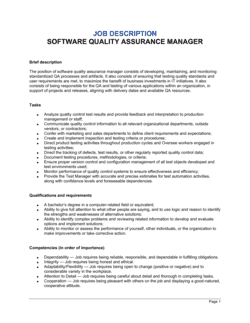
Part of your Business Operating System

This document is one of 3,000+ business & legal templates included in Business in a Box.

  • Fill-in-the-blanks β€” ready in minutes
  • 100% customizable Word document
  • Compatible with all office suites
  • Export to PDF and share electronically

Create your document in 3 simple steps.

From template to signed document β€” all inside one Business Operating System.
1
Download or open template

Access over 3,000+ business and legal templates for any business task, project or initiative.

2
Edit and fill in the blanks with AI

Customize your ready-made business document template and save it in the cloud.

3
Save, Share, Send, Sign

Share your files and folders with your team. Create a space of seamless collaboration.

Save time, save money, and create top-quality documents.

β˜…β˜…β˜…β˜…β˜…

"Fantastic value! I'm not sure how I'd do without it. It's worth its weight in gold and paid back for itself many times."

Managing Director Β· Mall Farm
Robert Whalley
Managing Director, Mall Farm Proprietary Limited
β˜…β˜…β˜…β˜…β˜…

"I have been using Business in a Box for years. It has been the most useful source of templates I have encountered. I recommend it to anyone."

Business Owner Β· 4+ years
Dr Michael John Freestone
Business Owner
β˜…β˜…β˜…β˜…β˜…

"It has been a life saver so many times I have lost count. Business in a Box has saved me so much time and as you know, time is money."

Owner Β· Upstate Web
David G. Moore Jr.
Owner, Upstate Web

Run your business with a system β€” not scattered tools

Stop downloading documents. Start operating with clarity. Business in a Box gives you the Business Operating System used by over 250,000 companies worldwide to structure, run, and grow their business.

Start freeΒ Β·Β No credit card required