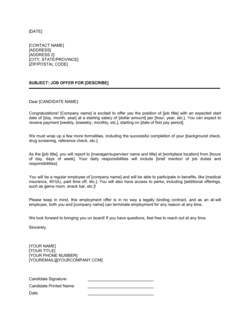
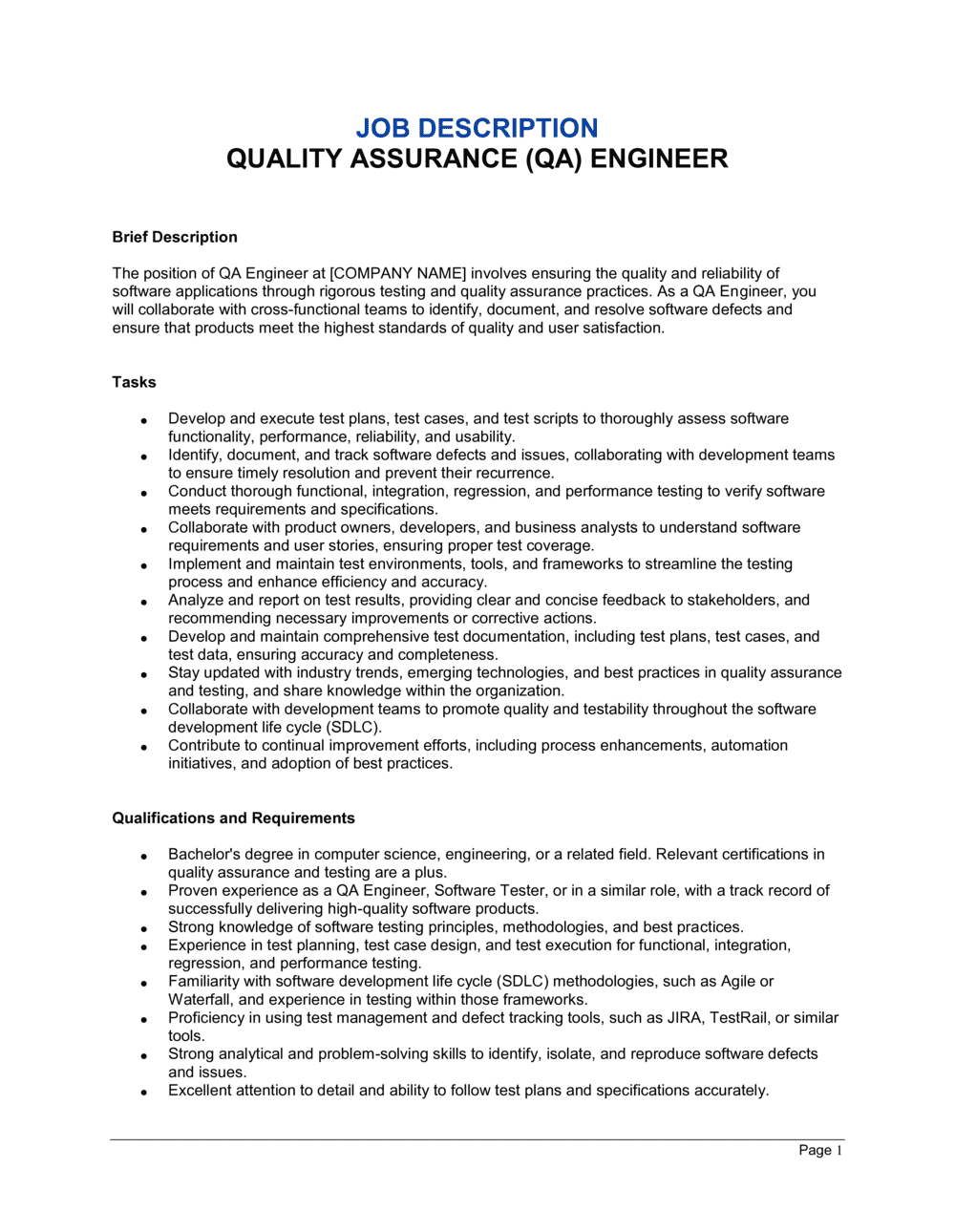
QA Engineer Job Description Template

Free Word download • Edit online • Save & share with Drive • Export to PDF

2 pages25–30 min to fillDifficulty: StandardSignature requiredLegal review recommended
Learn more ↓
FreeQA Engineer Job Description Template

At a glance

What it is
A QA Engineer Job Description is a formal employment document that defines the scope, responsibilities, qualifications, reporting structure, and terms of engagement for a quality assurance engineering role. This free Word download gives you a structured, legally grounded starting point you can edit online and export as PDF to post on job boards, attach to offer letters, or file as a reference document in employee records.
When you need it
Use it when opening a new QA engineering position, backfilling a vacancy, or formalizing the scope of an existing role that has been operating without written definition. It is also used when attaching a role definition to an employment contract or independent contractor agreement.
What's inside
Job title and department, position summary, key duties and responsibilities, required and preferred qualifications, technical skills and tooling requirements, reporting structure, employment type and location, compensation range, and acknowledgment and signature block.

What is a QA Engineer Job Description?

A QA Engineer Job Description is a formal employment document that defines the scope, responsibilities, required qualifications, technical skills, reporting structure, and compensation terms for a quality assurance engineering position. It functions as both an external recruitment tool — used to attract and screen candidates on job boards — and an internal HR reference document that establishes the agreed scope of the role at the point of hire. When signed by the hiring manager and the employee, it creates a documented baseline that supports performance management, scope-of-role discussions, and, where necessary, termination proceedings. Unlike an informal role summary in an offer letter, a structured job description with a signature block carries evidentiary weight in employment disputes.

Why You Need This Document

Hiring a QA engineer without a clearly written, signed job description creates problems that typically surface well after the hire is made. Without a documented scope of responsibilities, performance improvement conversations lack an objective baseline — disagreements about what the role required become contests of memory rather than references to an agreed document. In pay-transparency jurisdictions including California, New York, Colorado, and British Columbia, omitting a salary range from the posting triggers regulatory fines and reputational damage on employer-review platforms. A poorly written EEO statement that omits protected classes updated by recent legislation exposes the company to discrimination complaints before a candidate is even interviewed. And when an employee's role evolves — as QA roles frequently do when teams adopt automation or shift to agile — an outdated or missing job description makes it nearly impossible to justify a performance rating or a scope-related decision. This template gives you a legally grounded, pay-transparency-ready, and editable starting point that takes 30–60 minutes to complete and protects your hiring process from the first posting to the last day of employment.

Which variant fits your situation?

If your situation is…Use this template
Hiring a senior or lead QA engineer who oversees a testing teamSenior QA Engineer Job Description
Engaging a QA specialist on a contract or project basisIndependent Contractor Agreement
Defining an automation-focused QA role using tools like Selenium or CypressQA Automation Engineer Job Description
Hiring a QA analyst in a non-engineering, business-process contextQuality Assurance Analyst Job Description
Onboarding the QA hire with full employment terms after the role is filledEmployment Contract
Posting the role publicly and collecting applications formallyJob Application Form
Documenting QA processes and testing standards after hiringSoftware Testing Plan

Common mistakes to avoid

❌ Combining required and preferred qualifications in one list

Why it matters: Candidates treat every listed item as a hard requirement. Merging the two lists causes qualified candidates who lack one preferred skill to self-select out, shrinking your pool unnecessarily.

Fix: Create two separate, clearly labeled sections — 'Required Qualifications' and 'Preferred Qualifications' — and place truly optional items in the preferred section only.

❌ Omitting a salary range in pay-transparency jurisdictions

Why it matters: Colorado, New York, California, Washington, and British Columbia, among others, require salary ranges on job postings. Noncompliance triggers fines and public complaints on employer-review platforms.

Fix: Include a good-faith salary range in the compensation clause. Where not legally required, including one still improves application quality and reduces time-to-offer.

❌ Using an outdated or generic EEO statement that omits protected classes

Why it matters: The US Supreme Court's Bostock v. Clayton County decision (2020) confirmed that sexual orientation and gender identity are protected under Title VII. EEO statements that omit these classes are legally incomplete.

Fix: Review and update your EEO statement annually against current federal, state, and provincial protected-class lists. Include a legal review if operating in multiple jurisdictions.

❌ Never obtaining a signed acknowledgment from the employee

Why it matters: Without a signed job description on file, scope-of-role disputes during performance improvement plans or termination proceedings have no documented baseline — creating litigation exposure.

Fix: Build a signature block into the template and establish a process to obtain and file the signed copy before or on the employee's first day.

❌ Setting years-of-experience requirements arbitrarily high

Why it matters: Requiring 5+ years of experience for a role that genuinely needs 2–3 years can constitute age discrimination under the ADEA in the US and equivalent statutes in Canada and the UK, and reduces the qualified applicant pool without improving hire quality.

Fix: Calibrate experience requirements to the actual complexity of the role. Use skill-based requirements (e.g., 'ability to build an automated test suite from scratch') rather than arbitrary year thresholds.

❌ Listing responsibilities without prioritization or grouping

Why it matters: A flat list of 20 undifferentiated bullet points signals a poorly scoped role and deters strong candidates who want to understand what they will actually spend their time on.

Fix: Group responsibilities into three to four themes (e.g., Test Design, Defect Management, Collaboration) and limit the total list to 10–12 items ordered by importance.

The 10 key clauses, explained

Job title, department, and reporting line

In plain language: Identifies the exact role title, the department it sits within, and the direct manager the QA engineer reports to.

Sample language
Job Title: QA Engineer | Department: Engineering | Reports To: [ENGINEERING MANAGER TITLE / NAME] | Location: [CITY, STATE / REMOTE]

Common mistake: Using a generic title like 'QA Specialist' when the market uses 'QA Engineer' — mismatched titles reduce qualified applicant flow and create compensation benchmarking errors.

Position summary

In plain language: A two-to-four sentence overview of the role's purpose, the team context, and the primary impact the hire is expected to deliver.

Sample language
[COMPANY NAME] is seeking a QA Engineer to join the [TEAM NAME] team. In this role, you will own the end-to-end testing process for [PRODUCT / PLATFORM], working closely with developers and product managers to ship high-quality releases on a [CADENCE] release cycle.

Common mistake: Writing a position summary that describes the company rather than the role — candidates skim the summary to decide whether to read further, so the role's value proposition must lead.

Key responsibilities

In plain language: A prioritized list of the specific duties the QA engineer is expected to perform, written as action-verb statements.

Sample language
Design, write, and execute manual and automated test cases for [PRODUCT AREA]. Identify, document, and track defects through the full defect lifecycle in [JIRA / TOOL]. Collaborate with developers during sprint planning to define acceptance criteria for each user story.

Common mistake: Listing more than 10–12 responsibilities without grouping them by theme. An undifferentiated list of 20 bullet points signals a role with no real focus and deters strong candidates.

Required qualifications

In plain language: The minimum education, years of experience, and non-negotiable technical skills a candidate must have to be considered.

Sample language
Bachelor's degree in Computer Science, Engineering, or a related field (or equivalent practical experience). Minimum [X] years of professional QA experience in a software product environment. Proficiency in at least one test automation framework ([SELENIUM / CYPRESS / PLAYWRIGHT]).

Common mistake: Setting experience requirements too high — requiring 5+ years for a mid-level role narrows the candidate pool to a fraction of qualified applicants and can expose the company to age-discrimination risk.

Preferred qualifications

In plain language: Additional skills and experience that would make a candidate stand out, listed separately from hard requirements to avoid disqualifying strong candidates who lack one item.

Sample language
Experience with API testing tools such as Postman or Rest Assured. Familiarity with CI/CD pipelines (Jenkins, GitHub Actions, or CircleCI). ISTQB Foundation or equivalent QA certification preferred.

Common mistake: Merging preferred and required qualifications into one list. Candidates treat any listed item as a hard requirement — combining them causes qualified applicants to self-select out.

Technical skills and tooling

In plain language: A specific enumeration of the testing tools, programming languages, and platforms the role uses day-to-day.

Sample language
Required tools: [JIRA] for defect tracking, [SELENIUM / CYPRESS] for automation, [POSTMAN] for API testing, [GIT] for version control. Programming proficiency: [PYTHON / JAVA / JAVASCRIPT] at a level sufficient to write and maintain automated test scripts.

Common mistake: Listing every tool the company has ever used rather than the tools the hire will actually need. An exhaustive tooling list reads as a wish list and signals that the role has not been scoped carefully.

Employment type, location, and schedule

In plain language: States whether the position is full-time, part-time, or contract; where it is based; and any schedule or availability requirements.

Sample language
Employment Type: Full-Time, Permanent | Location: [OFFICE ADDRESS] / Remote / Hybrid ([X] days in-office per week) | Schedule: Standard business hours [TIMEZONE]; occasional after-hours availability required for release windows.

Common mistake: Omitting remote-work or hybrid terms entirely. In jurisdictions with pay-transparency or remote-work disclosure laws, vague location language creates compliance risk and candidate distrust.

Compensation and benefits summary

In plain language: States the salary range, bonus eligibility, and a summary of key benefits — required in an increasing number of jurisdictions and strongly expected by candidates.

Sample language
Base Salary: $[MIN] – $[MAX] per year, commensurate with experience. Eligible for annual performance bonus of up to [X]% of base. Benefits include [HEALTH / DENTAL / VISION], [401K / RRSP] with [X]% employer match, and [X] days PTO annually.

Common mistake: Omitting the salary range entirely in states or provinces that mandate pay-transparency disclosure (Colorado, New York, California, British Columbia). Noncompliance results in fines and reputational harm on job boards.

Equal opportunity and non-discrimination statement

In plain language: A legally required or strongly recommended statement affirming that the company does not discriminate on protected characteristics in its hiring process.

Sample language
[COMPANY NAME] is an equal opportunity employer. We do not discriminate on the basis of race, color, religion, sex, national origin, age, disability, veteran status, sexual orientation, gender identity, or any other characteristic protected by applicable law.

Common mistake: Using a generic EEO statement that omits protected classes added by recent legislation — for example, omitting sexual orientation or gender identity, which are protected under federal law in the US since Bostock v. Clayton County (2020).

Acknowledgment and signature block

In plain language: A section for both the employer and the employee (or candidate) to sign and date, confirming they have read, understood, and agreed to the job description as a reference document.

Sample language
I acknowledge that I have read and understand the responsibilities and requirements set out in this Job Description. Employee Signature: _______________ Date: ___ | Hiring Manager Signature: _______________ Date: ___

Common mistake: Treating the job description as a purely external recruitment document and never obtaining a signed copy. Without a signed acknowledgment, scope-of-role disputes during performance management have no written baseline to refer to.

How to fill it out

  1. 1

    Confirm the job title and reporting structure

    Enter the exact job title as it will appear in payroll and HR systems, the department, and the full name and title of the direct manager. Align the title with your existing job-level framework if one exists.

    💡 Check competing job postings on LinkedIn and Indeed to confirm your title matches market conventions — mismatched titles suppress applicant volume.

  2. 2

    Write the position summary around business impact

    Draft two to four sentences explaining what the QA engineer will own, which product or platform they support, and the team they will join. Lead with the role's impact, not the company's history.

    💡 Candidates decide whether to read further based on the summary alone. If the most compelling thing about the role is not in the first two sentences, rewrite it.

  3. 3

    List responsibilities in priority order

    Write each responsibility as an action-verb statement starting with a verb (Design, Execute, Collaborate). Order them from most important to least important. Cap the list at 10–12 items.

    💡 If you cannot prioritize the list, the role is not scoped clearly enough — go back to the hiring manager and establish which three duties consume 80% of the role's time.

  4. 4

    Separate required from preferred qualifications

    Create two distinct sections. Required qualifications are items that would make a candidate unqualified if missing. Preferred qualifications are differentiators. Keep required qualifications to the genuine minimum.

    💡 Every item you add to 'required' reduces your qualified candidate pool — add only what you truly cannot train for in the first 90 days.

  5. 5

    Enumerate the specific tools and technologies

    List only the tools the hire will use in the first six months. For each tool, indicate whether it is required or preferred proficiency.

    💡 Avoid listing tools the team is considering adopting but has not yet deployed — you will receive candidates skilled in tools you do not yet use and screen out candidates who could learn them quickly.

  6. 6

    Add compensation range and benefits

    Enter the base salary range, bonus target, and key benefits. If operating in a pay-transparency jurisdiction, this is legally required. Even where not mandated, including it materially increases application quality and volume.

    💡 Set the range floor at the minimum you would actually pay. Listing a low floor to attract candidates and then offering above-range creates distrust and extends negotiation cycles.

  7. 7

    Insert the EEO statement and review for inclusive language

    Add the equal opportunity employer statement covering all applicable protected classes for your jurisdiction. Review the full document for gender-coded language (e.g., 'ninja', 'rockstar', 'aggressive') that research shows reduces applications from underrepresented groups.

    💡 Run the draft through a free tool like Textio or Gender Decoder before posting. Neutral language consistently increases applicant diversity without reducing quality.

  8. 8

    Obtain signatures before the first day

    Have the hiring manager sign the job description and obtain the employee's signed acknowledgment before their start date. File the signed copy in the employee's personnel record.

    💡 A signed job description is your first line of defense in a wrongful-termination or scope-of-role dispute. Courts treat it as evidence of what was agreed at the time of hire.

Frequently asked questions

What is a QA Engineer job description?

A QA Engineer job description is a formal document that defines the responsibilities, required qualifications, technical skills, reporting structure, and employment terms for a quality assurance engineering role. It serves as both an external recruitment tool and an internal reference document that establishes the scope of the role at the time of hire. When signed by both parties, it creates a written baseline for performance management and scope-of-role discussions.

What should a QA Engineer job description include?

At minimum: job title and department, reporting line, a position summary, key responsibilities in priority order, required and preferred qualifications listed separately, specific tools and technologies, employment type and location, compensation range, an equal opportunity statement, and a signature block. Missing any of these weakens the document's usefulness as both a recruitment tool and an HR reference.

Is a job description a legally binding document?

A job description is generally not a standalone binding contract, but it can carry legal weight in several contexts. In employment disputes, a signed job description is treated as evidence of the agreed scope of work at the time of hire. In pay-transparency jurisdictions, the salary range disclosed in a job posting creates a legal obligation. When incorporated by reference into an employment contract, the job description's terms become part of that binding agreement.

What technical skills should appear in a QA Engineer job description?

Core technical skills for most QA engineering roles include proficiency in at least one test automation framework (Selenium, Cypress, or Playwright), familiarity with defect-tracking tools such as Jira, basic scripting ability in Python, Java, or JavaScript, experience with API testing tools like Postman, and understanding of CI/CD pipelines. The specific toolset should reflect what the team actually uses, not a comprehensive wish list.

Should a QA Engineer job description include a salary range?

Yes, in an increasing number of jurisdictions it is legally required. Colorado, New York, California, Washington, Illinois, and British Columbia all mandate salary range disclosure on job postings as of 2025. Even where not required, posting a range increases application volume, reduces time-to-offer, and improves candidate trust. Omitting it in a pay-transparency jurisdiction can result in fines and reputational damage.

What is the difference between a QA Engineer and a QA Analyst job description?

A QA Engineer role typically requires technical skills — writing automated test scripts, working within CI/CD pipelines, and collaborating directly with developers on code-level quality. A QA Analyst role is often less technical, focusing on manual test execution, documentation, and business-process validation. The distinction matters for compensation benchmarking, candidate sourcing channels, and the required qualifications section of the job description.

How often should a QA Engineer job description be updated?

Review and update the job description whenever the role's responsibilities change materially — new tooling adoption, a shift from manual to automated testing, a change in reporting structure, or a promotion to a lead role. An annual review aligned to the performance cycle is a minimum. Outdated job descriptions used in performance management or termination proceedings create credibility problems if the documented duties no longer match what the employee was actually doing.

Do I need a lawyer to write a QA Engineer job description?

For straightforward domestic hires, a high-quality template is typically sufficient. Consider a legal review when operating in multiple jurisdictions with different pay-transparency or EEO requirements, when the job description will be incorporated by reference into a formal employment contract, or when the role involves access to sensitive IP or data that requires specific confidentiality language. A brief employment lawyer review typically costs $150–$400 and is worthwhile for senior or high-sensitivity hires.

Can a job description be used as evidence in an employment dispute?

Yes. Courts and employment tribunals regularly reference signed job descriptions as evidence of the agreed scope of work, title, and responsibilities at the time of hire. In wrongful-termination, constructive- dismissal, and scope-of-role disputes, a signed and dated job description on file is one of the employer's strongest documentary defenses. Without one, the scope of the role becomes a matter of competing oral testimony.

How this compares to alternatives

vs Employment Contract

A job description defines the scope, responsibilities, and qualifications for a role. An employment contract is the binding legal agreement governing the working relationship — covering IP assignment, confidentiality, non-compete, termination, and severance. The job description is typically attached as a schedule to the employment contract, with the contract's terms controlling in any conflict. Both documents are needed; neither replaces the other.

vs Independent Contractor Agreement

A QA engineer job description is used when hiring an employee. An independent contractor agreement is used when engaging a self-employed QA specialist for project-based work. Misclassifying an employee as a contractor using a job description triggers payroll tax liability, benefit obligations, and regulatory penalties. If the engagement involves set hours, employer-provided tools, or ongoing supervision, an employment structure — not a contractor agreement — is appropriate.

vs Job Offer Letter

A job offer letter summarizes compensation, start date, and role to trigger candidate acceptance. A job description provides the detailed scope of the role, responsibilities, and qualifications. The offer letter references the job description but does not replace it. Relying solely on an offer letter leaves no documented baseline for performance management or scope-of-role disputes.

vs Performance Review Template

A job description defines what the QA engineer is expected to do. A performance review template evaluates how well they did it. The job description's responsibilities and qualifications serve as the scoring baseline for any structured performance appraisal. Using a performance review without a current, signed job description on file means evaluating the employee against undocumented expectations.

Industry-specific considerations

SaaS / Technology

Automation testing is standard; job descriptions emphasize CI/CD pipeline integration, test framework ownership, and sprint-embedded QA participation in agile teams.

Financial Services / Fintech

Regulatory and compliance testing requirements (PCI-DSS, SOC 2) are listed as required experience; security and penetration testing familiarity is often a preferred qualification.

Healthcare / MedTech

FDA validation requirements (21 CFR Part 11, IEC 62304) and HIPAA-compliant testing protocols are specified; experience with validated system environments is typically required.

E-commerce / Retail Tech

Performance and load testing for high-traffic events (e.g., Black Friday) and cross-browser/device compatibility testing are emphasized alongside standard functional QA.

Gaming

Platform-specific testing (console, mobile, PC), game-loop regression cycles, and localization QA across multiple languages are distinctive requirements in gaming QA roles.

Professional Services / Consulting

QA engineers embedded in client-facing delivery teams are expected to adapt quickly to varied tech stacks; client confidentiality and multi-project context-switching are noted in the role scope.

Jurisdictional notes

United States

Pay transparency laws in Colorado (EPEWA), New York, California, Washington, and Illinois require salary ranges on job postings. The ADEA prohibits setting experience requirements in ways that screen out candidates over 40 without a bona fide occupational reason. EEO statements must cover all Title VII protected classes including sexual orientation and gender identity following Bostock v. Clayton County (2020). Remote-work job postings may trigger multi-state pay-transparency obligations if the role is open to applicants in covered states.

Canada

British Columbia and Prince Edward Island mandate pay-transparency disclosure on job postings. Ontario and several other provinces are actively considering similar legislation as of 2025. Quebec requires that job postings for provincially regulated employers be available in French. The Canadian Human Rights Act prohibits discriminatory requirements; experience thresholds should be tied to genuine occupational requirements to avoid age or background discrimination complaints.

United Kingdom

While UK law does not currently mandate salary ranges on job postings, the Equality Act 2010 requires that job requirements not indirectly discriminate against protected characteristics. The ICO recommends data minimization in job postings — collect only the information necessary to assess suitability. Employers with 250 or more employees must publish gender pay gap data, and overly gendered job descriptions can contribute to imbalances that attract regulatory scrutiny.

European Union

The EU Pay Transparency Directive (2023/970) requires member states to implement pay-range disclosure obligations by June 2026, with most large employers required to publish salary ranges in job advertisements. GDPR applies to candidate data collected through the hiring process — job postings should not request information that constitutes special-category data (health, ethnicity, religion) without a lawful basis. Member state implementation timelines vary; Germany, France, and the Netherlands are early adopters.

Template vs lawyer — what fits your deal?

PathBest forCostTime
Use the templateSingle-jurisdiction domestic hires at mid-level QA roles with standard responsibilitiesFree30–60 minutes
Template + legal reviewRoles in pay-transparency jurisdictions, positions with IP sensitivity, or descriptions incorporated into formal employment contracts$150–$400 for an employment lawyer review1–3 days
Custom draftedSenior QA leads with access to trade secrets, multi-jurisdiction hiring, or highly regulated industries (healthcare, fintech, defense)$500–$1,500+1–2 weeks

Glossary

Quality Assurance (QA)
The systematic process of verifying that software meets defined requirements and quality standards before release.
Test Case
A documented set of conditions and steps used to verify that a specific function of a software system behaves as expected.
Regression Testing
Re-running previously passed tests after code changes to confirm that new updates have not broken existing functionality.
Defect Lifecycle
The sequence of states a reported software bug moves through — from discovery and logging to resolution and verification.
Automation Testing
The use of scripts and tooling (e.g., Selenium, Cypress, or Playwright) to execute test cases without manual intervention.
Acceptance Criteria
Pre-defined conditions that a software feature must satisfy for the product owner or stakeholder to accept it as complete.
Agile / Scrum
An iterative software development methodology in which QA engineers participate in sprint planning, daily standups, and retrospectives alongside developers.
CI/CD Pipeline
A continuous integration and continuous delivery workflow that automatically builds, tests, and deploys code changes — QA gates are typically embedded in this pipeline.
Test Coverage
A metric expressing the percentage of code, features, or user paths exercised by the existing test suite.
SDET (Software Development Engineer in Test)
A QA role that combines traditional testing responsibilities with software engineering skills to build and maintain automated test frameworks.
UAT (User Acceptance Testing)
A final testing phase in which end users or business stakeholders validate that the software meets their requirements before go-live.
Bug Triage
A meeting or process in which the team prioritizes reported defects by severity and assigns them for resolution in a specific sprint or release.

Part of your Business Operating System

This document is one of 3,000+ business & legal templates included in Business in a Box.

  • Fill-in-the-blanks — ready in minutes
  • 100% customizable Word document
  • Compatible with all office suites
  • Export to PDF and share electronically

Create your document in 3 simple steps.

From template to signed document — all inside one Business Operating System.
1
Download or open template

Access over 3,000+ business and legal templates for any business task, project or initiative.

2
Edit and fill in the blanks with AI

Customize your ready-made business document template and save it in the cloud.

3
Save, Share, Send, Sign

Share your files and folders with your team. Create a space of seamless collaboration.

Save time, save money, and create top-quality documents.

★★★★★

"Fantastic value! I'm not sure how I'd do without it. It's worth its weight in gold and paid back for itself many times."

Managing Director · Mall Farm
Robert Whalley
Managing Director, Mall Farm Proprietary Limited
★★★★★

"I have been using Business in a Box for years. It has been the most useful source of templates I have encountered. I recommend it to anyone."

Business Owner · 4+ years
Dr Michael John Freestone
Business Owner
★★★★★

"It has been a life saver so many times I have lost count. Business in a Box has saved me so much time and as you know, time is money."

Owner · Upstate Web
David G. Moore Jr.
Owner, Upstate Web

Run your business with a system — not scattered tools

Stop downloading documents. Start operating with clarity. Business in a Box gives you the Business Operating System used by over 250,000 companies worldwide to structure, run, and grow their business.

Free Forever Plan · No credit card required