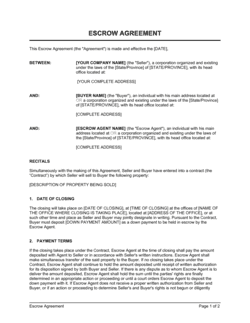
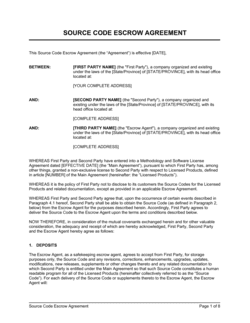
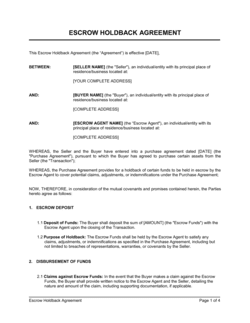
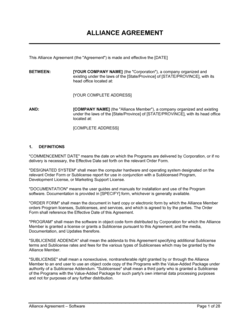
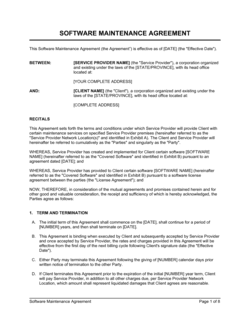
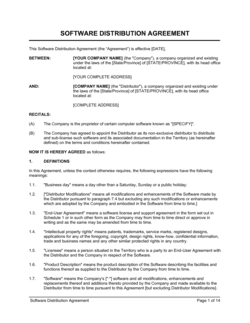
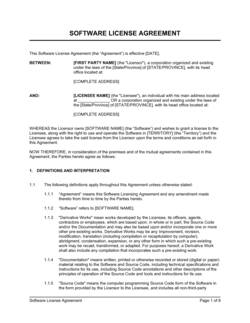
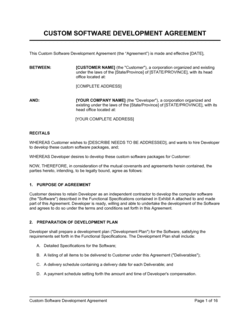
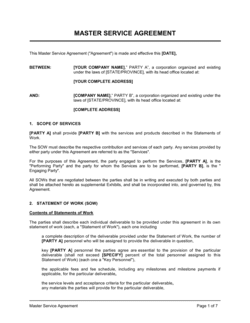
Software Escrow Agreement Template

Free Word download • Edit online • Save & share with Drive • Export to PDF

5 pages25–35 min to fillDifficulty: ComplexSignature requiredLegal review recommended
Learn more ↓
FreeSoftware Escrow Agreement Template

At a glance

What it is
A Software Escrow Agreement is a three-party legal contract between a software developer (depositor), a software licensee (beneficiary), and a neutral escrow agent that holds source code, build instructions, and related technical materials on behalf of both parties. This template is a free Word download you can edit online — covering deposit obligations, release triggers, verification rights, and escrow agent duties — and export as PDF for review and execution.
When you need it
Use it when a business depends on third-party software for critical operations and needs assurance that it can maintain or continue running that software if the vendor becomes insolvent, ceases support, or materially breaches the underlying license. It is routinely required by enterprise procurement, banking regulators, and government contracting officers before a software license is approved.
What's inside
Deposit obligations and materials description, release conditions and trigger events, escrow agent appointment and duties, verification and testing procedures, fees and payment, confidentiality, IP ownership acknowledgment, term and termination, and governing law and dispute resolution.

What is a Software Escrow Agreement?

A Software Escrow Agreement is a three-party legal contract among a software vendor (the depositor), a software licensee (the beneficiary), and a neutral escrow agent that holds source code and related technical materials on behalf of both parties. The vendor deposits its source code — along with build instructions, documentation, and third-party dependencies — with the escrow agent, which is contractually obligated to release those materials to the licensee only if a defined trigger event occurs, such as the vendor becoming insolvent, ceasing business operations, or materially breaching the underlying license. Unlike a source code license, which grants the licensee immediate access to source code, escrow keeps those materials under lock and key during normal operations while providing the licensee with a legally enforceable right to access them if the vendor can no longer fulfill its obligations. The arrangement preserves the vendor's intellectual property rights while giving the licensee meaningful protection against operational disruption.

Why You Need This Document

Without a software escrow agreement, a business that depends on a third-party application for its core operations has no guaranteed path to continuity if that vendor disappears. When a software company files for bankruptcy or shuts down, its source code becomes an asset of the estate — creditors, trustees, and acquirers control access, not the licensee, and courts have taken months or years to resolve competing claims. In regulated industries — banking, healthcare, and government contracting — the absence of an escrow arrangement can itself constitute a regulatory deficiency, triggering examiner findings or disqualifying a vendor from a contract. Enterprise procurement teams routinely require escrow as a non-negotiable condition before approving a license for a mission-critical system. This template gives both vendors and licensees a structured, enforceable starting point — covering deposit obligations, release triggers, verification rights, fee allocation, and post-release use limits — that can be executed alongside the underlying software license to close that protection gap before the software ever goes live.

Which variant fits your situation?

If your situation is…Use this template
Single licensee using proprietary on-premise softwareSoftware Escrow Agreement (Two-Party Beneficiary)
Multiple licensees sharing one escrow deposit for the same productMulti-Beneficiary Software Escrow Agreement
SaaS product where source code and infrastructure must both be depositedSaaS Continuity Escrow Agreement
Open-source project requiring a verified neutral code repositoryTechnology Escrow Agreement (Open Source)
Acquisition where ongoing IP access must survive ownership changeIP Escrow Agreement (M&A)
Government contract requiring escrow under federal procurement rulesSoftware Escrow Agreement (Government)
Short-term project requiring deposit only during development phaseDevelopment Escrow Agreement

Common mistakes to avoid

❌ Depositing object code instead of source code

Why it matters: Object code — compiled binary files — cannot be modified, maintained, or adapted without the source. A beneficiary who receives only compiled binaries after a release event cannot fix bugs, add features, or port the software to new infrastructure.

Fix: Explicitly require source code with build instructions in the deposit materials definition, and confirm through Level 2 or Level 3 verification that what was deposited is genuinely compilable source.

❌ No obligation to deposit software updates

Why it matters: A deposit locked to the version at signing becomes progressively obsolete. If the vendor releases major updates over five years and only the original version is in escrow, a release event delivers code incompatible with current data structures or integrations.

Fix: Require supplemental deposits within 30 days of every material version release, and tie the definition of 'material' to the version numbering scheme in the underlying license agreement.

❌ Omitting the escrow agent as a signatory

Why it matters: An escrow agreement signed only by the depositor and beneficiary imposes no obligations on the escrow agent. The agent has no contractual duty to hold or release materials and may decline to act.

Fix: Ensure all three parties — depositor, beneficiary, and escrow agent — execute the agreement before any deposit is made or the software license becomes effective.

❌ No verification right for the beneficiary

Why it matters: Without a contractual right to verify deposits, a beneficiary cannot confirm whether the deposited materials are complete, current, or buildable until a release event occurs — by which point it is too late to remedy gaps.

Fix: Include an annual verification right with a defined scope and cost allocation. At minimum, a Level 2 completeness review at initial deposit and after major version changes provides meaningful assurance.

❌ Vague or disputed release conditions

Why it matters: Broad trigger language like 'financial difficulty' or 'failure to support' creates disputes at the worst possible moment — when the beneficiary is in operational crisis. Depositors routinely contest releases under vague language, delaying access for months.

Fix: Define each release condition with objective criteria: 'filing of a voluntary or involuntary bankruptcy petition,' 'cessation of commercial sales and support for more than 90 consecutive days,' or 'failure to cure a material breach within 30 days of written notice.'

❌ Agreement expires without automatic renewal

Why it matters: An escrow agreement with a fixed term and no auto-renewal lapses silently. If the vendor forgets to renew and a release event occurs the following week, the beneficiary has no contractual right to the deposit regardless of the underlying license term.

Fix: Include an automatic annual renewal clause with a 60-day written notice requirement to terminate, and calendar a review 90 days before each renewal date to confirm the deposit remains current.

The 10 key clauses, explained

Parties and recitals

In plain language: Identifies all three parties — the depositor, beneficiary, and escrow agent — by legal entity name, and explains the background and purpose of the arrangement.

Sample language
This Software Escrow Agreement is entered into as of [DATE] among [VENDOR LEGAL NAME] ('Depositor'), [LICENSEE LEGAL NAME] ('Beneficiary'), and [ESCROW AGENT NAME] ('Escrow Agent'). The parties enter this Agreement to provide Beneficiary with assurance of continued access to the Deposit Materials in the event of a Release Condition.

Common mistake: Naming the vendor's trade name rather than its registered legal entity. If the vendor operates as an LLC or corporation under a different name, an escrow release against the wrong entity becomes legally complicated to enforce.

Description of deposit materials

In plain language: Defines exactly what must be deposited — source code, build scripts, documentation, third-party dependencies, and any other materials the beneficiary would need to operate and maintain the software independently.

Sample language
The Deposit Materials shall include: (a) complete source code for [SOFTWARE NAME] Version [X.X], including all modules and libraries; (b) build and compilation instructions; (c) development tool specifications; (d) technical documentation; and (e) copies of all third-party component licenses required to compile and operate the Software.

Common mistake: Defining deposit materials too narrowly — listing only source code files without including build scripts, environment configurations, or third-party license keys. A deposit that cannot be built or run provides no real continuity protection.

Deposit obligations and update schedule

In plain language: Requires the depositor to make an initial deposit within a set number of days and to submit supplemental deposits each time a material update or new version of the software is released.

Sample language
Depositor shall deliver the initial Deposit Materials to the Escrow Agent within [30] days of the Effective Date. Depositor shall deliver a Supplemental Deposit within [30] days of each material update or new version release of the Software. Each deposit shall be accompanied by a written inventory.

Common mistake: Setting no deadline for the initial deposit or no obligation to update. A stale deposit — code from three versions ago — may be useless by the time a release event occurs.

Release conditions and trigger events

In plain language: Lists every event that entitles the beneficiary to receive the deposited materials, and sets out the notice and waiting period before the escrow agent releases the deposit.

Sample language
Release Conditions include: (a) Depositor files for bankruptcy or makes an assignment for the benefit of creditors; (b) Depositor ceases business operations; (c) Depositor materially breaches the License Agreement and fails to cure within [30] days of written notice; or (d) Depositor discontinues support for the Software. Beneficiary shall deliver written notice to the Escrow Agent and Depositor specifying the Release Condition.

Common mistake: Omitting a notice-and-cure period before release. Without one, a beneficiary can trigger release based on a disputed or minor breach, creating immediate litigation risk. Thirty days is the standard cure window.

Escrow agent duties and limitations

In plain language: Defines what the escrow agent is and is not obligated to do — it holds and releases materials on instruction but does not evaluate the quality or completeness of the deposit unless specifically contracted to do so.

Sample language
Escrow Agent shall hold the Deposit Materials in a secure facility and release them only in accordance with this Agreement. Escrow Agent shall have no obligation to evaluate the completeness, functionality, or suitability of the Deposit Materials. Escrow Agent's liability is limited to direct damages caused by its gross negligence or willful misconduct.

Common mistake: Assuming the escrow agent will verify that the deposited code actually works. Standard escrow agents perform custody only — verification must be separately contracted and paid for.

Verification procedures

In plain language: Specifies whether and how the deposited materials will be tested for completeness and buildability — ranging from a basic inventory check to a full technical build-and-run verification by a qualified engineer.

Sample language
Beneficiary may, at its expense, request a technical verification of the Deposit Materials no more than [once per year]. Verification shall consist of [Level 1: deposit confirmation / Level 2: materials review / Level 3: build-and-run test] performed by an independent technical expert mutually agreed upon by the parties.

Common mistake: Omitting verification rights entirely. A beneficiary that has never tested whether the deposited code compiles may discover the deposit is incomplete or outdated only at the moment of a crisis.

Fees and payment obligations

In plain language: States who pays the escrow agent's annual fee, what happens if fees go unpaid, and how fee increases are handled.

Sample language
The annual escrow fee of $[AMOUNT] shall be paid by [DEPOSITOR / BENEFICIARY / SPLIT EQUALLY] within [30] days of invoice. Failure to pay fees within [30] days of notice shall entitle the Escrow Agent to terminate this Agreement after [30] days' additional written notice to all parties.

Common mistake: Leaving payment responsibility ambiguous when both parties sign. If neither party believes they owe the fee, the escrow agent terminates the agreement for non-payment and the beneficiary loses protection entirely.

Confidentiality and IP ownership

In plain language: Confirms that the depositor retains all intellectual property rights in the deposited materials and that the beneficiary's right to use released materials is limited to operating the licensed software — not developing competing products.

Sample language
Depositor retains all intellectual property rights in the Deposit Materials. Upon release, Beneficiary is granted a limited, non-exclusive license to use the Deposit Materials solely to maintain and operate the Software for Beneficiary's internal business purposes. This license does not include the right to sublicense, modify for external distribution, or develop competing products.

Common mistake: Not limiting the beneficiary's post-release use. Without a use restriction, a released deposit could theoretically be used as the foundation for a competing product, exposing the depositor to misappropriation claims.

Term and termination

In plain language: States how long the agreement lasts, how it can be renewed, and the grounds on which any party can terminate — including what happens to the deposit materials on termination.

Sample language
This Agreement shall remain in effect for [one year] from the Effective Date and shall automatically renew for successive one-year terms unless a party provides [60] days' written notice of non-renewal. Upon termination, Escrow Agent shall return the Deposit Materials to Depositor unless a Release Condition has been triggered.

Common mistake: No automatic renewal clause. If the agreement expires without renewal and a release event occurs the next day, the beneficiary has no contractual right to the deposit.

Governing law and dispute resolution

In plain language: Specifies which jurisdiction's law governs the agreement and how disputes between any two or all three parties — including contested release events — are resolved.

Sample language
This Agreement is governed by the laws of [STATE / PROVINCE / COUNTRY]. Any dispute arising from a contested release shall first be submitted to non-binding mediation. If unresolved within [30] days, disputes shall be resolved by binding arbitration under [AAA / JAMS] rules in [CITY], except that injunctive relief may be sought in any court of competent jurisdiction.

Common mistake: Choosing a governing jurisdiction that has no connection to where any party operates. Courts in disputes involving three parties across multiple jurisdictions may decline to enforce a choice-of-law clause with no rational basis.

How to fill it out

  1. 1

    Identify all three parties by legal entity name

    Enter the depositor's, beneficiary's, and escrow agent's full registered legal names, jurisdictions of formation, and principal business addresses. For the escrow agent, confirm the entity is specifically authorized to act as a commercial escrow agent.

    💡 Request a certificate of good standing for the escrow agent if you are not using a nationally recognized escrow firm — escrow agents have custodial obligations that require ongoing legal existence.

  2. 2

    Define the deposit materials with a technical annex

    Attach a Schedule A listing every component required to operate and maintain the software without vendor involvement: source code repository location, branch or tag identifier, build tool versions, environment variables, and all third-party dependency licenses.

    💡 Have your or the vendor's lead engineer draft the deposit materials list — legal teams routinely underspecify technical dependencies, which renders the deposit unworkable.

  3. 3

    Set the initial deposit deadline and update triggers

    Enter a specific number of days after signing for the initial deposit — 30 days is standard. Then define what constitutes a material update requiring a supplemental deposit: typically any version increment that changes core functionality.

    💡 Tie supplemental deposit obligations to the vendor's own release schedule defined in the license agreement so there is no ambiguity about when an update qualifies.

  4. 4

    Enumerate all release conditions specifically

    List every trigger event that entitles the beneficiary to release — insolvency, cessation of business, uncured breach, and discontinuation of support are the four standard conditions. Add any industry-specific triggers such as loss of regulatory license.

    💡 Avoid vague triggers like 'material change in ownership.' Define the precise event — for example, 'acquisition of more than 50% of Depositor's voting equity by a direct competitor of Beneficiary' — to prevent disputed releases.

  5. 5

    Select and describe the verification level

    Choose one of three standard verification levels: Level 1 (inventory check only), Level 2 (review for completeness against the materials list), or Level 3 (full technical build-and-run test). Document who bears the cost and how often verification may be requested.

    💡 Level 3 verification costs $3,000–$8,000 per test but is the only way to confirm the deposit actually produces working software. For mission-critical systems, the cost is justified at initial deposit and after major version changes.

  6. 6

    Allocate fee responsibility clearly

    State which party pays the escrow agent's annual fee, the exact amount, and the payment due date. If fees are split, specify the percentage each party bears. Include a grace period and the consequences of non-payment.

    💡 In vendor-mandated escrow arrangements (where the licensee requires it), the vendor often passes the annual fee through to the licensee as a line item — confirm this expectation before signing.

  7. 7

    Draft the post-release use restriction

    Specify that the beneficiary's right to use released deposit materials is limited to maintaining and operating the licensed software for internal business purposes only. Explicitly exclude sublicensing, competing product development, and transfer to third parties.

    💡 Include a sunset clause: the beneficiary's use license should terminate if the beneficiary replaces the licensed software with an alternative, preventing ongoing use of proprietary code after migration.

  8. 8

    Confirm governing law and execute before software go-live

    Select the governing law — typically the depositor's jurisdiction unless the licensee is in a jurisdiction with stronger IP protection — and have all three parties sign before the software license goes live.

    💡 Execution by all three parties simultaneously is best practice. An escrow agreement signed by only the depositor and beneficiary, with the escrow agent accepting later, can create an unprotected window between go-live and escrow effectiveness.

Frequently asked questions

What is a software escrow agreement?

A software escrow agreement is a three-party contract among a software vendor (depositor), a software licensee (beneficiary), and a neutral escrow agent. The vendor deposits source code and related technical materials with the escrow agent, which holds them and releases them to the licensee only if a defined trigger event occurs — such as vendor insolvency, cessation of business, or material uncured breach. It protects licensees who depend on third-party software for critical operations from losing access to that software if the vendor disappears.

Why would a software vendor agree to an escrow arrangement?

Software vendors agree to escrow arrangements primarily because enterprise customers and regulated industries require them as a condition of signing a license agreement. For vendors, offering escrow is a competitive advantage that removes a common procurement objection and allows them to close larger deals faster. The arrangement does not transfer IP ownership — the vendor retains full rights — and the source code is released only under specific, narrowly defined conditions that rarely occur in practice.

What should be included in the deposit materials?

The deposit must include everything a qualified engineer would need to operate and maintain the software without any assistance from the vendor: complete source code with version identifiers, build and compilation instructions, development environment specifications, test scripts, technical documentation, and copies of all third-party component licenses. Depositing only compiled binary files is a common and critical error — object code cannot be modified or maintained and provides no real continuity protection.

What are the standard release conditions in a software escrow agreement?

The four standard release conditions are: vendor insolvency or bankruptcy filing, cessation of business operations, material uncured breach of the license agreement (typically after a 30-day cure period), and discontinuation of support for the licensed software. Regulated industries — banking, healthcare, and government — often add sector-specific triggers such as loss of a required regulatory license or failure to meet contracted service levels for an extended period.

What is software escrow verification and why does it matter?

Verification is the process of confirming that the deposited materials are complete, current, and sufficient to build and run the software. Three levels are standard: Level 1 confirms the deposit was received and an inventory exists; Level 2 checks completeness against the materials schedule; Level 3 performs a full technical build-and-run test. Most standard escrow arrangements include only Level 1 by default. Without at least Level 2 verification at initial deposit, a beneficiary has no assurance the deposited code is usable until a crisis forces the issue.

Is a software escrow agreement required by law?

No general law mandates software escrow in most jurisdictions, but regulators in specific sectors effectively require it. US federal banking regulators and the UK's Financial Conduct Authority expect financial institutions to have continuity arrangements — including escrow — for core technology systems. Government procurement offices in the US, Canada, and the EU often mandate escrow as a standard contract term for mission-critical software acquisitions. Outside regulated contexts, escrow is a contractual choice driven by risk management.

Who pays the escrow agent's fees?

Fee allocation is negotiable and varies by deal. In vendor-required escrow arrangements, the vendor typically pays the annual fee as part of its service commitment. In licensee-required arrangements — where the customer demands escrow as a condition of signing — the fee is more often borne by the licensee or split equally. Annual fees for a standard single-beneficiary escrow typically range from $1,000 to $5,000 per year depending on the escrow agent and the verification level contracted.

How does a software escrow agreement differ from a source code license?

A source code license grants the licensee immediate, ongoing access to the vendor's source code — typically used in open-source arrangements or when the licensee needs to customize the software. A software escrow agreement keeps the source code under a neutral agent's control and releases it only upon a trigger event. The licensee has no access to the source code during normal operations — only the assurance that it can obtain access if the vendor fails to perform its obligations.

Can a SaaS product be covered by a software escrow agreement?

Yes, but SaaS escrow is more complex than traditional on-premise escrow because the deposit must cover not only source code but also infrastructure configuration, database schemas, API documentation, and deployment scripts needed to stand up the service independently. Some enterprises use a SaaS continuity escrow that includes cloud environment snapshots updated regularly. Standard software escrow templates require adaptation for SaaS; a technology-specific review is advisable before execution.

How this compares to alternatives

vs Software License Agreement

A software license agreement governs the terms under which a vendor grants a licensee the right to use its software — pricing, permitted use, support obligations, and liability. A software escrow agreement is a separate, companion contract that provides the licensee with contingent access to source code if the vendor fails. Escrow does not replace the license; both documents are typically executed together and cross-referenced.

vs Source Code License Agreement

A source code license grants the licensee immediate, unrestricted access to the vendor's source code — typically used when the licensee needs to customize or extend the software. An escrow agreement withholds source code access under normal conditions and releases it only upon a trigger event. Source code licenses involve broader IP exposure for the vendor; escrow is a narrower, risk-contingent alternative.

vs Technology Transfer Agreement

A technology transfer agreement permanently transfers IP rights — including source code ownership — from one party to another, typically in an acquisition or university commercialization context. A software escrow agreement transfers no IP rights; it provides temporary, conditional access for a limited operational purpose. Escrow preserves the vendor's ownership; technology transfer extinguishes it.

vs Non-Disclosure Agreement

An NDA protects confidential information — including source code — from unauthorized disclosure during negotiations or a business relationship. An escrow agreement governs the custody and conditional release of that source code under a formal three-party structure. In practice, an NDA covering the deposited materials is often incorporated by reference into or executed alongside a software escrow agreement.

Industry-specific considerations

Financial Services

Banking regulators in the US, UK, and EU expect financial institutions to hold escrow for core banking, trading, and payment processing systems as part of operational resilience requirements.

Healthcare and Life Sciences

Hospitals and health systems require escrow for electronic health record and clinical decision support platforms, where loss of access could directly affect patient care and HIPAA-mandated data availability.

Government and Public Sector

Federal and state procurement rules frequently mandate source code escrow for mission-critical systems, and agencies require annual verification to confirm deposits remain current and buildable.

Manufacturing and Industrial

Manufacturers running proprietary MES, SCADA, or ERP systems use escrow to ensure production continuity if a niche software vendor — often a small specialized firm — ceases operations.

Jurisdictional notes

United States

No federal statute specifically governs software escrow, but UCC Article 9 and state trade secret law (most states have adopted the Uniform Trade Secrets Act) affect how deposited materials are treated in bankruptcy. Federal banking regulators — OCC, FDIC, and Federal Reserve — expect escrow arrangements for core banking technology. California courts apply its trade secret law strictly; IP use restrictions post-release must be narrowly drafted.

Canada

Canadian courts apply provincial contract law to escrow arrangements; Ontario and British Columbia are the most commonly chosen governing jurisdictions. The Companies' Creditors Arrangement Act (CCAA) and Bankruptcy and Insolvency Act govern the depositor insolvency trigger — a trustee in bankruptcy may challenge the escrow release as a preferential transaction if not properly structured. Quebec parties should ensure the agreement complies with Civil Code provisions on mandates and deposits.

United Kingdom

The UK has a well-established software escrow market dominated by specialist escrow agents such as NCC Group and Iron Mountain. Escrow agreements are typically governed by English law, which provides strong enforcement of three-party contractual arrangements. The UK Intellectual Property Office recognizes source code as a copyright work; post-release use restrictions are enforceable in equity. The Insolvency Act 1986 governs vendor insolvency triggers — administrators may disclaim onerous contracts, so escrow agreements should be structured to survive administration.

European Union

EU member state laws vary significantly for escrow enforcement; Germany, France, and the Netherlands are common governing law choices for pan-European arrangements. The EU Software Directive (Directive 2009/24/EC) provides licensees with baseline decompilation rights in limited circumstances, but escrow provides stronger and more practical protection. GDPR applies if deposit materials contain personal data — data processing agreements between depositor and escrow agent are required, and transfers outside the EEA must comply with Chapter V mechanisms.

Template vs lawyer — what fits your deal?

PathBest forCostTime
Use the templateSmall to mid-size licensees and vendors establishing standard single-beneficiary escrow for non-regulated, non-critical softwareFree1–2 hours to complete, plus escrow agent setup (1–3 business days)
Template + legal reviewEnterprise licensees, regulated industries, or any arrangement involving mission-critical systems or cross-border parties$500–$1,500 for a technology lawyer review3–5 business days
Custom draftedMulti-beneficiary arrangements, SaaS continuity escrow, government contracts, or deals with equity or M&A implications$2,000–$8,000+2–4 weeks

Glossary

Escrow Agent
The neutral third party — typically a specialist escrow firm or law firm — that holds the deposited materials and is contractually obligated to release them only upon a defined trigger event.
Depositor
The software developer or vendor that creates the software and deposits source code and related materials into escrow for the benefit of the licensee.
Beneficiary
The software licensee that has contracted for the right to receive the deposited materials from the escrow agent upon a qualifying release event.
Deposit Materials
All items placed into escrow — typically source code, build instructions, development tools, test environments, documentation, and third-party component licenses needed to compile and run the software.
Release Condition
A contractually defined event that entitles the beneficiary to receive the deposit materials, such as vendor insolvency, cessation of business, or material uncured breach of the license agreement.
Verification
A process — ranging from basic deposit confirmation to full technical build-and-run testing — that confirms the deposited materials are complete, current, and sufficient to operate the software without the vendor's involvement.
Trigger Event
Any event specified in the agreement that automatically initiates the escrow release process, including bankruptcy filing, assignment for benefit of creditors, or failure to provide contracted support.
Supplemental Deposit
An updated version of the deposit materials that the depositor is required to submit each time the software is materially updated or a new version is released.
Escrow Fee
The annual or periodic charge paid to the escrow agent for holding, maintaining, and administering the deposited materials — typically ranging from $1,000 to $5,000 per year for a standard single-beneficiary escrow.
Business Continuity
The ability of the licensee to continue operating software-dependent processes without interruption, even if the vendor is no longer available to provide support or updates.
Source Code
The human-readable programming instructions that, when compiled, produce the executable software — as distinct from object code or binary files that cannot be modified without the source.

Part of your Business Operating System

This document is one of 3,000+ business & legal templates included in Business in a Box.

  • Fill-in-the-blanks — ready in minutes
  • 100% customizable Word document
  • Compatible with all office suites
  • Export to PDF and share electronically

Create your document in 3 simple steps.

From template to signed document — all inside one Business Operating System.
1
Download or open template

Access over 3,000+ business and legal templates for any business task, project or initiative.

2
Edit and fill in the blanks with AI

Customize your ready-made business document template and save it in the cloud.

3
Save, Share, Send, Sign

Share your files and folders with your team. Create a space of seamless collaboration.

Save time, save money, and create top-quality documents.

★★★★★

"Fantastic value! I'm not sure how I'd do without it. It's worth its weight in gold and paid back for itself many times."

Managing Director · Mall Farm
Robert Whalley
Managing Director, Mall Farm Proprietary Limited
★★★★★

"I have been using Business in a Box for years. It has been the most useful source of templates I have encountered. I recommend it to anyone."

Business Owner · 4+ years
Dr Michael John Freestone
Business Owner
★★★★★

"It has been a life saver so many times I have lost count. Business in a Box has saved me so much time and as you know, time is money."

Owner · Upstate Web
David G. Moore Jr.
Owner, Upstate Web

Run your business with a system — not scattered tools

Stop downloading documents. Start operating with clarity. Business in a Box gives you the Business Operating System used by over 250,000 companies worldwide to structure, run, and grow their business.

Start free · No credit card required