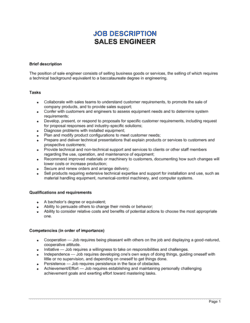
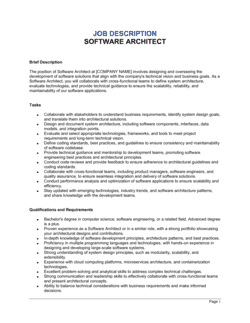
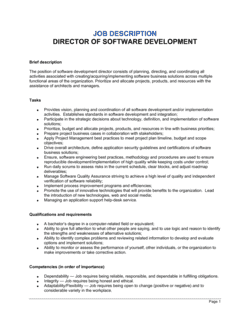
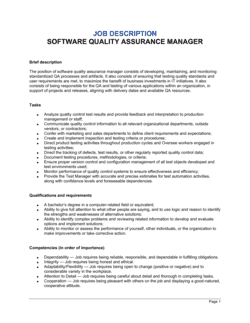
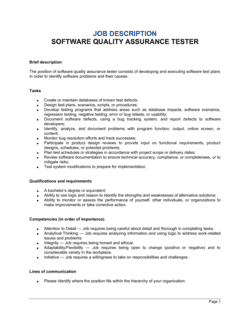
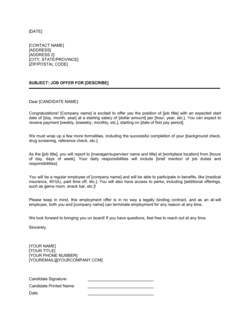
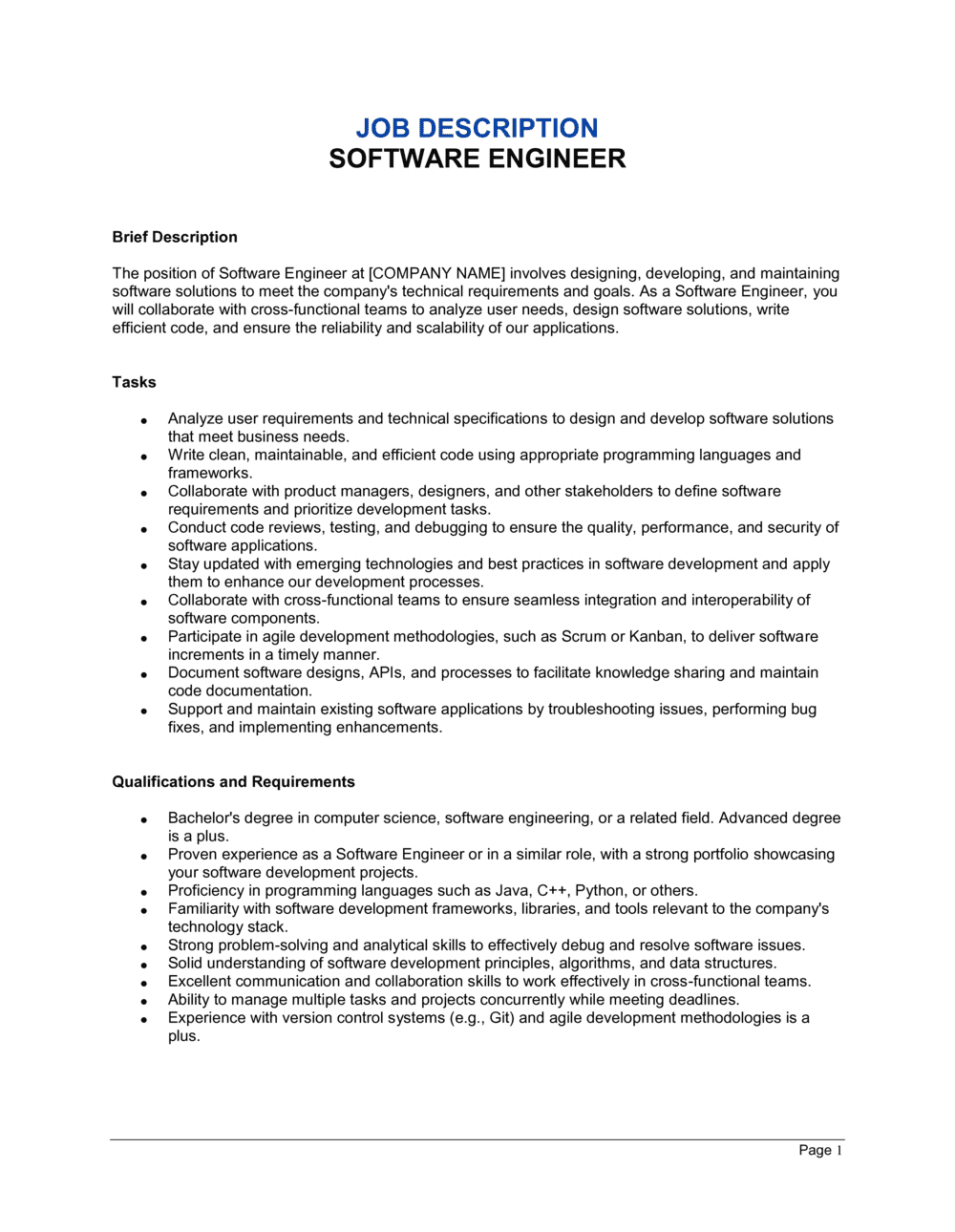
Software Engineer Job Description Template

Free Word download • Edit online • Save & share with Drive • Export to PDF

2 pages20–30 min to fillDifficulty: StandardSignature requiredLegal review recommended
Learn more ↓
FreeSoftware Engineer Job Description Template

At a glance

What it is
A Software Engineer Job Description is a formal document that defines the scope of a software engineering role — including technical duties, required qualifications, reporting structure, compensation range, and employment terms. This free Word download gives you an editable, legally grounded starting point you can tailor to any engineering level (junior through staff), export as PDF, and attach to an offer letter or employment contract.
When you need it
Use it whenever you are opening a new engineering headcount, backfilling a departing engineer, or formalizing a role that has grown organically beyond its original scope. It is also required when posting on regulated job boards in jurisdictions that mandate salary disclosure or skills-based hiring statements.
What's inside
Role title and seniority level, reporting structure, core technical responsibilities, required and preferred qualifications, technology stack, compensation range and benefits, employment type and location, IP and confidentiality obligations, and equal opportunity and accommodation language.

What is a Software Engineer Job Description?

A Software Engineer Job Description is a formal document that defines the scope, duties, qualifications, compensation, and employment terms for a software engineering role. It functions simultaneously as an external recruitment document, an internal role-scoping record, and — when paired with a signed employment agreement — a legally defensible foundation for IP assignment, confidentiality, and non-solicitation obligations. Unlike an informal job posting, a properly drafted software engineer job description identifies essential functions for ADA compliance, states a salary range where legally required, and includes the restrictive covenant language necessary to protect proprietary code and competitive information.

Why You Need This Document

Without a complete, signed software engineer job description and linked employment agreement, four costly gaps open immediately. First, IP ownership of code written on personal devices or outside standard hours is legally ambiguous — without explicit written assignment, the engineer may retain rights to work that powers your core product. Second, omitting salary disclosure in states like Colorado, California, and New York exposes the company to regulatory fines and disqualifies the posting from complying with paid job board requirements. Third, a vague responsibilities list makes accommodation analysis under the ADA impossible and creates disputes over role scope during performance reviews or terminations. Fourth, posting without proper EEO and accommodation language invites discrimination claims before a single interview takes place. This template closes all four gaps with legally grounded language calibrated to the specific demands of technical hiring — saving 30 minutes of drafting and significantly reducing exposure on the clauses that matter most.

Which variant fits your situation?

If your situation is…Use this template
Hiring a junior or entry-level engineer (0–2 years experience)Junior Software Engineer Job Description
Hiring a senior individual contributor (5+ years, no direct reports)Senior Software Engineer Job Description
Hiring a technical team lead or engineering managerEngineering Manager Job Description
Engaging a developer on a project basis outside employmentIndependent Contractor Agreement
Hiring a front-end or UI-focused engineerFront-End Developer Job Description
Hiring a DevOps or site reliability engineerDevOps Engineer Job Description
Bringing on a staff or principal engineer with cross-team scopeStaff Engineer Job Description

Common mistakes to avoid

❌ Omitting a salary range where legally required

Why it matters: Colorado, California, New York City, and Washington state mandate salary disclosure in job postings. Non-compliant postings can trigger regulatory fines and exclude your company from talent in those markets.

Fix: Identify every state or country where the role may be filled or where candidates may apply, then check current salary disclosure requirements. Publish the full approved band — not a single number — in the posting.

❌ Listing a four-year degree as required without a BFOQ justification

Why it matters: Several US states and federal contractors have restricted unnecessary degree requirements that produce disparate-impact outcomes. Requiring a CS degree for a role that does not require it screens out qualified candidates and exposes the employer to discrimination claims.

Fix: Replace 'Bachelor's degree required' with 'Bachelor's degree in Computer Science or related field, or equivalent professional experience' — or remove the education requirement entirely if a degree is not genuinely necessary.

❌ Writing more than 12 responsibilities without identifying essential functions

Why it matters: A bloated responsibilities section makes accommodation analysis impossible and signals a poorly scoped role. ADA and equivalent laws require employers to defend each essential function when an accommodation request is made.

Fix: Cut the list to 6–9 items, each tied to a specific outcome. Mark essential functions in your internal hiring documentation so HR can respond to accommodation requests with a defensible record.

❌ Including an overbroad non-compete rather than a targeted non-solicitation

Why it matters: California prohibits post-employment non-competes entirely. Minnesota, North Dakota, and Oklahoma follow suit. Courts in most other jurisdictions void non-competes that are unlimited in geography or duration, potentially nullifying the entire restrictive covenant.

Fix: Replace broad non-compete language with a narrowly scoped non-solicitation clause covering active recruitment of employees and direct solicitation of customers — these are consistently more enforceable across jurisdictions.

❌ Failing to sign the employment agreement before the engineer's start date

Why it matters: IP assignment and confidentiality clauses signed after day one may be unenforceable in common-law jurisdictions because the employee has already given their consideration — their labor — without receiving anything new in return.

Fix: Send the employment agreement alongside the offer letter and require both to be executed before the start date. If circumstances force a later signature, provide documented fresh consideration such as a signing bonus or additional equity.

❌ Using identical language for required and preferred qualifications

Why it matters: When both sections use mandatory phrasing ('must have', 'required'), the preferred section becomes a second required section — raising the bar beyond what the role actually needs and reducing the qualified applicant pool unnecessarily.

Fix: Use clearly differentiated phrasing: 'Required: X years of experience in Y' versus 'Preferred: familiarity with Z is an asset.' Apply the distinction consistently in your applicant tracking system's scoring rubric.

The 10 key clauses, explained

Role Title, Level, and Reporting Structure

In plain language: States the exact job title, seniority level (e.g., Software Engineer II), the direct manager's title, and the team or department the role sits within.

Sample language
Position: Software Engineer II | Department: Platform Engineering | Reports to: Engineering Manager, [TEAM NAME] | Location: [CITY, STATE / Remote]

Common mistake: Using an internal leveling code (e.g., 'L4') without a human-readable title. Candidates and job boards cannot interpret internal codes, and it creates ambiguity in offer letters and equity grants.

Role Summary

In plain language: A 3–5 sentence overview of the role's purpose, its place in the product or system, and the business outcome it drives.

Sample language
As a Software Engineer II at [COMPANY NAME], you will design, build, and maintain backend services powering [PRODUCT/PLATFORM] for [X] users. You will work closely with product and infrastructure teams to ship [CADENCE] releases and own the reliability of [SYSTEM SCOPE].

Common mistake: Making the summary so generic ('build great software with a great team') that it applies to any engineering job anywhere. Specificity attracts qualified candidates and reduces volume of unqualified applicants.

Core Responsibilities and Essential Functions

In plain language: Enumerates the primary technical duties the employee will perform, written as specific, outcome-oriented statements — and designates which are essential functions for ADA purposes.

Sample language
Design and implement RESTful APIs serving [X] requests/day. Participate in code review for [TEAM SIZE]-person team. Diagnose and resolve production incidents with target MTTR of [X] minutes. [Identify which items are 'essential functions' in the finalized description.]

Common mistake: Listing 15–20 bullet points without distinguishing essential functions from marginal ones. This creates liability if a qualified applicant with a disability requests accommodation and the employer cannot defend each requirement.

Required Qualifications

In plain language: States the minimum education, years of experience, and technical skills an applicant must have to be considered — the threshold below which a candidate is screened out.

Sample language
[X]+ years of professional software engineering experience. Proficiency in [LANGUAGE(S), e.g., Python, Go, TypeScript]. Experience with [PLATFORM, e.g., AWS or GCP]. [Degree requirement OR equivalent demonstrated experience, per applicable state law.]

Common mistake: Listing a four-year degree as required when it is not a BFOQ. Several US states and federal contractors now restrict or penalize unnecessary degree requirements that screen out qualified candidates — and the practice invites disparate-impact claims.

Preferred Qualifications

In plain language: Lists skills, certifications, or experiences that are advantageous but not mandatory — these shape the candidate ranking without being screening criteria.

Sample language
Experience with distributed systems at [SCALE]. Familiarity with [FRAMEWORK]. Prior experience in [INDUSTRY, e.g., fintech, healthcare]. Contributions to open-source projects.

Common mistake: Blurring the line between required and preferred by writing both sections with identical mandatory language. If everything is 'required,' the preferred section loses its function and the overall bar becomes unreasonably high.

Compensation, Benefits, and Employment Type

In plain language: States the salary band or hourly rate, equity eligibility, benefits summary, employment type (full-time, part-time, contract), and FLSA exempt status.

Sample language
Base Salary: $[MIN]–$[MAX] annually | FLSA Status: Exempt | Employment Type: Full-Time | Equity: Eligible per option plan | Benefits: Health, dental, vision, 401(k) with [X]% match, [X] days PTO.

Common mistake: Omitting the salary range in states that legally require it. Colorado, California, New York City, and Washington mandate salary disclosure in job postings — non-compliance triggers fines and reputational risk.

Intellectual Property Assignment

In plain language: Assigns to the employer all code, software, algorithms, and inventions created by the engineer in the course of employment, including work related to the company's business performed outside working hours.

Sample language
All work product, code, inventions, and improvements developed by Employee in connection with [COMPANY NAME]'s business during the term of employment are the sole property of [COMPANY NAME] and are hereby irrevocably assigned to the Company.

Common mistake: Not including IP assignment in the job description or linked employment agreement at all. When an engineer builds a core product feature on a personal device after hours, ownership is legally ambiguous without explicit written assignment.

Confidentiality and Data Security Obligations

In plain language: Requires the engineer to protect the company's source code, architecture, customer data, and trade secrets during and after employment, and comply with applicable data protection laws.

Sample language
Employee shall not disclose or use any Confidential Information — including source code, system architecture, customer data, and product roadmaps — without prior written consent. Employee shall comply with all applicable data protection laws, including [GDPR / CCPA / HIPAA] as relevant.

Common mistake: Listing data protection laws by name without specifying which apply to this role. Including HIPAA in a job description for an engineer working on a non-healthcare product creates confusion and potential compliance scope-creep.

Non-Solicitation Clause

In plain language: Restricts the engineer from recruiting the company's employees or soliciting its customers for a defined period following separation.

Sample language
For [12] months following separation, Employee shall not (a) solicit, recruit, or induce any Company employee to leave their employment, or (b) solicit any customer or client of the Company for a competing product or service.

Common mistake: Using a blanket prohibition on 'any contact' with former colleagues. Courts narrow overbroad non-solicitation clauses — and some jurisdictions void them entirely. Scope the restriction to active solicitation, not incidental contact.

Equal Opportunity, Accommodation, and Legal Compliance

In plain language: States the employer's commitment to equal employment opportunity, invites accommodation requests, and confirms the posting complies with applicable employment laws.

Sample language
[COMPANY NAME] is an equal opportunity employer. We do not discriminate on the basis of race, color, religion, sex, national origin, age, disability, or any other characteristic protected by law. Applicants requiring accommodation should contact [HR EMAIL / TITLE].

Common mistake: Omitting accommodation language entirely. Under the ADA (US), AODA (Ontario), and the Equality Act (UK), employers must indicate how candidates can request accommodations — omission exposes the company to discrimination claims before the hire is even made.

How to fill it out

  1. 1

    Set the role title, level, and reporting line

    Enter a human-readable job title aligned to your leveling framework, the seniority level, and the hiring manager's title. Confirm the team or department name matches your org chart.

    💡 Use the same title in this document, the offer letter, and the employment contract — discrepancies between documents create confusion during onboarding and in equity grant administration.

  2. 2

    Write a specific role summary

    Draft 3–5 sentences describing what the engineer will own, which system or product they will work on, and what business outcome their work drives. Avoid generic language about 'building great products.'

    💡 Name the primary programming language or platform in the summary. This alone filters unqualified applicants before they reach the requirements section.

  3. 3

    List core responsibilities as outcome statements

    Write each responsibility beginning with an action verb and tied to a measurable outcome or scope. Flag which items are essential functions in your internal notes — you will need this if an accommodation request arises.

    💡 Limit the responsibilities list to 6–9 items. More than that signals a role that has not been scoped properly and will struggle to be filled at the right level.

  4. 4

    Define required qualifications without unnecessary barriers

    State minimum years of experience, specific languages or frameworks, and any certification that is genuinely required. Check your jurisdiction — several US states and federal contractors restrict mandatory degree requirements where equivalent experience suffices.

    💡 Add 'or equivalent demonstrated experience' after any education requirement to comply with skills-based hiring laws in Colorado, Maryland, and similar jurisdictions.

  5. 5

    Add preferred qualifications as a separate, clearly labeled section

    List skills and experiences that would accelerate onboarding but are not screening criteria. Keep this list distinct from required qualifications so hiring managers apply it consistently.

    💡 Preferred qualifications are useful for internal scoring rubrics — assign point values to each item to create a structured candidate ranking that is defensible against bias claims.

  6. 6

    Enter the salary range and confirm FLSA or equivalent status

    Input the approved compensation band for this level. Confirm FLSA exempt status (most full-time software engineers qualify under the computer employee exemption above the threshold, currently $27.63/hr or $684/week salary). Add equity eligibility and benefits summary.

    💡 If you post this role in Colorado, California, New York City, or Washington state, salary disclosure is legally required — publishing a range avoids fines and attracts candidates who fit your budget.

  7. 7

    Attach or reference the IP assignment and confidentiality terms

    Either embed the IP assignment and confidentiality clauses directly in the job description or reference the employment agreement that contains them. Confirm the language covers remote work and personal devices.

    💡 Have the signed employment agreement — which includes IP assignment — executed before the engineer's first day. Post-start signatures require fresh consideration to be enforceable in common-law jurisdictions.

  8. 8

    Add equal opportunity and accommodation language

    Include a standard EEO statement and an explicit invitation for accommodation requests with a contact method. Confirm the statement covers all protected classes in the hiring jurisdiction.

    💡 In Ontario, the Accessibility for Ontarians with Disabilities Act (AODA) requires accommodation language in job postings — use 'upon request' phrasing and name an HR contact.

Frequently asked questions

What is a software engineer job description?

A software engineer job description is a formal document that defines a software engineering role's duties, required qualifications, reporting structure, compensation range, and employment terms. It serves three functions simultaneously: it attracts qualified candidates, creates a legally defensible record of bona fide occupational requirements, and forms the basis for the employment agreement that governs the hire.

What should a software engineer job description include?

At minimum: role title and seniority level, reporting structure, a specific role summary, core responsibilities identified as essential functions, required and preferred qualifications, compensation range and FLSA status, employment type and location, IP assignment and confidentiality obligations, non-solicitation terms, and equal opportunity and accommodation language. Missing the IP assignment clause is the single most costly omission for engineering roles.

Do I need to include a salary range in a software engineer job posting?

In Colorado, California, New York City, and Washington state, yes — salary disclosure is legally required in job postings. Several other jurisdictions are enacting similar laws. Even where not required, publishing a range reduces unqualified applications, accelerates offer acceptance, and supports pay equity compliance. A range of roughly 20–25% ($20K–$30K spread on a $120K–$150K band) is typical for a single engineering level.

Can a software engineer job description include a non-compete clause?

In most jurisdictions, a non-compete in a job description or linked employment agreement is enforceable only if it is reasonable in scope, duration, and geography. California, Minnesota, North Dakota, and Oklahoma prohibit most post-employment non-competes entirely. For software engineers, a narrowly drafted non-solicitation clause covering employee recruiting and direct customer solicitation is more consistently enforceable and achieves most of the same protective goals.

Can I require a computer science degree in a software engineer job description?

You can include a degree preference, but several US states — including Maryland, Colorado, and Pennsylvania — and federal contractors now restrict mandatory degree requirements where equivalent experience demonstrates the same competency. Courts in other jurisdictions have found mandatory degree requirements for roles where a degree is not genuinely necessary to constitute disparate-impact discrimination. Use 'or equivalent professional experience' language to stay compliant and widen your qualified applicant pool.

Who should sign a software engineer job description?

The job description itself is typically acknowledged in writing by the new hire as part of the onboarding packet or embedded in the employment agreement. The linked employment agreement — which contains IP assignment, confidentiality, and non-solicitation — must be signed by both the employee and an authorized company representative before the first day of work to ensure enforceability in common-law jurisdictions.

What is the difference between a software engineer job description and an employment contract?

A job description defines the role's duties, qualifications, and compensation — it is the hiring document used externally and internally to scope the position. An employment contract is the binding legal agreement that governs the entire working relationship, including termination, severance, IP assignment, and dispute resolution. The job description feeds into the contract; together they form a complete record of the employment relationship. Using one without the other leaves either the role scope or the legal protections undefined.

How often should a software engineer job description be updated?

Update it whenever the role's responsibilities materially change, the technology stack shifts, the compensation band is revised, or applicable salary disclosure laws in your hiring jurisdictions change. For active hiring, review every posting before each new search — a description that is 18+ months old often reflects a role that no longer exists as written, which leads to misaligned hires and downstream performance management problems.

Do I need a lawyer to write a software engineer job description?

For straightforward domestic hires, a high-quality template with standard IP assignment, non-solicitation, and EEO language is typically sufficient. Engage a lawyer when posting in multiple jurisdictions with conflicting salary disclosure or non-compete laws, when the role involves access to highly sensitive IP in a competitive market, or when the linked employment agreement includes equity, executive-level severance, or complex confidentiality obligations. A 1-hour template review costs $200–$400 and is worthwhile for any senior or IP-critical engineering hire.

How this compares to alternatives

vs Employment Contract

A job description defines the role's duties, qualifications, and compensation — it is primarily a hiring and scoping document. An employment contract governs the entire legal relationship, including termination, severance, IP assignment, and dispute resolution. You need both: the job description attracts and qualifies candidates; the employment contract binds and protects both parties. Using only a job description leaves termination, non-solicitation, and IP ownership undefined in a legally enforceable form.

vs Independent Contractor Agreement

A software engineer job description is for an employee — a person who will be on payroll, receive benefits, and whose work product is owned by the employer under IP assignment. An independent contractor agreement is for a self-employed developer engaged for project-based work with no employment entitlements. Misclassifying an engineer as a contractor when the work relationship is effectively employment triggers back taxes, penalties, and benefit liability in every major jurisdiction.

vs Offer Letter

An offer letter confirms the role, start date, and compensation to secure a candidate's acceptance — it is not a comprehensive legal document. A job description provides the detailed scope of duties and qualifications that inform the offer, and links to the full employment agreement containing IP assignment, confidentiality, and non-solicitation. All three documents should be consistent and cross-referenced; gaps between them become disputes during onboarding or separation.

vs Executive Employment Agreement

A standard software engineer job description and linked employment agreement cover individual contributor and team-lead roles. An executive employment agreement covers VP Engineering, CTO, and senior leadership roles — adding equity vesting schedules, change-of-control provisions, enhanced severance, D&O indemnification, and more heavily negotiated non-compete terms. Use the standard template for IC and manager roles; escalate to an executive agreement for any role with material equity and board-level exposure.

Industry-specific considerations

SaaS / Technology

Equity eligibility, stack-specific qualifications (e.g., Kubernetes, Terraform), and IP assignment covering open-source contribution policies are standard additions for SaaS engineering roles.

Financial Services / Fintech

Regulatory background check requirements, SOC 2 and PCI-DSS security obligations, and enhanced confidentiality covering transaction data and trading algorithms are typical inclusions.

Healthcare / MedTech

HIPAA confidentiality obligations incorporated by reference, FDA software development lifecycle requirements for medical device software, and credentialing prerequisites for clinical platform roles.

Professional Services

Client non-solicitation is critical given billable relationships; project-based and fixed-term engagement structures are common; consulting firms often attach separate IP ownership schedules by client engagement.

Manufacturing / Industrial

OT/IT integration roles require safety certification references; embedded software and firmware roles need export control (ITAR/EAR) compliance language; on-site requirements and shift structures differ from typical tech roles.

Retail / E-commerce

PCI-DSS and consumer data privacy obligations (CCPA, GDPR) are prominent; platform scale metrics (transactions per second, uptime SLAs) are used as qualification benchmarks; seasonal product release cycles affect role urgency language.

Jurisdictional notes

United States

Most software engineers qualify as FLSA-exempt under the computer employee exemption, provided they earn at least $684/week on a salary basis or $27.63/hour. California prohibits post-employment non-competes entirely and voids IP assignment clauses for off-duty inventions unrelated to company business under Labor Code §2870. Colorado, New York City, Washington state, and several other jurisdictions require salary range disclosure in job postings. Skills-based hiring laws in Maryland, Colorado, and Pennsylvania restrict mandatory four-year degree requirements.

Canada

At-will employment does not exist in Canada — employment agreements linked to job descriptions must include notice-period clauses meeting provincial Employment Standards Act minimums. Ontario's AODA requires accommodation language in job postings and an explicit process for requesting accommodation. Quebec postings and agreements must be in French for provincially regulated employers. Non-compete clauses for non-executive employees were effectively banned in Ontario effective October 2021 under the Working for Workers Act.

United Kingdom

Employers must provide a written statement of employment particulars on or before day one, which the job description and linked agreement together satisfy. The Equality Act 2010 governs the EEO statement — list all nine protected characteristics. Post-termination restrictive covenants (non-solicitation) are enforceable if reasonable in scope and duration; courts apply a strict necessity test. IR35 rules apply when engaging software engineers through personal service companies — misclassification carries significant HMRC liability.

European Union

The EU Transparent and Predictable Working Conditions Directive requires written employment terms within 7 days of the start date — the job description feeds directly into this obligation. GDPR must be addressed explicitly in the confidentiality and data security clause for any engineer handling personal data, including logging, analytics, or customer-facing systems. Post-employment non-competes typically require financial compensation to the employee — ranging from 25% to 100% of salary depending on the member state — to be enforceable. Germany, France, and the Netherlands impose the most stringent requirements.

Template vs lawyer — what fits your deal?

PathBest forCostTime
Use the templateStandard domestic software engineering hires at IC or team-lead level in a single jurisdictionFree30–45 minutes
Template + legal reviewMulti-state or cross-border postings, roles with access to sensitive IP, or jurisdictions with complex salary disclosure or non-compete laws$200–$500 (employment lawyer review)1–3 days
Custom draftedSenior or staff engineers with significant equity exposure, regulated industries (healthcare, fintech), or roles requiring export control compliance (ITAR/EAR)$800–$2,500+1–2 weeks

Glossary

Job Description
A formal written document defining a role's duties, qualifications, reporting structure, and employment terms — used in hiring, performance management, and legal compliance.
Essential Functions
The core tasks an employee must be able to perform, with or without reasonable accommodation — legally significant because they define the baseline for ADA and disability accommodation analysis.
Salary Band
The minimum and maximum compensation range established for a role or job family, used to ensure pay equity and compliance with salary disclosure laws.
At-Will Employment
Employment that either party may end at any time for any lawful reason without advance notice — the default in most US states but not applicable in Canada, the UK, or the EU.
IP Assignment
A clause transferring ownership of code, inventions, and other work product created by the employee to the employer during the employment relationship.
Skills-Based Hiring Language
Job description language that emphasizes demonstrated competencies and experience over formal degree requirements — required or encouraged by several US states and federal contractors.
Reasonable Accommodation
A modification to job duties, environment, or tools that enables a qualified individual with a disability to perform the essential functions of a role without undue hardship to the employer.
Bona Fide Occupational Qualification (BFOQ)
A requirement that is genuinely necessary to perform a job — the legal standard for justifying a qualification that might otherwise appear discriminatory.
FLSA Exempt Status
Classification under the US Fair Labor Standards Act indicating an employee is not entitled to overtime pay — most software engineers qualify under the computer employee exemption above a salary threshold.
Non-Solicitation Clause
A restriction preventing a departing employee from recruiting the employer's staff or soliciting its customers for a defined period after leaving.
Salary Disclosure Law
State or local legislation — enacted in California, Colorado, New York, and Washington, among others — requiring employers to publish a compensation range in job postings.

Part of your Business Operating System

This document is one of 3,000+ business & legal templates included in Business in a Box.

  • Fill-in-the-blanks — ready in minutes
  • 100% customizable Word document
  • Compatible with all office suites
  • Export to PDF and share electronically

Create your document in 3 simple steps.

From template to signed document — all inside one Business Operating System.
1
Download or open template

Access over 3,000+ business and legal templates for any business task, project or initiative.

2
Edit and fill in the blanks with AI

Customize your ready-made business document template and save it in the cloud.

3
Save, Share, Send, Sign

Share your files and folders with your team. Create a space of seamless collaboration.

Save time, save money, and create top-quality documents.

★★★★★

"Fantastic value! I'm not sure how I'd do without it. It's worth its weight in gold and paid back for itself many times."

Managing Director · Mall Farm
Robert Whalley
Managing Director, Mall Farm Proprietary Limited
★★★★★

"I have been using Business in a Box for years. It has been the most useful source of templates I have encountered. I recommend it to anyone."

Business Owner · 4+ years
Dr Michael John Freestone
Business Owner
★★★★★

"It has been a life saver so many times I have lost count. Business in a Box has saved me so much time and as you know, time is money."

Owner · Upstate Web
David G. Moore Jr.
Owner, Upstate Web

Run your business with a system — not scattered tools

Stop downloading documents. Start operating with clarity. Business in a Box gives you the Business Operating System used by over 250,000 companies worldwide to structure, run, and grow their business.

Free Forever Plan · No credit card required