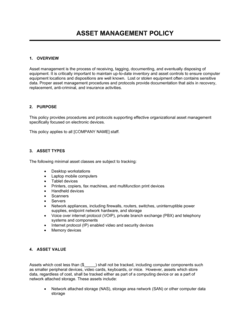
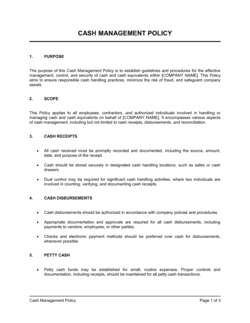
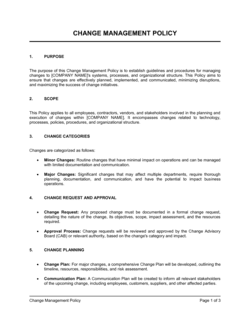
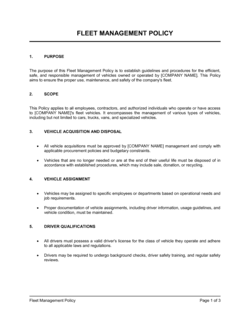
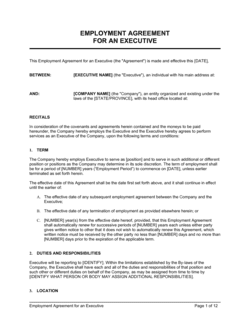
Remote Team Management Template

Free Word download • Edit online • Save & share with Drive • Export to PDF

4 pages25–30 min to fillDifficulty: ComplexSignature requiredLegal review recommended
Learn more ↓
FreeRemote Team Management Template

At a glance

What it is
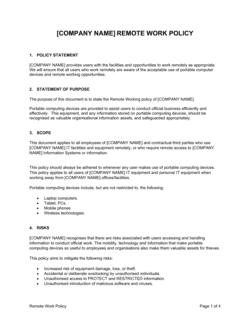
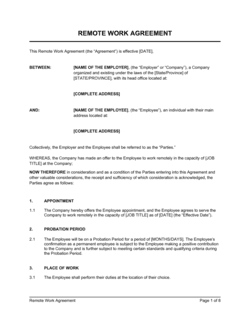
A Remote Team Management Agreement is a legally binding document between an employer and a remote employee or distributed team that formalizes the conditions under which work is performed outside a central office. This free Word download covers work hours, deliverables, equipment, data security, expense reimbursement, communication protocols, and termination — giving both parties a clear, enforceable framework for the remote relationship.
When you need it
Use it when onboarding any employee or team member who will work from home, a co-working space, or any location outside a company-controlled office, whether on a permanent, hybrid, or temporary basis. It is also appropriate when transitioning an existing in-office employee to a remote arrangement.
What's inside
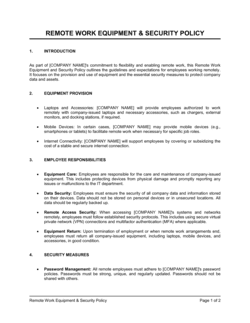
Core sections include the approved remote work location and schedule, performance and deliverable expectations, equipment and expense policies, data security and confidentiality obligations, communication and availability standards, and termination or revocation of remote work privileges. A governing law clause and signature block complete the agreement.

What is a Remote Team Management Agreement?

A Remote Team Management Agreement is a legally binding document between an employer and one or more employees that formalizes every material condition governing work performed outside a company-controlled office. It specifies the approved work location and schedule, measurable performance expectations, equipment ownership and security requirements, expense reimbursement limits, communication standards, and the employer's right to revoke the arrangement. Unlike a general remote work policy, which sets company-wide expectations, this agreement is signed individually by each remote employee and creates enforceable bilateral obligations — giving both parties a concrete framework to rely on if expectations, disputes, or termination arise.

Why You Need This Document

Without a signed remote team management agreement, an employer operating a distributed workforce is exposed on multiple fronts at once. An employee working from an unapproved state or country can silently create corporate tax nexus, payroll registration obligations, and local employment law exposure the employer discovers only during an audit. A long-standing informal remote arrangement — with no written revocation clause — has been found by courts in Canada, the UK, and across the EU to be an implied term of employment, meaning a return-to-office mandate becomes a constructive dismissal claim. Data breaches originating from personal devices or public Wi-Fi are nearly impossible to address through discipline when no written security obligation exists. Expense disputes escalate when there is no documented cap or pre-approval requirement. This template closes all four gaps before the remote arrangement begins, at the cost of 20 minutes and a legal review where the stakes warrant one.

Which variant fits your situation?

If your situation is…Use this template
Permanent fully remote employee in a single jurisdictionRemote Work Agreement (Permanent)
Hybrid arrangement splitting time between office and homeHybrid Work Schedule Agreement
Temporary remote arrangement during travel or leaveTemporary Remote Work Authorization
Independent contractor working remotely on a project basisIndependent Contractor Agreement
Cross-border remote worker in a different country from the employerInternational Remote Work Agreement
Entire distributed team requiring a unified policy documentRemote Work Policy
Executive or senior manager working remotely with equity and performance targetsExecutive Employment Agreement

Common mistakes to avoid

❌ Approving 'work from anywhere' without locking jurisdiction

Why it matters: An employee working from a new state or country can trigger corporate tax nexus, payroll registration requirements, and local employment law obligations — often without the employer realizing it until a tax audit or employment claim arrives.

Fix: Specify the approved work location by address. If flexibility is needed, list approved jurisdictions in an exhibit and set a maximum number of days per year the employee may work from each.

❌ No revocation clause

Why it matters: Without an explicit right-to-revoke provision, courts in Canada, the UK, and several EU countries have treated a long-standing remote arrangement as an implied term of employment — making compelled return-to-office a constructive dismissal.

Fix: Include a clause stating that remote work authorization may be revoked with specified notice, that revocation is not a material change in employment conditions, and have the employee acknowledge this in writing at signing.

❌ Monitoring employees without a written disclosure

Why it matters: Covert productivity monitoring — keyloggers, screenshot tools, webcam checks — on company devices violates privacy law in the EU, Canada, and several US states, exposing the employer to regulatory fines and making the monitoring evidence inadmissible in disputes.

Fix: Include a monitoring and audit clause that discloses what is monitored, on which devices, for what purpose, and for how long data is retained. Obtain the employee's written acknowledgment before any monitoring begins.

❌ No expense cap or pre-approval requirement

Why it matters: Uncapped, open-ended reimbursement language has resulted in employers facing claims for premium home internet upgrades, ergonomic furniture costing thousands, and even dedicated home-office room renovations — all characterized as 'necessary remote work expenses.'

Fix: Set a specific monthly dollar cap, enumerate the eligible expense categories, and require pre-approval for any single expense above a defined threshold before the employee incurs it.

❌ Relying on the employment contract's NDA for data security

Why it matters: Generic confidentiality clauses do not address VPN use, personal-device restrictions, public-Wi-Fi prohibitions, or cloud storage controls — the specific vectors through which remote data breaches actually occur.

Fix: Add a dedicated data security clause listing the specific technical controls required and the incident reporting procedure, and reference the company's current security policy by name so updates to the policy flow through automatically.

❌ No defined performance metrics for remote work

Why it matters: Carrying an in-office job description into a remote agreement without translating it into measurable deliverables leaves managers without a contractual basis to address underperformance and makes termination for cause difficult to defend.

Fix: Attach a Schedule A with at least three quantified performance metrics specific to the remote role — weekly deliverable completion rate, response time standard, project milestone dates — and review them at each performance cycle.

The 10 key clauses, explained

Approved work location and schedule

In plain language: Specifies the exact address or category of location where the employee is authorized to work, the days and hours they are expected to be available, and whether any in-office attendance is required.

Sample language
Employee is authorized to perform their duties remotely from [HOME ADDRESS / APPROVED CO-WORKING LOCATION] on a [FULL-TIME / PART-TIME / HYBRID] basis. Employee shall maintain core availability from [START TIME] to [END TIME] [TIMEZONE], [DAYS OF WEEK]. In-office attendance is required [X DAYS PER MONTH / as requested with [X] business days' notice].

Common mistake: Approving 'home or anywhere' without locking down a specific address. If an employee works from a different state or country, the employer can inadvertently create a new tax nexus or trigger local employment law without knowing it.

Performance expectations and deliverables

In plain language: Sets out the measurable outcomes the employee is responsible for, how performance will be tracked, and the cadence of check-ins or progress reviews.

Sample language
Employee shall complete the deliverables specified in Schedule A and meet the performance metrics set out therein. Manager and Employee shall conduct a [weekly / bi-weekly] check-in to review progress. Failure to meet agreed deliverables for [TWO CONSECUTIVE REVIEW PERIODS] may result in revocation of remote work privileges.

Common mistake: Carrying over the same vague in-office job description without translating it into measurable remote deliverables. Vague expectations make performance management — and termination for cause — nearly impossible to defend.

Equipment provision and responsibility

In plain language: States who provides hardware, who pays for repairs, who carries insurance on employer-owned equipment, and what the employee must do with company equipment at separation.

Sample language
Company shall provide Employee with [LIST OF EQUIPMENT] for exclusive use in performing their duties. All equipment remains Company property. Employee shall promptly report any damage or loss and shall return all equipment within [5] business days of separation. Employee is responsible for any damage caused by negligence or misuse.

Common mistake: Allowing employees to use personal devices without a written BYOD addendum and MDM enrollment requirement. Personal devices that store company data and are never enrolled in management create a data loss and confidentiality gap the agreement cannot close after the fact.

Data security and confidentiality

In plain language: Requires the employee to follow specific security practices when working remotely — encrypted connections, approved devices, secure passwords, and prohibitions on working in public spaces with sensitive information visible.

Sample language
Employee shall at all times: (a) connect to Company systems via Company-approved VPN; (b) use only devices enrolled in Company's MDM program; (c) not access Confidential Information on unsecured public Wi-Fi; and (d) store Company data only on Company-approved cloud services. Employee shall immediately report any suspected breach to [SECURITY CONTACT / TITLE].

Common mistake: Relying on a general confidentiality clause from the employment contract without adding remote-specific security requirements. Generic NDA language does not address VPN use, device enrollment, or public-location protocols — all of which are where remote data breaches actually happen.

Expense reimbursement

In plain language: Defines which remote-work expenses the employer will reimburse — internet, phone, office supplies, ergonomic equipment — the monthly cap if any, the submission process, and the approval timeline.

Sample language
Company shall reimburse Employee for pre-approved remote work expenses up to $[MONTHLY CAP] per month, including [internet service, mobile phone, office supplies]. Employee must submit receipts via [EXPENSE SYSTEM] within [30] days of incurring the expense. Reimbursement will be processed within [15] business days of approval.

Common mistake: No expense cap and no pre-approval requirement. Uncapped reimbursement obligations with no approval process have resulted in employers facing claims for home renovation costs, premium internet plans, and standing desks costing thousands — all argued to be 'necessary for remote work.'

Communication and availability standards

In plain language: Establishes the required communication tools, expected response times during core hours, and the employee's obligation to participate in scheduled meetings.

Sample language
Employee shall respond to messages on [APPROVED COMMUNICATION PLATFORM] within [2] business hours during core hours. Employee shall attend all scheduled video meetings with camera enabled unless otherwise agreed. Planned absences during core hours of more than [2] hours require advance manager approval.

Common mistake: No defined response-time standard. Without one, managers have no contractual basis to address chronic non-responsiveness, and employees claim their general availability satisfies any undefined obligation.

Health, safety, and workspace standards

In plain language: Places responsibility on the employee to maintain a safe, ergonomic, and distraction-appropriate workspace, and may require a self-certification or periodic inspection protocol.

Sample language
Employee represents that their remote workspace is free from hazards, ergonomically suitable for sustained work, and provides adequate internet connectivity. Employee shall complete the Company's Remote Workspace Self-Certification (Exhibit B) annually and promptly notify [HR CONTACT] of any material change in workspace conditions.

Common mistake: Ignoring workspace safety entirely on the assumption that employer liability stops at the office door. In several jurisdictions — including the UK and Germany — employer duty-of-care obligations extend to remote workplaces, and a documented self-certification is the minimum defense.

Right to monitor and audit

In plain language: Reserves the employer's right to monitor productivity, audit equipment, and review company-system access logs, while complying with applicable privacy laws.

Sample language
To the extent permitted by applicable law, Company reserves the right to monitor Employee's use of Company systems, devices, and network connections for security and productivity purposes. Employee acknowledges that Company-issued devices have no expectation of personal privacy. Any monitoring will be conducted in accordance with [COMPANY PRIVACY POLICY] and applicable data protection law.

Common mistake: Monitoring employees without a written consent and disclosure clause. In the EU, Canada, and several US states, covert monitoring of employees — even on company devices — violates privacy law and can result in regulatory penalties and evidence being inadmissible in disputes.

Right to revoke remote work authorization

In plain language: Gives the employer the contractual right to end the remote arrangement and require the employee to return to the office, with specified notice and without treating the change as constructive dismissal.

Sample language
Company may revoke Employee's remote work authorization at any time with [15] business days' written notice, or immediately for cause. Revocation of remote work authorization shall not constitute a material change in employment conditions, provided Employee's compensation and job duties remain unchanged. Employee acknowledges this agreement does not create a permanent entitlement to remote work.

Common mistake: Not including a revocation clause at all. Without one, courts in Canada, the UK, and parts of Europe have found that long-standing remote arrangements become an implied term of employment — meaning the employer must treat compelled return-to-office as a constructive dismissal risk.

Governing law and dispute resolution

In plain language: Specifies which jurisdiction's law governs the agreement and how disputes will be handled, accounting for the fact that employer and employee may be located in different states or countries.

Sample language
This Agreement is governed by the laws of [STATE / PROVINCE / COUNTRY], without regard to conflict-of-law principles. Any dispute arising under this Agreement shall be resolved by [binding arbitration / mediation then litigation] in [CITY], except claims for injunctive relief arising from data security or confidentiality breaches.

Common mistake: Choosing governing law based solely on where the employer is incorporated, without considering where the employee actually works. Many jurisdictions — including California, Quebec, and all EU member states — apply local employment law regardless of contract choice-of-law clauses.

How to fill it out

  1. 1

    Identify the parties and confirm the approved work location

    Enter the employer's full legal entity name and the employee's legal name. Specify the exact approved remote work address — not just 'home office' — because the address determines tax nexus, applicable employment law, and health-and-safety obligations.

    💡 If the employee intends to work from multiple locations or travel internationally, add an exhibit listing approved jurisdictions and the maximum days permitted in each — this prevents inadvertent tax nexus creation.

  2. 2

    Define core hours and the required schedule

    Set the time zone, core hours window, and any required in-office days explicitly. If the arrangement is hybrid, specify the minimum office attendance requirement and how much notice is required for ad hoc changes.

    💡 For global teams, a core hours overlap of two to three hours is the minimum needed for real-time collaboration — build the schedule around that window rather than mirroring an in-office 9-to-5.

  3. 3

    Attach a Schedule A with measurable deliverables and metrics

    Move performance expectations into a separate Schedule A rather than embedding them in the body. Include at least three quantified metrics — e.g., weekly task completion rate, response time standard, project milestone dates — that will be used to evaluate remote performance.

    💡 Review and update Schedule A at each annual performance cycle so expectations stay calibrated to the employee's actual current role.

  4. 4

    Complete the equipment and BYOD provisions

    List every piece of company-provided equipment by type and, where practical, serial number. If the employee will use personal devices, complete a BYOD addendum specifying the MDM enrollment requirement, security controls, and the employer's right to remotely wipe company data from personal devices.

    💡 State explicitly whether personal-device wipes in a security incident will include personal data — and have the employee acknowledge the risk in writing before enrollment.

  5. 5

    Specify the expense reimbursement policy and cap

    Enter the monthly reimbursement cap, the eligible expense categories, the submission deadline, and the payment timeline. Reference the company's expense submission system by name so employees know exactly how to claim.

    💡 Check whether your state or province mandates expense reimbursement for remote workers — California Labor Code §2802 and several other state laws require reimbursement for all 'necessary' remote work costs, which courts have interpreted broadly.

  6. 6

    Insert the data security and monitoring provisions

    Add the specific security controls required — VPN, MDM enrollment, approved cloud storage, prohibited public-Wi-Fi use — and the incident reporting procedure. Include the monitoring disclosure language and confirm it complies with applicable privacy law in the employee's work location.

    💡 For EU-based employees, the monitoring disclosure must meet GDPR transparency requirements — a blanket 'we may monitor' clause is insufficient; specify what is monitored, how, and for how long data is retained.

  7. 7

    Set the revocation clause and notice period

    Enter the notice period required to revoke remote work authorization and confirm the language explicitly states that revocation is not a constructive dismissal. Have the employee sign a separate acknowledgment that remote work is a privilege, not a permanent entitlement.

    💡 In Canada, where constructive dismissal claims are common, some employment lawyers recommend a minimum 30-day revocation notice for employees who have worked remotely for more than 12 months.

  8. 8

    Execute before the remote arrangement begins

    Both parties must sign before the employee begins working remotely. Post-commencement signatures face the same fresh-consideration problem as late-signed employment contracts — restrictive covenants and revocation clauses may be unenforceable without separate consideration.

    💡 Use a timestamped electronic signature platform so you have an audit trail showing execution date and IP address — critical if a future dispute turns on whether the agreement was signed before or after remote work began.

Frequently asked questions

What is a remote team management agreement?

A remote team management agreement is a legally binding document between an employer and an employee (or group of employees) that sets the enforceable terms under which work is performed outside the employer's physical office. It covers approved work location, schedule, performance expectations, equipment, data security, expense reimbursement, communication standards, and the employer's right to revoke the arrangement. It is distinct from an employment contract in that it governs the logistics and conditions of remote work specifically, rather than the employment relationship overall.

Is a remote work agreement legally required?

No jurisdiction universally mandates a standalone remote work agreement, but several countries and states require employers to document certain terms in writing. The EU Transparent and Predictable Working Conditions Directive requires written disclosure of working location and schedule. In the UK, employers must include remote work terms in the written statement of particulars. Even where not legally required, a written agreement is the primary defense against constructive dismissal claims, tax nexus disputes, and data security liability.

Does a remote work agreement replace the employment contract?

No. A remote team management agreement supplements the employment contract — it does not replace it. The employment contract governs salary, benefits, IP, termination, and non-compete obligations. The remote work agreement governs the specific conditions under which the employee performs their duties away from the office. Both documents should be executed, and the remote work agreement should reference the employment contract to confirm all other terms remain in force.

Can an employer require employees to return to the office after a remote agreement is signed?

Yes, if the agreement includes a properly drafted right-to-revoke clause with specified notice. Without that clause, courts in Canada, the UK, and several EU member states have found that a long-standing remote arrangement becomes an implied term of employment — meaning a compelled return to office can be characterized as constructive dismissal. The revocation clause should state that remote work is a privilege, not a permanent entitlement, and specify the minimum notice period — typically 15 to 30 business days.

What data security requirements should a remote work agreement include?

At minimum: a requirement to connect via company-approved VPN, use only MDM-enrolled devices, store company data exclusively on approved cloud platforms, and avoid accessing confidential information on unsecured public Wi-Fi. The agreement should also specify the incident reporting procedure and the consequences of a security breach caused by the employee's failure to follow the required controls. For EU employees, the monitoring and data-retention terms must meet GDPR transparency requirements.

Who owns equipment purchased for a remote employee?

Ownership depends entirely on what the agreement says. Employer-provided equipment remains company property and must be returned on separation — the agreement should state this explicitly and include a return timeline (typically five business days). For employee-purchased equipment that the employer reimburses, clarify in writing whether the reimbursement transfers ownership to the employer or is simply a cost subsidy that leaves ownership with the employee. Ambiguity here creates disputes at offboarding.

What tax issues arise when employees work remotely in a different state or country?

An employee working from a different jurisdiction can create corporate tax nexus for the employer, triggering registration, withholding, and filing obligations in that state or country. In the US, nexus rules vary by state — some apply the physical presence test immediately, others have de minimis thresholds. Internationally, a remote employee can constitute a permanent establishment, exposing the employer to local corporate tax. Locking the approved work location by address in the agreement — and requiring written approval for any change — is the first line of defense.

Can I use a remote work policy instead of a signed agreement?

A company-wide remote work policy sets general expectations but is typically not a binding bilateral contract with each employee. Without individual signatures, the policy may not be enforceable as a contractual obligation — particularly for revocation clauses, expense caps, and data security requirements. A signed remote team management agreement, referencing the policy for operational detail, provides both the binding legal framework and the flexibility to update operational procedures without amending each individual contract.

What happens if an employee works remotely without a signed agreement?

The employer loses the ability to enforce key protections: the right to revoke without constructive dismissal risk, expense caps, data security obligations, and monitoring rights. Courts fill the gap with jurisdiction- specific defaults, which typically favor the employee on flexibility and constructive dismissal. In jurisdictions that mandate written remote work terms — including the EU and UK — the absence of documentation can also result in regulatory enforcement action.

How this compares to alternatives

vs Employment Contract

An employment contract governs the overall employment relationship — salary, benefits, IP, non-compete, and termination. A remote team management agreement supplements it by specifying the conditions under which work is performed away from the office. Both documents are needed for remote employees; neither replaces the other. Sign the employment contract first, then the remote work agreement on or before the remote arrangement's start date.

vs Independent Contractor Agreement

An independent contractor agreement engages a self-employed individual for project-based work with no employment entitlements. A remote team management agreement applies to employees working remotely — people who receive a salary, benefits, and tax withholding. Using a contractor agreement for what is functionally a remote employment relationship risks worker misclassification, which triggers back taxes, penalties, and benefit liability.

vs Remote Work Policy

A remote work policy is a company-wide document setting general expectations for all remote workers. It is not typically a bilateral binding contract signed by each employee. A remote team management agreement is individually executed and creates enforceable obligations — expense caps, data security duties, and revocation rights — that a general policy alone cannot reliably enforce in a legal dispute.

vs Non-Disclosure Agreement

An NDA protects confidential information in any context — including negotiations, vendor relationships, and pre-employment. A remote team management agreement includes confidentiality obligations as one clause among many, tailored to the specific risks of remote access: unsecured networks, personal devices, and uncontrolled physical environments. For remote employees, the remote work agreement's data security clause addresses risks the standard NDA was not designed to cover.

Industry-specific considerations

Technology / SaaS

Source-code access controls, cloud-environment security requirements, and cross-border team coordination across multiple time zones are standard additional provisions.

Financial Services

Regulators in the US (FINRA), UK (FCA), and EU require documented controls for remote access to client data and trading systems, making the data security clause especially detailed.

Professional Services

Client confidentiality obligations must be explicitly extended to the remote workspace, and billable-hour tracking tools often need to be addressed in the monitoring and audit clause.

Healthcare / MedTech

HIPAA in the US and equivalent regulations in the UK and EU require that protected health information accessed remotely is covered by specific technical safeguards spelled out in the agreement.

Retail / E-commerce

Customer data protection and PCI-DSS compliance for payment processing staff require specific remote-access controls and prohibition on processing card data on personal devices.

Manufacturing

Typically applies to engineering, design, and administrative roles where IP and proprietary technical data must be accessed securely, with strict controls on file download and transfer to personal devices.

Jurisdictional notes

United States

Remote work creates state tax nexus immediately in most US states — an employee working from a new state can obligate the employer to register for payroll tax, withhold state income tax, and comply with that state's employment law. California's Labor Code §2802 requires reimbursement of all 'necessary' remote work expenses, which courts have read broadly. Several states, including New York and New Jersey, apply convenience-of-employer rules that affect income tax sourcing for remote workers. Non-compete enforceability for remote employees follows the law of the state where the employee works, not where the employer is incorporated.

Canada

Provincial employment standards apply based on where the employee works, not where the employer is incorporated — an Ontario employee working remotely is covered by Ontario's Employment Standards Act regardless of the employer's home province. The right-to-revoke clause is especially important in Canada: courts have found that long-standing remote arrangements constitute implied employment terms, and compelled return-to-office has succeeded as a constructive dismissal claim. Quebec employers must provide the agreement in French for employees who work in the province. PIPEDA and provincial privacy laws govern monitoring disclosures.

United Kingdom

Employers must include the employee's work location — including any home address — in the written statement of employment particulars provided on or before day one. The Health and Safety at Work Act 1974 extends employer duty-of-care to home workplaces; a documented workspace self-certification is the standard compliance step. The UK GDPR requires that any employee monitoring be disclosed, proportionate, and documented in the employer's privacy notice. Right-to-revoke clauses should specify whether return-to-office triggers an express variation to the written statement.

European Union

The EU Transparent and Predictable Working Conditions Directive requires employers to disclose the employee's work location and schedule in writing within seven days of hire — remote work terms must be documented from the outset. GDPR Article 13 requires transparent disclosure of any monitoring: what data is collected, the legal basis, the retention period, and the employee's rights. Post-employment non-competes generally require financial compensation to be enforceable — Germany requires 50% of most recent compensation, France requires a negotiated indemnity. Member states vary significantly on remote-work expense reimbursement obligations; the Netherlands and Belgium have specific statutory remote-work allowances.

Template vs lawyer — what fits your deal?

PathBest forCostTime
Use the templateDomestic remote employees in a single state or province with standard schedules and company-provided equipmentFree20–30 minutes per employee
Template + legal reviewCross-border or multi-state remote teams, roles with access to sensitive regulated data, or jurisdictions with complex privacy and employment law$300–$700 for a 1–2 hour employment lawyer review2–5 business days
Custom draftedInternational distributed teams spanning multiple countries, heavily regulated industries (finance, healthcare), or senior employees with material data-access and non-compete considerations$1,500–$4,000+1–3 weeks

Glossary

Remote Work Location
The specific address or type of location — home office, co-working space, or other approved site — where the employee is authorized to perform their duties.
Core Hours
The fixed window of time each day during which a remote employee must be reachable and available for meetings, regardless of their overall flexible schedule.
Deliverable
A defined, measurable output — a report, a feature, a client presentation — that the employee is expected to complete by a specified date.
Equipment Policy
The agreement's terms on who provides hardware and peripherals, who is responsible for maintenance and insurance, and what happens to employer-owned equipment upon separation.
Data Security Obligation
The employee's contractual duty to protect company data by using encrypted connections, approved devices, secure passwords, and avoiding public or unsecured Wi-Fi for sensitive work.
Expense Reimbursement
The employer's commitment to repay pre-approved, documented costs the employee incurs to maintain their remote workspace — such as internet, phone, or office supplies.
Right to Revoke
The employer's contractual power to withdraw remote work authorization and require the employee to return to an office, with or without cause and on specified notice.
Nexus
The legal connection a business creates with a jurisdiction by having employees work there, which can trigger corporate tax, payroll tax, and employment law obligations in that state or country.
Bring Your Own Device (BYOD)
A policy allowing employees to use personal computers or phones for work, subject to security controls such as mobile device management (MDM) software.
Availability Protocol
The agreed method and response time standard for how remote employees communicate with managers and colleagues — for example, responding to messages within two business hours.
Performance Metrics
Quantified standards used to evaluate a remote employee's output — such as weekly deliverable completion rate, call-handling targets, or sprint velocity.

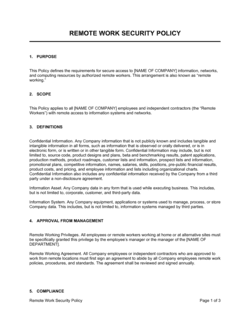
Part of your Business Operating System

This document is one of 3,000+ business & legal templates included in Business in a Box.

  • Fill-in-the-blanks — ready in minutes
  • 100% customizable Word document
  • Compatible with all office suites
  • Export to PDF and share electronically

Create your document in 3 simple steps.

From template to signed document — all inside one Business Operating System.
1
Download or open template

Access over 3,000+ business and legal templates for any business task, project or initiative.

2
Edit and fill in the blanks with AI

Customize your ready-made business document template and save it in the cloud.

3
Save, Share, Send, Sign

Share your files and folders with your team. Create a space of seamless collaboration.

Save time, save money, and create top-quality documents.

★★★★★

"Fantastic value! I'm not sure how I'd do without it. It's worth its weight in gold and paid back for itself many times."

Managing Director · Mall Farm
Robert Whalley
Managing Director, Mall Farm Proprietary Limited
★★★★★

"I have been using Business in a Box for years. It has been the most useful source of templates I have encountered. I recommend it to anyone."

Business Owner · 4+ years
Dr Michael John Freestone
Business Owner
★★★★★

"It has been a life saver so many times I have lost count. Business in a Box has saved me so much time and as you know, time is money."

Owner · Upstate Web
David G. Moore Jr.
Owner, Upstate Web

Run your business with a system — not scattered tools

Stop downloading documents. Start operating with clarity. Business in a Box gives you the Business Operating System used by over 250,000 companies worldwide to structure, run, and grow their business.

Start free · No credit card required