- Pre-Incorporation Agreement
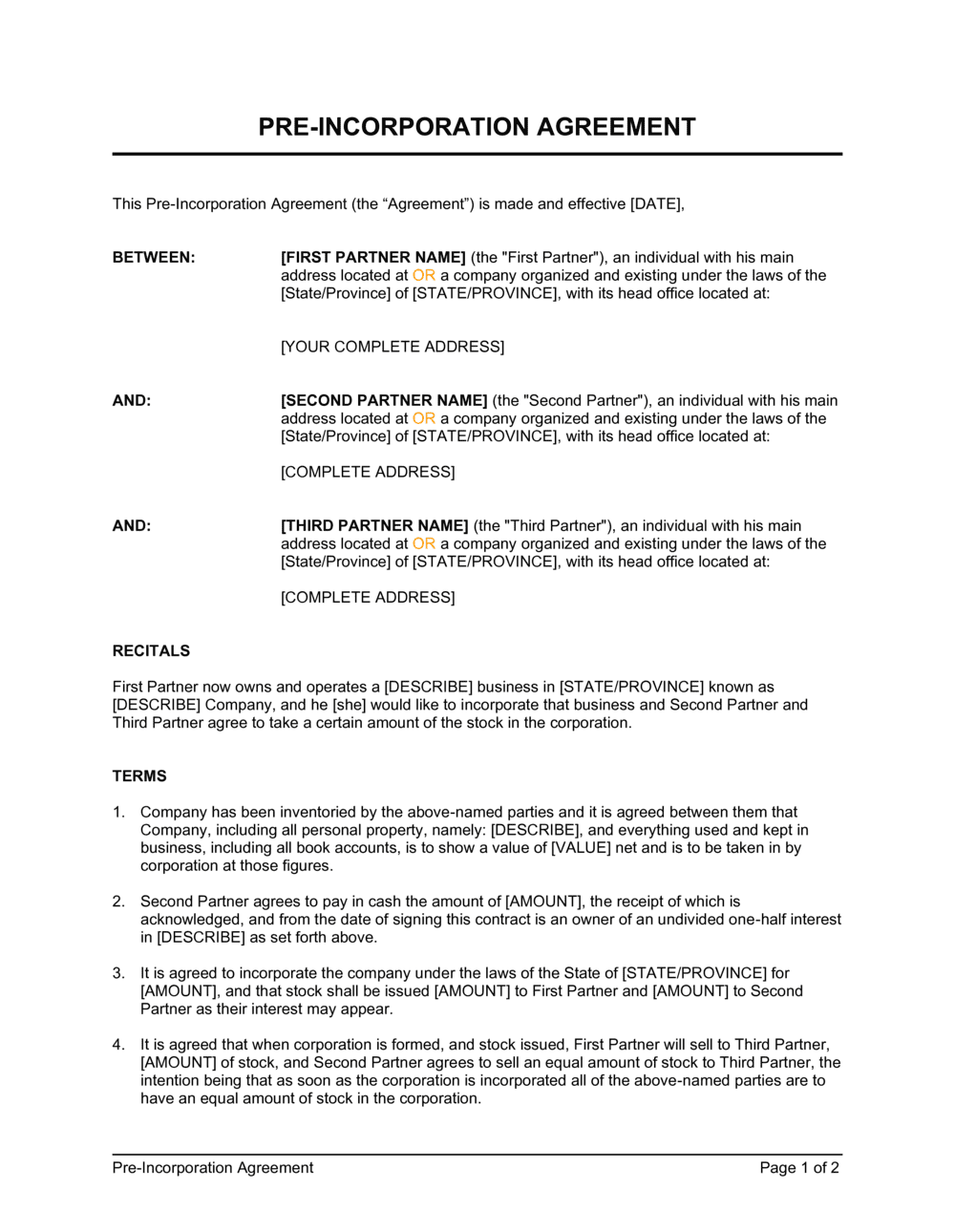
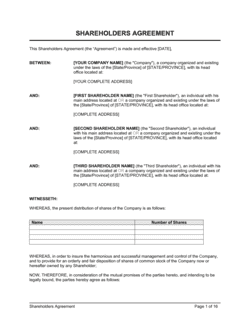
- A contract between prospective founders that governs their mutual obligations, equity expectations, and IP ownership before a legal entity is formed.
- Prospective Founders
- Individuals who intend to incorporate a company together but have not yet formed the legal entity.
- Equity Split
- The agreed percentage of shares or ownership interest each founder will receive in the company upon incorporation.
- Vesting Schedule
- A timeline over which founders earn their equity, typically monthly over 4 years with a 1-year cliff, designed to ensure continued contribution.
- IP Assignment
- A contractual transfer of ownership of intellectual property — code, designs, trade secrets — created by a founder to the company upon incorporation.
- Capital Contribution
- Cash, property, or other assets a founder commits to transferring to the company in exchange for their equity stake.
- Pre-Incorporation Expenses
- Costs incurred by founders on behalf of the proposed venture before the legal entity exists, such as filing fees, software subscriptions, or prototype materials.
- Ratification
- The act by which the newly incorporated company formally adopts and takes legal responsibility for contracts or obligations entered into on its behalf before incorporation.
- Dissolution Clause
- A provision specifying how assets, IP, and liabilities are handled if the founders decide not to proceed with incorporation.
- Deadlock
- A situation where co-founders with equal voting rights cannot reach agreement, potentially stalling all material decisions for the venture.
- Non-Solicitation Clause
- A restriction preventing a departing founder from recruiting the remaining founders' employees or contractors for a defined period after leaving the venture.
- Confidential Information
- Non-public information about the proposed venture — business model, financials, technical details, customer data — that founders agree not to disclose to third parties.