Podcast Script Template

Free Word download • Edit online • Save & share with Drive • Export to PDF

3 pages20–30 min to fillDifficulty: StandardSignature requiredLegal review recommended
Learn more ↓
FreePodcast Script Template

At a glance

What it is
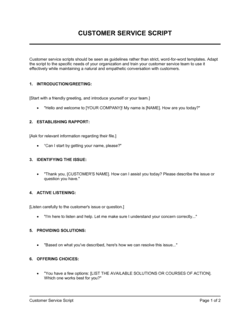
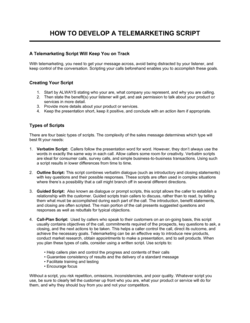
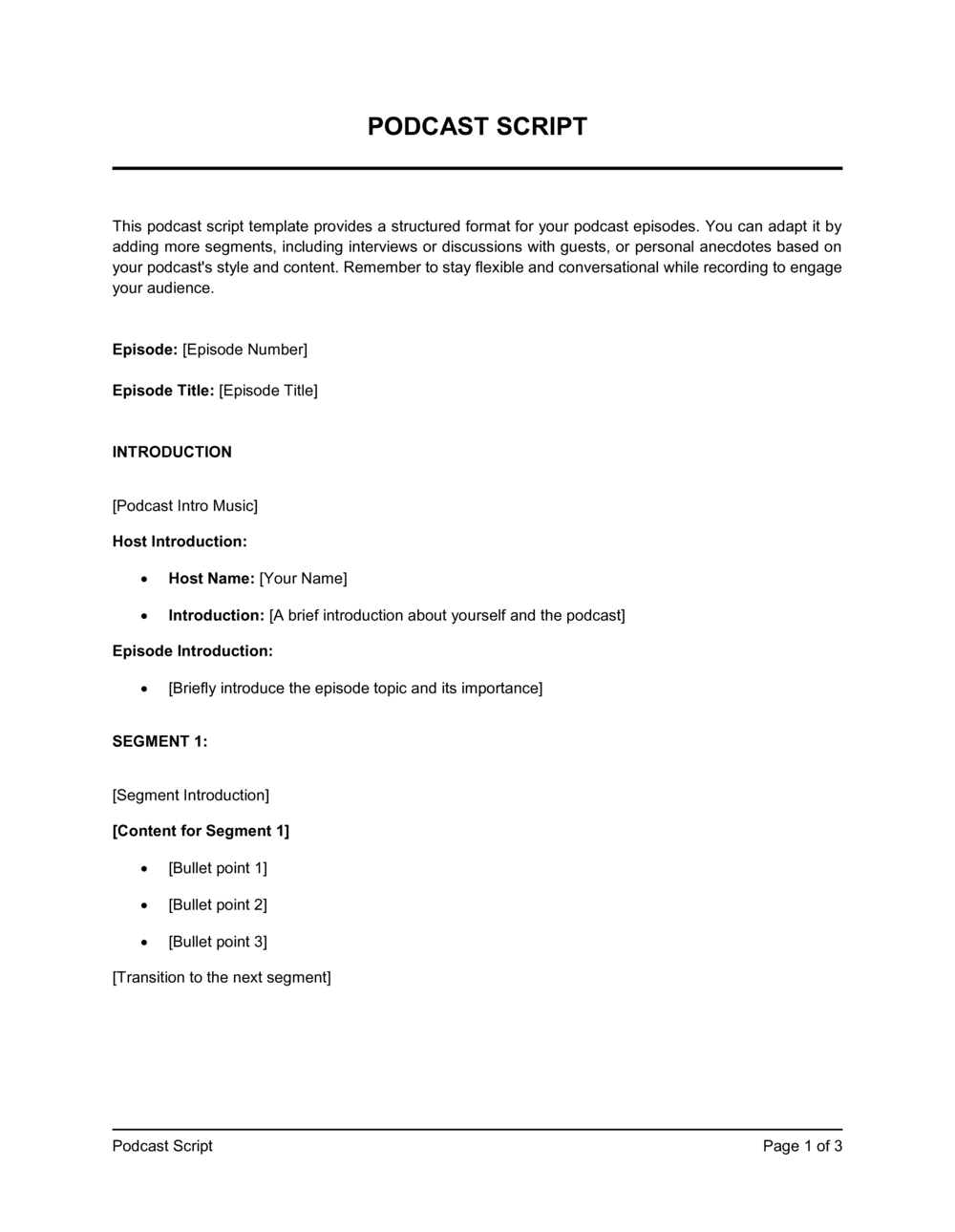
A Podcast Script is a structured production document that maps every spoken element of a podcast episode — from the host intro and guest introductions to segment transitions, sponsor ad reads, legal disclosures, and the closing call to action. This free Word download gives podcasters, production teams, and branded content studios a consistent, professional framework they can edit online and export as PDF before every recording session.
When you need it
Use it before recording any episode where content accuracy, brand consistency, sponsor compliance, or legal disclosures matter — including sponsored episodes, interview shows, educational series, and branded content produced under a network or advertising agreement.
What's inside
Episode metadata header, host and guest introduction blocks, segment-by-segment talking points with time targets, verbatim sponsor ad read copy, legal disclaimer and disclosure language, transition cues, and a closing outro with calls to action and episode credits.

What is a Podcast Script?

A Podcast Script is a structured production document that maps every spoken element of a podcast episode — from the host's opening hook and guest introductions to segment talking points, verbatim sponsor ad reads, legal disclosures, transition cues, and the closing call to action. Unlike a simple outline, a full podcast script functions simultaneously as a recording guide for the host, a production brief for the audio editor, and a compliance record that ensures every sponsored episode meets FTC, ASA, and EU advertising disclosure requirements. This free Word download gives podcasters, branded content studios, and corporate communications teams a consistent, professionally formatted framework they can edit and adapt before every recording session.

Why You Need This Document

Producing a podcast episode without a script creates three categories of risk simultaneously. First, sponsored episodes without verbatim FTC disclosures expose both the host and the advertiser to regulatory enforcement — fines, mandatory corrective disclosures, and reputational damage that sponsors will not absorb twice. Second, interview episodes recorded without guest release forms create copyright and personality rights liability that surfaces only when a guest disputes how their contribution was used — after the episode has already been distributed to thousands of listeners. Third, episodes without a defined segment structure and time targets run long, require expensive editing to fix, and deliver inconsistent listener experiences that suppress subscriber retention. A completed podcast script closes all three gaps before you press record, and this template gives you the structure to do it in under 90 minutes per episode.

Which variant fits your situation?

If your situation is…Use this template
Solo commentary or educational episode with no guestsSolo Podcast Script
Interview-format episode with one or more guestsInterview Podcast Script
Sponsored or branded content episode requiring FTC disclosuresSponsored Podcast Script
Panel discussion with three or more participantsPanel Podcast Script
Narrative or storytelling podcast with scripted scenesNarrative Podcast Script
Short-form trailer or promotional episode under five minutesPodcast Trailer Script
Repurposing a podcast episode as written content or show notesPodcast Show Notes Template

Common mistakes to avoid

❌ Burying the FTC disclosure in a mumbled sign-off

Why it matters: The FTC requires that sponsored content disclosures be clear and conspicuous in the same medium as the endorsement. A rushed or quiet disclosure in an audio episode does not meet the standard and exposes both the host and sponsor to enforcement action.

Fix: Place the disclosure at the start of the ad read in plain language — 'This segment is sponsored by [SPONSOR NAME], and this is a paid partnership' — before delivering any endorsement.

❌ Over-scripting interview dialogue

Why it matters: Fully scripted interview exchanges sound unnatural on playback and signal to guests that they cannot speak freely, which suppresses the candid responses that generate the best listener engagement.

Fix: Limit the interview body to talking points and prepared questions. Reserve verbatim scripting for the intro, outro, ad reads, and legal disclaimers only.

❌ Omitting a guest release form before recording

Why it matters: Recording and publishing a guest's voice and likeness without written consent creates copyright and personality rights liability, particularly for guests in California, Canada, and the EU.

Fix: Send a guest release form for signature before the recording date. Include language covering recording, editing, distribution, and use in promotional clips.

❌ Using the same script structure for every episode type

Why it matters: A solo commentary episode, an interview, and a branded sponsored episode have fundamentally different legal, editorial, and production requirements. A one-size script misses disclosures or includes guest introduction blocks with no guest to introduce.

Fix: Maintain separate script templates for solo, interview, and sponsored episode types. Use the variant decision table to select the right format before drafting.

❌ No copyright notice on independently produced episodes

Why it matters: Without a copyright assertion in the episode and show notes, third parties can redistribute audio clips and monetize them without attribution. Recovering damages without prior notice is significantly harder in most jurisdictions.

Fix: Include a copyright line in every episode script credits block and in the show notes published with each episode. Format: © [YEAR] [COPYRIGHT HOLDER]. All rights reserved.

❌ Listing more than three calls to action in the outro

Why it matters: Listener research consistently shows that more than three CTAs produce diminishing returns. A listener asked to subscribe, review, follow on three platforms, visit a website, and buy a product will do none of them.

Fix: Choose one primary CTA aligned to your current growth priority — subscribe if you are building audience, visit a URL if you are driving conversions — and make it the last thing a listener hears.

The 9 key clauses, explained

Episode metadata header

In plain language: Records the episode title, number, season, recording date, planned publish date, host names, and guest names — the reference block that ties the script to a specific production.

Sample language
Episode [NUMBER] | Season [NUMBER] | '[EPISODE TITLE]' | Host: [HOST NAME] | Guest: [GUEST NAME] | Record Date: [DATE] | Publish Date: [DATE] | Target Runtime: [XX:XX]

Common mistake: Omitting the target runtime from the header. Without a time target, segments expand to fill available space and episodes run long, increasing editing costs and drop-off rates.

Host introduction and cold open

In plain language: The opening 30–90 seconds in which the host introduces themselves, the show, and the episode topic — often the first thing a new listener hears.

Sample language
HOST: 'Welcome to [SHOW NAME], the podcast where [VALUE PROPOSITION]. I'm [HOST NAME], and today we're diving into [EPISODE TOPIC]. [HOOK STATEMENT — question, statistic, or story to open].'

Common mistake: Starting with a lengthy biography of the host. New listeners disengage within 30 seconds if value is not established — lead with the episode's benefit to the listener, not the host's credentials.

Guest introduction block

In plain language: A scripted introduction of the guest that the host reads aloud, including title, affiliation, and one specific credential that establishes why this guest is worth the listener's time.

Sample language
HOST: 'My guest today is [GUEST FULL NAME], [TITLE] at [ORGANIZATION], where they [SPECIFIC ACHIEVEMENT — e.g., grew ARR from $2M to $18M in 24 months]. [GUEST NAME], welcome to the show.'

Common mistake: Reading the guest's full LinkedIn bio verbatim. A four-sentence bio read aloud takes 45 seconds and loses listeners. Write a two-sentence spoken introduction focused on the single most relevant achievement.

Segment talking points with time targets

In plain language: The body of the episode broken into named segments, each with key questions or talking points and a target duration — keeping the episode on schedule and on topic.

Sample language
SEGMENT 2: '[SEGMENT NAME]' | Target: [X:XX–X:XX] | Talking Points: (1) [POINT ONE], (2) [POINT TWO], (3) [POINT THREE] | Transition: '[TRANSITION PHRASE or MUSIC CUE].'

Common mistake: Writing fully scripted dialogue for interview segments. Over-scripting interview content makes hosts sound robotic and eliminates the authentic reactions guests respond to — use talking points and questions, not verbatim copy.

Sponsor ad read

In plain language: Verbatim or guided sponsor copy delivered by the host, placed at pre-roll, mid-roll, or post-roll, including the sponsor name, offer, promo code, and required FTC disclosure.

Sample language
AD READ ([POSITION — pre/mid/post]): 'This episode is brought to you by [SPONSOR NAME]. [SPONSOR DESCRIPTION]. Go to [URL] and use code [PROMO CODE] to get [OFFER]. [PERSONAL ENDORSEMENT IF APPLICABLE]. [DISCLOSURE: This is a paid partnership with [SPONSOR NAME].]'

Common mistake: Placing the FTC disclosure at the end of the ad read in a low-attention voice. The FTC requires disclosure to be 'clear and conspicuous' — bury it in a mumbled last sentence and you risk enforcement action against the host and the brand.

Legal disclaimer and disclosure block

In plain language: Scripted language — read aloud and included in show notes — disclosing any material relationships (paid sponsorships, affiliate links, free products), professional advice limitations, and copyright notices.

Sample language
DISCLAIMER: 'The views expressed on [SHOW NAME] are those of the host and guests and do not constitute [legal / financial / medical] advice. [SHOW NAME] may receive compensation for sponsor mentions in this episode. All opinions are our own.'

Common mistake: Placing the disclaimer only in show notes and not in the audio. FTC and ASA guidance requires disclosure in the same medium as the endorsement — audio disclosures are required for audio sponsorships, not just text.

Transition cues and production notes

In plain language: Inline script notes directing the audio editor to insert music, sound effects, or breaks — keeping the script actionable for both host and producer.

Sample language
[MUSIC FADE IN — 3 seconds] | [CUT TO GUEST CLIP — [TIMESTAMP]] | [SFX: [SOUND EFFECT NAME]] | [EDITOR NOTE: trim to [TARGET DURATION] at [TIMESTAMP RANGE]]

Common mistake: Writing production notes in plain prose mixed with spoken copy. Use brackets and ALL CAPS consistently for all production directions so editors can instantly distinguish spoken content from instructions.

Outro and call to action

In plain language: The closing segment in which the host thanks the guest, recaps the episode's key takeaway, and delivers one to three specific calls to action for listeners.

Sample language
HOST: 'Thank you to [GUEST NAME] for joining us. If you found this episode valuable, [CTA 1 — subscribe / leave a review]. You can find [GUEST NAME] at [URL/HANDLE]. Full show notes and links are at [SHOW NOTES URL]. Until next time, I'm [HOST NAME].'

Common mistake: Delivering five or more calls to action in the outro. Listeners act on one clear instruction or none — more than three CTAs produce the same result as zero. Pick the single most important action and make it specific.

Credits and rights notice

In plain language: A closing block — included in the script and show notes — crediting the production team and asserting copyright ownership of the episode content.

Sample language
[SHOW NAME] is produced by [PRODUCTION COMPANY / HOST NAME]. Audio editing by [EDITOR NAME]. Music by [ARTIST NAME] used under [LICENSE TYPE]. © [YEAR] [COPYRIGHT HOLDER]. All rights reserved. Unauthorized reproduction or distribution is prohibited.

Common mistake: No copyright notice on independently produced episodes. Without a clear copyright assertion, clips can be redistributed or monetized by third parties without attribution or compensation.

How to fill it out

  1. 1

    Complete the episode metadata header

    Fill in the episode number, season, title, host and guest names, recording date, planned publish date, and target runtime before writing any other section. This anchors the entire production.

    💡 Set the target runtime first and work backward to allocate minutes per segment — a 30-minute episode leaves roughly 22 minutes of net content after a typical intro, outro, and two ad reads.

  2. 2

    Write the cold open and host introduction

    Draft the first 60–90 seconds of the episode. Lead with a hook — a question, a surprising statistic, or a one-sentence preview of the episode's most compelling moment — before introducing the show and yourself.

    💡 Record yourself reading the cold open aloud. If it takes longer than 90 seconds, cut it. Listener drop-off is highest in the first two minutes.

  3. 3

    Prepare the guest introduction

    Write a two-sentence spoken introduction for each guest: name and title in the first sentence, one specific quantified achievement in the second. Send a draft to the guest before recording so they can correct any factual errors.

    💡 Ask guests to provide their preferred introduction in 50 words or fewer — this saves rewriting time and avoids the awkward on-air correction.

  4. 4

    Map segments with time targets and talking points

    List each episode segment in order with a target start and end time. Under each segment, add three to five talking points or interview questions — enough to guide the conversation without locking it to a script.

    💡 Add a 'rescue question' at the end of each segment — a broad, open-ended question you can ask if the conversation stalls before the segment's time target is reached.

  5. 5

    Insert verbatim sponsor ad reads

    Paste the sponsor's approved ad copy into the pre-roll, mid-roll, or post-roll slot. Add the FTC disclosure immediately after the endorsement, not at the end of the read. Confirm the promo code and URL are current.

    💡 Record ad reads in a separate take even if the episode is recorded live — clean ad audio increases sponsor renewal rates and is easier to replace if the offer changes.

  6. 6

    Add legal disclaimer and disclosure language

    Include a spoken disclaimer in the episode and a written version in show notes. Specify which topic areas require a professional advice limitation (legal, financial, medical) based on the episode content.

    💡 Keep a master disclaimer block in a separate document and paste it into each episode script. Update it any time your sponsor relationships or content areas change.

  7. 7

    Write the outro and finalize calls to action

    Draft the closing 60–90 seconds: thank the guest, state the single most important episode takeaway in one sentence, and deliver one primary call to action with a second optional one. Add the credits and copyright notice.

    💡 End with the same verbal phrase every episode — a signature sign-off creates a memorable brand moment and helps listeners know the episode has ended before the audio does.

  8. 8

    Review the script against the run-of-show timeline

    Read the full script aloud with a stopwatch. Compare total time against the run-of-show. Trim or expand segments to hit the target runtime within 10% before sharing with the production team.

    💡 If the script runs long, cut from the middle segments — never cut the cold open hook or the outro CTA, as these drive retention and conversion.

Frequently asked questions

What is a podcast script?

A podcast script is a structured production document that maps every spoken element of an episode, from the host's opening hook and guest introductions to segment talking points, sponsor ad reads, legal disclosures, and the closing call to action. It functions as both a recording guide for the host and a production brief for the audio editor, ensuring every episode is consistent, compliant, and on time.

Do I need to script every word of my podcast?

No. Fully verbatim scripting is appropriate for the intro, outro, ad reads, and legal disclaimers. Interview and discussion segments are better served by talking points and prepared questions that guide the conversation without eliminating the spontaneity listeners value. Over-scripting interview content makes delivery sound robotic and suppresses the authentic exchanges that generate the best engagement.

What is an FTC disclosure and where does it go in a podcast script?

An FTC disclosure is a statement informing listeners that the host has a material connection to a sponsor — typically a paid arrangement or affiliate commission. It must appear in the audio episode itself, not only in show notes, and should be placed at or near the beginning of the ad read — not buried at the end in a quiet or rushed delivery. The FTC's 2023 endorsement guidelines extended these requirements explicitly to podcast and social media content.

Do podcast guests need to sign a release form?

Yes, in most cases. Recording and publishing a guest's voice and likeness without written consent creates potential liability under copyright law and personality rights statutes, particularly for guests based in California, Canada, and EU member states. A release form should be signed before the recording date and should cover recording, editing, distribution across platforms, and use of clips in promotional content. Keep a countersigned copy on file.

How long should a podcast script be for a 30-minute episode?

A typical scripted 30-minute episode requires approximately 3,000 to 4,500 words of spoken content, depending on pace. Hosts typically speak at 130 to 160 words per minute in a podcast setting. Add production notes, talking points, and stage directions and the full script document runs 4,000 to 6,000 words. Reading the script aloud with a stopwatch before recording is the most reliable way to confirm runtime.

What is the difference between a podcast script and a podcast outline?

A podcast outline lists the episode segments in order with brief topic notes — it is a planning tool, not a production document. A podcast script includes verbatim copy for intros, outros, and ad reads; time targets for each segment; production cues for the editor; and legal disclosure language. The script is what you take into the recording booth; the outline is what you draft first to plan the episode's structure.

Can I use a podcast script template for sponsored content?

Yes, and it is the recommended approach. A sponsored episode script template should include dedicated ad read slots at pre-roll, mid-roll, and post-roll positions; a verbatim FTC disclosure placed at the start of each ad read; a brand safety review section for the sponsor to approve content before recording; and a legal disclaimer block in both the audio and show notes. Using a standard template reduces the risk of missing a required disclosure on any sponsored episode.

How this compares to alternatives

vs Podcast outline

A podcast outline lists segments and topics in order without verbatim copy, production cues, or legal disclosure language. It is a pre-production planning tool, not a recording document. A full script is required for any episode with sponsor ad reads, legal disclaimers, or multiple contributors who need coordinated cues.

vs Video script

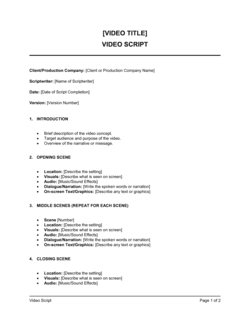
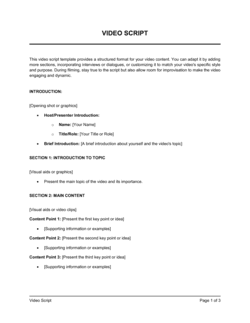
A video script includes visual direction, camera notes, and on-screen text cues alongside spoken copy. A podcast script covers audio only — verbal transitions, music cues, and production notes for the audio editor. If you are producing a video podcast, you need a combined A/V script with both audio and visual direction columns.

vs Show notes template

Show notes are a written companion document published alongside the audio episode — containing timestamps, guest bios, links, and a written disclaimer. A podcast script is the pre-recording production document that drives the episode itself. Both are needed: the script guides the recording; the show notes publish the supporting written content.

vs Guest interview agreement

A guest interview agreement is a legally binding contract covering recording consent, rights, confidentiality, and scheduling obligations between the host and guest. A podcast script is a production document, not a legal agreement. Both are required for interview episodes — the agreement before recording, the script during it.

Industry-specific considerations

Media and entertainment

Network and independent podcast producers use structured scripts to enforce brand consistency across multiple shows and hosts while managing FTC sponsor compliance at scale.

Marketing and advertising agencies

Agencies producing branded podcast content for clients require verbatim ad reads, sponsor approval workflows, and FTC disclosure language embedded directly in the script to meet contractual delivery standards.

Professional services

Law firms, financial advisors, and healthcare providers use scripted podcast episodes with mandatory professional advice disclaimers to manage liability when publishing topic-specific content.

Corporate communications

Internal podcast series for employee communications and external thought-leadership shows require on-brand scripting, consistent segment structure, and legal sign-off before publication.

Jurisdictional notes

United States

The FTC's Endorsement Guides require clear and conspicuous audio disclosure of material connections between hosts and sponsors in every episode where a paid or gifted relationship exists. California's right-of-publicity statute (Civil Code §3344) requires written guest consent before using a person's voice or likeness commercially. The Copyright Act vests authorship in the creator of the original work, but work-for-hire arrangements transfer rights to the employer or commissioning party if the contract specifies this.

Canada

The Competition Bureau enforces truth-in-advertising requirements that apply to sponsored podcast content, requiring clear identification of paid endorsements. Quebec's Act Respecting the Protection of Personal Information in the Private Sector imposes additional consent requirements for recording and publishing personal information, including voice recordings. The Copyright Act gives moral rights to creators, meaning guest contributors may object to modifications of their contributions even after assigning economic rights.

United Kingdom

The UK Advertising Standards Authority's CAP Code requires that sponsored podcast content be clearly identified as advertising. The UK GDPR imposes consent requirements for recording and processing voice data of guests and contributors. OFCOM's broadcasting codes, while not directly applicable to on-demand podcasts, provide the industry standard for impartiality and harm avoidance that UK-based podcast networks typically follow by convention.

European Union

The EU Audiovisual Media Services Directive requires that sponsored content in on-demand media — including podcasts distributed commercially — be clearly labeled, with the commercial relationship disclosed to listeners. The GDPR requires a lawful basis for recording and processing voice data from guests, typically explicit consent. Member states vary in their application of personality rights; France and Germany impose particularly strong protections requiring written consent before publishing a person's voice in a commercial context.

Template vs lawyer — what fits your deal?

PathBest forCostTime
Use the templateIndependent podcasters, internal corporate shows, and non-sponsored episodes without complex legal disclosure requirementsFree30–90 minutes per episode
Template + legal reviewSponsored episodes, branded content for clients, or shows covering legal, financial, or medical topics$150–$500 per review1–3 days
Custom draftedNetwork podcast contracts, multi-show branded content agreements, or episodes subject to regulatory oversight$1,000–$5,000+1–2 weeks

Glossary

Ad Read
A scripted sponsor message delivered by the host, either verbatim or from talking points, typically placed at the pre-roll, mid-roll, or post-roll position of an episode.
Pre-Roll
An ad read or host message delivered before the main episode content begins, typically within the first 60 seconds.
Mid-Roll
A sponsor break or segment transition placed in the middle of an episode, generally at the highest-retention point where CPM rates are highest.
FTC Disclosure
A statement required by the US Federal Trade Commission informing listeners when a host has a material connection to a sponsor — including paid endorsements, gifted products, or affiliate arrangements.
Talking Points
Bullet-form notes outlining the key ideas a host or guest should cover in a segment, used instead of fully verbatim script copy to preserve a conversational tone.
Transition Cue
A scripted phrase, sound effect marker, or music note in the script signaling a move from one segment to the next.
Call to Action (CTA)
A specific instruction to the listener — subscribe, leave a review, visit a URL, or follow on social — delivered at a defined point in the episode, typically in the outro.
Show Notes
A written summary of the episode published alongside the audio, including guest bios, links, timestamps, and a transcript or summary.
CPM (Cost Per Mille)
The ad rate paid by a sponsor per 1,000 episode downloads or streams, the standard pricing metric in podcast advertising.
Run-of-Show
A top-level production timeline listing every segment in order with its planned start time and duration, used by producers to keep episodes on schedule.
Release Form
A legal document signed by a guest or third party granting the podcast producer the right to record, edit, and publish their voice and likeness.

Part of your Business Operating System

This document is one of 3,000+ business & legal templates included in Business in a Box.

  • Fill-in-the-blanks — ready in minutes
  • 100% customizable Word document
  • Compatible with all office suites
  • Export to PDF and share electronically

Create your document in 3 simple steps.

From template to signed document — all inside one Business Operating System.
1
Download or open template

Access over 3,000+ business and legal templates for any business task, project or initiative.

2
Edit and fill in the blanks with AI

Customize your ready-made business document template and save it in the cloud.

3
Save, Share, Send, Sign

Share your files and folders with your team. Create a space of seamless collaboration.

Save time, save money, and create top-quality documents.

★★★★★

"Fantastic value! I'm not sure how I'd do without it. It's worth its weight in gold and paid back for itself many times."

Managing Director · Mall Farm
Robert Whalley
Managing Director, Mall Farm Proprietary Limited
★★★★★

"I have been using Business in a Box for years. It has been the most useful source of templates I have encountered. I recommend it to anyone."

Business Owner · 4+ years
Dr Michael John Freestone
Business Owner
★★★★★

"It has been a life saver so many times I have lost count. Business in a Box has saved me so much time and as you know, time is money."

Owner · Upstate Web
David G. Moore Jr.
Owner, Upstate Web

Run your business with a system — not scattered tools

Stop downloading documents. Start operating with clarity. Business in a Box gives you the Business Operating System used by over 250,000 companies worldwide to structure, run, and grow their business.

Start free · No credit card required