- Conflict of Interest
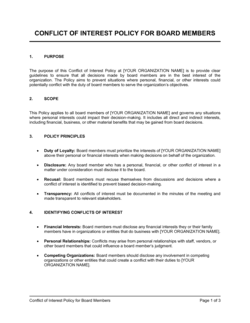
- A situation in which a staff member, board member, or volunteer has a personal or financial interest that could improperly influence a decision they make on behalf of the organization.
- Whistleblower Protection
- A policy provision that shields employees and volunteers from retaliation when they report suspected misconduct, fraud, or policy violations in good faith.
- Fiduciary Duty
- The legal and ethical obligation of board members to act in the best interests of the organization and its mission, rather than in their own personal interest.
- Related-Party Transaction
- Any financial arrangement between the organization and a board member, staff leader, or their immediate family — requiring disclosure and board approval.
- Gift Policy
- A written rule specifying what types and values of gifts, meals, or entertainment staff and board members may accept from donors, vendors, or other parties.
- Confidential Information
- Non-public information about the organization's finances, donors, clients, personnel, or strategy that members may not disclose outside authorized channels.
- Form 990
- The annual information return filed with the IRS by most tax-exempt organizations, which is publicly available and includes governance policy disclosures.
- Duty of Loyalty
- The board member obligation to put the organization's interests above personal gain — a core component of nonprofit governance and conflict-of-interest management.
- Acknowledgment and Signature
- A signed statement by each covered person confirming they have read, understood, and agree to comply with the code of conduct.
- Reporting Channel
- A designated person, role, or mechanism — such as an ethics hotline or board chair — through which violations or concerns are submitted for investigation.