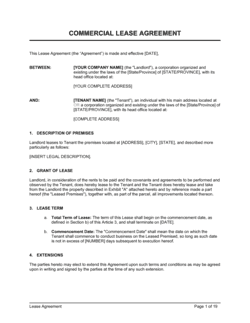
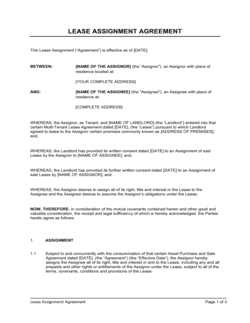
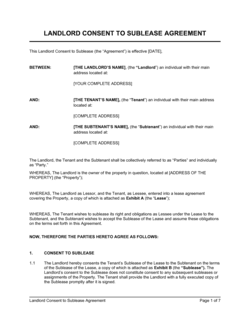
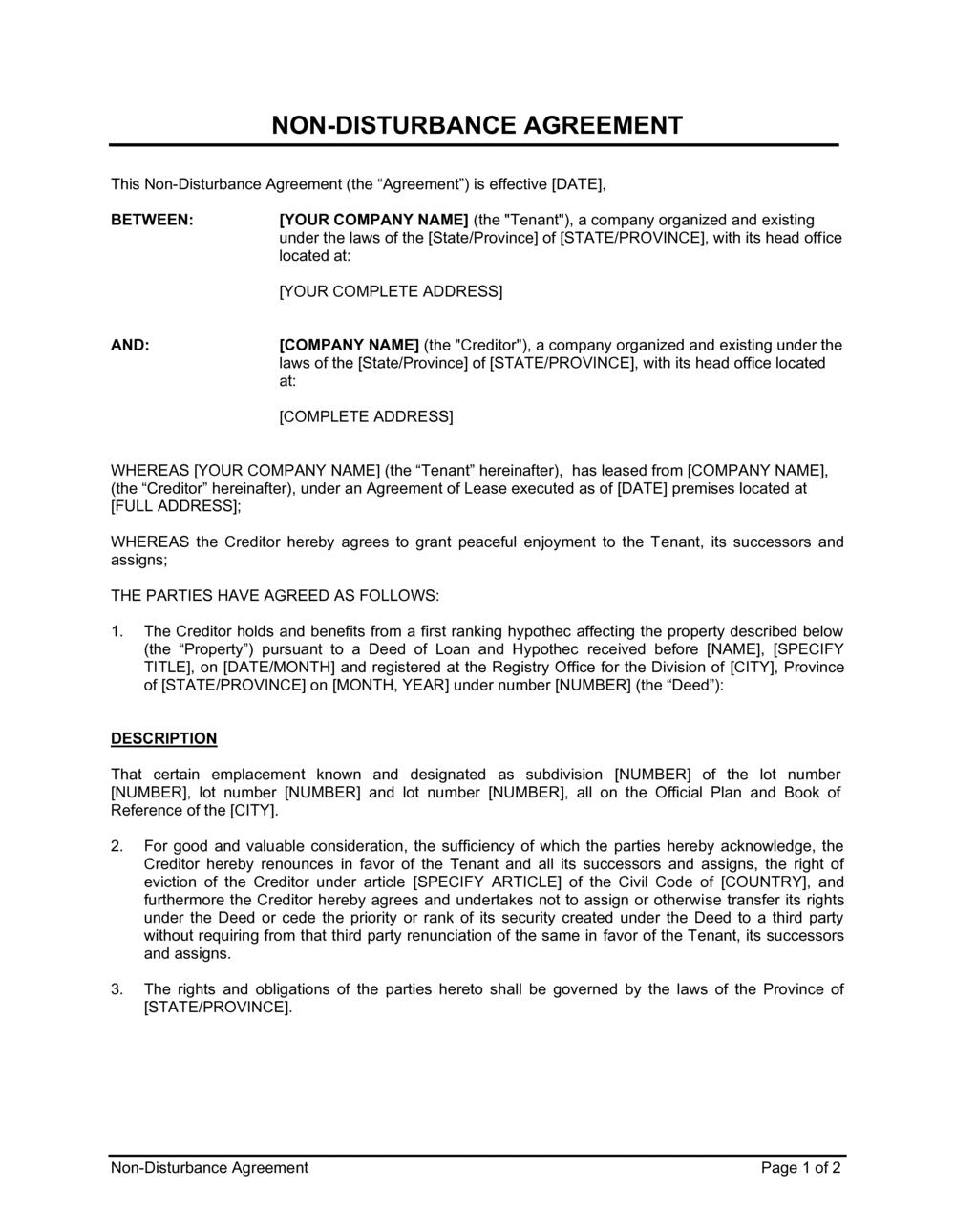
Non-Disturbance Agreement Template

Free Word download • Edit online • Save & share with Drive • Export to PDF

2 pages20–30 min to fillDifficulty: StandardSignature requiredLegal review recommended
Learn more ↓
FreeNon-Disturbance Agreement Template

At a glance

What it is
A Non Disturbance Agreement is a legally binding contract — most commonly part of a broader Subordination, Non-Disturbance and Attornment (SNDA) agreement — in which a lender or superior lienholder promises that a tenant's right to occupy leased premises will not be disturbed in the event of a foreclosure or other enforcement action against the landlord. This free Word download gives landlords, tenants, and lenders a structured, professionally drafted starting point they can edit online and export as PDF.
When you need it
Use it when a commercial tenant's lender or a property lender requires lease subordination as a condition of financing, and the tenant needs assurance that their occupancy will survive foreclosure. It is also triggered when a landlord refinances a mortgaged property or when a tenant negotiates lease protections before signing a long-term commercial lease.
What's inside
Subordination of the lease to the lender's mortgage or deed of trust, the lender's covenant not to disturb the tenant's possession so long as the tenant is not in default, the tenant's agreement to attorn to any successor landlord, notice and cure rights, and governing law.

What is a Non Disturbance Agreement?

A Non Disturbance Agreement is a legally binding contract — most often executed as part of a Subordination, Non-Disturbance and Attornment (SNDA) Agreement — in which a lender or superior lienholder gives a tenant a written promise that, provided the tenant is not in default under their lease, the lender will not terminate or interfere with the tenant's occupancy rights if the landlord defaults on their mortgage and the lender forecloses. In exchange, the tenant typically agrees to subordinate their lease to the lender's mortgage lien and to attorn to — that is, recognize as landlord — any party that acquires the property through foreclosure. The result is a three-way arrangement that aligns the interests of all parties: the lender secures a clean priority position and a continuing rent roll; the landlord satisfies a standard financing condition; and the tenant gains enforceable protection against losing their premises through no fault of their own.

Why You Need This Document

Without a non disturbance agreement, a commercial tenant occupying space on a mortgaged property faces a serious and often overlooked risk: if the landlord defaults on the mortgage, a foreclosing lender can extinguish the tenant's lease entirely under the priority rules that apply in most US states and many other jurisdictions. This means the tenant can be forced to vacate — losing any tenant improvements they funded, the favorable rent locked into a long-term lease, and potentially their entire business location — despite being fully current on rent and in complete compliance with every lease obligation. The financial exposure is not theoretical: tenant improvement costs for commercial fit-outs commonly run $50 to $150 per square foot, and a forced relocation can cost a business six figures before accounting for lost revenue. A properly drafted and recorded non disturbance agreement closes this gap at the outset, giving the tenant certainty of occupancy for the full lease term and giving the lender a committed, performing tenant as part of their collateral. This template provides a professionally structured starting point that captures all three core obligations — subordination, non-disturbance, and attornment — and is designed to be adapted with legal guidance to the specific financing and leasing transaction at hand.

Which variant fits your situation?

If your situation is…Use this template
Full three-party arrangement covering subordination, non-disturbance, and attornmentSubordination, Non-Disturbance and Attornment Agreement (SNDA)
Standalone tenant protection without subordination in a new lease negotiationNon Disturbance Agreement
Formalizing lease terms in a commercial property transactionCommercial Lease Agreement
Landlord refinancing with multiple tenants requiring coordinated SNDAsEstoppel Certificate
Tenant assignment or subletting requiring lender consentLease Assignment Agreement
New lender acquiring a property through foreclosure and inheriting tenanciesAttornment Agreement
Ground lease requiring lender non-disturbance for a leasehold mortgageGround Lease Non-Disturbance Agreement

Common mistakes to avoid

❌ Subordinating without securing non-disturbance simultaneously

Why it matters: A tenant who subordinates their lease without a non-disturbance covenant loses their lease automatically on foreclosure in many jurisdictions, with no right to remain in possession regardless of whether they are current on rent.

Fix: Never agree to subordination without a simultaneous, written non-disturbance covenant from the lender. Treat the two as inseparable obligations in every negotiation.

❌ Omitting notice-and-cure rights for the lender

Why it matters: Without lender notice-and-cure rights, a tenant can terminate the lease for a landlord default that the lender could have remedied — eliminating a performing lease asset from the lender's collateral without any warning.

Fix: Include a clause requiring the tenant to send simultaneous notice of landlord default to the lender and granting the lender a separate cure period of at least 30 days for monetary defaults.

❌ Failing to record the executed agreement

Why it matters: An unrecorded non-disturbance agreement is binding between the signing parties but provides no protection against a subsequent lender or purchaser who takes the property without actual knowledge of the agreement.

Fix: Record the agreement in the county land records immediately after execution. Confirm that all signatures are notarized if recording is required in the applicable jurisdiction.

❌ Leaving successor landlord liability caps undefined

Why it matters: Without clear liability carve-outs, a successor landlord inherits all pre-foreclosure landlord obligations — including unpaid tenant improvement allowances and rent credits — which can make the property economically unattractive to foreclosure buyers and chill bidding.

Fix: Enumerate the specific pre-foreclosure obligations the successor will not be bound by, while preserving the tenant's right to offset any obligations the successor actually assumes or receives cash for.

❌ Using a form that omits the security deposit clause

Why it matters: If the original landlord retains the security deposit and the lender forecloses, the tenant may have no recourse against the successor landlord — losing the deposit entirely.

Fix: Include an explicit provision stating that the successor landlord is liable for the deposit only to the extent it was physically transferred, and require the landlord to transfer the deposit to the lender upon request.

❌ Giving the lender an absolute consent right over lease modifications

Why it matters: An unrestricted lender veto over lease amendments paralyzes routine landlord-tenant operations — renewals, expansion options, signage approvals — and can breach the implied covenant of quiet enjoyment.

Fix: Include a 'not unreasonably withheld or delayed' standard for lender consent, and specify a deemed-approval timeframe (e.g., 10 business days of silence) to prevent indefinite delays.

The 9 key clauses, explained

Recitals and Definitions

In plain language: Identifies all three parties — lender, landlord, and tenant — and defines the property, the mortgage, and the lease to which the agreement applies.

Sample language
WHEREAS, [LENDER NAME] ('Lender') holds a mortgage dated [DATE] on the real property located at [PROPERTY ADDRESS] ('Property'); WHEREAS, [LANDLORD NAME] ('Landlord') is the owner of the Property; WHEREAS, [TENANT NAME] ('Tenant') is a tenant under that certain lease dated [LEASE DATE] ('Lease').

Common mistake: Referencing the lease by execution date only without also citing the full legal description of the property. If the landlord holds multiple properties, this creates ambiguity about which lease is covered.

Subordination of Lease

In plain language: States that the tenant's lease interest is and remains subordinate to the lender's mortgage, ensuring the lender's lien has priority in any enforcement action.

Sample language
Tenant hereby agrees that the Lease and all of Tenant's rights thereunder are and shall remain subject and subordinate to the lien of the Mortgage and to all renewals, modifications, and extensions thereof.

Common mistake: Granting unconditional subordination without simultaneously securing the non-disturbance covenant. Subordination without non-disturbance exposes the tenant to lease termination on foreclosure.

Lender's Covenant of Non-Disturbance

In plain language: The core obligation — the lender's binding promise that as long as the tenant is not in default under the lease, the lender will not terminate the lease or disturb the tenant's possession in any foreclosure or enforcement proceeding.

Sample language
So long as Tenant is not in default (beyond any applicable notice and cure period) under the Lease, Lender agrees that Tenant's possession of the Premises and Tenant's rights and privileges under the Lease shall not be disturbed by Lender in any foreclosure or other enforcement of the Mortgage.

Common mistake: Omitting the words 'beyond any applicable notice and cure period.' Without that qualifier, a technical default that the tenant could cure can trigger the loss of non-disturbance protection before the tenant has any chance to remedy the issue.

Tenant's Agreement to Attorn

In plain language: The tenant agrees that if the lender or any purchaser at a foreclosure sale acquires the landlord's interest, the tenant will recognize that party as the new landlord and continue performing under the lease.

Sample language
In the event of a foreclosure of the Mortgage or any other transfer of the Landlord's interest in the Property, Tenant shall attorn to and recognize such successor as Tenant's landlord under the Lease for the balance of the Lease term, upon the same terms and conditions.

Common mistake: Failing to cap the successor landlord's liability for the prior landlord's defaults. Without a carve-out, the new landlord inherits all pre-foreclosure landlord obligations — including unpaid tenant improvement allowances and rent credits the original landlord owes.

Notice and Cure Rights for Tenant

In plain language: Gives the lender the right to receive notice of any landlord default under the lease and a separate cure period to remedy it before the tenant can exercise any termination right.

Sample language
Tenant agrees to provide Lender with written notice of any default by Landlord under the Lease simultaneously with notice to Landlord. Lender shall have [30] days after receipt of such notice (or such longer period as is reasonably necessary to cure a non-monetary default) to cure such default before Tenant exercises any remedy under the Lease.

Common mistake: Setting the lender's cure period equal to the landlord's cure period rather than giving the lender additional time. Lenders often need extra time to exercise their remedies before they can cure the landlord's default on their behalf.

Limitations on Successor Landlord Liability

In plain language: Specifies the obligations a successor landlord (lender or foreclosure buyer) will and will not be bound by when they step into the landlord role after foreclosure.

Sample language
Any Successor Landlord shall not be: (a) liable for any act or omission of any prior landlord; (b) subject to any offsets, defenses, or counterclaims accruing before such Successor Landlord acquired title; (c) bound by any rent paid more than [30] days in advance; or (d) bound by any amendment to the Lease made without Lender's prior written consent.

Common mistake: Making successor liability limitations so broad that the tenant's core economic benefits — security deposit return, tenant improvement obligations, rent abatement for casualty — are effectively wiped out on foreclosure.

Security Deposit Provisions

In plain language: Addresses whether and how the security deposit is transferred to the successor landlord, and whether the lender is responsible for the tenant's deposit if it was not physically transferred.

Sample language
Successor Landlord shall be responsible for the return of Tenant's security deposit only to the extent such security deposit has been physically delivered to or received by Successor Landlord. Successor Landlord shall have no liability for any security deposit not so transferred.

Common mistake: Leaving the security deposit provision silent. If the original landlord pockets the deposit and the lender forecloses, the tenant can lose the deposit entirely unless the agreement allocates responsibility clearly.

Lender's Consent to Lease Modifications

In plain language: Requires the tenant to obtain the lender's written consent before agreeing to any material amendment, assignment, subletting, or early termination of the lease.

Sample language
Tenant agrees not to materially amend, modify, terminate, or surrender the Lease, or to assign or sublease all or any portion of the Premises, without the prior written consent of Lender, which shall not be unreasonably withheld or delayed.

Common mistake: Omitting the 'not unreasonably withheld' qualifier on lender consent. Without it, the lender has an absolute veto over routine lease modifications, which can paralyze normal landlord-tenant operations.

Governing Law and Recording

In plain language: Specifies the jurisdiction whose law governs the agreement and addresses whether the SNDA should be recorded in the land records to provide constructive notice to future purchasers.

Sample language
This Agreement shall be governed by the laws of the State of [STATE]. The parties agree that this Agreement may be recorded in the real property records of [COUNTY], [STATE], at the election of any party.

Common mistake: Failing to record the agreement. An unrecorded non-disturbance agreement binds the signing parties but may not be enforceable against a subsequent purchaser or lender who takes title without actual knowledge of it.

How to fill it out

  1. 1

    Identify all three parties and their roles

    Enter the full legal names of the lender (or lienholder), the landlord (property owner), and the tenant. Confirm each party's legal entity type — individual, LLC, corporation — and the state of organization.

    💡 Verify the lender's legal name against the recorded mortgage document to ensure the names match exactly — discrepancies create title problems.

  2. 2

    Describe the property and the mortgage

    Include the full legal description of the property (not just the street address), the mortgage recording information (book, page, and county), and the original loan date and amount.

    💡 Pull the legal description from the recorded deed or title commitment — the street address alone is insufficient for a recordable instrument.

  3. 3

    Reference the lease precisely

    Identify the lease by execution date, commencement date, lease term, and the specific premises (suite number, floor, or square footage). Attach a copy of the lease or its key pages as an exhibit.

    💡 If the lease has been amended, identify each amendment by date and number to prevent disputes about which version is covered.

  4. 4

    Confirm the scope of the non-disturbance covenant

    Specify the exact conditions under which non-disturbance protection applies — typically 'so long as Tenant is not in default beyond any applicable notice and cure period.' Define what constitutes a default with reference to the lease.

    💡 Tenants should negotiate for non-disturbance protection even during a cure period, so a technical default does not instantly terminate the covenant.

  5. 5

    Set notice and cure periods

    Draft the lender's notice-of-default rights and its separate cure period. The lender's cure period should begin running from the date the lender actually receives notice — not the date notice is sent to the landlord.

    💡 Give lenders at least 30 days for monetary defaults and 60 days (plus additional time if possession is needed) for non-monetary defaults.

  6. 6

    Define successor landlord liability limits

    List the specific pre-foreclosure obligations the successor landlord will not be bound by, and confirm which obligations do carry over — particularly the obligation to return the security deposit if it was transferred.

    💡 Tenants should push back on any carve-out that eliminates the successor landlord's obligation to complete tenant improvements already committed in the lease.

  7. 7

    Obtain signatures from all three parties

    All three parties — lender, landlord, and tenant — must sign. Some jurisdictions require notarization if the agreement is to be recorded. Confirm recording requirements in the applicable county before execution.

    💡 Execute at least three original counterparts — one for each party — and confirm that the lender's copy is submitted for recording promptly after signing.

  8. 8

    Record the agreement in the land records

    Submit the executed, notarized agreement for recording in the county land records where the property is located. Pay applicable recording fees and confirm the book and page number assigned.

    💡 Recording is the only way to bind future purchasers and successor lenders who take title without actual notice of the agreement.

Frequently asked questions

What is a non disturbance agreement?

A non disturbance agreement is a contract in which a lender or superior lienholder promises that a tenant's lease and right to possession will not be terminated if the lender forecloses on the property. It is typically one component of a broader SNDA agreement — combining subordination, non-disturbance, and attornment in a single instrument. The core purpose is to protect the tenant's business continuity even if the landlord defaults on their mortgage.

What is the difference between a non disturbance agreement and an SNDA?

An SNDA — Subordination, Non-Disturbance and Attornment Agreement — is the full three-part instrument. A standalone non disturbance agreement addresses only the lender's covenant not to disturb the tenant's possession. In practice, lenders almost always require the full SNDA because they need both the tenant's subordination and attornment commitments in exchange for granting non-disturbance protection.

Why would a lender require a non disturbance agreement?

Lenders want performing tenants to remain in place after a foreclosure because rent income services the debt and supports the property's value. Without an SNDA, a tenant whose lease predates the mortgage may have superior priority and refuse to subordinate — which clouds the lender's title. By granting non-disturbance in exchange for subordination, the lender secures a clean priority position while preserving the rent roll.

Is a non disturbance agreement required by law?

No jurisdiction mandates a non disturbance agreement by statute, but commercial lease practice in the US, Canada, the UK, and the EU makes it a standard condition in any property financing transaction with existing tenants. Most institutional lenders require an SNDA before closing. Tenants negotiating long-term leases on mortgaged properties should insist on one as a condition of signing.

What happens to a tenant if there is no non disturbance agreement and the landlord defaults?

If there is no non disturbance agreement and the tenant's lease is subordinate to the mortgage, foreclosure typically extinguishes the lease under US law. The tenant becomes a month-to-month holdover or a tenant at sufferance, with no right to remain in possession beyond what the foreclosing lender permits. This can force the tenant to relocate with little or no notice, disrupting operations, triggering moving costs, and voiding any favorable lease terms they negotiated.

Does a non disturbance agreement need to be notarized?

Notarization is not required in all jurisdictions for the agreement to be binding between the parties. However, most US states and Canadian provinces require notarization as a condition of recording a document in the land records. Since recording is the primary protection against future purchasers and lenders, notarizing all signatures before execution is strongly recommended regardless of technical requirements.

Who benefits most from a non disturbance agreement — the tenant or the lender?

Both parties benefit, but for different reasons. The tenant gains certainty that their occupancy will survive foreclosure, protecting business continuity and the value of any tenant improvements they have funded. The lender gains the tenant's subordination and attornment — ensuring a clean priority position and a committed rent-paying tenant who will recognize any successor landlord — which preserves the property's income stream as collateral for the loan.

Can a tenant negotiate the terms of a non disturbance agreement?

Yes, and tenants often do. Key negotiating points include: the scope of the lender's cure rights, successor landlord liability for pre-foreclosure landlord defaults (particularly tenant improvement allowances and security deposit obligations), the definition of 'default' triggering loss of protection, and the lender's consent standard for lease modifications. Institutional tenants with strong bargaining positions frequently negotiate SNDA terms before finalizing a long-term commercial lease.

What should a tenant check before signing a non disturbance agreement?

Tenants should verify that the non-disturbance covenant is not conditional on matters outside their control, that their notice-and-cure rights are preserved under the lease, that successor landlord liability for tenant improvement allowances and the security deposit is addressed, that the lender's consent rights over lease modifications include a reasonableness standard, and that the agreement will be recorded. A real estate attorney review before signing is strongly recommended for any lease with significant term or financial exposure.

How this compares to alternatives

vs Commercial Lease Agreement

A commercial lease agreement sets out the full terms of the landlord-tenant relationship — rent, term, permitted use, and maintenance obligations. A non disturbance agreement is a separate instrument between the tenant and the lender that protects the tenant's rights under that lease if the lender forecloses. The lease creates the tenancy; the non disturbance agreement protects it against third-party enforcement actions.

vs Estoppel Certificate

An estoppel certificate is a tenant's signed confirmation of the current status of a lease — rent, term, and whether any defaults exist — issued for the benefit of a prospective lender or purchaser. A non disturbance agreement is a forward-looking promise by the lender to protect the tenant's possession. Lenders typically require both: the estoppel confirms the lease status at closing; the SNDA governs what happens if the loan defaults.

vs Lease Assignment Agreement

A lease assignment agreement transfers the tenant's interest in a lease to a third-party assignee. A non disturbance agreement does not transfer any interest — it protects the existing tenant's right to remain in possession against a lender's foreclosure. The two documents address entirely different scenarios: voluntary lease transfer versus involuntary change of landlord.

vs Non-Disclosure Agreement

An NDA protects confidential business information shared between parties in any commercial context. A non disturbance agreement is specific to real estate transactions and protects a tenant's leasehold interest from termination by a foreclosing lender. These documents share no functional overlap and should not be confused despite their similar names.

Industry-specific considerations

Commercial Real Estate

Office, retail, and industrial leases on mortgaged properties routinely require a fully executed SNDA before lender loan closing and as a condition of lease execution.

Retail and Hospitality

Anchor and national tenants typically negotiate non-disturbance rights as a pre-condition of signing, given the high cost of fit-out and the brand disruption of forced relocation.

Healthcare

Medical tenants with long-term leases and substantial equipment installations require non-disturbance protection to preserve regulatory compliance and patient continuity if the landlord defaults.

Financial Services

Banks and insurance companies leasing branch or headquarters space require SNDAs as a matter of internal real estate policy, often with customized lender-consent and successor-liability provisions.

Technology / SaaS

Long-term office and data-center leases in high-cost markets make non-disturbance protection critical, particularly where tenants have funded significant tenant improvements and fit-out costs.

Manufacturing

Industrial tenants with specialized equipment installations and long lease terms negotiate non-disturbance agreements to protect capital-intensive improvements and supply-chain continuity.

Jurisdictional notes

United States

SNDA agreements are standard practice in US commercial real estate finance and are typically required by institutional lenders as a condition of closing. Recording requirements and notarization formalities vary by state — most states require acknowledgment before a notary public for recording. In states where the 'first in time, first in right' priority rule applies strictly, an unrecorded SNDA provides no protection against a subsequent purchaser or lender who takes without actual notice.

Canada

Non-disturbance provisions are common in Canadian commercial mortgage transactions, particularly in Ontario, British Columbia, and Alberta where institutional lenders follow practices similar to US standards. Provincial land registration systems vary — Ontario uses the Land Titles Act system; BC uses the Land Title Act. Agreements must be executed under seal and registered against the applicable land title to bind third parties. Quebec follows civil law principles under the Civil Code of Quebec, where the equivalent concept is regulated differently and French-language documentation may be required for provincially regulated parties.

United Kingdom

In England and Wales, the concept of non-disturbance is addressed through 'non-merger' and 'tenant protection' clauses in a landlord's mortgage deeds rather than as a standalone SNDA. The Law of Property Act 1925 governs the relationship between mortgagees and tenants. Lenders exercising the mortgagee's power of sale or appointing a receiver must generally recognize existing tenancies. Commercial tenants should seek an express deed of non-disturbance from the lender and register it at HM Land Registry for protection against subsequent dealings.

European Union

EU member states regulate landlord-tenant and real estate finance relationships under national civil codes, and there is no uniform SNDA framework across the EU. In Germany, the BGB (Civil Code) provides statutory tenant protections in certain mortgage enforcement scenarios, but these do not substitute for a negotiated non-disturbance agreement in commercial transactions. France, the Netherlands, and Spain each have distinct priority and foreclosure regimes affecting lease survival. Cross-border transactions involving EU properties should obtain jurisdiction-specific legal advice, as the enforceability and recording requirements of non-disturbance instruments vary significantly by member state.

Template vs lawyer — what fits your deal?

PathBest forCostTime
Use the templateStraightforward single-property transactions where the lease is standard and the parties have agreed on terms in principleFree30–60 minutes
Template + legal reviewCommercial leases over 3 years, leases with significant tenant improvement allowances, or properties in jurisdictions with complex recording requirements$400–$800 for a real estate attorney review2–5 business days
Custom draftedInstitutional financing, anchor-tenant retail leases, multi-property portfolios, or cross-border real estate transactions$1,500–$5,000+1–3 weeks

Glossary

Non-Disturbance
A lender's contractual promise that it will not terminate or interfere with a tenant's lease and possession rights if the lender forecloses on the property.
Subordination
The tenant's agreement that their lease interest is ranked below (junior to) the lender's mortgage lien in priority.
Attornment
The tenant's agreement to recognize a new owner — including a foreclosing lender or its purchaser — as the landlord under the existing lease.
SNDA Agreement
A Subordination, Non-Disturbance and Attornment Agreement — the standard three-part document combining all three tenant-lender obligations in a single instrument.
Foreclosure
The legal process by which a lender enforces its mortgage lien against a property after a borrower (landlord) defaults, potentially resulting in a change of ownership.
Lienholder
Any party holding a security interest in the property, including mortgage lenders, mechanics' lien claimants, or judgment creditors.
Estoppel Certificate
A signed statement by a tenant confirming the current status of a lease — rent amount, term, any defaults — typically required by a lender before closing a property loan.
Fee Mortgage
A mortgage secured by the fee simple ownership interest in real property, as opposed to a leasehold mortgage secured only by a tenant's lease interest.
Leasehold Mortgage
A mortgage pledged by a tenant against their leasehold interest, rather than against the underlying real property.
Successor Landlord
Any party — including a foreclosing lender or a buyer at a foreclosure sale — that acquires the landlord's ownership interest and steps into the lease relationship.
Quiet Enjoyment
A landlord's implied or express covenant that the tenant will not be disturbed in possession by the landlord or any party claiming through the landlord.
Priority
The order in which competing claims against a property are satisfied, generally determined by the date of recording — earlier recording = higher priority.

Part of your Business Operating System

This document is one of 3,000+ business & legal templates included in Business in a Box.

  • Fill-in-the-blanks — ready in minutes
  • 100% customizable Word document
  • Compatible with all office suites
  • Export to PDF and share electronically

Create your document in 3 simple steps.

From template to signed document — all inside one Business Operating System.
1
Download or open template

Access over 3,000+ business and legal templates for any business task, project or initiative.

2
Edit and fill in the blanks with AI

Customize your ready-made business document template and save it in the cloud.

3
Save, Share, Send, Sign

Share your files and folders with your team. Create a space of seamless collaboration.

Save time, save money, and create top-quality documents.

★★★★★

"Fantastic value! I'm not sure how I'd do without it. It's worth its weight in gold and paid back for itself many times."

Managing Director · Mall Farm
Robert Whalley
Managing Director, Mall Farm Proprietary Limited
★★★★★

"I have been using Business in a Box for years. It has been the most useful source of templates I have encountered. I recommend it to anyone."

Business Owner · 4+ years
Dr Michael John Freestone
Business Owner
★★★★★

"It has been a life saver so many times I have lost count. Business in a Box has saved me so much time and as you know, time is money."

Owner · Upstate Web
David G. Moore Jr.
Owner, Upstate Web

Run your business with a system — not scattered tools

Stop downloading documents. Start operating with clarity. Business in a Box gives you the Business Operating System used by over 250,000 companies worldwide to structure, run, and grow their business.

Free Forever Plan · No credit card required