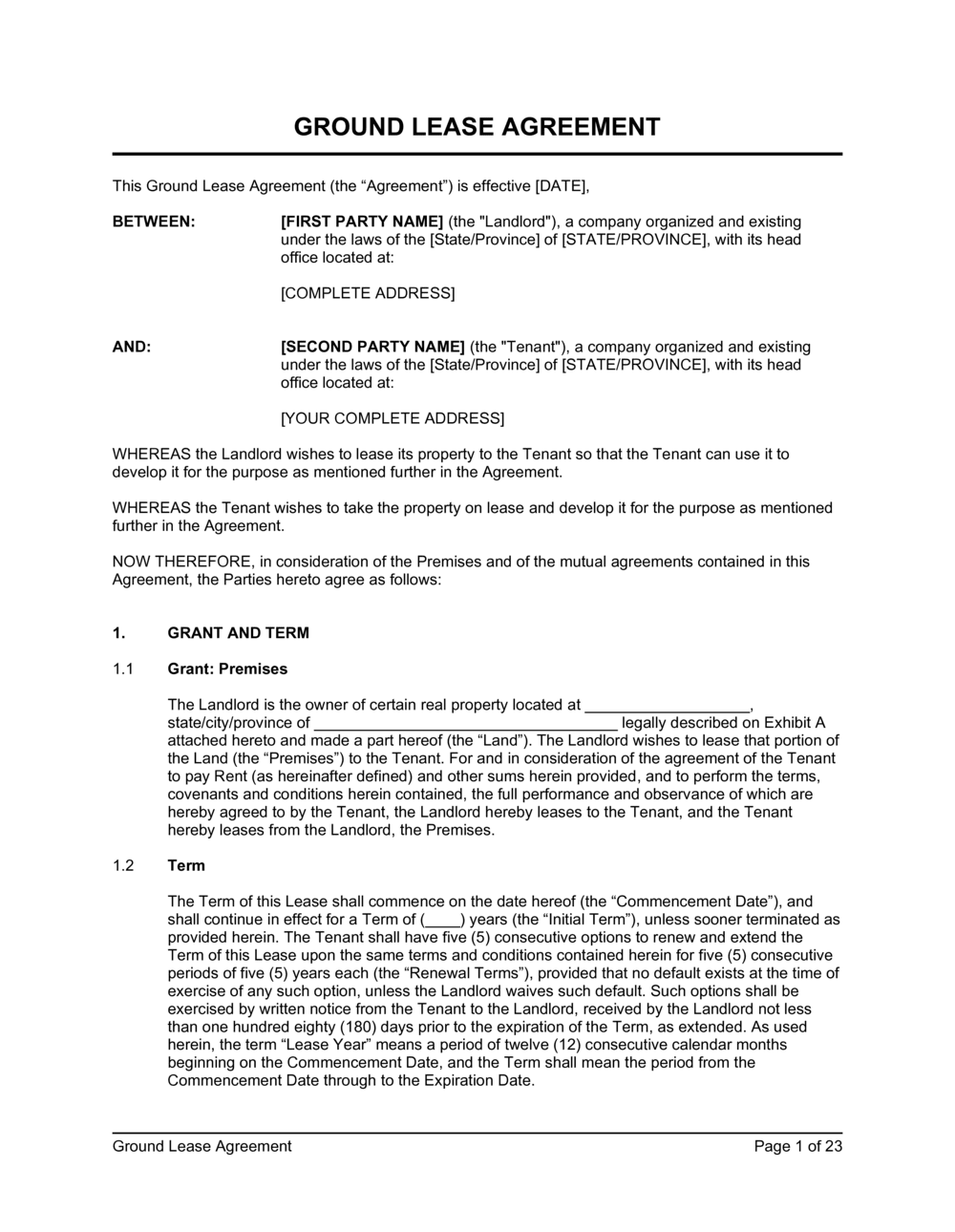
- Ground Lease
- A long-term lease — typically 25 to 99 years — in which the tenant leases only the land and retains ownership of any buildings or improvements constructed on it during the term.
- Reversion
- The return of ownership of improvements — buildings, structures, fixtures — to the landowner at the end of the lease term, unless the agreement provides otherwise.
- Leasehold Interest
- The tenant's legal right to possess and use the leased land for the duration of the term, which can itself be mortgaged or assigned subject to the lease's terms.
- Fee Interest
- The landowner's permanent ownership of the underlying land, which is separate from the leasehold interest held by the tenant.
- Subordinated Ground Lease
- A ground lease in which the landowner agrees that a lender's mortgage on the leasehold interest takes priority over the landowner's fee interest, making lender financing easier to obtain.
- Unsubordinated Ground Lease
- A ground lease in which the landowner's fee interest remains superior to any leasehold mortgage, protecting the landowner from foreclosure risk but limiting the tenant's financing options.
- Rent Escalation Clause
- A contractual provision that increases base rent over time according to a fixed percentage, CPI index, fair market value reassessment, or a combination of methods.
- Estoppel Certificate
- A written statement by the tenant (or landowner) confirming the current status of the lease — rent paid, no defaults, term remaining — typically required by lenders or buyers.
- Leasehold Mortgage
- A mortgage secured against the tenant's leasehold interest rather than the land itself, used to finance construction or improvements on the leased site.
- Net Lease
- A lease structure in which the tenant pays base rent plus some or all of property taxes, insurance, and maintenance costs — common in ground leases to keep the landowner's obligations minimal.
- Attornment
- The tenant's agreement to recognize a new landowner or mortgagee as landlord following a sale or foreclosure, preserving the lease rather than triggering termination.