1
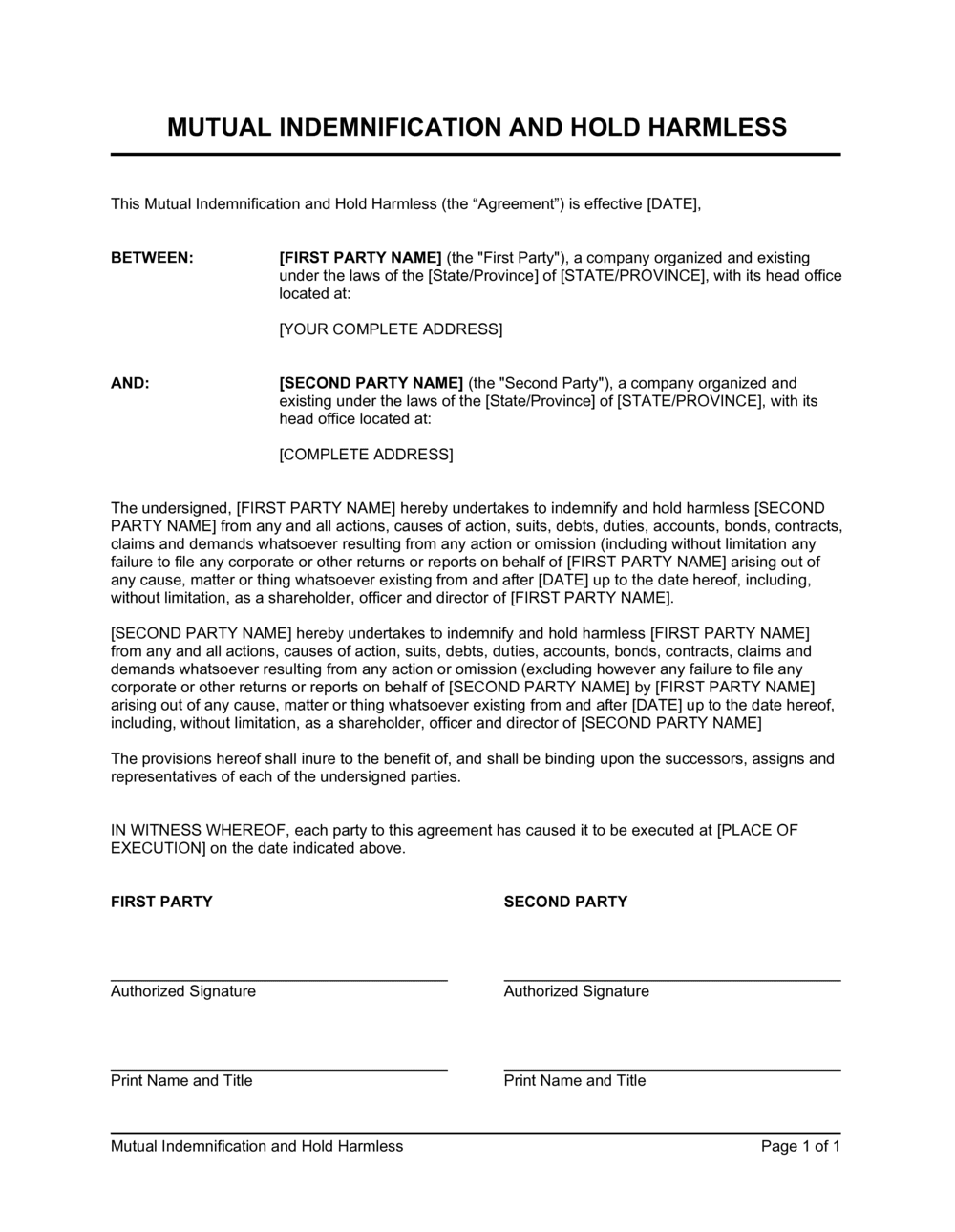
Identify the parties and their legal entity names
Enter the full registered legal name, entity type (LLC, Corp, etc.), state or country of formation, and principal address for each party. Both parties carry equal obligations, so precision here matters for enforcement.
💡 Cross-reference each party's name against their state or provincial corporate registry to confirm the exact legal entity before signing.
2
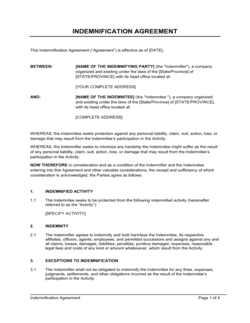
Define the scope of the covered activity
Describe the underlying project, event, or relationship that gives rise to the mutual indemnity — the more specific, the better. Vague scope creates disputes about whether a given claim falls within the agreement.
💡 If the parties have a separate master services agreement or project contract, reference it by name and date in the scope clause to tie the indemnity to that specific engagement.
3
Set the indemnity trigger standard
Choose whether indemnity is triggered by negligence only, by breach of the agreement, or by both. Decide whether the indemnity covers strict liability claims in addition to fault-based ones.
💡 Broad triggers like 'arising out of or related to' can capture claims the indemnitor had no hand in causing — use 'caused by or resulting from the fault or breach of' for tighter protection.
4
Specify insurance minimums and additional-insured requirements
Enter the required coverage types and minimum limits appropriate to the risk level of the underlying activity. Common baselines are $1M per occurrence / $2M aggregate for general liability. Add professional liability and cyber liability requirements for technology or professional service engagements.
💡 Request a certificate of insurance and additional-insured endorsement from the other party before the project begins — not after a claim arises.
5
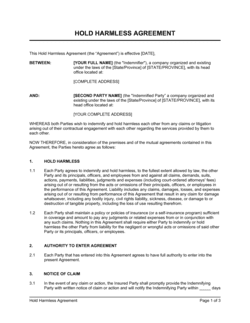
Set the notice period and tender procedure
Specify the number of days after a claim is discovered that notice must be provided, the required form (written, certified mail, email with confirmation), and the contact person for each party.
💡 30 days is a widely accepted notice period — shorter deadlines create forfeiture risk; longer deadlines delay the indemnitor's ability to mount an effective defense.
6
Negotiate and enter the liability cap
Agree on a dollar ceiling for each party's total exposure. Base it on the value of the underlying contract, the realistic range of third-party claims, and each party's insurance limits.
💡 Set the cap at or above the underlying contract value. A cap below the contract value effectively negates the indemnity for any serious claim.
7
Review exclusions and carve-outs
Confirm that gross negligence, willful misconduct, and material breach by the indemnitee are excluded from coverage. Consider adding a comparative fault provision that reduces indemnity obligations proportionally when both parties contributed to the loss.
💡 In jurisdictions with comparative negligence statutes, a proportional carve-out aligns the contract with what courts would likely do anyway — and makes the agreement easier to enforce.
8
Execute before the activity begins
Both authorized signatories must sign and date the agreement before the joint activity, event, or project starts. Post-activity signatures raise fresh-consideration problems and may not cover claims that arose before execution.
💡 Use a dated signature block with the signer's name, title, and authority statement (e.g., 'duly authorized representative') to prevent later disputes about whether the signatory had authority to bind the entity.