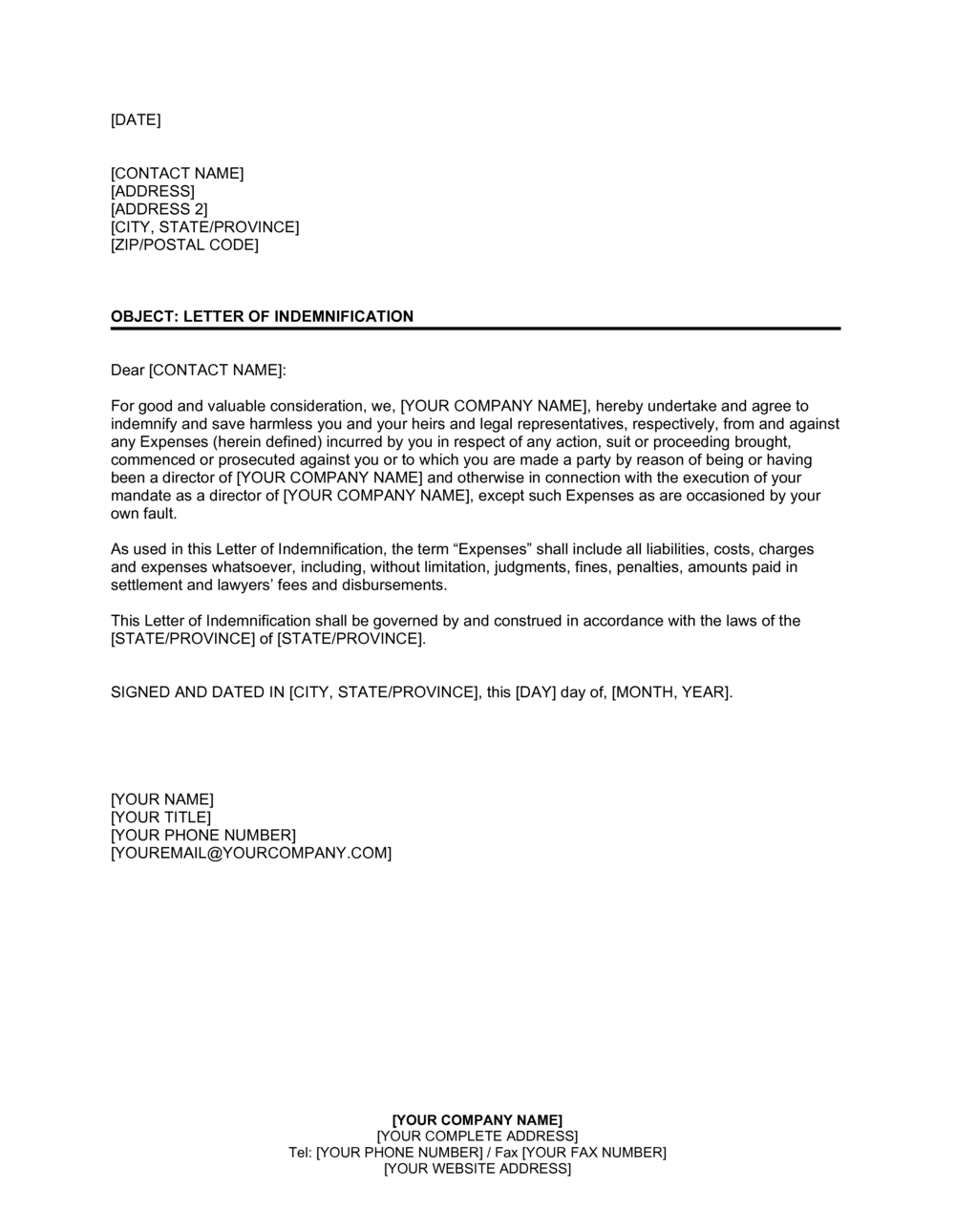
Letter of Indemnification to Former Director Template

Free Word download β€’ Edit online β€’ Save & share with Drive β€’ Export to PDF

1 pageβ€’20–25 min to fillβ€’Difficulty: Standard
Learn more ↓
FreeLetter of Indemnification to Former Director Template

At a glance

What it is
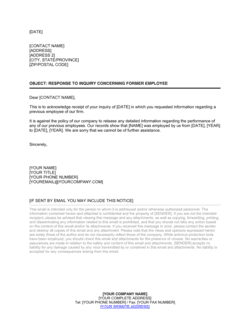
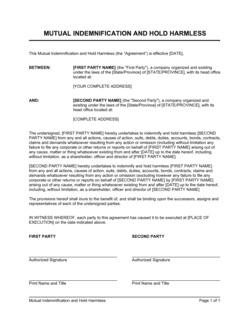
A Letter of Indemnification to a Former Director is a formal written confirmation from a company to a departing or former board member that the organization will cover specified legal costs, claims, and liabilities arising from actions taken in good faith during that director's tenure. This free Word download gives you a professionally structured letter you can edit online and export as PDF.
When you need it
Use it when a director resigns or is removed from the board and the company wishes to confirm existing indemnification obligations, or when a former director faces a third-party claim, lawsuit, or regulatory inquiry related to decisions made during their service.
What's inside
Opening identification of both parties, reference to the governing indemnification provision, scope of covered costs and claims, conditions and limitations, process for submitting claims, duration of the commitment, and a formal closing acknowledgment.

What is a Letter of Indemnification to a Former Director?

A Letter of Indemnification to a Former Director is a formal written confirmation issued by a company to a departing or past board member, documenting the organization's commitment to cover specified legal costs, claims, and liabilities arising from actions the director took in good faith during their tenure. It does not typically create new rights β€” rather, it translates obligations already embedded in the company's bylaws, articles of incorporation, or a prior indemnification agreement into a clear, standalone document the former director can reference if a covered claim emerges after their departure. The letter identifies both parties, cites the governing authority for the commitment, defines what is and is not covered, and outlines the process for invoking protection.

Why You Need This Document

Without a written indemnification letter at the point of a director's departure, the company's existing obligation becomes harder to act on quickly when a claim actually arrives β€” which is precisely the wrong moment to be reconstructing the scope of the commitment from bylaw provisions and meeting minutes. Former directors facing a regulatory inquiry or civil action need to know immediately whether the company will cover their legal costs and advance expenses; ambiguity at that stage delays the engagement of counsel and can increase total costs significantly. For the company, a clearly scoped letter limits exposure by documenting the good-faith conditions and exclusions that apply β€” reducing the risk of an overly broad indemnification demand. This template gives both parties a professionally structured, consistent record of the commitment in under 30 minutes, removing the ambiguity that turns routine board transitions into unnecessary disputes.

Which variant fits your situation?

If your situation is…Use this template
Confirming indemnification for a director departing after normal term expiryLetter of Indemnification to Former Director
Binding commitment with mutual obligations and detailed claim proceduresIndemnification Agreement
Covering an officer or executive rather than a board-level directorLetter of Indemnification to Former Officer
Providing indemnification to an employee named in litigationEmployee Indemnification Letter
Indemnifying a third-party vendor or partner rather than an internal directorLetter of Indemnity (Third Party)
Releasing the company from claims by the departing directorDirector Resignation and Release Agreement
Issuing a comprehensive D&O policy confirmation alongside the letterDirectors and Officers Insurance Summary Letter

Common mistakes to avoid

❌ Using trade name instead of registered legal entity

Why it matters: If the letter names a brand rather than the incorporated entity, the indemnification commitment may be unenforceable because the signing party has no legal capacity to bind the company.

Fix: Confirm the exact legal name from the company's certificate of incorporation or state registry and use it consistently throughout the letter.

❌ Omitting the good-faith condition

Why it matters: Without a good-faith requirement, the company may face an argument that it must indemnify a director later found to have acted fraudulently or in deliberate breach of fiduciary duty.

Fix: Include explicit exclusions for fraud, gross negligence, and willful misconduct, and tie indemnification to the director's reasonable belief that their conduct served the company's interests.

❌ Setting a fixed expiry date for the commitment

Why it matters: Securities, environmental, and regulatory claims can surface years or decades after a director's departure β€” a three-year sunset clause leaves the director exposed on long-tail matters.

Fix: Tie the duration to the applicable statute of limitations for the types of claims most likely to arise from the director's role, or state that it runs as long as any claim from the tenure period can lawfully be brought.

❌ No consent-to-settle clause

Why it matters: A former director who settles a claim independently β€” without the company's approval β€” can bind the company to a large payment it had no opportunity to evaluate or contest.

Fix: Include a clause requiring the company's prior written consent before the director settles any covered claim, with a reasonableness standard to prevent the company from unreasonably withholding consent.

The 10 key clauses, explained

Opening identification of parties

In plain language: Names the company and the former director, states the date of the letter, and references the director's period of service.

Sample language
This letter is addressed to [FORMER DIRECTOR FULL NAME] ('Director'), who served on the Board of Directors of [COMPANY LEGAL NAME] ('Company') from [START DATE] to [END DATE].

Common mistake: Using a trade name instead of the company's registered legal entity name β€” this can create ambiguity about which entity is bound by the commitment.

Reference to governing authority

In plain language: Cites the specific bylaw provision, board resolution, or prior indemnification agreement that authorizes and underpins the commitment made in this letter.

Sample language
Pursuant to Article [X], Section [Y] of the Company's Bylaws and the Board resolution dated [DATE], the Company hereby confirms its indemnification obligations to the Director as set out below.

Common mistake: Omitting the specific governing reference and relying on vague language like 'as previously agreed' β€” leaving the authority for the commitment unclear and potentially unenforceable.

Scope of covered claims and costs

In plain language: Defines exactly what the company will cover: legal fees, settlements, judgments, fines, and other costs arising from third-party or regulatory claims related to the director's service.

Sample language
The Company agrees to indemnify the Director against any and all reasonable legal fees, settlements, judgments, and fines arising from any Covered Claim, defined as any civil, criminal, administrative, or regulatory proceeding related to the Director's service in that capacity.

Common mistake: Using undefined terms like 'all claims' without specifying the categories of proceedings covered β€” creating disputes later about whether a particular claim qualifies.

Good faith and conduct conditions

In plain language: States that indemnification applies only where the director acted in good faith and in a manner reasonably believed to be in the company's best interests, excluding gross negligence or willful misconduct.

Sample language
Indemnification under this letter is conditioned upon the Director having acted in good faith and in a manner the Director reasonably believed to be in the best interests of the Company, and not as a result of fraud, gross negligence, or willful misconduct.

Common mistake: Omitting the good-faith condition entirely β€” which can expose the company to indemnifying a director found to have acted fraudulently or in deliberate breach of duty.

Advancement of expenses provision

In plain language: Confirms whether the company will advance legal costs before the claim is resolved, and if so, states the repayment obligation if indemnification is ultimately denied.

Sample language
The Company will advance reasonable legal expenses incurred by the Director in connection with a Covered Claim, provided the Director executes a written undertaking to repay such amounts if it is ultimately determined that the Director is not entitled to indemnification hereunder.

Common mistake: Promising advancement of expenses without requiring a written undertaking to repay β€” removing the company's recourse if the claim is later excluded from coverage.

Claims notification procedure

In plain language: Specifies how and to whom the former director must give notice of a covered claim, and the timeline for doing so.

Sample language
The Director shall notify the Company's General Counsel in writing at [ADDRESS / EMAIL] within [30] days of receiving notice of any claim for which indemnification may be sought under this letter.

Common mistake: Setting a notification deadline without stating the consequence of late notice β€” courts may still require the company to indemnify if the delay caused no prejudice, making enforcement difficult.

Company's right to control defense

In plain language: Reserves the company's right to select legal counsel and control the defense of any covered claim, including approval over settlements.

Sample language
The Company reserves the right, at its own expense, to assume control of the defense of any Covered Claim, including selection of legal counsel. The Director shall not settle any Covered Claim without the Company's prior written consent, which shall not be unreasonably withheld.

Common mistake: Failing to include a consent-to-settle clause β€” allowing the former director to agree to a large settlement that binds the company without its knowledge.

Duration of the indemnification commitment

In plain language: States how long the indemnification obligation remains in effect after the director's departure, typically for as long as claims arising from the director's tenure can lawfully be brought.

Sample language
The indemnification obligations confirmed in this letter shall remain in effect for as long as the Director may be subject to any Covered Claim arising from their service as a director, notwithstanding the cessation of the Director's role.

Common mistake: Including a fixed expiry date β€” such as three years from departure β€” without accounting for long-tail regulatory or securities claims that can arise many years after the fact.

Non-exclusivity and insurance coordination

In plain language: Clarifies that this letter supplements, rather than replaces, any D&O insurance policy, and that coverage under both can be pursued simultaneously.

Sample language
The rights conferred by this letter are not exclusive of any other indemnification rights the Director may have under applicable law, the Company's governing documents, or any D&O insurance policy maintained by the Company.

Common mistake: Treating this letter as the sole source of indemnification and omitting the D&O policy reference β€” leaving the director unaware of available insurance coverage and potentially triggering duplicate or conflicting claims processes.

Governing law and closing acknowledgment

In plain language: States which jurisdiction's law governs the letter and includes a formal closing with the authorized signatory's name and title.

Sample language
This letter is governed by the laws of [STATE / JURISDICTION]. It is issued on behalf of [COMPANY LEGAL NAME] by the undersigned, duly authorized to act on behalf of the Company. [AUTHORIZED SIGNATORY NAME], [TITLE].

Common mistake: Signing with a personal name only, without a title or confirmation that the signatory is authorized to bind the company β€” raising questions about whether the letter creates a valid company obligation.

How to fill it out

  1. 1

    Identify the parties and tenure dates

    Enter the company's full registered legal name and the former director's full legal name. Confirm the exact start and end dates of the director's board service from board minutes or corporate records.

    πŸ’‘ Cross-check the director's service dates against the company's share register or minute book β€” discrepancies in tenure can affect which board resolutions and bylaws apply.

  2. 2

    Cite the governing authority

    Insert the specific bylaw article and section number, or board resolution date, that authorizes the indemnification. Review the current bylaws to confirm the provision is still in force and covers former directors.

    πŸ’‘ If the company has amended its bylaws since the director's tenure, confirm the version in effect during their service β€” indemnification rights are typically assessed under the rules in place at the time of the act.

  3. 3

    Define covered claims and costs

    List the categories of proceedings covered (civil, criminal, administrative, regulatory) and the types of costs included (legal fees, settlements, judgments, fines). Be specific to avoid disputes over borderline claims.

    πŸ’‘ Exclude claims that already fall under a D&O policy's primary coverage to prevent the letter from inadvertently becoming a backstop for uncovered matters.

  4. 4

    Set the good-faith and exclusion conditions

    Include clear language excluding fraud, willful misconduct, and gross negligence from covered claims. Review any prior indemnification agreement with the director to ensure this letter is consistent with earlier commitments.

    πŸ’‘ Where a prior indemnification agreement exists, confirm this letter supplements rather than supersedes it to avoid inadvertently narrowing the director's existing rights.

  5. 5

    Specify the claims notification process

    Name the company officer (typically General Counsel or CEO) to whom notice must be sent, include their contact details, and set the notification deadline β€” typically 30 days from receiving notice of a claim.

    πŸ’‘ State explicitly that notice must be in writing and describe acceptable methods (email with read receipt, certified mail) to prevent disputes about whether proper notice was given.

  6. 6

    Confirm duration and insurance coordination

    State that the obligation runs for the full period during which claims arising from the director's tenure can lawfully be brought, and reference the D&O policy by carrier name and policy number if available.

    πŸ’‘ Attach a one-page D&O coverage summary as an appendix so the former director has a complete picture of all protection available to them.

  7. 7

    Obtain an authorized signature and issue the letter

    Have the letter signed by an officer with board authority to bind the company β€” typically the CEO, General Counsel, or Board Chair. Issue the original to the former director and retain a countersigned copy in the corporate records.

    πŸ’‘ Ask the former director to sign and return a copy confirming receipt and acknowledgment β€” this creates a clear record that the letter was delivered and reviewed.

Frequently asked questions

What is a letter of indemnification to a former director?

A letter of indemnification to a former director is a formal written confirmation from a company to a departing or past board member that the company will cover specified legal costs, claims, and liabilities arising from actions taken in good faith during the director's tenure. It documents an existing obligation β€” typically rooted in the company's bylaws or a prior indemnification agreement β€” and gives the former director a clear reference point if a covered claim arises after their departure.

When should a company send this letter?

Send it at or shortly after the director's departure from the board β€” ideally as part of a structured offboarding process alongside a resignation letter and any release documentation. It is also appropriate to issue the letter when a former director contacts the company about a pending claim, regulatory inquiry, or lawsuit related to their prior service, to confirm the scope of the company's commitment before costs are incurred.

Does this letter create a new indemnification obligation or confirm an existing one?

In most cases, this letter confirms and documents an obligation that already exists under the company's bylaws, articles of incorporation, or a prior indemnification agreement signed when the director joined the board. It does not typically create new rights beyond what those governing documents provide. If the intent is to extend or modify the existing obligation, a formal indemnification agreement β€” rather than a letter β€” is the more appropriate instrument.

Is D&O insurance a substitute for this letter?

No β€” D&O insurance and an indemnification letter serve complementary but distinct functions. A D&O policy is a third-party insurance product that pays covered claims up to the policy limit, subject to deductibles and exclusions. The indemnification letter is a direct company commitment that can cover gaps in the policy, including amounts above the policy limit or claims excluded by the insurer. Both should be in place for meaningful director protection.

Does this letter need to be signed by the former director?

The letter is issued by the company and signed by an authorized officer β€” it does not legally require the former director's countersignature to be effective. However, asking the director to sign and return a copy confirming receipt is strongly recommended because it creates an unambiguous record that the letter was delivered, reviewed, and understood by both parties.

What costs are typically covered by this type of indemnification?

Covered costs typically include reasonable legal and attorney fees, court costs, expert witness fees, settlements (subject to company consent), and final judgments in civil proceedings. Some letters also cover fines in administrative or regulatory proceedings where the director acted in good faith. Costs arising from fraud, willful misconduct, or gross negligence are almost always excluded.

How long does the indemnification obligation last?

The obligation should remain in force for as long as a claim arising from the director's tenure can lawfully be brought β€” which is determined by the applicable statute of limitations for the relevant type of claim. For most corporate governance matters this is three to six years, but securities and regulatory claims can have longer windows. Avoid setting a fixed sunset date that could inadvertently cut off the director's protection before all possible claims are time-barred.

Can this letter be used for officers as well as directors?

This specific template is structured for board-level directors. Officers β€” such as a CEO, CFO, or Secretary who are not board members β€” have similar but legally distinct roles, and the governing authority for their indemnification may differ. Adapting the letter for an officer is straightforward: update the role description and confirm that the bylaw provision cited covers officers as well as directors.

Do I need a lawyer to issue this letter?

For most standard director departures, a well-structured template is sufficient to document the company's commitment. Consider engaging legal counsel when the director's departure is contentious, when active litigation is already pending, when the letter needs to interact with a complex D&O policy structure, or when the company is incorporated in a jurisdiction with specific statutory requirements for director indemnification.

How this compares to alternatives

vs Indemnification Agreement

An indemnification agreement is a bilateral contract signed by both the director and the company, typically at the time of appointment, with detailed mutual obligations, claim procedures, and dispute resolution clauses. A letter of indemnification is a unilateral company confirmation β€” shorter, less formal, and typically issued at departure to document existing obligations rather than create new ones. Use the agreement at onboarding; use the letter at offboarding.

vs Director Resignation Letter

A director resignation letter is issued by the departing director to the company, formally ending their board service. A letter of indemnification flows in the opposite direction β€” from the company to the director β€” confirming ongoing protection after departure. Both documents are typically prepared as part of the same offboarding package.

vs Release of Claims Agreement

A release of claims agreement is signed by the departing director and waives their right to bring future legal actions against the company. An indemnification letter is the mirror image β€” the company waives any argument that it is not obligated to protect the director. The two documents are often issued together to achieve a mutual clean break on departure.

vs D&O Insurance Certificate

A D&O insurance certificate confirms that a third-party insurer has agreed to cover claims against directors up to a policy limit. A letter of indemnification is a direct company commitment that fills coverage gaps β€” amounts above the policy limit, exclusions, and deductibles. The letter and the certificate protect the same person but operate through entirely different mechanisms.

Industry-specific considerations

Financial Services

Regulatory investigations by SEC, FINRA, or banking authorities frequently target former directors, making a well-drafted indemnification letter essential before any inquiry materializes.

Technology / SaaS

Investor-backed startups routinely issue these letters to nominee directors appointed by VC funds when the fund exits or the director rotates off the board post-funding round.

Healthcare

Compliance-driven boards in healthcare organizations face heightened personal liability exposure from billing, licensing, and patient-data decisions, making clear indemnification documentation critical at director departure.

Nonprofit Organizations

Volunteer directors of nonprofits often rely solely on indemnification letters β€” rather than robust D&O policies β€” as the primary form of personal liability protection after their term ends.

Template vs pro β€” what fits your needs?

PathBest forCostTime
Use the templateStandard board departures where no active litigation exists and the company's bylaws clearly authorize indemnificationFree20–30 minutes
Template + professional reviewSituations involving a contentious departure, pending regulatory inquiry, or a complex D&O policy structure$200–$500 for a one-hour legal review1–2 days
Custom draftedActive litigation, high-value claims, publicly traded companies, or jurisdictions with statutory indemnification requirements$800–$2,500+3–7 days

Glossary

Indemnification
A company's obligation to compensate a director or officer for losses, legal costs, or liabilities incurred while performing their duties in good faith.
Indemnitee
The person receiving indemnification β€” in this context, the former director who is being protected against covered claims.
Indemnitor
The party providing indemnification β€” in this letter, the company or organization issuing the commitment.
D&O Insurance
Directors and Officers liability insurance, a policy that covers personal liability claims against board members; it often works alongside a formal indemnification letter.
Good Faith
The standard requiring a director to have acted honestly and in the company's best interests β€” a prerequisite for indemnification in most governing documents.
Covered Claim
A legal action, regulatory inquiry, or third-party demand that falls within the scope of the company's indemnification commitment as defined in the letter.
Advancement of Expenses
A provision allowing the company to pay a director's legal costs as they are incurred, before the underlying claim is resolved, subject to repayment if indemnification is later denied.
Bylaw Indemnification Provision
The section of a company's bylaws or articles that establishes the baseline obligation to indemnify directors and officers β€” the authority referenced in this letter.
Tail Coverage
An extension of a D&O insurance policy that covers claims arising after a director's departure for acts committed during their tenure, commonly called a 'run-off' policy.
Release of Claims
A waiver by which a departing director agrees not to bring legal action against the company in exchange for agreed-upon benefits β€” sometimes issued alongside an indemnification letter.

Part of your Business Operating System

This document is one of 3,000+ business & legal templates included in Business in a Box.

  • Fill-in-the-blanks β€” ready in minutes
  • 100% customizable Word document
  • Compatible with all office suites
  • Export to PDF and share electronically

Create your document in 3 simple steps.

From template to signed document β€” all inside one Business Operating System.
1
Download or open template

Access over 3,000+ business and legal templates for any business task, project or initiative.

2
Edit and fill in the blanks with AI

Customize your ready-made business document template and save it in the cloud.

3
Save, Share, Send, Sign

Share your files and folders with your team. Create a space of seamless collaboration.

Save time, save money, and create top-quality documents.

β˜…β˜…β˜…β˜…β˜…

"Fantastic value! I'm not sure how I'd do without it. It's worth its weight in gold and paid back for itself many times."

Managing Director Β· Mall Farm
Robert Whalley
Managing Director, Mall Farm Proprietary Limited
β˜…β˜…β˜…β˜…β˜…

"I have been using Business in a Box for years. It has been the most useful source of templates I have encountered. I recommend it to anyone."

Business Owner Β· 4+ years
Dr Michael John Freestone
Business Owner
β˜…β˜…β˜…β˜…β˜…

"It has been a life saver so many times I have lost count. Business in a Box has saved me so much time and as you know, time is money."

Owner Β· Upstate Web
David G. Moore Jr.
Owner, Upstate Web

Run your business with a system β€” not scattered tools

Stop downloading documents. Start operating with clarity. Business in a Box gives you the Business Operating System used by over 250,000 companies worldwide to structure, run, and grow their business.

Start freeΒ Β·Β No credit card required