1
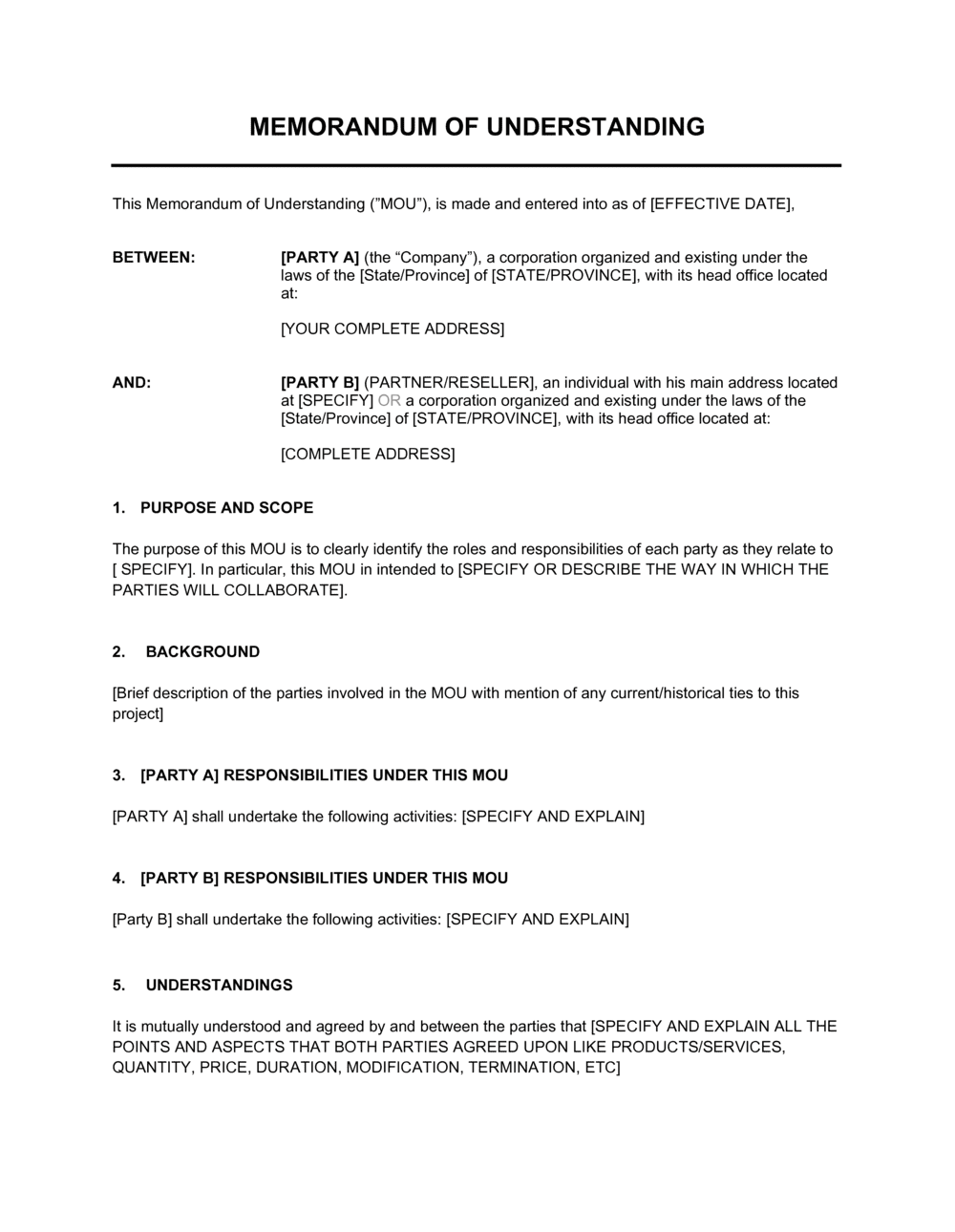
Identify the parties using their registered legal names
Enter each party's full legal entity name, jurisdiction of organization, and entity type (LLC, corporation, etc.) in the opening clause. Include a short defined term for each party — e.g., 'Company' and 'Partner' — to use throughout the document.
💡 Look up each party in the applicable corporate registry before signing. A misspelled or outdated entity name can complicate enforcement of any binding provisions.
2
Describe the proposed arrangement at the right level of detail
Write a clear but high-level description of the deal or collaboration — enough for a third party to understand the subject matter, but avoid including price, payment terms, or delivery dates that would convert this clause into a binding commitment.
💡 If you find yourself writing more than three paragraphs here, stop — you are drafting a contract, not an MOU.
3
Decide which clauses will be binding
Identify which provisions — typically confidentiality, exclusivity, governing law, and costs — will be legally enforceable. List them explicitly in the binding-designation clause. Mark all other sections as non-binding intent.
💡 Add the phrase 'this clause is binding' at the end of each provision you intend to enforce, in addition to the consolidated designation clause — courts have found belt-and-suspenders labeling more persuasive.
4
Set the exclusivity period and scope
If exclusivity applies, enter the duration (typically 30–90 days for most transactions), the specific subject matter covered, and whether it applies to one or both parties. Confirm this clause is explicitly flagged as binding.
💡 A 30-day exclusivity period with a mutual 30-day extension option on written agreement is a practical starting point for most transactions — long enough to demonstrate commitment, short enough to limit exposure if negotiations fail.
5
Draft the confidentiality obligations
Define what constitutes Confidential Information, state how it may be used (evaluation purposes only), list any permitted disclosures (e.g., to advisors under equivalent obligations), and set the survival period after the MOU expires.
💡 If a separate NDA is already in place, reference it and confirm this MOU's confidentiality clause supplements rather than replaces it — overlapping but non-contradictory is safer than a gap.
6
Set the term and termination mechanism
Enter a specific expiry date or a defined period from signing — 60 to 120 days is typical for M&A or partnership negotiations. Add an automatic expiry trigger when the Definitive Agreement is signed, and include a short notice period (5–15 days) for early termination.
💡 Build in a one-time written extension option at the same notice threshold — this avoids both parties needing to sign a full amendment if negotiations run slightly long.
7
Confirm governing law and dispute resolution
Select the governing jurisdiction based on where the key party is incorporated or where the transaction is being performed. For binding clause disputes, choose between litigation, arbitration, or mediation based on your preference for privacy and speed.
💡 Arbitration keeps disputes private and often resolves faster than litigation for commercial disputes — worth specifying even in an MOU if the binding provisions include material exclusivity obligations.
8
Execute before disclosing any sensitive information
Both authorized signatories must sign before any confidential information changes hands or any exclusivity obligations begin. Date the document accurately — post-dated MOUs have been found unenforceable in several jurisdictions.
💡 Use electronic signature with a timestamped audit trail. Courts in the US, Canada, UK, and EU all recognize e-signatures for commercial documents of this type.