Letter of Encouragement to Sales Staff Template

Free Word download • Edit online • Save & share with Drive • Export to PDF

2 pages15–25 min to fillDifficulty: Standard
Learn more ↓
FreeLetter of Encouragement to Sales Staff Template

At a glance

What it is
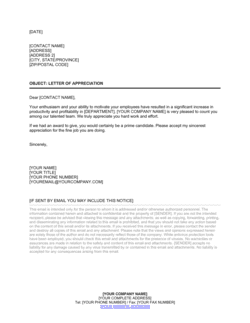
A Letter of Encouragement to Sales Staff is a formal written communication from a manager, director, or executive to a sales team acknowledging their effort, reinforcing confidence, and motivating continued performance. This free Word download gives you a ready-to-edit structure you can personalize with team-specific results, goals, and context, then send by email or print for in-person distribution in minutes.
When you need it
Use it when your team is navigating a slow quarter, recovering from a missed target, facing increased competition, or approaching a high-stakes sales push where morale and focus are critical to results.
What's inside
A warm but professional opening, acknowledgment of recent effort or challenges, specific praise tied to observed behaviors or metrics, a forward-looking motivational message with clear goals, and a confident closing from leadership.

What is a Letter of Encouragement to Sales Staff?

A Letter of Encouragement to Sales Staff is a formal written communication from a sales leader or executive to a sales team that acknowledges current effort, validates the challenges the team is navigating, and directs their motivation toward a specific near-term goal. It is not a performance review, a warning, or a target memo — it is a deliberate leadership tool for sustaining morale and focus during periods of pressure, slow pipelines, or recovery from a missed target. Unlike a casual Slack message or a verbal pep talk, a written letter carries weight precisely because it represents a considered, deliberate act by leadership.

Why You Need This Document

Sales performance is as much a function of confidence and focus as it is of skill and process. When a team is grinding through a slow quarter, a single well-written letter from leadership — one that names the difficulty honestly, recognizes specific behaviors, and points toward a clear priority — can reset energy and redirect effort more effectively than another round of pipeline reviews. Without it, teams in pressure cycles often interpret leadership silence as indifference or disappointment, which compounds the performance problem. This template gives managers and executives a proven structure to communicate credibly and quickly, without spending hours staring at a blank page when there are already deals to close.

Which variant fits your situation?

If your situation is…Use this template
Team missed a quarterly target and morale is lowLetter of Encouragement to Sales Staff (After Missed Target)
Kicking off a new fiscal year or annual sales campaignSales Kick-Off Motivational Letter
Recognizing a top individual performer rather than the whole teamEmployee Recognition Letter
Communicating a sales target increase or new quotaSales Quota Announcement Letter
Motivating staff after a company restructure or leadership changeLetter of Encouragement to Staff
Thanking the team after successfully closing a major deal or campaignEmployee Thank You Letter
Addressing burnout and workload concerns alongside motivationEmployee Wellness Communication Letter

Common mistakes to avoid

❌ All praise, no acknowledgment of difficulty

Why it matters: A team that is struggling will feel patronized by a letter that pretends everything is fine. Credibility is lost in the first paragraph, and the rest goes unread.

Fix: Open by naming the specific challenge directly. One honest sentence of acknowledgment does more for morale than three paragraphs of motivation.
❌ Vague praise with no metrics or specifics

Why it matters: Generic statements like 'you've been working so hard' feel hollow when a team is underperforming. Without specifics, the praise reads as a form letter.

Fix: Pull at least one real activity metric from your CRM — calls, pipeline additions, accounts touched — and name it explicitly in the letter.

❌ No actionable direction after the motivation

Why it matters: A motivating letter that ends without pointing to a specific priority leaves the reader energized but directionless, and that energy dissipates within hours.

Fix: State one or two specific, measurable focus areas for the next week or month. Tie them to existing goals so they feel like momentum, not new demands.

❌ Sending the same letter to every team every quarter

Why it matters: Sales reps talk. When the same letter resurfaces word-for-word in a different quarter, it signals that leadership copy-pastes rather than engages, and trust erodes.

Fix: Customize at least the opening acknowledgment, the specific metrics, and the forward-looking priorities for each send. The template saves structure; you supply the substance.

The 8 key clauses, explained

Header and salutation

In plain language: States the date, the recipient (team name or individual names), and opens with a direct, warm greeting that establishes tone.

Sample language
[DATE] | To: [TEAM NAME / SALES DEPARTMENT] | Dear [Team / First Names],

Common mistake: Using a generic 'To Whom It May Concern' salutation — this immediately signals the letter is a form document and strips out the personal impact.

Opening acknowledgment

In plain language: The first paragraph names the specific context — a tough quarter, a challenging market, an aggressive target — so the team knows the letter is grounded in reality, not empty positivity.

Sample language
I want to start by acknowledging that [SPECIFIC CHALLENGE — e.g., Q3 has been one of our most demanding quarters in recent memory]. The market headwinds you have been navigating are real, and I see the effort you are putting in every day.

Common mistake: Skipping directly to motivation without acknowledging the difficulty. A team that feels their struggle is unrecognized will discount any encouragement that follows.

Specific recognition of effort or behavior

In plain language: Names observable actions or results — call volume, pipeline activity, customer retention, or a specific win — to show that leadership is paying attention to behavior, not just outcomes.

Sample language
Over the past [TIMEFRAME], our team logged [X] outreach calls, progressed [X] deals through to proposal stage, and retained [X] key accounts despite significant competitive pressure. That level of activity does not go unnoticed.

Common mistake: Giving only vague praise like 'you've all been working hard' without referencing a single specific metric or action — vagueness reads as insincerity.

Validation of challenges

In plain language: Explicitly names the external or internal factors making the team's job harder, to demonstrate that leadership understands the full picture.

Sample language
The [MARKET CONDITION / PRODUCT CHANGE / COMPETITIVE FACTOR] has created real friction in your conversations with prospects, and I recognize that closing in this environment requires significantly more persistence than it did [TIMEFRAME] ago.

Common mistake: Attributing all difficulty to team execution without acknowledging external factors — this damages trust and makes the letter feel like disguised criticism.

Motivational message tied to team identity

In plain language: Connects the encouragement to a quality the team has demonstrated before — resilience, creativity, or competitiveness — anchoring confidence in evidence rather than wishful thinking.

Sample language
This team has responded to pressure before. In [PREVIOUS QUARTER / YEAR / SITUATION], you collectively [SPECIFIC ACHIEVEMENT]. That same capability is what I am counting on now.

Common mistake: Using generic motivational language ('you've got this', 'believe in yourselves') without connecting it to something the team actually did — abstract encouragement does not build real confidence.

Forward-looking goals and focus areas

In plain language: States the specific target, priority activity, or time horizon the team should focus on — so the encouragement translates into directed action.

Sample language
For [MONTH / QUARTER], our focus is on [SPECIFIC GOAL — e.g., advancing the [X] deals currently at proposal stage and targeting [X] new discovery calls per rep per week]. These two activities are the highest-leverage use of your time right now.

Common mistake: Ending with motivation but no direction — a letter that inspires without pointing to a specific next step leaves energy with nowhere to go.

Statement of leadership support

In plain language: Commits leadership to a specific form of support — resources, coaching, removing a blocker, or increased accessibility — rather than a vague 'I'm here for you'.

Sample language
I am committed to [SPECIFIC SUPPORT — e.g., clearing the pricing approval bottleneck by [DATE] / scheduling weekly one-on-ones through end of quarter / reviewing your top three deals personally this week].

Common mistake: Promising general support ('my door is always open') without naming a concrete action — this is forgettable and does nothing to reduce the team's actual friction.

Confidence close and signature

In plain language: Closes with a brief, direct expression of confidence in the team and a professional sign-off with the sender's name, title, and contact information.

Sample language
I have every confidence that this team will finish [PERIOD] strong. Let's go get it. | Warm regards, | [SENDER NAME] | [TITLE] | [COMPANY NAME] | [EMAIL / PHONE]

Common mistake: Closing with a question ('Can we count on each other?') instead of a statement — questions create doubt; confident declarative closes reinforce conviction.

How to fill it out

  1. 1

    Identify the specific context and audience

    Before writing, name the exact situation — missed Q3 target, slow summer pipeline, pre-campaign push — and decide whether the letter goes to the full team or a specific region or segment.

    💡 A letter written for the whole company should feel personal; add one sentence that is specific to each sub-team if you send to multiple groups.

  2. 2

    Pull two or three real metrics from recent performance

    Log into your CRM or sales reporting tool and extract one to three specific activity or outcome numbers — calls made, deals advanced, accounts retained — to use in the recognition section.

    💡 Even if the headline number (revenue) is disappointing, there is almost always a positive leading indicator (activity, pipeline growth, new logos) worth naming.

  3. 3

    Draft the opening acknowledgment first

    Write the paragraph that names the challenge before you write the motivation. Getting the empathy on paper first prevents the letter from feeling tone-deaf.

    💡 Read the opening paragraph aloud — if it sounds like you are minimizing the difficulty, rewrite it before moving on.

  4. 4

    Connect motivation to a past team achievement

    Find one specific example from the past 12 months where this team demonstrated the quality you are calling on now. Name the quarter, the deal, or the campaign.

    💡 New managers who lack that history should ask a senior rep or HR for a memorable team win they can reference authentically.

  5. 5

    State one or two specific priorities for the coming period

    Write one sentence for each priority, tied to a measurable output — not an attitude. 'Five new discovery calls per rep per week' is actionable; 'work harder' is not.

    💡 Limit the letter to two priorities maximum. A list of six dilutes focus and signals leadership indecision.

  6. 6

    Name your specific commitment as a leader

    Write down one concrete thing you will personally do to reduce friction or accelerate results — a process fix, a resource approval, or a dedicated review session.

    💡 Follow through visibly and quickly. The letter's credibility depends on whether the team sees the promised action materialize.

  7. 7

    Review tone before sending

    Read the full letter from the perspective of a rep who has been cold-calling for eight hours with no closes. Ask: does this feel honest, specific, and worth reading?

    💡 Have one trusted member of the sales team read it before you send — a single piece of feedback at this stage is worth more than a dozen rewrites after the fact.

Frequently asked questions

What is a letter of encouragement to sales staff?

A letter of encouragement to sales staff is a formal written message from a manager or executive to a sales team that acknowledges their effort, validates any challenges they are facing, and motivates them toward a specific goal or time period. Unlike a performance review or target memo, it is focused entirely on building confidence and directing energy — not evaluating or correcting performance.

When should I send an encouragement letter to my sales team?

The most effective moments are: after a missed quarterly target before the team loses momentum, at the start of a high-pressure sales campaign, during a sustained slow period caused by market conditions, after a significant competitive loss, or at the beginning of a new fiscal year. Sending it proactively — before morale visibly drops — is more effective than sending it reactively once engagement has already declined.

How long should a letter of encouragement to sales staff be?

One page is the right target — roughly 300 to 400 words. Sales reps are time-pressured and results-focused; a letter that runs to two or three pages will not be read in full. Focus on quality over length: one honest acknowledgment, one specific recognition, one clear priority, and one concrete leadership commitment will outperform a longer but less specific letter every time.

Should the letter be signed by the direct manager or a senior executive?

Both carry different weight. A letter from a direct manager feels personal and shows that the person closest to the team is paying attention. A letter from a VP of Sales or CEO signals that the challenge is visible at the highest level and that leadership is invested in the outcome. For significant situations — a tough quarter, a major campaign launch, or a restructure — a co-signed letter from both levels has the most impact.

Is email or a printed letter more effective for sales team encouragement?

Email reaches distributed and remote teams instantly and can be forwarded or saved. A printed letter — especially signed by hand — has a higher perceived value and is more likely to be remembered. The best practice for a high-stakes situation is to send the letter by email and follow it up with a brief team call or standup where the sender reads or references it in person.

What should I avoid writing in an encouragement letter to sales staff?

Avoid hollow phrases that lack specificity ('you've got this', 'keep pushing'), any language that implicitly blames the team for external market conditions, vague promises of support with no concrete follow-through, and references to consequences or performance management. The moment an encouragement letter feels like a warning in disguise, it has the opposite of its intended effect.

How is this different from a performance improvement communication?

A letter of encouragement is positive and forward-looking — it reinforces what the team is doing well and directs their energy toward a goal. A performance improvement communication identifies gaps, sets corrective expectations, and often has formal HR implications. The two should never be combined in the same document. If performance issues need to be addressed, use a separate, appropriately formal channel.

Can I send this letter to an individual salesperson rather than the whole team?

Yes, and a one-on-one encouragement letter — or even a brief handwritten note — can be more powerful than a team-wide message for a rep who is visibly struggling or doubting themselves. The structure is the same: acknowledge what you see, name a specific behavior or effort you have observed, and point toward a near-term goal. Personalize the metrics and the support commitment to that individual's situation.

How this compares to alternatives

vs Letter of Encouragement to Staff

A general staff encouragement letter addresses the whole workforce across all functions. A sales-specific letter focuses on pipeline activity, quota performance, and revenue goals. If your challenge is revenue-team morale specifically, the sales version is more credible because it speaks the team's language — deals, conversion, and targets — rather than general workplace motivation.

vs Employee Recognition Letter

A recognition letter celebrates a specific achievement — a record close, a promotion, or a milestone — and is addressed to an individual or a team that has succeeded. An encouragement letter is used when the team needs motivation to reach a goal they have not yet achieved. Recognition looks backward; encouragement looks forward.

vs Sales Target Announcement

A sales target announcement communicates a new quota or goal — it is informational and directive. A letter of encouragement assumes the target is already set and focuses on building the confidence and motivation to hit it. The two documents serve different moments: the announcement sets expectations; the encouragement sustains them.

vs Employee Thank You Letter

A thank-you letter is sent after a result has been delivered — at the end of a successful campaign or following a significant team win. An encouragement letter is sent before or during the effort, when the outcome is still uncertain. Thank-you letters close a chapter; encouragement letters open one.

Industry-specific considerations

Financial Services

Quota-driven environments with monthly close pressure benefit from letters that reference pipeline health and deal progression metrics rather than just closed revenue.

Technology / SaaS

Long enterprise sales cycles mean reps go weeks without a close; letters that validate pipeline-building activity and late-stage deal advancement are especially effective.

Retail

Seasonal sales fluctuations make encouragement letters before peak periods (holiday, back-to-school) and after slow months a standard management practice.

Professional Services

Business development in professional services is often secondary to client delivery roles; letters that recognize the effort of selling alongside billable work resonate particularly well.

Template vs pro — what fits your needs?

PathBest forCostTime
Use the templateSales managers and executives sending regular team communicationsFree15–30 minutes
Template + professional reviewSenior leaders sending a company-wide letter during a high-stakes period or restructure$50–$150 (communications or HR advisor review)1–2 hours
Custom draftedOrganizations needing a series of communications as part of a structured morale or change-management program$300–$800 (professional copywriter or internal communications consultant)1–3 days

Glossary

Morale
The collective confidence, enthusiasm, and sense of purpose a team brings to their work — directly linked to productivity and retention.
Sales Quota
A defined revenue or activity target assigned to a salesperson or team for a specific time period, used as a performance benchmark.
Pipeline
The set of active sales opportunities at various stages between initial contact and closed deal, used to forecast future revenue.
Cadence
The rhythm of outreach or follow-up activities — calls, emails, meetings — that a salesperson maintains with prospects and customers.
Conversion Rate
The percentage of prospects or leads that advance to the next stage of the sales process or result in a closed sale.
Ramp Period
The time it takes a new salesperson to reach full productivity, typically 3–6 months, during which lower quotas are often set.
Stretch Goal
A target set above the standard quota to encourage exceptional performance, often tied to additional incentives or recognition.
Churn
The rate at which existing customers cancel or do not renew, which sales teams in some industries are responsible for reducing through relationship management.
At-Risk Account
A customer showing signs of disengagement or dissatisfaction who may cancel or reduce spend without proactive intervention.

Part of your Business Operating System

This document is one of 3,000+ business & legal templates included in Business in a Box.

  • Fill-in-the-blanks — ready in minutes
  • 100% customizable Word document
  • Compatible with all office suites
  • Export to PDF and share electronically

Create your document in 3 simple steps.

From template to signed document — all inside one Business Operating System.
1
Download or open template

Access over 3,000+ business and legal templates for any business task, project or initiative.

2
Edit and fill in the blanks with AI

Customize your ready-made business document template and save it in the cloud.

3
Save, Share, Send, Sign

Share your files and folders with your team. Create a space of seamless collaboration.

Save time, save money, and create top-quality documents.

★★★★★

"Fantastic value! I'm not sure how I'd do without it. It's worth its weight in gold and paid back for itself many times."

Managing Director · Mall Farm
Robert Whalley
Managing Director, Mall Farm Proprietary Limited
★★★★★

"I have been using Business in a Box for years. It has been the most useful source of templates I have encountered. I recommend it to anyone."

Business Owner · 4+ years
Dr Michael John Freestone
Business Owner
★★★★★

"It has been a life saver so many times I have lost count. Business in a Box has saved me so much time and as you know, time is money."

Owner · Upstate Web
David G. Moore Jr.
Owner, Upstate Web

Run your business with a system — not scattered tools

Stop downloading documents. Start operating with clarity. Business in a Box gives you the Business Operating System used by over 250,000 companies worldwide to structure, run, and grow their business.

Free Forever Plan · No credit card required