How To Train Employees For Customer Service

Free to read β€’ Save or share with one click

FreeHow To Train Employees For Customer Service Template

At a glance

What it is
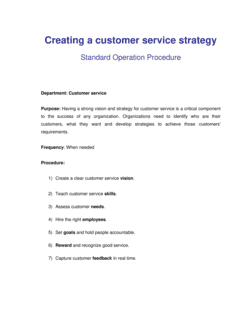
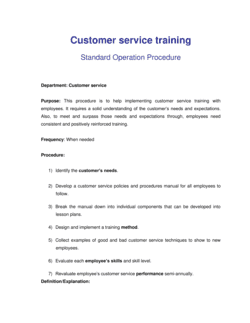
A How To Train Employees For Customer Service document is a structured operational guide that defines the skills, processes, scenarios, and evaluation criteria your team needs to deliver consistent customer experiences. This free Word download gives you a ready-to-edit framework covering everything from onboarding scripts to escalation handling and performance metrics β€” export as PDF to share with trainers or new hires.
When you need it
Use it when onboarding new customer-facing staff, standardizing service quality across locations or teams, or rebuilding a training program after recurring customer complaints. It is also the foundation document when launching a new support channel β€” phone, chat, or email.
What's inside
Training objectives and competency targets, onboarding schedule, core communication skills modules, product and policy knowledge requirements, complaint-handling procedures, role-play scenario library, and a performance evaluation rubric tied to measurable service metrics.

What is a How To Train Employees For Customer Service document?

A How To Train Employees For Customer Service document is a structured operational guide that defines the skills, knowledge, scenarios, and evaluation criteria your team needs to deliver consistent, high-quality customer interactions. It functions as the master reference for everyone involved in service training β€” from the manager designing the program to the new hire working through their first 30 days. Unlike a general onboarding checklist, this document focuses specifically on the communication techniques, complaint-handling procedures, product knowledge benchmarks, and performance metrics that determine whether a customer-facing employee is genuinely ready to represent your business.

Why You Need This Document

Without a written training plan, customer service quality depends entirely on whoever happens to be available to show a new hire the ropes β€” producing inconsistent results across shifts, locations, and team leads. The consequences are measurable: lower CSAT scores, higher escalation rates, repeat contacts on unresolved issues, and front-line staff who burn out faster because they were never properly prepared for difficult interactions. A structured training document closes that gap by giving every new employee the same foundation, every trainer the same curriculum, and every manager the same rubric to evaluate readiness. This template gives you a complete starting point you can customize to your products, channels, and service standards β€” and have in use within a single work day.

Which variant fits your situation?

If your situation is…Use this template
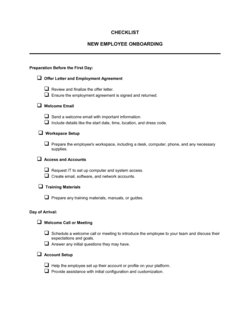
Training new hires in their first 30 days on the jobEmployee Onboarding Plan
Documenting standard procedures for handling customer complaintsCustomer Complaint Procedure
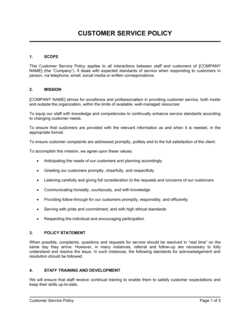
Setting service quality benchmarks and expectations in writingCustomer Service Policy
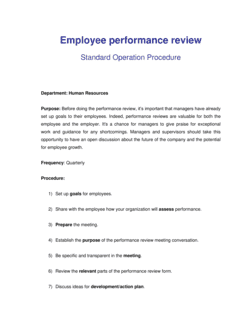
Evaluating a rep's performance after training is completeEmployee Performance Review
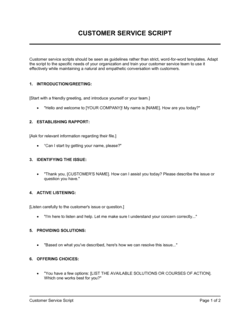
Creating scripts for phone or live-chat customer interactionsCustomer Service Script
Outlining service standards and response time commitments to customersService Level Agreement (SLA)
Defining role expectations for a customer service representative positionCustomer Service Job Description

Common mistakes to avoid

❌ Setting vague training objectives

Why it matters: Without measurable targets, neither the trainer nor the trainee knows when training is complete or successful, leading to inconsistent readiness levels before employees go live.

Fix: Rewrite every objective to include a measurable outcome β€” a pass rate, a CSAT score, or a handle-time benchmark β€” and a deadline for achieving it.

❌ Skipping supervised live practice before solo shifts

Why it matters: Trainees who go directly from classroom instruction to unsupervised interactions make more escalatable errors in their first two weeks, increasing complaint rates and supervisor workload.

Fix: Require a minimum number of observed live interactions β€” five is a common baseline β€” before a trainee is cleared to handle customers independently.

❌ Never updating the training document after launch

Why it matters: Product changes, policy updates, and new service channels render outdated training materials a source of misinformation rather than guidance within 6–12 months.

Fix: Assign a named document owner and schedule quarterly reviews. Link training materials to the live knowledge base wherever possible to reduce maintenance burden.

❌ Training only on positive interaction scenarios

Why it matters: Employees who have never practiced handling irate, unreasonable, or escalating customers before their first live shift are unprepared for the interactions that cause the most damage to CSAT scores.

Fix: Include at least three difficult scenario types β€” billing disputes, repeated complaints, and policy exception requests β€” in the role-play library before trainees go live.

❌ Measuring performance by handle time alone

Why it matters: Optimizing for speed without quality metrics trains representatives to close tickets fast rather than resolve them fully, inflating FCR failures and repeat contact rates.

Fix: Balance efficiency metrics (handle time, contacts per hour) with quality metrics (CSAT, FCR, QA scores) in every performance evaluation.

❌ Delivering training once and treating it as complete

Why it matters: Customer service skills degrade without reinforcement β€” especially after product changes or team turnover β€” and a one-and-done approach produces declining service quality over time.

Fix: Build recurring skill refreshers into the annual calendar: monthly QA coaching sessions, quarterly scenario library updates, and a full training refresh for any employee returning from extended leave.

The 8 key sections, explained

Training objectives and competency targets

Onboarding schedule and timeline

Product and policy knowledge requirements

Core communication skills module

Complaint and escalation handling procedure

Role-play scenario library

Systems and tools training

Performance evaluation rubric and metrics

How to fill it out

  1. 1

    Define measurable training objectives

    List three to five specific outcomes the trainee should achieve by the end of the program. Tie each objective to a KPI β€” FCR rate, CSAT score, or handle time β€” so progress is trackable.

    πŸ’‘ Write objectives in the format 'By [DATE], [EMPLOYEE] will be able to [OBSERVABLE BEHAVIOR] as measured by [METRIC].' This format forces specificity.

  2. 2

    Map your onboarding schedule by week

    Sequence training activities across the first 30–90 days. Begin with product and policy knowledge, move to communication skills, then supervised practice, and finish with solo interactions under QA review.

    πŸ’‘ Build in at least five supervised live interactions β€” observed by a trainer β€” before the new hire handles customers independently.

  3. 3

    Document product and policy knowledge requirements

    List every product line, pricing tier, return policy, and common FAQ the employee must know before going live. Include a minimum passing score for any required assessments.

    πŸ’‘ Link directly to your internal knowledge base rather than duplicating content β€” this keeps training materials accurate when products or policies change.

  4. 4

    Write the communication standards section

    Define approved opening and closing scripts, channel-specific tone guidelines, and a list of prohibited phrases paired with approved alternatives for each.

    πŸ’‘ Record two or three real interactions from your best performers and use transcripts as positive examples in this section.

  5. 5

    Build the escalation procedure step by step

    Map every escalation trigger to a specific action and responsible party. Include word-for-word warm handoff language so trainees know exactly what to say when transferring a customer.

    πŸ’‘ Pilot the escalation flowchart with a group of existing reps β€” they will identify gaps your managers may have overlooked.

  6. 6

    Create at least six role-play scenarios

    Cover your three most common interaction types and your three most difficult β€” billing disputes, irate customers, and policy exceptions are a reliable starting set. Include a scoring rubric for each.

    πŸ’‘ Rotate scenarios annually so experienced staff who move into trainer roles encounter genuinely new practice material.

  7. 7

    Fill in the performance evaluation rubric

    Define the KPI targets and behavioral criteria for each performance rating level (e.g., Exceeds, Meets, Developing). Specify how often QA reviews occur and who conducts them.

    πŸ’‘ Share the rubric with trainees on Day 1 β€” knowing how they will be evaluated in advance accelerates skill development.

  8. 8

    Review and update the document quarterly

    Schedule a quarterly review to update product knowledge sections, refresh scenario libraries, and recalibrate KPI targets based on actual team performance data.

    πŸ’‘ Assign one team lead as the document owner so updates are made consistently rather than only when a problem surfaces.

Frequently asked questions

What should a customer service training plan include?

A complete customer service training plan covers measurable training objectives, a sequenced onboarding schedule, product and policy knowledge requirements, communication skills standards, complaint and escalation procedures, role-play scenarios, systems training, and a performance evaluation rubric. Missing any of these sections typically produces employees who know your products but not how to handle difficult interactions β€” or vice versa.

How long should customer service training take?

For most front-line roles, a structured training period of 2–4 weeks before independent interactions is standard, followed by a 30–90 day supervised ramp with regular QA reviews. Call centers and high-complexity support roles often extend initial training to 4–6 weeks. The right duration depends on product complexity, interaction volume, and the channel mix the employee will handle.

What are the most important customer service skills to train?

Active listening, clear and empathetic communication, de-escalation technique, product and policy knowledge, and accurate system usage are the five skills that most directly affect CSAT scores and FCR rates. Communication and de-escalation are the hardest to teach through written materials alone β€” they require structured role-play and observed practice to develop reliably.

How do I measure whether customer service training was effective?

Track CSAT scores, first contact resolution rate, average handle time, and QA review scores before and after training. A 30-day post-training evaluation comparing these metrics against pre-training baselines gives a concrete picture of impact. Ongoing monthly QA reviews catch skill decay before it becomes a pattern visible in customer satisfaction data.

Should customer service training be done in person or online?

Both work, but the most effective programs combine online self-paced modules for product knowledge and policy content with in-person or live-video sessions for communication skills, role-play, and supervised live interactions. Purely asynchronous training consistently underprepares employees for the emotional and interpersonal demands of live customer interactions.

How often should customer service training be updated?

At minimum, review and update the training document quarterly β€” more frequently when major product changes, policy updates, or new service channels are introduced. The scenario library should be refreshed at least annually. Outdated training materials are one of the most common causes of service inconsistency in growing teams.

What is the difference between a customer service training plan and a customer service policy?

A customer service policy defines the standards, response times, and behavioral expectations the business commits to β€” it is the destination. A training plan documents the curriculum, schedule, and evaluation criteria used to get employees to that destination. Both documents are needed; the policy alone gives no guidance on how to develop the skills required to meet it.

Do I need a dedicated trainer to implement a customer service training program?

Not necessarily. Many small and mid-sized businesses run effective training programs using a senior representative as a part-time trainer supported by a structured written guide. The key requirement is a designated person responsible for running scenarios, conducting QA reviews, and updating the training document β€” not a full-time training role.

How this compares to alternatives

vs Customer Service Policy

A customer service policy defines the standards, response time commitments, and behavioral expectations the business holds itself to β€” it states what good looks like. A training plan is the operational document that teaches employees how to meet those standards. You need the policy to set the bar and the training plan to help staff reach it.

vs Employee Onboarding Plan

An onboarding plan covers the full range of activities a new hire completes in their first weeks β€” HR paperwork, system access, team introductions, and role orientation. A customer service training plan is a focused subset of onboarding dedicated specifically to service skills, scenarios, and performance metrics. Service-heavy roles need both documents.

vs Employee Performance Review

A performance review evaluates how well an employee is performing against established standards at a point in time β€” typically quarterly or annually. A customer service training plan establishes the competency targets and metrics the review will later measure. The training plan defines the destination; the review assesses whether the employee has reached it.

vs Service Level Agreement (SLA)

An SLA is a formal commitment to customers defining response times, resolution targets, and escalation rights β€” an external-facing contract. A customer service training plan is an internal operational document that prepares employees to meet those SLA commitments. The SLA sets the external promise; the training plan ensures staff can keep it.

Industry-specific considerations

Retail

Training covers in-store greeting standards, return and exchange procedures, and handling high-volume seasonal interactions from part-time staff with short ramp times.

SaaS / Technology

Technical product knowledge requirements are deep; training must cover tiered support levels, CRM logging protocols, and handoff procedures between support and engineering teams.

Healthcare

Patient communication standards, HIPAA-compliant information handling, and de-escalation for emotionally sensitive interactions are the primary training focus areas.

Financial Services

Compliance-sensitive scripts, regulatory disclosure requirements, and strict escalation rules for complaints governed by CFPB or FCA guidelines shape the entire training framework.

Template vs pro β€” what fits your needs?

PathBest forCostTime
Use the templateSmall business owners and managers building a first formal training program for a team of 2–20 customer-facing employeesFree3–6 hours to customize and finalize
Template + professional reviewMid-sized teams or multi-location businesses that want a training consultant or L&D specialist to audit the program for completeness and industry alignment$500–$2,000 for a consultant review or half-day workshop1–2 weeks
Custom draftedLarge call centers, regulated industries, or enterprise teams requiring a fully custom curriculum with e-learning modules, certification paths, and LMS integration$5,000–$25,000+ for custom L&D development6–12 weeks

Glossary

Service Standard
A defined, measurable benchmark for how customer interactions should be handled β€” for example, responding to all emails within 4 business hours.
First Contact Resolution (FCR)
The percentage of customer issues resolved on the first interaction without requiring a follow-up or escalation.
Escalation Path
The defined sequence of steps and personnel a representative follows when an issue exceeds their authority or expertise to resolve.
Role-Play Scenario
A structured training exercise in which one trainee acts as a customer and another practices handling a specific type of interaction.
CSAT (Customer Satisfaction Score)
A post-interaction survey metric, typically scored 1–5, measuring how satisfied a customer was with the service they received.
Active Listening
A communication technique in which the representative focuses fully on the customer's words, asks clarifying questions, and confirms understanding before responding.
Competency Framework
A structured list of skills, behaviors, and knowledge areas that define what proficient performance looks like in a customer-facing role.
Knowledge Base
An internal repository of product information, policy documentation, and troubleshooting guides that representatives reference during customer interactions.
Onboarding Schedule
A day-by-day or week-by-week timeline that sequences training activities, shadowing sessions, and assessments for new employees.
Quality Assurance (QA) Review
A periodic evaluation of recorded or observed customer interactions against defined service standards, used to identify coaching opportunities.

Part of your Business Operating System

This document is one of 3,000+ business & legal templates included in Business in a Box.

  • Fill-in-the-blanks β€” ready in minutes
  • Compatible with all office suites
  • Export to PDF and share electronically

Create your document in 3 simple steps.

From template to signed document β€” all inside one Business Operating System.
1
Download or open template

Access over 3,000+ business and legal templates for any business task, project or initiative.

2
Edit and fill in the blanks with AI

Customize your ready-made business document template and save it in the cloud.

3
Save, Share, Send, Sign

Share your files and folders with your team. Create a space of seamless collaboration.

Save time, save money, and create top-quality documents.

β˜…β˜…β˜…β˜…β˜…

"Fantastic value! I'm not sure how I'd do without it. It's worth its weight in gold and paid back for itself many times."

Managing Director Β· Mall Farm
Robert Whalley
Managing Director, Mall Farm Proprietary Limited
β˜…β˜…β˜…β˜…β˜…

"I have been using Business in a Box for years. It has been the most useful source of templates I have encountered. I recommend it to anyone."

Business Owner Β· 4+ years
Dr Michael John Freestone
Business Owner
β˜…β˜…β˜…β˜…β˜…

"It has been a life saver so many times I have lost count. Business in a Box has saved me so much time and as you know, time is money."

Owner Β· Upstate Web
David G. Moore Jr.
Owner, Upstate Web

Run your business with a system β€” not scattered tools

Stop downloading documents. Start operating with clarity. Business in a Box gives you the Business Operating System used by over 250,000 companies worldwide to structure, run, and grow their business.

Start freeΒ Β·Β No credit card required