Go To Market Plan Template

Free Word download β€’ Edit online β€’ Save & share with Drive β€’ Export to PDF

17 pagesβ€’1h 40m – 2h 20m to fillβ€’Difficulty: Expert
Learn more ↓
FreeGo To Market Plan Template

At a glance

What it is
A Go To Market Plan is a structured operational document that defines how a company will bring a product or service to market β€” covering target customer segments, value proposition, competitive positioning, pricing, distribution channels, and a phased launch timeline. This free Word download gives you a complete, editable framework you can customize for a new product launch, market expansion, or service relaunch, then export as PDF to share with stakeholders.
When you need it
Use it when launching a new product or service, entering a new geographic market, repositioning an existing offering, or aligning sales, marketing, and product teams around a shared execution plan before a launch date.
What's inside
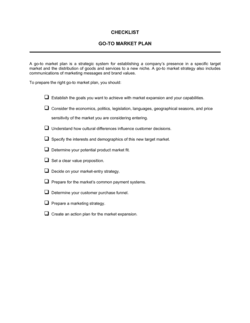
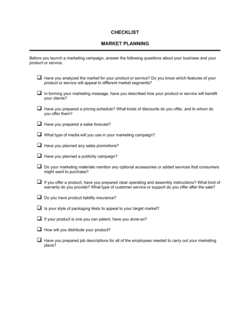
Executive summary, target market and buyer persona profiles, value proposition and positioning, competitive landscape, pricing strategy, distribution and channel plan, marketing and demand-generation tactics, sales enablement plan, launch timeline with milestones, and success metrics with KPIs.

What is a Go To Market Plan?

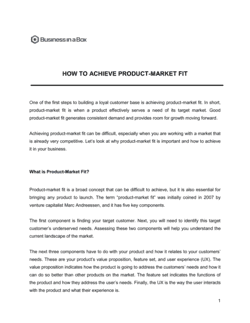
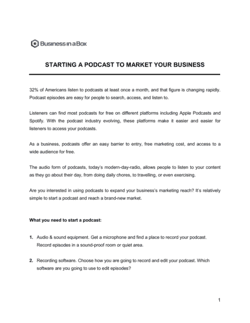
A Go To Market Plan is a cross-functional operational document that defines exactly how a company will bring a product or service to its target customers β€” covering buyer personas, value proposition, competitive positioning, pricing, distribution channels, marketing campaigns, sales enablement, launch timeline, and success metrics in a single coordinated framework. Unlike a general marketing plan or a business plan, a GTM plan is specific to a single product launch or market entry and is designed to align product, sales, and marketing teams around the same strategy, the same customer, and the same definition of success before the launch date arrives.

Why You Need This Document

Without a go to market plan, product launches default to heroics β€” each team builds its own assumptions about who the customer is, what the message should be, and which channels to prioritize, and those assumptions rarely agree. The result is a sales team pitching to the wrong segment, a marketing campaign running the wrong message, and a product release that generates noise for two weeks before going quiet. A structured GTM plan forces the hard decisions β€” segment prioritization, pricing rationale, channel selection, and success metrics β€” before money is spent and deadlines are missed. It also creates the accountability structure that turns a launch date into an actual launch: named owners, sequenced milestones, and leading indicators that surface problems early enough to fix them.

Which variant fits your situation?

If your situation is…Use this template
Launching a SaaS product to a new customer segmentGo To Market Plan (SaaS)
Expanding an existing product into a new geographic marketMarket Expansion Plan
Launching a physical consumer product through retail channelsProduct Launch Plan
Planning the full marketing strategy for a businessMarketing Plan
Defining overall company strategy and annual prioritiesStrategic Plan
Raising investment and needing a market entry narrativeBusiness Plan
Aligning sales and marketing on a shared pipeline targetSales Plan

Common mistakes to avoid

❌ Targeting too broad a market segment

Why it matters: A target market defined as 'all SMBs' or 'any company that needs X' produces messaging that resonates with no one and a channel plan that tries to be everywhere.

Fix: Define the initial segment with at least three firmographic or demographic filters β€” industry, company size, and a specific trigger event β€” then expand after validating the first beachhead.

❌ Skipping the competitive analysis

Why it matters: Without understanding how competitors are positioned and priced, the sales team walks into deals unprepared and marketing spends budget on channels the market leader already owns.

Fix: Map at least four alternatives β€” including the status quo β€” before finalizing positioning and channel strategy. Run win/loss interviews on at least three recent deals.

❌ Finalizing sales enablement after the launch date

Why it matters: Reps who go live without battlecards, demo scripts, and objection-handling guides fall back on product features instead of buyer outcomes β€” extending sales cycles and lowering close rates.

Fix: Set sales enablement asset completion as a launch gate. No assets ready means no launch.

❌ Setting only revenue KPIs with no leading indicators

Why it matters: Revenue results lag pipeline and activity metrics by weeks or months. By the time a revenue miss is visible, the window to intervene on messaging, channel, or targeting has already closed.

Fix: Track at least two leading indicators β€” qualified leads generated and demos completed β€” alongside revenue and customer count from day one.

❌ Selecting channels based on team comfort rather than buyer behavior

Why it matters: A team that defaults to outbound cold email for a product whose buyers research exclusively through peer reviews and community forums will generate low pipeline at high CAC.

Fix: Ask five to ten target buyers how they discovered their last similar purchase, and build channel priority from those answers rather than internal assumptions.

❌ Building the timeline forward from today instead of backward from launch

Why it matters: Forward scheduling consistently underestimates dependencies, producing a plan where campaign assets, pricing approval, and sales training all collide in the final week before launch.

Fix: Set the launch date first, list every dependency, assign owners, and work backward to confirm that each deadline is achievable before committing to the go-live date.

The 10 key sections, explained

Executive Summary

Target Market and Buyer Personas

Value Proposition and Positioning

Competitive Landscape

Pricing Strategy

Distribution and Channel Plan

Marketing and Demand-Generation Plan

Sales Enablement Plan

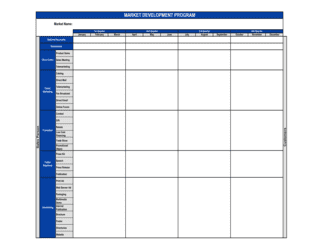
Launch Timeline and Milestones

Success Metrics and KPIs

How to fill it out

  1. 1

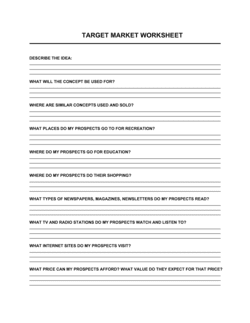
    Define your target market and primary buyer persona

    Start with the single most winnable customer segment β€” the buyers with the strongest pain, the budget to act, and the shortest sales cycle. Build one detailed persona before expanding to secondary segments.

    πŸ’‘ Interview three to five existing customers or target prospects before writing this section. Their language belongs in the positioning statement, not yours.

  2. 2

    Write the value proposition and positioning statement

    Use the standard positioning formula: for [target customer] who [pain point], [product] is a [category] that [key benefit], unlike [alternative] which [limitation]. Test it with someone outside the company β€” if they cannot repeat the core idea back, simplify it.

    πŸ’‘ Lock the positioning before writing any other section β€” every downstream decision on channels, pricing, and messaging should flow from it.

  3. 3

    Map the competitive landscape with at least four alternatives

    Include direct competitors, indirect competitors, and the status quo (doing nothing or using a spreadsheet). For each, note pricing, primary channel, key strength, and the one area where you win.

    πŸ’‘ A simple 2Γ—2 matrix β€” axes chosen around your two strongest differentiators β€” makes the competitive section scannable and forces you to pick a defensible position.

  4. 4

    Define pricing tiers and the rationale behind them

    Choose a pricing model (subscription, usage-based, one-time, or hybrid) and set at least two tiers. Anchor the entry price against a competitive reference point and justify the premium tier on a specific high-value feature or outcome.

    πŸ’‘ Run a willingness-to-pay test with five to ten prospects before finalizing price points β€” a $20/month miss in either direction materially changes conversion rates.

  5. 5

    Select two to three primary distribution channels

    Choose channels where your target buyer actually discovers solutions, not channels your team finds comfortable. Estimate CAC and expected revenue contribution for each, and assign a channel owner.

    πŸ’‘ Limit the initial plan to two channels. Spreading across five channels with insufficient budget produces mediocre results in all of them.

  6. 6

    Build the launch timeline by working backward from the go-live date

    Set the launch date first, then identify every dependency β€” campaign assets, sales training, pricing approval, legal review, and product readiness β€” and assign them to owners with deadlines at least two weeks before they are needed.

    πŸ’‘ Add a one-week buffer before launch for integration testing, final approvals, and the inevitable last-minute changes.

  7. 7

    Define success metrics with 30-, 60-, and 90-day targets

    Set at least one leading indicator (pipeline generated, demos booked) and one lagging indicator (closed revenue, active customers) for each time horizon. Assign a single owner to each metric.

    πŸ’‘ If a metric has no owner, it will not move. Put names next to numbers, not just team labels.

  8. 8

    Write the executive summary last

    Pull the product description, market opportunity, primary channel, key differentiator, launch date, and 90-day revenue target from the completed sections into a one-page summary.

    πŸ’‘ Share only the executive summary and metrics sections for a first executive review β€” it is faster to get alignment on the strategy before stakeholders debate tactical details.

Frequently asked questions

What is a go to market plan?

A go to market plan is a structured document that defines how a company will bring a specific product or service to its target customers. It covers the target market, buyer personas, value proposition, competitive positioning, pricing, distribution channels, marketing tactics, sales enablement, launch timeline, and success metrics. It serves as the cross-functional operating plan that aligns product, marketing, and sales teams before and during a launch.

What is the difference between a go to market plan and a marketing plan?

A go to market plan is product-launch-specific and cross-functional β€” it covers sales enablement, pricing, distribution channels, and launch timelines alongside marketing tactics. A marketing plan covers the ongoing marketing strategy for a business across all products and channels for an entire fiscal year. A GTM plan feeds into and informs the marketing plan but is narrower in scope and tied to a specific launch event.

Who should own the go to market plan?

Ownership typically sits with the product manager or product marketing manager for the specific product being launched. They are responsible for coordinating inputs from sales, marketing, engineering, and finance and maintaining the plan as a living document through the launch cycle. Executive sign-off is standard before the plan is distributed to cross-functional teams.

How long should a go to market plan be?

A complete go to market plan for a significant product launch typically runs 10–20 pages plus a supporting launch timeline spreadsheet. Simpler service launches or market expansions can be documented in 5–10 pages. The plan should be detailed enough for each team to execute their section without a separate briefing, but short enough to remain a reference document rather than a shelf artifact.

What is the difference between a go to market plan and a business plan?

A business plan covers the entire company β€” market opportunity, team, operations, and multi-year financials β€” and is primarily used for fundraising or bank financing. A go to market plan is focused on a single product launch or market entry and is primarily used as an internal execution tool. A business plan may contain a GTM section, but the two documents serve different audiences and purposes.

What KPIs belong in a go to market plan?

A strong GTM plan tracks both leading and lagging indicators. Leading indicators include qualified leads generated, demos or trials activated, and sales-accepted opportunities created. Lagging indicators include closed revenue, number of new customers, CAC, and net revenue retention at 90 days. Set targets for 30, 60, and 90 days post-launch and assign a named owner to each metric.

How far in advance should a go to market plan be completed?

The full plan should be completed and approved at least four to six weeks before the launch date β€” earlier for complex launches involving channel partners, paid media campaigns, or significant sales training. Sales enablement assets should be complete at least two weeks before launch day so the sales team has time to internalize positioning and practice the demo before going live with prospects.

Can a go to market plan be used for an existing product entering a new market?

Yes β€” a GTM plan is equally applicable when an existing product enters a new geographic market, a new industry vertical, or a new customer segment. In these cases, the product and features sections are abbreviated, and more weight goes to the new segment's buyer personas, local competitive landscape, channel differences, and any pricing or packaging adjustments required for the new market.

What makes a go to market plan fail?

The most common failure modes are launching to a segment that is too broad to message effectively, skipping sales enablement so reps are unprepared for early buyer conversations, setting only revenue targets with no leading indicators to catch problems early, and selecting channels based on internal comfort rather than where the target buyer actually discovers solutions. Plans that lack named owners on each section consistently fail to execute on schedule.

How this compares to alternatives

vs Marketing Plan

A marketing plan covers the full annual marketing strategy across all products, channels, and campaigns for a business. A go to market plan is narrower β€” it is product-specific, launch-specific, and cross-functional, covering sales enablement, pricing, and distribution alongside marketing tactics. Use the GTM plan to launch; use the marketing plan to operate.

vs Product Launch Plan

A product launch plan focuses primarily on the launch event itself β€” timeline, readiness checklist, and launch-day execution. A go to market plan is broader, covering the strategic rationale, market positioning, pricing, and channel selection that inform the launch. Think of the product launch plan as the execution layer beneath the GTM strategy.

vs Sales Plan

A sales plan defines revenue targets, territory assignments, quotas, and sales activities for a sales team over a fiscal period. A go to market plan includes sales enablement and channel strategy as two of its sections but covers the full cross-functional launch picture. For a new product launch, the GTM plan feeds the sales plan with positioning, ICP, and channel guidance.

vs Strategic Plan

A strategic plan sets company-wide goals, initiatives, and resource allocation over a 3–5 year horizon. A go to market plan is a shorter-horizon execution document tied to a specific product or market entry. A strategic plan may direct the company to enter a new market; the GTM plan is the operational playbook for doing so.

Industry-specific considerations

SaaS / Technology

Freemium vs. paid conversion strategy, self-serve vs. inside-sales channel split, product-led growth loops, and trial-to-paid activation metrics baked into the KPI section.

Professional Services

Service packaging and tiered retainer pricing, referral and partnership channels as primary demand sources, and thought-leadership content as the primary demand-generation tactic.

Retail / E-commerce

Channel split across DTC, marketplace (Amazon, Etsy), and wholesale retail; launch promotions and influencer seeding tied to the demand-generation plan; repurchase rate as a core post-launch KPI.

Healthcare / MedTech

Regulatory clearance timing as a hard dependency in the launch timeline, clinical evidence as a core positioning element, and reimbursement pathway included in the channel plan.

Template vs pro β€” what fits your needs?

PathBest forCostTime
Use the templateStartups, SMBs, and product teams launching a new product or service with an internal cross-functional teamFree1–2 weeks (15–30 hours)
Template + professional reviewGrowth-stage companies entering a new market or launching a high-stakes product where strategic alignment across large teams is required$500–$2,500 for a product marketing consultant or fractional CMO review2–3 weeks
Custom draftedEnterprise product launches, heavily regulated industries, or market entries requiring primary research and competitive intelligence$5,000–$25,000 for a full GTM engagement with a strategy consultancy4–8 weeks

Glossary

Go To Market (GTM) Strategy
The overall plan for how a company will reach target customers and achieve a competitive advantage when launching a product or entering a market.
Ideal Customer Profile (ICP)
A detailed description of the company or individual most likely to buy your product, benefit from it, and remain a long-term customer.
Value Proposition
A clear statement of the specific benefit a product delivers to a customer, why it is better than alternatives, and who it is for.
Positioning Statement
An internal-facing sentence that defines how you want your product perceived relative to competitors in the minds of your target customers.
Distribution Channel
The path a product takes from the company to the end customer β€” direct sales, resellers, marketplaces, or retail partnerships.
Sales Enablement
The process of equipping the sales team with the content, tools, and training needed to effectively engage buyers and close deals.
Demand Generation
Marketing activities that create awareness and interest in a product among target buyers, with the goal of filling the sales pipeline.
Product-Market Fit
The degree to which a product satisfies strong market demand β€” typically evidenced by retention, referrals, and growing organic usage.
Launch Milestone
A specific, time-bound deliverable in the launch timeline β€” such as 'beta open to 100 users by Week 6' β€” used to track readiness.
Customer Acquisition Cost (CAC)
Total sales and marketing spend in a period divided by the number of new customers acquired, used to evaluate channel efficiency.
Total Addressable Market (TAM)
The total revenue opportunity available for a product if it captured 100% of its target market, used to size the opportunity.

Part of your Business Operating System

This document is one of 3,000+ business & legal templates included in Business in a Box.

  • Fill-in-the-blanks β€” ready in minutes
  • 100% customizable Word document
  • Compatible with all office suites
  • Export to PDF and share electronically

Create your document in 3 simple steps.

From template to signed document β€” all inside one Business Operating System.
1
Download or open template

Access over 3,000+ business and legal templates for any business task, project or initiative.

2
Edit and fill in the blanks with AI

Customize your ready-made business document template and save it in the cloud.

3
Save, Share, Send, Sign

Share your files and folders with your team. Create a space of seamless collaboration.

Save time, save money, and create top-quality documents.

β˜…β˜…β˜…β˜…β˜…

"Fantastic value! I'm not sure how I'd do without it. It's worth its weight in gold and paid back for itself many times."

Managing Director Β· Mall Farm
Robert Whalley
Managing Director, Mall Farm Proprietary Limited
β˜…β˜…β˜…β˜…β˜…

"I have been using Business in a Box for years. It has been the most useful source of templates I have encountered. I recommend it to anyone."

Business Owner Β· 4+ years
Dr Michael John Freestone
Business Owner
β˜…β˜…β˜…β˜…β˜…

"It has been a life saver so many times I have lost count. Business in a Box has saved me so much time and as you know, time is money."

Owner Β· Upstate Web
David G. Moore Jr.
Owner, Upstate Web

Run your business with a system β€” not scattered tools

Stop downloading documents. Start operating with clarity. Business in a Box gives you the Business Operating System used by over 250,000 companies worldwide to structure, run, and grow their business.

Start freeΒ Β·Β No credit card required