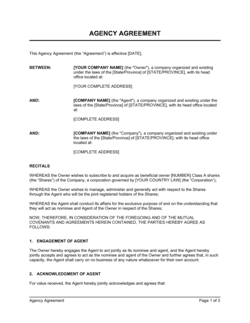
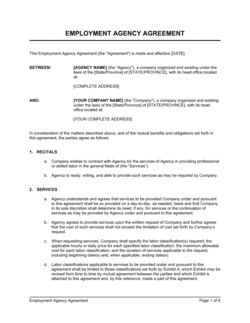
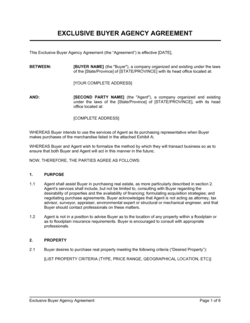
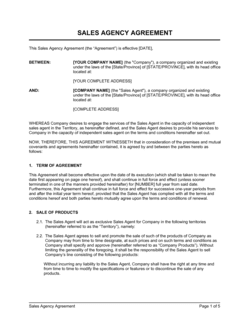
Fiscal Agency Agreement Template

Free Word download • Edit online • Save & share with Drive • Export to PDF

4 pages25–30 min to fillDifficulty: ComplexSignature requiredLegal review recommended
Learn more ↓
FreeFiscal Agency Agreement Template

At a glance

What it is
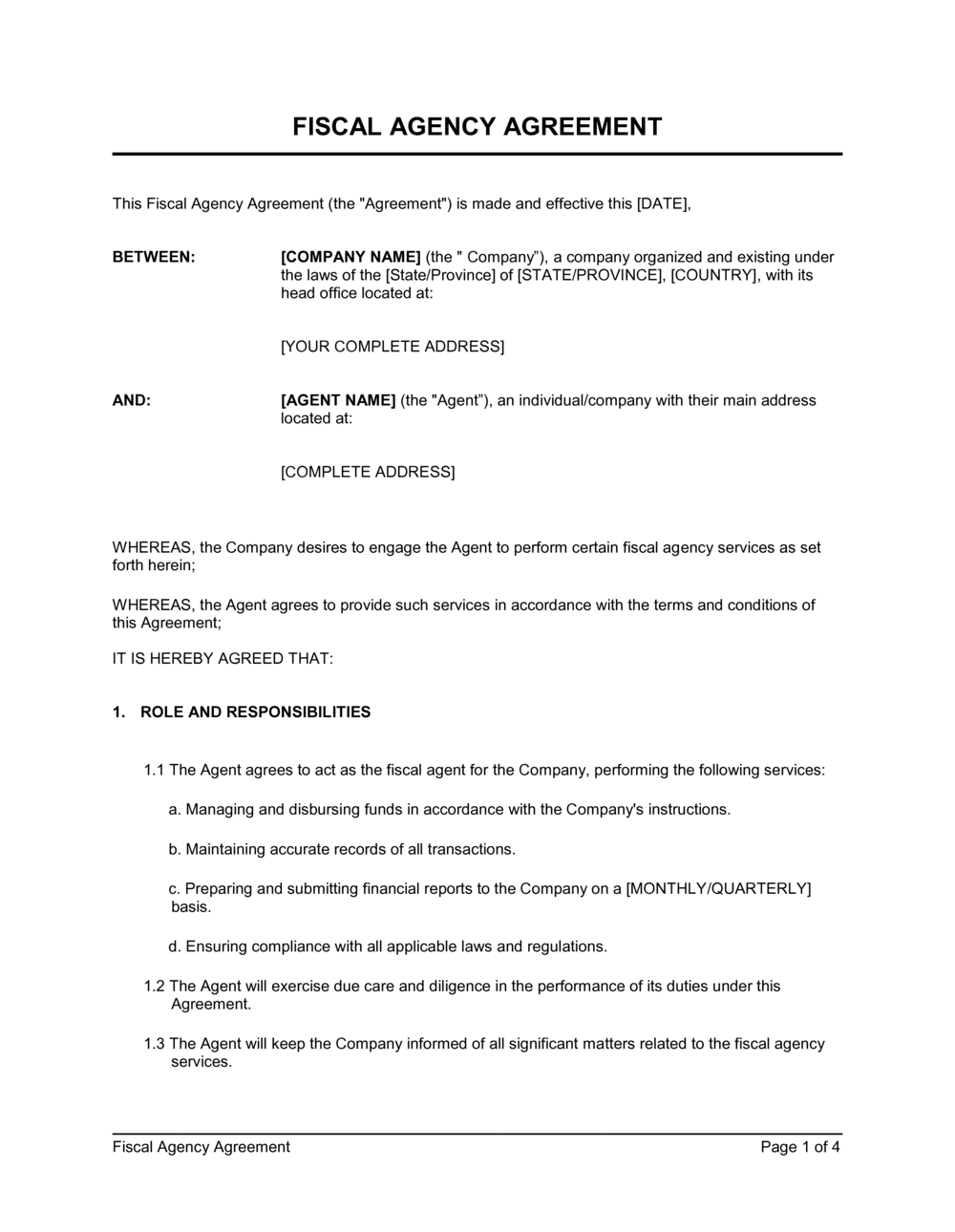
A Fiscal Agency Agreement is a legally binding contract that appoints a fiscal agent — typically an established organization or financial institution — to receive, hold, and disburse funds on behalf of a principal party. This free Word download gives you a structured template covering agent authority, fund custody, reporting obligations, fee arrangements, liability limits, and termination in a single document you can edit online and export as PDF.
When you need it
Use it when an unincorporated group, startup nonprofit, or project sponsor needs an established entity to receive and administer grant funds, donations, or project capital on its behalf. It is also used when a government body, corporation, or bond issuer appoints an agent to manage disbursements, debt service payments, or escrow-adjacent financial flows.
What's inside
Agent appointment and scope of authority, fund custody and segregation requirements, disbursement procedures and approval thresholds, reporting and record-keeping obligations, agent fees and expense reimbursement, liability and indemnification provisions, term and termination mechanics, and governing law.

What is a Fiscal Agency Agreement?

A Fiscal Agency Agreement is a legally binding contract that appoints an established organization or financial institution — known as the fiscal agent — to receive, hold, and disburse funds on behalf of a principal party that needs financial administration support. The agreement grants the agent clearly bounded authority to manage money, enter approved expenditures, and produce financial reports, while the principal retains control over program activities and ultimate ownership of the funds. It is used most commonly by unincorporated nonprofit projects awaiting their own tax-exempt status, by government bodies designating a lead agency to administer multi-jurisdictional program funds, and by bond issuers appointing a bank or trust company to manage debt service payments.

Why You Need This Document

Without a written fiscal agency agreement, the entire fund-management relationship rests on informal arrangements that courts, funders, and auditors treat with deep skepticism. Grant funders — particularly federal agencies operating under 2 CFR Part 200 — require a formal agreement as a condition of funding whenever a fiscal agent is involved; an absent or inadequate document can trigger fund suspension or clawback. Beyond funder compliance, an unsigned arrangement creates no enforceable obligation for the agent to segregate funds, produce reports, or return unspent balances — meaning the principal's money is exposed to the agent's creditors if the agent faces financial difficulty. Disputes over fees, reporting responsibilities, and residual funds at termination are among the most frequently litigated nonprofit financial conflicts, and almost all of them trace back to a missing or vague governing document. This template closes those gaps by formalizing authority, custody, reporting, fees, liability, and termination mechanics in a single signed instrument before any funds change hands.

Which variant fits your situation?

If your situation is…Use this template
Unincorporated project needing a nonprofit to receive charitable donationsFiscal Sponsorship Agreement (Model A)
Bond issuer appointing a bank to administer principal and interest paymentsPaying Agent Agreement
Government agency designating a subrecipient to manage program fundsSubgrant Agreement
Two organizations sharing back-office financial management servicesShared Services Agreement
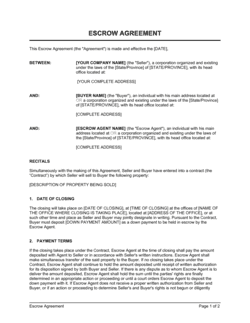
Principal needing a third party to hold disputed funds pending resolutionEscrow Agreement
Nonprofit receiving restricted grant funds with detailed compliance requirementsGrant Agreement
Agent managing investment assets on behalf of a principalInvestment Management Agreement

Common mistakes to avoid

❌ Omitting fund segregation language

Why it matters: Without a clear requirement to hold principal funds in a named, separate account, the fiscal agent may commingle funds. If the agent becomes insolvent, commingled principal funds are exposed to the agent's creditors and may be unrecoverable.

Fix: Name the specific bank, account title, and account number (or require account opening within 5 business days of execution) and expressly prohibit commingling in the agreement.

❌ Leaving disbursement authority undefined or unlimited

Why it matters: An open-ended authority clause allows the fiscal agent to commit the principal's funds to contracts or expenditures the principal never authorized, creating both financial exposure and funder compliance violations.

Fix: List permitted expenditure categories and set a dollar threshold above which the principal's written approval is required before any disbursement is made.

❌ Setting reporting intervals that don't match funder requirements

Why it matters: A mismatch means the principal must request ad hoc data from the fiscal agent every reporting cycle, delaying submissions and damaging the principal's relationship with the funder — potentially triggering clawbacks or suspension.

Fix: Review every active grant's reporting schedule before finalizing the agreement and set the fiscal agent's reporting obligation to match the most frequent cycle across all funding streams.

❌ No wind-down or fund disposition clause

Why it matters: Without explicit mechanics for transferring funds, records, and open obligations at termination, disputes routinely delay the principal's ability to engage a new fiscal agent by weeks or months, stalling program operations.

Fix: Add a fund disposition clause with a 30-day completion timeline, a record-transfer obligation, and a signed transition checklist as an exhibit to the agreement.

❌ Placing all liability on the fiscal agent regardless of fault

Why it matters: An unrestricted indemnification clause that holds the fiscal agent liable for all losses — including those caused by the principal's own program decisions — deters qualified agents and may be struck down as unconscionable.

Fix: Draft mutual, fault-based indemnification: the principal indemnifies the agent for claims arising from the principal's activities; the agent indemnifies the principal for claims arising from the agent's gross negligence or willful misconduct.

❌ Using informal correspondence as the operative document

Why it matters: Email exchanges and memoranda of understanding lack the specificity on fee structures, reporting obligations, and termination rights that a formal fiscal agency agreement provides — and courts give them less weight in disputes over fund ownership.

Fix: Execute a complete written agreement before any funds are transferred. Treat emails and MOUs as negotiating documents only, and confirm their key terms are captured verbatim in the final signed agreement.

The 10 key clauses, explained

Parties, recitals, and appointment

In plain language: Identifies the principal and fiscal agent as legal entities, states the background purpose of the arrangement, and formally appoints the fiscal agent to act on the principal's behalf.

Sample language
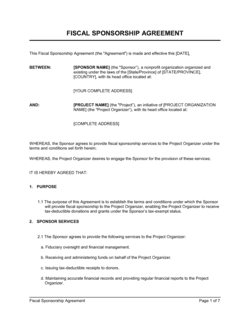
This Fiscal Agency Agreement is entered into as of [DATE] between [PRINCIPAL LEGAL NAME], a [ENTITY TYPE] ('Principal'), and [FISCAL AGENT LEGAL NAME], a [ENTITY TYPE] ('Fiscal Agent'). Principal hereby appoints Fiscal Agent to receive and administer funds as described herein, and Fiscal Agent accepts such appointment.

Common mistake: Using a trade name or program name instead of the registered legal entity name for either party. If the entity names don't match tax filings and bank account records, the agent's authority to act on the principal's behalf becomes legally ambiguous.

Scope of authority and permitted activities

In plain language: Defines exactly what the fiscal agent is — and is not — authorized to do with the principal's funds, including entering contracts, making payments, and accepting contributions.

Sample language
Fiscal Agent is authorized to: (a) receive contributions and grant funds designated for [PROJECT/PROGRAM NAME]; (b) disburse funds in accordance with Exhibit A; and (c) enter into service contracts on Principal's behalf not exceeding $[THRESHOLD] per transaction. Fiscal Agent shall have no authority to incur debt or make capital expenditures on Principal's behalf without prior written consent.

Common mistake: Leaving the scope of authority open-ended. Vague authority language exposes the principal to unauthorized expenditures and creates ambiguity about which party holds contractual liability to third-party vendors.

Fund custody and segregation

In plain language: Requires the fiscal agent to hold the principal's funds in a named, separate account and prohibits commingling with the agent's own operating funds.

Sample language
Fiscal Agent shall maintain a separate, dedicated bank account titled '[ACCOUNT NAME]' at [BANK NAME] exclusively for funds received under this Agreement. Principal's funds shall not be commingled with Fiscal Agent's operating funds or funds held for any other principal.

Common mistake: Omitting the fund segregation requirement entirely, or permitting commingling subject to 'adequate internal accounting controls.' If the fiscal agent becomes insolvent, commingled funds are difficult to recover and may be treated as the agent's assets by creditors.

Disbursement procedures and approval thresholds

In plain language: Sets out how the principal requests disbursements, what documentation is required, the approval chain, and any dollar thresholds above which additional authorization is needed.

Sample language
Principal shall submit disbursement requests on Fiscal Agent's standard form with supporting documentation at least [X] business days before the requested payment date. Disbursements under $[AMOUNT] require authorization from [PRINCIPAL CONTACT]. Disbursements of $[AMOUNT] or more require written approval from [PRINCIPAL SIGNATORY] and countersignature by [FISCAL AGENT OFFICER].

Common mistake: Setting no minimum documentation requirement for disbursements. Without receipts, invoices, or budget line references attached to each request, the arrangement cannot withstand a funder audit and may violate grant compliance requirements.

Reporting and record-keeping obligations

In plain language: Specifies the financial reports the fiscal agent must produce, how often, in what format, and how long records must be retained.

Sample language
Fiscal Agent shall provide Principal with monthly bank statements and a transaction-level expenditure report within [15] days of each month-end. Annual financial statements must be provided within [60] days of the fiscal year-end. All records shall be retained for a minimum of [7] years from the date of the final expenditure under this Agreement.

Common mistake: Setting reporting intervals that don't align with funder requirements. If a grant funder requires quarterly reports but the agreement only mandates annual reporting, the principal will be unable to fulfill its grant obligations without emergency requests for data from the agent.

Administrative fee and expense reimbursement

In plain language: States the fee the fiscal agent charges for its services — whether a flat monthly rate or a percentage of funds received — and the process for reimbursing the agent's out-of-pocket expenses.

Sample language
In consideration for services under this Agreement, Principal shall pay Fiscal Agent an administrative fee of [X]% of gross funds received per [PERIOD], deducted directly from the designated account. Fiscal Agent may also seek reimbursement for pre-approved out-of-pocket expenses not to exceed $[AMOUNT] per [PERIOD] without additional authorization.

Common mistake: Failing to specify when and how the fee is calculated and deducted. If the agreement is silent on timing, disputes arise over whether the fee applies to pledged funds, received funds, or disbursed funds — each producing a materially different dollar amount.

Liability limits and indemnification

In plain language: Caps the fiscal agent's liability for losses and establishes mutual indemnification obligations — clarifying who bears the cost of claims arising from each party's acts or omissions.

Sample language
Fiscal Agent's aggregate liability under this Agreement shall not exceed the total administrative fees paid by Principal in the [12] months preceding the claim. Principal shall indemnify and hold harmless Fiscal Agent from claims arising from Principal's program activities. Fiscal Agent shall indemnify Principal from claims arising from Fiscal Agent's gross negligence or willful misconduct.

Common mistake: Placing all liability on the fiscal agent regardless of which party caused the loss. This deters qualified fiscal agents from accepting the arrangement and may be unenforceable as applied to third-party claims arising from the principal's own program operations.

Term, renewal, and termination

In plain language: Sets the initial agreement period, auto-renewal conditions, the notice required for either party to terminate without cause, and the immediate termination rights available for material breach.

Sample language
This Agreement commences on [START DATE] and continues for [12] months, renewing automatically for successive [12]-month terms unless either party provides [60] days' written notice of non-renewal. Either party may terminate for Cause immediately upon written notice if the other party materially breaches this Agreement and fails to cure within [30] days of notice.

Common mistake: No wind-down mechanics for fund disposition after termination. If the agreement is silent on what happens to unspent funds and open liabilities at termination, disputes over fund transfers and residual obligations routinely delay the principal's ability to engage a new fiscal agent.

Fund disposition on termination

In plain language: Describes what the fiscal agent must do with any remaining funds, open purchase orders, and financial records when the agreement ends.

Sample language
Upon termination, Fiscal Agent shall, within [30] days: (a) transfer all remaining funds in the designated account to an account designated by Principal; (b) assign or close all open vendor contracts in accordance with Principal's written instructions; and (c) deliver all financial records, reconciliations, and supporting documentation to Principal.

Common mistake: Setting too short a wind-down period — 5 to 10 business days is unrealistic for closing accounts, settling outstanding invoices, and transferring records. A 30-day period is standard and should be accompanied by a transition checklist as an exhibit.

Governing law, dispute resolution, and entire agreement

In plain language: Specifies which jurisdiction's law governs the agreement, how disputes are resolved, and confirms the written contract displaces all prior understandings.

Sample language
This Agreement is governed by the laws of [STATE/PROVINCE/COUNTRY]. Any dispute shall be resolved by binding arbitration administered by [AAA/JAMS] in [CITY], except that either party may seek injunctive relief in any court of competent jurisdiction. This Agreement constitutes the entire agreement between the parties and supersedes all prior negotiations, representations, and understandings.

Common mistake: Choosing a governing law with no connection to where either party operates or where the funds are held. Several jurisdictions — particularly in Canada and the EU — apply local law to fund-management relationships regardless of contractual choice-of-law clauses.

How to fill it out

  1. 1

    Enter the legal names and entity types of both parties

    Use the full registered legal name and entity type (e.g., '501(c)(3) corporation,' 'limited liability company') for both the principal and fiscal agent. Confirm names match tax filings and any relevant bank account records.

    💡 Cross-reference the fiscal agent's IRS determination letter or articles of incorporation before drafting — a name mismatch between the agreement and the agent's tax records can delay bank account opening.

  2. 2

    Define the program or project scope

    Describe the specific program, project, or fund to which this agreement applies. Attach a program description or budget as Exhibit A so the scope of authorized activity is unambiguous.

    💡 If the principal will receive multiple grants or funding streams, create a separate designated account and exhibit for each to avoid commingling and to simplify funder reporting.

  3. 3

    Set the scope of authority with explicit limits

    List exactly what the fiscal agent is authorized to do — and include a dollar threshold above which additional principal sign-off is required. Expressly exclude authority to incur debt or make capital expenditures without written consent.

    💡 Match the authorization threshold to the principal's internal approval policy — if the principal requires board approval for expenditures above $25,000, set the same threshold in the agreement.

  4. 4

    Specify fund custody and segregation requirements

    Name the bank, account title, and account type for the designated fund account. State explicitly that funds may not be commingled with the fiscal agent's operating accounts or accounts held for other principals.

    💡 Request the fiscal agent's most recent audited financial statements before execution — an agent with weak controls or prior audit findings on fund management is a red flag regardless of reputation.

  5. 5

    Document disbursement procedures and approval thresholds

    Set out the standard disbursement request form, required supporting documentation, lead time, and the approval chain including any dual-authorization requirements for large payments.

    💡 Include a sample disbursement request form as an exhibit — this prevents ambiguity about what 'adequate documentation' means and makes funder audits straightforward.

  6. 6

    Set reporting intervals aligned to funder requirements

    Check the reporting schedule required by each funder whose money will flow through the fiscal agent, then set the agreement's reporting intervals to meet the most frequent requirement. Include report format and delivery method.

    💡 Build a one-page reporting calendar as an exhibit listing each funder, their reporting due dates, and the corresponding data the fiscal agent must provide — this becomes the agent's compliance checklist.

  7. 7

    Negotiate and document the administrative fee

    Agree on whether the fee is a flat monthly amount or a percentage of funds received, specify when it is deducted, and set a cap on reimbursable out-of-pocket expenses requiring prior approval.

    💡 Nonprofit fiscal agents typically charge 5–15% of funds received. Anything above 15% warrants scrutiny from grant funders, who may treat excessive administrative fees as indirect costs that reduce allowable program expenditures.

  8. 8

    Include a wind-down checklist as an exhibit

    Attach a termination checklist covering fund transfer mechanics, open invoice resolution, record transfer, and account closure timelines. Both parties should sign the checklist at execution, not only at termination.

    💡 A signed wind-down checklist at the start of the relationship — not the end — prevents the most common post-termination dispute: disagreements about what records belong to the principal.

Frequently asked questions

What is a fiscal agency agreement?

A fiscal agency agreement is a legally binding contract that appoints an established entity — a nonprofit, bank, or government body — to receive, hold, and disburse funds on behalf of a principal party that cannot or does not yet hold funds in its own name. It defines the agent's authority, fee, reporting obligations, and liability, and creates an enforceable framework for the management of those funds. It is commonly used by unincorporated organizations, early-stage nonprofits, and bond issuers.

What is the difference between a fiscal agency agreement and a fiscal sponsorship agreement?

The terms are often used interchangeably, but they reflect different structural relationships. In a true fiscal sponsorship (Model A), the sponsor assumes full legal ownership and responsibility for the project and its funds — the project operates under the sponsor's tax-exempt umbrella. In a fiscal agency arrangement, the fiscal agent acts as a pass-through conduit only: the principal retains legal control of the program and its activities, and the agent handles fund custody and administration. The choice between the two affects liability, funder eligibility, and the principal's tax obligations.

Who typically serves as a fiscal agent?

Established 501(c)(3) organizations are the most common fiscal agents for nonprofit and grant-funded projects. Banks and trust companies serve as fiscal agents for bond issuers and corporate debt service. Government agencies designate fiscal agents — often a lead county or municipal entity — to administer multi-jurisdictional program funds. The agent must typically have the financial infrastructure, accounting systems, and legal standing required by the funders whose money will flow through it.

Is a fiscal agency agreement legally required?

No law universally mandates a written fiscal agency agreement, but federal and state grant funders — including the US Department of Health and Human Services, the Department of Education, and most foundations — require one as a condition of funding when a fiscal agent is involved. Without a written agreement, disputes over fund ownership, fee obligations, and termination rights are resolved by courts applying general agency law defaults, which rarely reflect either party's intent.

What administrative fee do fiscal agents typically charge?

Nonprofit fiscal agents typically charge between 5% and 15% of gross funds received. Banks and trust companies acting as paying agents for bond transactions charge flat annual fees ranging from $2,000 to $25,000 depending on transaction complexity. Government fiscal agents may charge nothing or recover only direct costs. Fees above 15% of received funds frequently draw scrutiny from grant funders, who may classify excess charges as unallowable indirect costs under federal cost principles (2 CFR Part 200 in the US).

What happens to unspent funds if the fiscal agency agreement is terminated?

The agreement should specify a wind-down period — typically 30 days — during which the fiscal agent settles outstanding invoices, transfers the remaining balance to the principal's designated account, and delivers all financial records. If the agreement is silent on this point, applicable state agency law generally requires the agent to return the principal's property promptly upon termination. In practice, disputes over residual funds are among the most common post-termination conflicts, which is why a detailed fund disposition clause is essential.

Can a fiscal agency agreement be terminated early?

Yes. Most agreements allow either party to terminate without cause on 60 to 90 days' written notice, giving enough time to transition funds and records to a new agent. Immediate termination for cause — triggered by material breach such as fund misappropriation, failure to report, or insolvency — is typically permitted with written notice and a short cure period (15–30 days) for remediable breaches. The principal should also negotiate the right to terminate immediately if the fiscal agent loses its tax-exempt status or faces regulatory action.

Does a fiscal agency agreement need to be notarized?

Notarization is not required for a fiscal agency agreement to be enforceable in most jurisdictions. However, some government funders and financial institutions require notarized signatures as a condition of recognizing the agent's authority. If the agreement will be filed with a government agency or used to open a bank account under the principal's program name, confirm the funder's and bank's execution requirements before signing.

What records must the fiscal agent keep?

At minimum, the fiscal agent should maintain bank statements, transaction-level disbursement records with supporting invoices, payroll records if applicable, copies of all contracts entered on the principal's behalf, and all correspondence with funders. Federal grant regulations require a 3-year minimum retention period from the date of the final expenditure report, but 7 years is the practical standard given state audit statutes of limitations. The agreement should specify both the retention period and the format in which records will be transferred to the principal upon termination.

What liability does the fiscal agent have if funds are misused?

A fiscal agent that misappropriates or negligently mishandles funds faces liability under contract law, fiduciary duty principles, and potentially criminal fraud statutes. The agreement's liability cap (typically capped at fees earned in the prior 12 months) limits exposure for ordinary errors, but courts in most jurisdictions will not enforce liability caps against claims of fraud, willful misconduct, or gross negligence. Funders may also hold both the principal and the agent jointly responsible for misuse of grant funds under grant agreement terms.

How this compares to alternatives

vs Escrow Agreement

An escrow agreement appoints a neutral third party to hold funds pending the satisfaction of a specific condition — such as completion of a real estate closing or resolution of a dispute. A fiscal agency agreement is an ongoing administrative arrangement for receiving, managing, and disbursing funds over the life of a program. Escrow is transactional and condition-based; fiscal agency is operational and relationship-based.

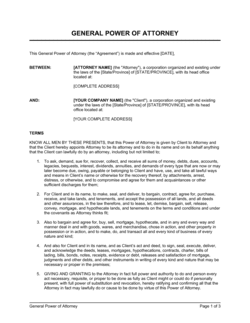
vs Power of Attorney

A power of attorney grants broad authority for one party to act on another's behalf across a wide range of legal and financial matters. A fiscal agency agreement is a narrower, purpose-specific contract limited to fund custody and disbursement for a defined program or project. The fiscal agent's authority is contractually bounded; an attorney-in-fact's authority can be much broader depending on the instrument.

vs Agency Agreement

A general agency agreement governs a broad commercial agency relationship — sales representation, procurement, or contract negotiation. A fiscal agency agreement is a specialized variant focused exclusively on financial administration: receiving funds, making authorized disbursements, and reporting on fund balances. The fiduciary and compliance obligations in a fiscal agency context are significantly more detailed than in a standard commercial agency arrangement.

vs Grant Agreement

A grant agreement is between a funder and a recipient, establishing the conditions under which grant money is awarded and spent. A fiscal agency agreement governs the relationship between the recipient (principal) and the entity that administers the funds on the recipient's behalf. The two documents are complementary: the grant agreement sets the funder's conditions; the fiscal agency agreement operationalizes how those conditions are met internally.

Industry-specific considerations

Nonprofit and Social Sector

Unincorporated projects and fiscally sponsored initiatives use this agreement to access charitable grant funding through an established 501(c)(3) while awaiting their own tax-exempt status.

Government and Public Administration

Lead agencies are designated as fiscal agents for multi-jurisdiction federal programs — such as workforce development and public health initiatives — responsible for fund flow, compliance reporting, and subgrantee monitoring.

Financial Services and Banking

Banks and trust companies are appointed as fiscal agents by bond issuers and corporate borrowers to administer debt service payments, manage sinking funds, and communicate with bondholders.

Education

School districts and university foundations serve as fiscal agents for collaborative research grants, Title I funding consortia, and community education programs that span multiple participating entities.

Jurisdictional notes

United States

Federal grantees acting as fiscal agents must comply with 2 CFR Part 200 (Uniform Guidance), which imposes specific requirements on fund segregation, allowable costs, and record retention. State law governs the underlying agency relationship; most states follow Restatement (Third) of Agency principles. California and New York impose additional oversight requirements on nonprofit fiscal sponsors operating within their borders.

Canada

Fiscal agency arrangements for registered charities are subject to Canada Revenue Agency guidance on direction and control of charitable funds — the fiscal agent must maintain oversight of how funds are spent to preserve its charitable registration. Provincial nonprofit legislation in Ontario, British Columbia, and Quebec imposes additional accountability requirements on organizations that receive and disburse public funds. French-language agreements are required for organizations subject to Quebec's language laws.

United Kingdom

The Charity Commission for England and Wales requires that charities acting as fiscal agents maintain legal control over funds and cannot act as a mere conduit without accountability for how money is spent. The agreement must clearly distinguish between the agent's administrative role and the principal's programmatic responsibility to satisfy Charity Commission guidance on grant-making and fund-holding. Scotland and Northern Ireland have separate charity regulators with similar expectations.

European Union

EU-funded programs that designate a fiscal agent must comply with the EU Financial Regulation (2018/1046), which imposes strict segregation, audit trail, and reporting requirements on entities managing public funds. GDPR applies to any personal data processed by the fiscal agent in connection with program administration, including payroll and beneficiary records. Member state civil law principles — particularly in France, Germany, and the Netherlands — vary on the enforceability of liability caps in fiduciary arrangements.

Template vs lawyer — what fits your deal?

PathBest forCostTime
Use the templateEstablished nonprofits with prior fiscal agency experience acting as agent for a straightforward, single-funder projectFree1–2 hours
Template + legal reviewFirst-time fiscal agency arrangements, multi-funder projects, or situations where government grants impose specific compliance requirements$400–$900 for a nonprofit attorney or CPA review3–7 business days
Custom draftedBond paying agent arrangements, high-value government fiscal agency designations, or arrangements involving cross-border fund flows$2,000–$8,000+2–4 weeks

Glossary

Fiscal Agent
An entity authorized by a principal to receive, hold, and disburse funds on the principal's behalf, subject to the terms of the agreement.
Principal
The party on whose behalf the fiscal agent acts — typically an unincorporated organization, project sponsor, or bond issuer.
Fund Segregation
The requirement to hold the principal's funds in a separate, identifiable account distinct from the fiscal agent's own operating funds.
Disbursement Authority
The scope of the fiscal agent's power to release or pay out funds, including any approval thresholds or co-authorization requirements.
Pass-Through Entity
An organization that receives funds from a funder and transmits them to another party, serving as a conduit without retaining a beneficial interest.
Restricted Funds
Money that must be used only for a specific purpose stated by the donor, grantor, or governing agreement.
Administrative Fee
A percentage of funds received or a flat charge paid to the fiscal agent to cover the costs of financial management, reporting, and compliance.
Fiduciary Duty
A legal obligation requiring the fiscal agent to act in the best interest of the principal when managing funds, rather than in its own interest.
Indemnification
A contractual obligation by one party to compensate the other for losses, liabilities, or legal costs arising from specified acts or omissions.
Termination for Cause
Ending the agreement immediately due to a material breach — such as misappropriation of funds, fraud, or failure to file required reports.
Accounting Period
The defined interval — monthly, quarterly, or annual — for which the fiscal agent must produce financial statements and reconcile fund balances.

Part of your Business Operating System

This document is one of 3,000+ business & legal templates included in Business in a Box.

  • Fill-in-the-blanks — ready in minutes
  • 100% customizable Word document
  • Compatible with all office suites
  • Export to PDF and share electronically

Create your document in 3 simple steps.

From template to signed document — all inside one Business Operating System.
1
Download or open template

Access over 3,000+ business and legal templates for any business task, project or initiative.

2
Edit and fill in the blanks with AI

Customize your ready-made business document template and save it in the cloud.

3
Save, Share, Send, Sign

Share your files and folders with your team. Create a space of seamless collaboration.

Save time, save money, and create top-quality documents.

★★★★★

"Fantastic value! I'm not sure how I'd do without it. It's worth its weight in gold and paid back for itself many times."

Managing Director · Mall Farm
Robert Whalley
Managing Director, Mall Farm Proprietary Limited
★★★★★

"I have been using Business in a Box for years. It has been the most useful source of templates I have encountered. I recommend it to anyone."

Business Owner · 4+ years
Dr Michael John Freestone
Business Owner
★★★★★

"It has been a life saver so many times I have lost count. Business in a Box has saved me so much time and as you know, time is money."

Owner · Upstate Web
David G. Moore Jr.
Owner, Upstate Web

Run your business with a system — not scattered tools

Stop downloading documents. Start operating with clarity. Business in a Box gives you the Business Operating System used by over 250,000 companies worldwide to structure, run, and grow their business.

Start free · No credit card required