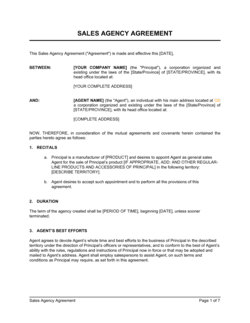
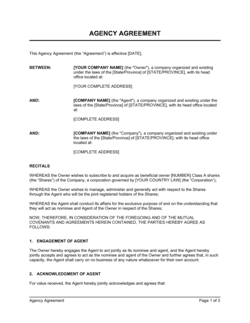
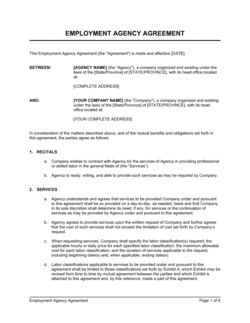
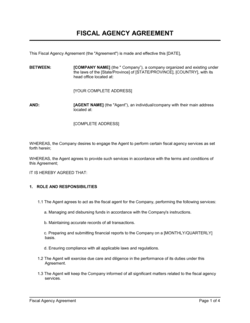
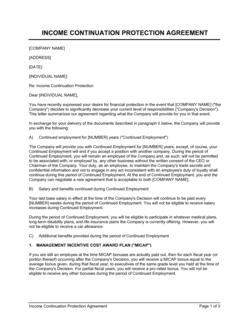
Sales Agency Agreement With Trademarks protection Template

Free Word download • Edit online • Save & share with Drive • Export to PDF

5 pages25–35 min to fillDifficulty: ComplexSignature requiredLegal review recommended
Learn more ↓
FreeSales Agency Agreement With Trademarks protection Template

At a glance

What it is
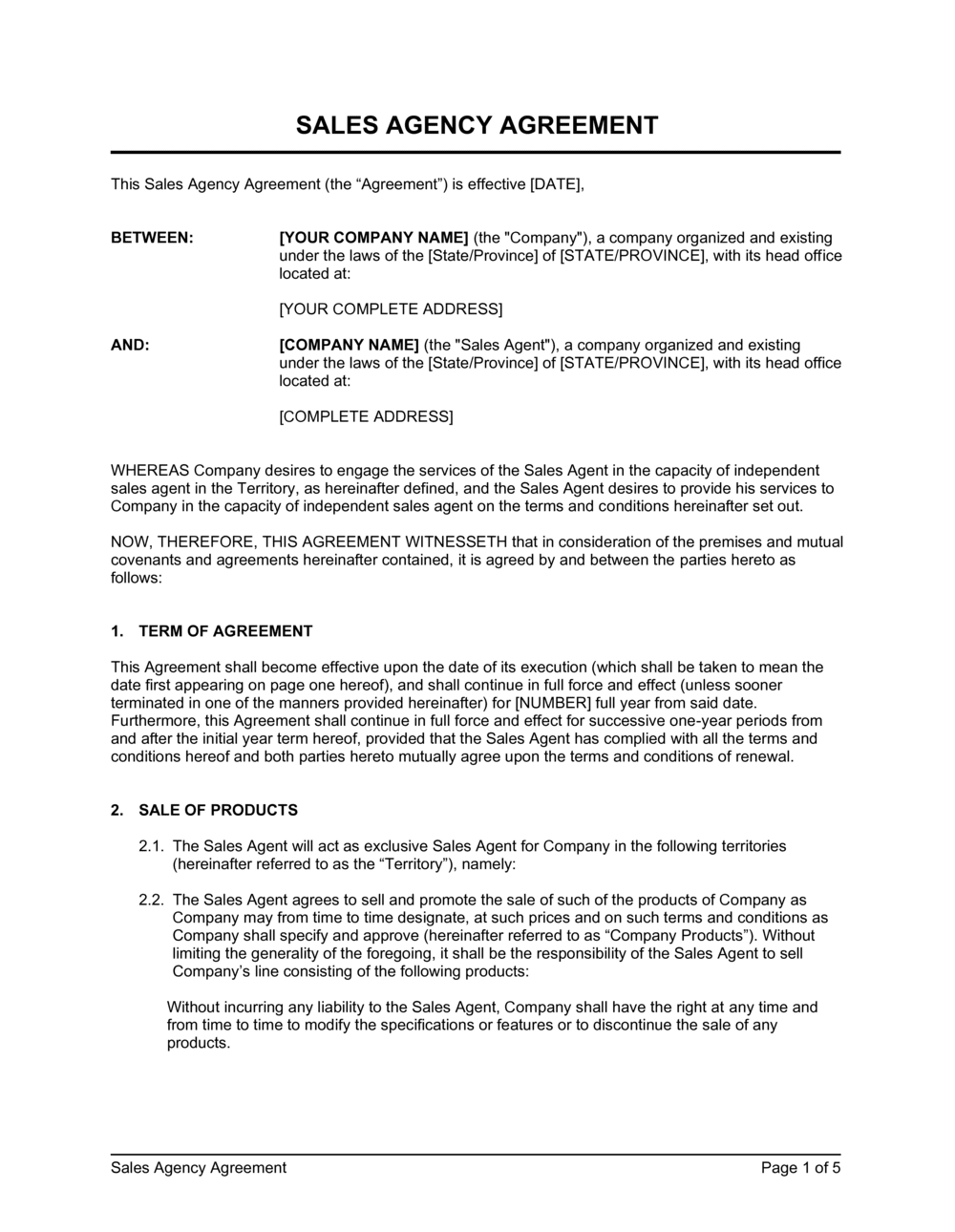
A Sales Agency Agreement With Trademarks Protection is a legally binding contract between a principal (the brand or product owner) and a sales agent (an independent representative authorized to sell on the principal's behalf) that defines the commercial relationship and explicitly governs how the principal's trademarks, trade names, and branded materials may be used. This free Word download covers territory, commission structure, IP licensing scope, brand usage standards, exclusivity, and termination in a single document you can edit online and export as PDF.
When you need it
Use it whenever you appoint an external sales agent or distributor to sell your products or services in a defined territory, especially where brand consistency and trademark integrity are business-critical concerns. It is equally important when an agent will use your logos, product names, or promotional materials to solicit customers on your behalf.
What's inside
Appointment and territory scope, trademark license grant and usage restrictions, commission rates and payment mechanics, sales targets and performance obligations, confidentiality, non-compete and non-solicitation restrictions, IP ownership and infringement reporting, and termination with post-termination brand obligations.

What is a Sales Agency Agreement With Trademarks Protection?

A Sales Agency Agreement With Trademarks Protection is a legally binding contract between a Principal — the company or individual that owns the products or services being sold — and a Sales Agent — an independent representative authorized to solicit orders or close sales on the principal's behalf. What distinguishes this document from a standard sales agency agreement is the explicit trademark license and brand governance framework embedded within it: the contract grants the agent a limited, non-transferable right to use the principal's registered trademarks, logos, and trade names strictly for authorized sales activities, while setting out the usage standards, approval process, and post-termination obligations that ensure the principal retains full control over how their brand appears in the market. The agreement covers territory scope, exclusivity status, commission structure, sales performance obligations, confidentiality, non-compete restrictions, IP ownership acknowledgment, and termination mechanics in a single enforceable document.

Why You Need This Document

Appointing a sales agent without a written agreement — or using a generic contract that lacks trademark provisions — creates four compounding risks. First, without an explicit license and Schedule A, the scope of the agent's authority to use your brand is legally ambiguous: agents have produced off-brand promotional materials, co-branded collateral without approval, and modified logos in ways that dilute trademark distinctiveness. Second, without a post-termination cessation clause, former agents routinely continue using your trademarks on websites, social media profiles, and marketing materials for months after the relationship ends, creating customer confusion and potentially weakening your registration. Third, in the EU and UK, failing to address statutory agent indemnity rights in the agreement exposes the principal to termination compensation claims averaging one year's gross commission — an obligation that exists regardless of what the contract says, but that can be structured and budgeted for when addressed at the outset. Fourth, undefined commission triggers and territory boundaries are the two most common causes of agent disputes: a signed agreement with a clear Schedule A and payment mechanics eliminates both before they become costly arbitration proceedings.

Which variant fits your situation?

If your situation is…Use this template
Appointing an exclusive agent for a single defined territoryExclusive Sales Agency Agreement
Using multiple non-exclusive agents in the same marketNon-Exclusive Sales Agency Agreement
Selling physical goods to an agent who resells at their own riskDistribution Agreement
Licensing trademarks without a sales agency componentTrademark License Agreement
Engaging a commission-only independent sales representativeIndependent Sales Representative Agreement
Appointing a manufacturer's representative for a product lineManufacturer's Representative Agreement
Contracting a self-employed individual for broader business servicesIndependent Contractor Agreement

Common mistakes to avoid

❌ Granting a trademark license without a Schedule A listing specific marks

Why it matters: A generic license covering 'all company trademarks' may inadvertently extend to pending applications, unregistered marks, or marks in classes the principal intended to restrict — creating licensing liability in unexpected categories.

Fix: Attach a Schedule A listing each authorized trademark by registration number, jurisdiction, and permitted use. Update the schedule by written amendment whenever the trademark portfolio changes.

❌ No post-termination obligation to cease trademark use

Why it matters: Without an express obligation to stop using the principal's marks upon termination, former agents have continued using logos, domain names, and social media handles branded with the principal's trademarks for months after the relationship ends.

Fix: Include a clause requiring the agent to immediately cease all trademark use, return or destroy branded materials, and confirm compliance in writing within 10 business days of termination.

❌ Tying commission entitlement to order placement rather than payment receipt

Why it matters: If commission accrues when orders are placed, the principal owes commission on customer defaults, cancellations, and disputed invoices — a significant financial exposure in markets with long collection cycles or high dispute rates.

Fix: Define commission as earned only upon the principal's receipt of full payment from the customer, with a clawback mechanism for subsequent returns or charge-backs.

❌ Ignoring statutory agent indemnity rights in EU and UK markets

Why it matters: The EU Commercial Agents Directive and UK Commercial Agents Regulations grant qualifying agents a mandatory right to compensation or indemnity upon termination. A contractual waiver of this right is void, and principals who ignore it face claims averaging one year's gross commission.

Fix: If the agent operates in the EU or UK, obtain legal advice on whether the Regulations apply, address any mandatory indemnity in the agreement, and budget for the potential liability before appointing the agent.

❌ Undefined brand approval process for agent-created marketing materials

Why it matters: Without a documented approval requirement, agents produce off-brand or legally non-compliant materials bearing the principal's trademarks — materials that are difficult to recall once distributed to customers.

Fix: Include an explicit pre-approval requirement and a designated approval contact, with a timeline (e.g., 5 business days to respond) so the agent is not blocked from timely sales activities.

❌ Using a territory definition that overlaps with existing distribution or agency agreements

Why it matters: Appointing two agents with overlapping territories — even accidentally — triggers commission disputes on shared customers and can expose the principal to breach claims from the first-appointed agent.

Fix: Maintain a territory register before each new appointment and require the agent to confirm in writing that they are aware of the territory boundaries and that no competing appointment exists.

The 10 key clauses, explained

Appointment, Territory, and Exclusivity

In plain language: Establishes the principal-agent relationship, defines the geographic or market territory in which the agent may operate, and states whether the appointment is exclusive or non-exclusive.

Sample language
[PRINCIPAL COMPANY NAME] ('Principal') hereby appoints [AGENT COMPANY/INDIVIDUAL NAME] ('Agent') as its [exclusive / non-exclusive] sales agent in the territory of [TERRITORY DESCRIPTION] for the purpose of soliciting orders for [PRODUCTS/SERVICES DESCRIPTION].

Common mistake: Defining territory too broadly or leaving it undefined. An unspecified territory creates disputes over which sales the agent is owed commission on and exposes the principal to multiple agents claiming the same territory.

Trademark License Grant

In plain language: Grants the agent a limited, non-transferable license to use the principal's trademarks, logos, and trade names exclusively for authorized sales and promotional activities within the territory.

Sample language
Principal grants Agent a limited, non-exclusive, non-transferable license to use the Trademarks listed in Schedule A solely in connection with the promotion and sale of the Products in the Territory. Agent shall not sublicense, assign, or otherwise transfer any rights in the Trademarks without prior written consent of the Principal.

Common mistake: Not attaching a Schedule A listing the specific registered trademarks covered. A generic reference to 'the company's trademarks' leaves ambiguity about which marks are licensed and may inadvertently include unregistered marks or pending applications.

Brand Usage Standards and Approval

In plain language: Specifies how the agent must use the trademarks — required formats, color standards, required trademark symbols, and the approval process for any marketing material the agent creates.

Sample language
Agent shall use the Trademarks strictly in accordance with the Brand Usage Guidelines provided by Principal (Schedule B). All marketing, promotional, and sales materials bearing the Trademarks must receive prior written approval from Principal's Marketing Director before distribution.

Common mistake: Granting broad license without an approval requirement. An agent's off-brand or legally non-compliant use of a trademark can weaken the principal's registration or create liability without a documented approval process.

Agent's Duties and Sales Obligations

In plain language: Sets out the agent's core obligations — actively promoting products, meeting minimum sales targets, reporting on market conditions, and following the principal's sales and pricing policies.

Sample language
Agent shall use commercially reasonable efforts to promote and solicit orders for the Products within the Territory, maintain a minimum of [X] active customer contacts per [MONTH/QUARTER], and provide Principal with written sales activity reports on a [MONTHLY/QUARTERLY] basis. Agent shall not alter, modify, or negotiate prices except within the ranges pre-approved by Principal in writing.

Common mistake: No minimum performance obligation. Without quantified targets or a 'commercially reasonable efforts' standard, it becomes nearly impossible to terminate a non-performing agent for cause without triggering a wrongful termination dispute.

Commission Structure and Payment Terms

In plain language: Defines the commission rate or schedule, the event that triggers entitlement (order placement vs. payment receipt), the payment currency and timeline, and what happens to commissions on disputed or returned orders.

Sample language
Principal shall pay Agent a commission of [X]% of the Net Invoice Value of each order accepted by Principal and paid in full by the customer. Commission is earned upon receipt of full payment by Principal and shall be remitted within [30] days of month-end in which payment is received. Commission on cancelled or returned orders shall be reversed against the Agent's next statement.

Common mistake: Not defining when commission is 'earned.' If the agreement says commission accrues on orders placed rather than orders paid, the principal owes commission on bad debt — a significant financial exposure for high-volume agent relationships.

IP Ownership and Infringement Reporting

In plain language: Confirms that all trademarks and IP remain exclusively owned by the principal, that the agent gains no rights in the marks beyond the limited license, and that the agent must promptly report any suspected infringement or misuse they observe in the territory.

Sample language
Agent acknowledges that all Trademarks and IP are and shall remain the sole property of Principal. Agent acquires no rights in the Trademarks other than the limited license in this Agreement. Agent shall promptly notify Principal in writing upon becoming aware of any actual or suspected infringement, counterfeiting, or unauthorized use of the Trademarks within the Territory.

Common mistake: No acknowledgment that the agent earns no rights in the marks through use. In some jurisdictions, prolonged use of a trademark by an agent without such a clause can support a claim that the agent has acquired goodwill or common-law rights in the mark.

Confidentiality

In plain language: Prohibits the agent from disclosing or misusing the principal's pricing, customer lists, product roadmaps, and business strategy during and after the agreement.

Sample language
Agent agrees to keep confidential all Confidential Information of Principal and shall not disclose or use any such information except as strictly necessary to perform the Agent's duties under this Agreement. This obligation survives termination of this Agreement for a period of [X] years.

Common mistake: Failing to define what constitutes Confidential Information. Without a definition, courts apply a reasonableness test — and pricing schedules, customer databases, or margin information that was shared informally may not qualify without explicit inclusion.

Non-Compete and Non-Solicitation

In plain language: Restricts the agent from representing competing products or brands in the territory during the agreement term and for a defined period after termination, and from soliciting the principal's customers for competing suppliers.

Sample language
During the term of this Agreement and for [12] months following its termination, Agent shall not, within the Territory, directly or indirectly represent, promote, or sell any product or service that competes with the Products, or solicit any customer introduced to Agent by Principal.

Common mistake: Using a non-compete duration that courts in the governing jurisdiction routinely void as unreasonable. Post-termination non-competes for sales agents must be calibrated to the agent's actual market access — 6 to 12 months is more consistently enforced than 24-month restrictions.

Term, Termination, and Post-Termination Trademark Obligations

In plain language: States the initial contract term, renewal mechanics, notice periods for termination, grounds for immediate termination for cause, and — critically — what the agent must do with branded materials and all licensed marks upon termination.

Sample language
This Agreement commences on [START DATE] and continues for [X] years, renewing automatically for successive [1]-year terms unless either party provides [60] days' written notice. Upon termination for any reason, Agent shall immediately cease all use of the Trademarks, destroy or return all branded materials as directed by Principal, and confirm compliance in writing within [10] business days.

Common mistake: No express post-termination obligation to cease trademark use and return branded materials. Without it, former agents have continued using the principal's marks on websites, social media, and promotional materials for months after termination, creating brand confusion and dilution.

Governing Law, Dispute Resolution, and Agent Indemnity

In plain language: Specifies the governing jurisdiction, how disputes are resolved (arbitration, mediation, or litigation), and addresses whether the agent is entitled to any statutory indemnity or compensation claim upon termination.

Sample language
This Agreement is governed by the laws of [STATE/PROVINCE/COUNTRY]. Any dispute shall be resolved by binding arbitration under the rules of [AAA / ICC / LCIA] in [CITY]. If Agent operates in a jurisdiction with statutory agent indemnity rights, any contractual limitation of those rights is set out in Schedule C.

Common mistake: Ignoring statutory agent indemnity rights in the EU and UK. Commercial Agency Regulations in both jurisdictions give qualifying agents a mandatory right to indemnity or compensation upon termination — a contractual waiver is void unless specific statutory conditions are met.

How to fill it out

  1. 1

    Identify both parties with full legal names

    Enter the principal's registered company name, jurisdiction of incorporation, and registered address. Enter the agent's full legal name or registered trading name. Confirm both align with any corporate registry filings before execution.

    💡 Using a trade name instead of a registered legal entity for either party can make the agreement unenforceable against the correct corporate entity in a dispute.

  2. 2

    Define the territory precisely

    Specify the territory by country, state/province, postal codes, named industry verticals, or a named customer list — whichever is most appropriate. Decide whether the appointment is exclusive or non-exclusive and state it explicitly.

    💡 If the territory is international, confirm whether the agent will be subject to local commercial agency laws (particularly EU, UK, and Canadian provincial regulations) before deciding on exclusivity.

  3. 3

    Complete Schedule A: trademark register

    List every trademark the agent is authorized to use — registration number, jurisdiction, class, and the exact form (word mark, logo, combination). Attach a visual reference sheet showing approved logo formats and color codes.

    💡 Only license trademarks that are actively registered in the territory. Licensing an unregistered mark gives the agent less legal clarity and weakens your enforcement position against third-party infringers.

  4. 4

    Attach Schedule B: brand usage guidelines

    Reference your existing brand guide or create a simplified version covering minimum size requirements, prohibited modifications, co-branding rules, required trademark symbols (® or ™), and the approval workflow for agent-created materials.

    💡 A one-page quick-reference card works better than a 40-page brand manual. Agents who cannot interpret the guidelines will ignore them.

  5. 5

    Set the commission rate and payment trigger

    Enter the commission percentage, specify whether it applies to gross invoice value or net of freight and taxes, define the trigger event (order accepted vs. invoice paid vs. cash received), and set the payment timeline.

    💡 Tying commission to cash received rather than invoice date protects the principal from owing commission on bad debt — especially important in high-volume or export markets with longer collection cycles.

  6. 6

    Insert minimum performance obligations

    Add a quantified sales target or a 'commercially reasonable efforts' standard, specify the reporting format (monthly call report or CRM submission), and tie sustained underperformance to a cure period before termination.

    💡 A 90-day cure period before termination for underperformance gives the agent a fair opportunity to recover while giving the principal a defensible paper trail if the relationship must end.

  7. 7

    Calibrate non-compete scope to jurisdiction and role

    Set the post-termination restriction period (typically 6–12 months), define the competing products category narrowly enough to survive judicial scrutiny, and confirm the governing jurisdiction's enforceability standards.

    💡 EU and UK courts apply a proportionality test — if the non-compete prevents the agent from earning a livelihood in their trade, it will be struck down regardless of what the contract says.

  8. 8

    Sign before the agent begins any sales or brand activity

    Both parties must execute the agreement before the agent uses any trademark, contacts any customer, or makes any representation about the principal's products. Post-commencement signatures create fresh-consideration issues in common-law jurisdictions.

    💡 Use an electronic signature platform that timestamps execution and stores the executed copy — this is critical evidence in trademark misuse or commission disputes.

Frequently asked questions

What is a sales agency agreement with trademarks protection?

A sales agency agreement with trademarks protection is a legally binding contract between a brand owner (the principal) and an independent sales agent that sets out both the commercial terms of the sales relationship and the specific conditions under which the agent may use the principal's trademarks, logos, and trade names. It combines standard agency terms — territory, commission, performance obligations, and termination — with an explicit trademark license and brand usage standards, ensuring the principal retains control over how their brand is represented in the market.

What is the difference between a sales agency agreement and a distribution agreement?

Under a sales agency agreement, the agent solicits orders on behalf of the principal and typically never takes title to the goods — the contract of sale is between the principal and the end customer, and the agent earns a commission. Under a distribution agreement, the distributor buys goods from the principal at wholesale and resells them at their own risk and price, taking title to inventory. The trademark implications differ significantly: a distributor typically has broader rights to use the brand for resale, while an agent's trademark use must be strictly limited to authorized sales activities on the principal's behalf.

Why do I need trademark protection clauses in a sales agency agreement?

A standard sales agency agreement authorizes the agent to act on your behalf but does not explicitly govern how they use your brand. Without trademark clauses, agents may modify logos, make unauthorized claims, create off-brand materials, or continue using your trademarks after termination. Explicit trademark license terms, usage standards, and a post-termination cessation obligation are the contractual tools that protect brand integrity and give you an enforceable basis to act if the agent misuses your IP.

Does a sales agent acquire any rights in my trademarks through use?

Generally, no — provided the agreement explicitly states that all trademark rights remain with the principal and that the agent acquires no rights in the marks beyond the limited license granted. Without that acknowledgment, prolonged, visible use of a trademark by an agent can support a common-law goodwill claim in some jurisdictions. Including a clear IP ownership clause and a Schedule A limiting the license to specific registered marks substantially reduces this risk.

What should be included in a trademark license within a sales agency agreement?

The license clause should identify the specific marks authorized (by registration number and jurisdiction in a Schedule A), state that the license is limited, non-exclusive, non-transferable, and revocable, specify the approved use cases (sales promotion, customer presentations, approved marketing materials only), reference brand usage guidelines, require pre-approval of agent-created materials, and include a clear obligation to cease use and return or destroy all branded materials on termination.

Are post-termination non-compete clauses enforceable against sales agents?

Enforceability depends on jurisdiction, duration, and scope. In the US, most states allow post-termination non-competes for independent agents if they are reasonable in duration (typically 6–12 months) and limited to directly competing products in the same territory. In the EU and UK, commercial agents are entitled to a maximum 2-year post-termination non-compete under the Commercial Agents Directive, but only if it relates to the same product category and geographic area. California and several other US states restrict or ban non-competes for independent contractors entirely. Always verify enforceability in the agent's operating jurisdiction before finalizing the clause.

What statutory rights do sales agents have upon termination?

In the EU and UK, the Commercial Agents Directive and UK Commercial Agents Regulations grant qualifying agents a mandatory right to either indemnity (up to one year's average annual commission) or compensation (based on the value of the agency goodwill) upon termination, unless the agent is terminated for cause or the agent themselves terminates without just cause. These rights cannot be waived in advance by contract. In the US and Canada, no equivalent statutory right exists, but common-law principles may support a claim for commission on orders in the pipeline at termination.

Can a sales agency agreement be terminated without notice?

Termination for cause — such as trademark misuse, material breach, or criminal conduct — can typically occur immediately without notice. Termination without cause generally requires a notice period specified in the contract. In the EU and UK, minimum statutory notice periods apply: one month per year of service up to a maximum of three months after three years. Terminating without following required notice periods exposes the principal to wrongful termination claims and may increase the agent's indemnity entitlement.

Do I need a lawyer to draft a sales agency agreement with trademark clauses?

For straightforward domestic appointments with a single agent in a well-understood market, a high-quality template is a practical starting point. Legal review is strongly recommended when the agent operates in the EU or UK (where statutory agent rights apply), when the trademark portfolio includes multiple classes or registered marks in multiple jurisdictions, when the commission exposure is material, or when the agent will have significant customer-facing brand visibility. A 2–3 hour legal review typically costs $500–$1,000 and is worthwhile for any appointment with meaningful brand or revenue exposure.

What happens to agent-generated customer relationships when the agreement ends?

Unless the agreement explicitly assigns customer relationships to the principal, there can be ambiguity about who 'owns' the customers the agent developed. A well-drafted agreement should state that all customer relationships and data generated in the course of the agency belong to the principal, that the agent will cooperate in transitioning customers upon termination, and that the non-solicitation clause prevents the agent from approaching those customers on behalf of a competitor. In the EU and UK, the value of those customer relationships factors directly into the agent's indemnity or compensation calculation.

How this compares to alternatives

vs Distribution Agreement

A distribution agreement transfers title to goods to the distributor, who resells at their own risk and sets their own price. A sales agency agreement keeps the principal as the contracting party for all sales — the agent solicits orders and earns a commission but never owns the inventory. Trademark implications differ: distributors typically have broader implied rights to use the brand for resale, while agent trademark rights must be explicitly licensed and tightly controlled.

vs Independent Sales Representative Agreement

An independent sales representative agreement covers commission, territory, and performance obligations but typically does not include an explicit trademark license or brand usage standards. This template adds the trademark protection layer — the license grant, Schedule A, brand approval workflow, and post-termination cessation obligations — making it appropriate wherever the agent will use the principal's branded materials in customer-facing activities.

vs Independent Contractor Agreement

An independent contractor agreement is a broad services contract covering deliverables, fees, and IP assignment for a wide range of project-based work. A sales agency agreement with trademark protection is purpose-built for the commercial agent relationship — it addresses commission structures, territory, sales obligations, trademark licensing, and the specialized statutory rights that apply to commercial agents in many jurisdictions. Using a generic contractor agreement for a sales agent omits critical protections for both parties.

vs Trademark License Agreement

A standalone trademark license agreement grants rights to use a mark without embedding a sales or commission structure. This template combines the trademark license with the full commercial agency framework — territory, commission, duties, and termination — in a single document, which is more appropriate when the trademark use is exclusively in the context of the agency sales relationship and inseparable from the agent's commercial obligations.

Industry-specific considerations

Consumer Goods and FMCG

Multiple regional agents selling branded products to retailers require strict visual identity standards, approval workflows for in-store promotional materials, and clear geographic territory splits to prevent commission disputes.

Technology and SaaS

Reseller agents demoing branded software must be restricted from modifying product descriptions, screenshots, or UI representations, and post-termination obligations must cover digital assets including partner portal access and co-branded landing pages.

Manufacturing and Industrial Equipment

Agents selling capital equipment under the principal's brand in international markets face longer sales cycles, making commission-on-payment triggers and pipeline commission clauses at termination particularly important.

Professional Services and Consulting

Referral or sales agents for professional services firms must be tightly restricted from making service capability representations that could create liability, with trademark use limited to approved client-facing pitch decks and collateral.

Pharmaceutical and Medical Devices

Regulated industry requirements mean agent marketing materials must comply with FDA or EMA promotional standards; trademark clauses should cross-reference regulatory compliance obligations and require approval by both the legal and regulatory teams.

Fashion and Luxury Goods

Brand positioning is critical; agents must adhere to strict visual standards, minimum price floors, approved retail channel restrictions, and prohibited discount practices — all of which should be incorporated into the trademark and sales policy schedules.

Jurisdictional notes

United States

No federal statute governs commercial agency relationships in the US — agency law is state-by-state common law. Non-compete enforceability varies sharply: California, Minnesota, and North Dakota ban most post-termination restrictions on independent contractors. Some states (e.g., Illinois, Massachusetts) have specific sales representative statutes requiring prompt commission payment and imposing penalties for late payment. Trademark use rights are governed by the Lanham Act; an explicit license with a Schedule A is necessary to avoid implied license or naked license arguments that could weaken the principal's trademark registration.

Canada

Commercial agency is governed by provincial common law; Quebec applies civil law principles under the Civil Code of Quebec. Several provinces have Sales Representative Acts (Ontario, British Columbia, Alberta) that impose mandatory commission payment timelines and grant agents a statutory lien on goods in their possession. Non-competes must be reasonable in scope and duration to be enforceable. Trademark rights are governed by the Trademarks Act (federal); licensing without adequate quality control can result in a 'naked license' that invalidates the trademark registration.

United Kingdom

The Commercial Agents (Council Directive) Regulations 1993 give qualifying agents mandatory rights to notice, commission on pipeline orders, and indemnity or compensation upon termination. These rights cannot be waived in advance by contract. Indemnity is capped at one year's average annual commission; compensation is assessed on the value of the agency goodwill. Post-termination non-competes must be limited to the same geographic area and product category and cannot exceed two years. Trademark use by the agent must comply with the Trade Marks Act 1994 and any related registered user provisions.

European Union

The EU Commercial Agents Directive (86/653/EEC), implemented in all member states, provides mandatory protections including minimum notice periods (one month per year up to three months), commission on pipeline orders, and a right to indemnity or compensation on termination. Financial compensation for goodwill is especially prominent in France and Germany, where courts regularly award amounts exceeding one year's commission. Post-termination non-competes require compensation to the agent in several member states. GDPR applies to all customer data the agent collects or processes on the principal's behalf — a data processing addendum is typically required.

Template vs lawyer — what fits your deal?

PathBest forCostTime
Use the templateDomestic appointments with a single agent in a straightforward market and a well-defined product lineFree30–60 minutes
Template + legal reviewAgents operating in the EU or UK where statutory agency rights apply, or where the trademark portfolio spans multiple jurisdictions$500–$1,2002–5 days
Custom draftedMulti-territory international agency networks, heavily regulated industries, high-value commission arrangements, or complex trademark portfolios$2,000–$8,000+2–4 weeks

Glossary

Principal
The company or individual who owns the products or services being sold and appoints the sales agent to act on their behalf.
Sales Agent
An independent representative authorized to solicit orders or conclude sales on behalf of the principal, typically in exchange for a commission.
Trademark License
A limited, revocable grant permitting the sales agent to use the principal's registered trademarks, logos, and trade names strictly for authorized sales activities.
Territory
The defined geographic area or market segment within which the agent is authorized to solicit sales, either exclusively or non-exclusively.
Exclusivity
A contractual commitment by the principal not to appoint additional agents in the same territory during the agreement term.
Commission Rate
The percentage of net sale value the agent earns as compensation for each order the principal accepts and fulfills.
Goodwill
The commercial reputation and customer relationships associated with a trademark; the agreement must address whether any goodwill generated by the agent's sales activity belongs to the principal or the agent.
Indemnity Clause
A provision requiring one party to compensate the other for specified losses — commonly triggered by trademark misuse, unauthorized representations, or breach of the agreement.
Non-Compete Restriction
A post-termination clause preventing the agent from representing competing products or brands in the same territory for a defined period after the agreement ends.
Intellectual Property (IP)
Trademarks, trade names, logos, product designs, and proprietary materials owned by the principal that the agent is licensed to use solely for authorized sales purposes.
Agency Indemnity (Commercial Agency)
A statutory right in the EU and UK for agents to claim compensation or indemnity upon termination, based on the business they generated for the principal.

Part of your Business Operating System

This document is one of 3,000+ business & legal templates included in Business in a Box.

  • Fill-in-the-blanks — ready in minutes
  • 100% customizable Word document
  • Compatible with all office suites
  • Export to PDF and share electronically

Create your document in 3 simple steps.

From template to signed document — all inside one Business Operating System.
1
Download or open template

Access over 3,000+ business and legal templates for any business task, project or initiative.

2
Edit and fill in the blanks with AI

Customize your ready-made business document template and save it in the cloud.

3
Save, Share, Send, Sign

Share your files and folders with your team. Create a space of seamless collaboration.

Save time, save money, and create top-quality documents.

★★★★★

"Fantastic value! I'm not sure how I'd do without it. It's worth its weight in gold and paid back for itself many times."

Managing Director · Mall Farm
Robert Whalley
Managing Director, Mall Farm Proprietary Limited
★★★★★

"I have been using Business in a Box for years. It has been the most useful source of templates I have encountered. I recommend it to anyone."

Business Owner · 4+ years
Dr Michael John Freestone
Business Owner
★★★★★

"It has been a life saver so many times I have lost count. Business in a Box has saved me so much time and as you know, time is money."

Owner · Upstate Web
David G. Moore Jr.
Owner, Upstate Web

Run your business with a system — not scattered tools

Stop downloading documents. Start operating with clarity. Business in a Box gives you the Business Operating System used by over 250,000 companies worldwide to structure, run, and grow their business.

Start free · No credit card required