Employee Sickness Policy Template

Free Word download β€’ Edit online β€’ Save & share with Drive β€’ Export to PDF

3 pagesβ€’20–25 min to fillβ€’Difficulty: Standard
Learn more ↓
FreeEmployee Sickness Policy Template

At a glance

What it is
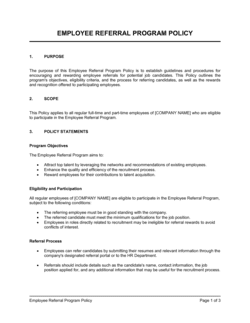
An Employee Sickness Policy is an operational document that sets out the rules and procedures governing employee absence due to illness or injury. This free Word download covers absence reporting obligations, sick pay entitlements, return-to-work procedures, and how the business handles long-term or recurring illness β€” all in a single editable document you can tailor to your workforce and export as PDF.
When you need it
Use it when onboarding your first employees, updating an existing handbook, or when inconsistent handling of sick absences is creating fairness concerns or operational disruptions. It is also essential before any absence-related disciplinary action, to confirm a documented policy was in place.
What's inside
Policy purpose and scope, absence notification requirements, sick pay rules, return-to-work interview process, short-term and long-term absence procedures, fit note requirements, and management responsibilities.

What is an Employee Sickness Policy?

An Employee Sickness Policy is an operational document that defines the rules and procedures governing how a business manages employee absence caused by illness or injury. It sets out notification obligations, sick pay entitlements, self-certification and fit note requirements, return-to-work interview procedures, and the escalation pathway for short-term, recurring, and long-term absence. Rather than leaving managers to make ad hoc decisions, the policy creates a single consistent framework applied equally across the workforce β€” protecting both the employee's rights and the employer's operational and legal position.

Why You Need This Document

Without a written sickness policy, absence is managed differently by every manager in the business β€” some hold informal chats, others ignore the issue entirely, and employees quickly learn which approach gets the least scrutiny. That inconsistency creates fairness complaints, exposes the business to discrimination claims where absence relates to a health condition, and makes any disciplinary or capability action extremely difficult to defend. When an absence dispute reaches a tribunal or labor board, the first question asked is whether a documented policy existed and whether the employee was aware of it. This template gives you a defensible, professionally structured policy in under an hour β€” covering every stage from the first phone call on day one to the formal capability review at week eight.

Which variant fits your situation?

If your situation is…Use this template
General workforce covering office and hybrid employeesEmployee Sickness Policy
Shift-based or frontline workers where cover planning is criticalAttendance and Punctuality Policy
Managing a single prolonged illness or medical leaveMedical Leave of Absence Policy
Documenting a formal absence management meeting or reviewReturn-to-Work Interview Form
Addressing repeated short-term absences under a formal processEmployee Written Warning Letter
Setting out all leave entitlements in one documentEmployee Leave Policy
Covering workplace injury or occupational illness specificallyWorkplace Injury Report Form

Common mistakes to avoid

❌ Applying trigger points inconsistently across the workforce

Why it matters: If some managers initiate reviews at three absences while others wait for ten, affected employees can argue the policy was applied selectively or discriminatorily.

Fix: Train all line managers to the same standard and log every trigger-point conversation in your HR system so the pattern is auditable.

❌ Conflating sick pay entitlement with sickness absence allowance

Why it matters: Employees often assume they are 'allowed' a set number of sick days β€” but the policy should make clear that any absence may be managed, regardless of whether sick pay is still running.

Fix: State explicitly that sick pay entitlement and the company's right to manage absence are separate β€” exhausting sick pay does not protect an employee from a capability process.

❌ Omitting a long-term absence procedure

Why it matters: Without a documented process for managing absences beyond four weeks, dismissing an employee on capability grounds becomes very difficult to defend.

Fix: Add a specific long-term absence section that includes occupational health referral, keeping-in-touch obligations, and a timeline for reviewing the employee's ability to return.

❌ Failing to treat the return-to-work interview as mandatory

Why it matters: Optional return-to-work interviews are skipped, removing the single most effective deterrent against short-term casual absence and the main early-warning mechanism for underlying health issues.

Fix: State that a return-to-work interview is required after every absence, log completion centrally, and include it as a manager KPI during performance reviews.

❌ Not updating the policy when sick pay or entitlement rules change

Why it matters: A policy that still references outdated SSP rates or superseded thresholds undermines the document's credibility and can create incorrect expectations about what employees are owed.

Fix: Review the policy at the start of each new tax year and whenever employment law changes are announced, updating statutory figures and cross-references as required.

❌ Publishing the policy without employee acknowledgment

Why it matters: Disciplinary or capability action that references this policy becomes far harder to pursue if the employee credibly claims they were never made aware of its contents.

Fix: Require every employee to sign or electronically acknowledge receipt of the policy at onboarding and again each time a material update is made.

The 9 key sections, explained

Purpose and scope

Absence notification procedure

Self-certification and fit note requirements

Sick pay entitlements

Return-to-work interviews

Short-term and recurring absence management

Long-term absence procedure

Confidentiality and data handling

Manager responsibilities

How to fill it out

  1. 1

    Confirm the scope and which employees are covered

    Insert your company name and confirm the policy applies to all employees including part-time, fixed-term, and remote workers. Note any exclusions, such as workers engaged via agency contracts, and state those separately.

    πŸ’‘ Aligning scope with your employment contracts avoids a gap where certain employees claim they were not subject to the policy.

  2. 2

    Set the notification requirements

    Specify the notification deadline (e.g., within 30 minutes of the employee's normal start time), the required method (phone call, not text), and the named contact. Add an alternative contact for when the primary manager is unavailable.

    πŸ’‘ Requiring a phone call rather than a text significantly reduces short-term casual absences β€” the small friction of a conversation acts as a deterrent.

  3. 3

    Define sick pay entitlements and qualifying conditions

    Enter the number of weeks at full pay and half pay for your company's contractual sick pay. State whether the entitlement is on a calendar-year or rolling 12-month basis, and specify the probationary period exclusion if applicable.

    πŸ’‘ If you are subject to SSP obligations, confirm your contractual sick pay scheme is at least equal to or above the statutory rate to avoid compliance gaps.

  4. 4

    Set the self-certification and fit note thresholds

    Decide the number of days before a fit note is required β€” seven calendar days is the SSP standard, but many employers require one from day four. Enter these thresholds and add a reference to the self-certification form employees must complete on return.

    πŸ’‘ For employees with a pattern of Monday or Friday absences, you can legitimately require a fit note from day one for a defined period as part of a formal absence review.

  5. 5

    Establish absence trigger points

    Insert the number of separate occasions and total days that trigger a formal review β€” common benchmarks are three occasions or eight days in any rolling 12 months. Confirm these figures with your HR advisor before publishing.

    πŸ’‘ Using a rolling 12-month window rather than a calendar year prevents employees from resetting their absence record on January 1.

  6. 6

    Outline the long-term absence procedure

    Add the week threshold at which long-term absence procedures begin (typically four weeks), name your occupational health provider if you have one, and set the keeping-in-touch frequency for managers to follow.

    πŸ’‘ Documenting regular contact with long-term absent employees protects the business during any subsequent capability dismissal process.

  7. 7

    Add confidentiality and data protection language

    Reference your company's data protection policy and confirm who has access to medical information. State how absence records are stored and for how long in line with your data retention schedule.

    πŸ’‘ Cross-referencing your GDPR or privacy policy by name makes it easier to update both documents independently without creating inconsistencies.

  8. 8

    Publish, communicate, and train managers

    Distribute the policy to all employees β€” ideally requiring a signed acknowledgment β€” and run a briefing for line managers covering trigger points, interview procedures, and escalation steps.

    πŸ’‘ A policy that employees have never seen cannot be used as the basis for disciplinary action β€” keep a record of how and when each employee received it.

Frequently asked questions

What is an employee sickness policy?

An employee sickness policy is a written document that sets out how a business manages employee absence due to illness or injury. It covers how employees must report sickness, what sick pay they receive, when a doctor's fit note is required, how return-to-work interviews work, and the process for managing persistent or long-term absence. It creates a consistent, documented framework that protects both the employer and the employee.

Do small businesses need a formal sickness policy?

Yes. Even businesses with two or three employees benefit from a written sickness policy because it removes ambiguity about sick pay, reporting expectations, and what happens when absence becomes a pattern. Without one, managers handle absences inconsistently, which creates fairness complaints and makes any subsequent disciplinary action far harder to defend. A documented policy is also essential evidence if an employment dispute reaches a tribunal or labor board.

What should a sickness policy include?

At minimum, a sickness policy should cover: the absence notification procedure (who to contact, by when, and how), self-certification and fit note requirements, sick pay entitlements and qualifying conditions, the return-to-work interview process, trigger points for formal absence reviews, the long-term absence procedure including occupational health referral, confidentiality of medical information, and manager responsibilities. Omitting any of these creates gaps that are commonly exploited in disputes.

How many sick days should employees be allowed?

There is no single correct number. Most employers set an informal benchmark β€” commonly 7–10 days per year β€” but the policy should frame absence management in terms of trigger points and formal reviews rather than a fixed allowance. Framing absence as an allowance implies employees are entitled to take a set number of days regardless of cause, which creates the wrong expectation. Instead, specify the number of separate occasions or total days that will trigger a review conversation.

When should a fit note be required?

Statutory Sick Pay rules in the UK require a fit note after seven consecutive calendar days of absence. Many employers require one after four or five days to reduce short-term absence, which is a legitimate policy choice. For employees with a documented pattern of short absences, it is also reasonable to require a fit note from day one for a defined review period. Always state your threshold clearly in the policy so employees know what to expect.

What is a return-to-work interview and is it mandatory?

A return-to-work interview is a brief, structured conversation between a line manager and an employee on their first day back after any sickness absence. It confirms the employee is fit to return, identifies any support or adjustments needed, and signals that all absences are recorded and reviewed. It is not legally mandatory in most jurisdictions, but it is widely recognized as the single most effective tool for reducing short-term absence rates and should be treated as mandatory in your policy.

How does the sickness policy interact with disability legislation?

Where an employee's illness or condition amounts to a disability under applicable law β€” such as the Equality Act 2010 in the UK or the ADA in the US β€” the employer has a duty to consider reasonable adjustments before taking any capability action. A sickness policy should reference this obligation and include a step requiring an occupational health assessment before any disciplinary or capability process begins. Applying absence trigger points rigidly to a disabled employee without first exploring adjustments is a common source of discrimination claims.

Can an employer dismiss an employee for sickness absence?

Yes, in most jurisdictions an employer can fairly dismiss an employee for genuine incapability due to illness, provided the correct process has been followed. That means a documented absence management process, medical evidence considered, reasonable adjustments explored, the employee given the opportunity to respond, and adequate warnings issued. Skipping any of these steps β€” particularly the occupational health stage for long-term absence β€” significantly increases the risk of an unfair dismissal finding. A well-structured sickness policy is the foundation of any defensible capability dismissal.

How often should a sickness policy be reviewed?

Review the policy at least once a year β€” typically at the start of the new tax or fiscal year β€” and whenever statutory sick pay rates change, employment legislation is updated, or the business structure changes significantly. Also review it after any absence-related grievance or tribunal case, as these often highlight gaps or ambiguities in the existing wording.

How this compares to alternatives

vs Attendance and Punctuality Policy

An attendance and punctuality policy covers all forms of non-attendance and lateness, including unauthorized absence, late arrivals, and leaving early β€” not just sickness. A sickness policy focuses specifically on illness-related absence and the associated medical and sick pay procedures. Larger organizations maintain both; smaller businesses often combine them in a single document.

vs Employee Leave Policy

An employee leave policy covers all planned and statutory leave entitlements β€” annual leave, parental leave, bereavement leave, and public holidays. A sickness policy covers unplanned absence due to illness or injury with its own notification, documentation, and management framework. Both are typically separate sections of an employee handbook, as the rules and processes are distinct.

vs Employee Handbook

An employee handbook is the parent document that brings together all workplace policies β€” including sickness, leave, conduct, and performance β€” in one place. A standalone sickness policy is the detailed operational document for absence management specifically. Most businesses maintain the policy as a standalone document and reference it from the handbook, so it can be updated independently.

vs Employee Written Warning Letter

An employee written warning letter is the output of a formal absence management process β€” it documents a sanction where an employee's absence has reached the point of formal action under the sickness policy. The policy establishes the rules; the warning letter enforces them. Neither is effective without the other: a warning issued without a documented policy is very difficult to defend.

Industry-specific considerations

Retail and hospitality

Shift-based rotas make unplanned absence immediately disruptive, so notification deadlines are set earlier β€” often two hours before a shift β€” and cover arrangements are explicitly built into the procedure.

Healthcare

Patient safety obligations mean fitness-for-work standards are stricter, fit notes may be required from day one in clinical roles, and infection-related absences trigger additional reporting requirements.

Manufacturing

Absence directly affects production output and safety staffing ratios, so trigger points are typically lower, return-to-work assessments include physical capability checks, and occupational health involvement is standard.

Professional services

Client-facing deadlines mean absence has a direct revenue impact, long-term absence procedures often include workload redistribution plans, and mental health and burnout provisions are increasingly built into the policy.

Template vs pro β€” what fits your needs?

PathBest forCostTime
Use the templateSmall and medium businesses establishing or updating a sickness absence framework without an in-house HR teamFree30–60 minutes
Template + professional reviewBusinesses operating in multiple jurisdictions, employing 50 or more staff, or those with recent absence-related grievances or tribunal exposure$300–$800 for an HR consultant or employment lawyer review2–5 days
Custom draftedLarge organizations with complex shift patterns, union agreements, or sector-specific regulatory requirements such as healthcare or transport$1,000–$3,000+ for a specialist HR or employment law firm2–4 weeks

Glossary

Absence Trigger Point
A threshold β€” such as three separate absences in 12 weeks β€” that automatically prompts a formal review or management meeting.
Return-to-Work Interview
A brief structured conversation between a manager and employee on their first day back, used to understand the cause of absence and identify any support needed.
Fit Note
A medical certificate issued by a doctor stating whether an employee is fit for work, unfit for work, or fit with adjustments β€” required after a defined number of absence days.
Statutory Sick Pay (SSP)
The minimum sick pay an employer must pay eligible employees under applicable employment law, independent of any contractual sick pay the employer offers.
Contractual Sick Pay
Any sick pay above the statutory minimum that an employer voluntarily provides, typically expressed as full or half pay for a defined number of weeks per rolling year.
Bradford Factor
A formula (SΒ² Γ— D, where S is the number of separate spells and D is total days lost) used to measure the disruptive impact of short-term intermittent absence.
Long-Term Absence
Continuous sickness absence lasting more than four consecutive weeks, typically triggering a different management pathway including occupational health referral.
Occupational Health Referral
A formal process where an employer asks an independent occupational health professional to assess an employee's fitness for work and recommend adjustments.
Reasonable Adjustment
A change to a role, workstation, schedule, or process that enables an employee with a health condition or disability to return to or remain in work.
Self-Certification
A declaration completed by the employee themselves β€” without a doctor's note β€” for short absences, typically covering the first three to seven days.

Part of your Business Operating System

This document is one of 3,000+ business & legal templates included in Business in a Box.

  • Fill-in-the-blanks β€” ready in minutes
  • 100% customizable Word document
  • Compatible with all office suites
  • Export to PDF and share electronically

Create your document in 3 simple steps.

From template to signed document β€” all inside one Business Operating System.
1
Download or open template

Access over 3,000+ business and legal templates for any business task, project or initiative.

2
Edit and fill in the blanks with AI

Customize your ready-made business document template and save it in the cloud.

3
Save, Share, Send, Sign

Share your files and folders with your team. Create a space of seamless collaboration.

Save time, save money, and create top-quality documents.

β˜…β˜…β˜…β˜…β˜…

"Fantastic value! I'm not sure how I'd do without it. It's worth its weight in gold and paid back for itself many times."

Managing Director Β· Mall Farm
Robert Whalley
Managing Director, Mall Farm Proprietary Limited
β˜…β˜…β˜…β˜…β˜…

"I have been using Business in a Box for years. It has been the most useful source of templates I have encountered. I recommend it to anyone."

Business Owner Β· 4+ years
Dr Michael John Freestone
Business Owner
β˜…β˜…β˜…β˜…β˜…

"It has been a life saver so many times I have lost count. Business in a Box has saved me so much time and as you know, time is money."

Owner Β· Upstate Web
David G. Moore Jr.
Owner, Upstate Web

Run your business with a system β€” not scattered tools

Stop downloading documents. Start operating with clarity. Business in a Box gives you the Business Operating System used by over 250,000 companies worldwide to structure, run, and grow their business.

Start freeΒ Β·Β No credit card required