1
Pull your turnover baseline data
Extract voluntary separations, involuntary separations, and average headcount for the trailing 12 months from your HRIS. Calculate voluntary turnover rate by department, tenure band, and role family.
💡 If your HRIS does not separate voluntary from involuntary departures automatically, code them manually before calculating — mixing the two renders the baseline useless.
2
Benchmark your turnover against your industry
Look up the most recent voluntary turnover benchmarks for your industry from at least two sources — SHRM's annual Benchmarking Report and your sector's trade association data are reliable starting points.
💡 Use the median (P50), not the mean — a few outlier companies with 80% turnover inflate industry averages significantly in sectors like hospitality and retail.
3
Synthesize your root-cause data
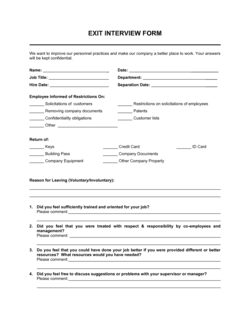
Review the last 12 months of exit interview responses, the most recent engagement survey results, and any stay interview notes. Group findings into themes and rank them by frequency of mention.
💡 Ask departing employees the same three questions every time — consistency in data collection is what makes year-over-year comparison meaningful.
4
Complete the compensation benchmarking section
For each role family above your turnover threshold, pull current salary bands and compare them to market P50 and P75 from a current-year survey (Radford, Mercer, or Levels.fyi for tech roles). Flag any band more than 10% below market.
💡 Prioritize benchmarking the roles with the longest replacement timelines — losing a senior engineer or finance lead costs far more than losing a junior hire.
5
Build the career development maps
For each major role family, define at least three levels with specific skills, scope, and tenure criteria for progression. Confirm that the L&D budget and available programs can actually support the development requirements listed.
💡 Validate career paths with current employees in those roles before publishing — paths designed without input from people doing the job are rarely credible or followed.
6
Score manager effectiveness and assign development priorities
Pull direct-report engagement scores and team attrition rates for each manager. Flag any manager with a team voluntary turnover rate more than 5 percentage points above the company average for a targeted development conversation.
💡 Treat this data with appropriate confidentiality — share individual manager scores with their direct supervisor, not in a company-wide report.
7
Populate the action plan with named owners and deadlines
For each root cause identified in Step 3, write one or two specific actions, assign a named individual as owner, set a target completion date, and define a measurable success metric.
💡 Limit the first action plan to six to eight initiatives — more than ten items produces a list no one monitors and nothing gets done.
8
Set the reporting cadence and share with leadership
Define which KPIs will be reported monthly, who receives the report, and the threshold that triggers an escalation meeting. Present the completed guide to the leadership team and confirm budget approval for any compensation adjustments or program investments.
💡 Schedule the first monthly retention review on the calendar before you distribute the guide — without a standing meeting, the reporting cadence will slip within two months.