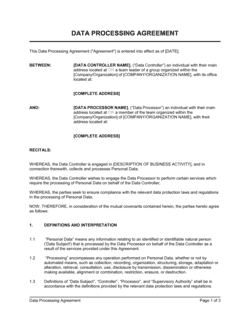
Email Disclaimer Template

Free Word download • Edit online • Save & share with Drive • Export to PDF

7 pages25–35 min to fillDifficulty: ComplexSignature requiredLegal review recommended
Learn more ↓
FreeEmail Disclaimer Template

At a glance

What it is
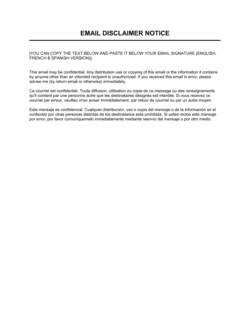
An Email Disclaimer is a standardized legal notice appended to outgoing business emails that limits the sender's liability, asserts confidentiality over message content, and communicates compliance obligations to recipients. This free Word download lets you customize the notice for your organization, export it as PDF, and deploy it across your email system in minutes.
When you need it
Use it whenever your organization sends external communications that contain confidential information, legal or professional advice, or data subject to regulatory requirements such as HIPAA, GDPR, or attorney-client privilege. It is also appropriate for any business that routinely emails clients, partners, or third parties where liability exposure is a concern.
What's inside
Confidentiality and restricted-use notice, liability limitation, legal privilege assertion, misdirected email instructions, virus and malware disclaimer, regulatory compliance statement, and governing law reference.

What is an Email Disclaimer?

An Email Disclaimer is a standardized legal notice appended to the footer of outgoing business email messages that limits the sender's liability, asserts confidentiality over message contents, communicates regulatory compliance obligations, and provides instructions when a message reaches an unintended recipient. Unlike a signed confidentiality agreement, it operates as a unilateral notice — functioning primarily as an evidentiary record of the sender's intent and a documented compliance gesture rather than a binding contract on the recipient. It is typically deployed at the mail-server or email-platform level so that it appends automatically and consistently to every outbound message across the organization.

Why You Need This Document

Without a deployed email disclaimer, every piece of external business correspondence leaves your organization without a documented assertion of confidentiality, without any limitation on liability for errors or reliance, and without the regulatory notices that HIPAA, GDPR, CASL, and financial-services regulations effectively require. A misdirected email containing sensitive client data or strategic information is significantly harder to contain legally when no prior notice communicated the confidential nature of the content. For professional services firms — law practices, accounting firms, medical providers, and financial advisors — the absence of a disclaimer can be cited as evidence that informal email advice was intended as a professional opinion, creating unexpected liability. This template gives you a jurisdiction-aware, customizable disclaimer that you can tailor to your industry, deploy in minutes, and review annually as regulatory requirements evolve.

Which variant fits your situation?

If your situation is…Use this template
General business email to clients or partnersStandard Email Disclaimer
Legal correspondence asserting attorney-client privilegeLegal Privilege Email Disclaimer
Healthcare emails involving patient or health dataHIPAA Email Disclaimer
Financial advice or investment communicationsFinancial Services Email Disclaimer
Emails sent to EU residents involving personal data processingGDPR Email Disclaimer
Marketing or promotional emails requiring CAN-SPAM complianceMarketing Email Footer Disclaimer
Internal-only communications flagged as confidentialInternal Confidentiality Notice

Common mistakes to avoid

❌ Applying an absolute liability exclusion without limiting language

Why it matters: Courts in the UK, EU, Canada, and several US states will strike down blanket 'no liability whatsoever' clauses as void against public policy or under consumer-protection statutes.

Fix: Add the phrase 'to the fullest extent permitted by applicable law' to every liability exclusion so the clause survives partial judicial invalidation rather than being voided entirely.

❌ Asserting attorney-client privilege on every company email

Why it matters: Courts give the privilege assertion less weight when it appears routinely on messages that are plainly not legal communications — and this can undermine the assertion when it actually matters.

Fix: Reserve the attorney-client privilege clause for messages authored or reviewed by counsel, or create a separate legal-correspondence disclaimer distinct from the standard company footer.

❌ Using 'without prejudice' on routine commercial correspondence

Why it matters: The without-prejudice designation is a specific evidentiary rule for settlement communications; misapplying it to ordinary emails can confuse courts and counterparties about the status of everyday business correspondence.

Fix: Apply the without-prejudice notice only to emails that explicitly discuss dispute resolution, claims, or settlement terms, and train staff on the distinction.

❌ Omitting a specific contact for misdirected emails

Why it matters: An instruction to 'notify the sender' with no email address or phone number leaves the unintended recipient with no practical way to comply, weakening any confidentiality argument in a subsequent dispute.

Fix: Include a specific, monitored email address — such as a legal or compliance inbox — so the instruction is actionable and the return of the misdirected message can be documented.

❌ Deploying GDPR or HIPAA compliance language without confirming applicability

Why it matters: Citing a regulation your organization is not actually subject to creates confusion for recipients and may attract regulatory scrutiny if it implies a data-protection posture the organization cannot substantiate.

Fix: Confirm with legal or compliance counsel which regulations apply to your specific business activities before including regulatory-compliance language in the disclaimer.

❌ Never updating the disclaimer after initial deployment

Why it matters: Regulatory requirements, governing-law changes, and new data-privacy statutes can make a static disclaimer inaccurate within 12–18 months of drafting, creating compliance gaps and potential liability.

Fix: Schedule an annual review of the disclaimer as part of your broader legal-document maintenance cycle and update contact details, regulatory references, and liability language as needed.

The 10 key clauses, explained

Confidentiality and Restricted Use

In plain language: States that the email and any attachments are intended only for the named recipient and that unauthorized use, copying, or distribution is prohibited.

Sample language
This email and any attachments are confidential and intended solely for the use of [RECIPIENT NAME]. If you are not the intended recipient, any use, disclosure, copying, or distribution of this message is strictly prohibited.

Common mistake: Addressing confidentiality only to the email body and not explicitly to attachments — a court may find the disclaimer does not protect documents sent alongside the message.

Misdirected Email Instructions

In plain language: Instructs an unintended recipient to notify the sender immediately and to delete the message without reading, copying, or acting on its contents.

Sample language
If you have received this email in error, please notify [SENDER NAME] immediately at [EMAIL ADDRESS] and permanently delete this message and any copies from your system.

Common mistake: Omitting a specific return contact address — without one, the unintended recipient has no practical mechanism to comply with the instruction.

Liability Limitation

In plain language: Limits the sender's and the organization's liability for errors in the email, for reliance on its contents, and for any loss or damage arising from its transmission.

Sample language
[COMPANY NAME] accepts no liability for any loss or damage arising from the use of or reliance on information contained in this email, including any errors, omissions, or inaccuracies.

Common mistake: Using an absolute liability exclusion without qualifying language such as 'to the extent permitted by law' — courts in several jurisdictions will strike down blanket exclusions as unenforceable.

Legal and Professional Advice Disclaimer

In plain language: Clarifies that the email does not constitute legal, financial, medical, or other professional advice, and that recipients should seek qualified counsel before acting.

Sample language
Nothing in this email constitutes legal, financial, or professional advice. Recipients should not act on any information herein without first obtaining advice from a suitably qualified professional.

Common mistake: Omitting this clause for professional services firms. Without it, a client who acts on informal email guidance may successfully argue the communication amounted to a binding professional opinion.

Attorney-Client Privilege Assertion

In plain language: Asserts that the communication is protected by attorney-client privilege or another applicable legal privilege, and that any unintended disclosure does not constitute a waiver.

Sample language
This communication may be protected by attorney-client privilege or the work-product doctrine. Disclosure to an unintended recipient does not constitute a waiver of any applicable privilege.

Common mistake: Including this clause on every company email regardless of whether counsel authored or reviewed it — overuse dilutes the assertion and courts may give it less weight when it actually matters.

Virus and Security Disclaimer

In plain language: States that while the sender has taken reasonable precautions, the organization does not guarantee the email is virus-free and accepts no liability for transmitted malware.

Sample language
[COMPANY NAME] has taken reasonable precautions to ensure this email is free from viruses. However, we cannot guarantee that this message or any attachment is virus-free and accept no liability for any damage caused by transmitted software.

Common mistake: Relying solely on this disclaimer as a substitute for actual email-security controls — courts have found that a disclaimer does not excuse a sender who failed to deploy commercially standard antivirus measures.

Regulatory Compliance Statement

In plain language: References applicable regulatory frameworks — HIPAA, GDPR, FINRA, or other sector-specific rules — and notifies the recipient of the organization's compliance obligations.

Sample language
This email may contain information subject to [REGULATION NAME] requirements. Unauthorized access, use, or disclosure of protected information is prohibited. Please contact [COMPLIANCE CONTACT] if you believe you have received this message in error.

Common mistake: Citing a regulation by name without confirming the organization is actually subject to it — a firm that cites HIPAA in its disclaimer but is not a covered entity undermines its own credibility.

Without Prejudice Notice

In plain language: Flags that the email is sent on a without-prejudice basis, meaning it cannot be introduced as evidence of any admission or settlement offer in litigation.

Sample language
This email is sent without prejudice and may not be used as evidence in any legal proceedings without the prior written consent of [COMPANY NAME].

Common mistake: Using 'without prejudice' on routine commercial emails that contain no settlement discussions — courts have found that misapplying the label can confuse the evidentiary status of unrelated correspondence.

Governing Law and Jurisdiction

In plain language: Specifies which jurisdiction's law governs the disclaimer and any disputes arising from the email communication.

Sample language
This disclaimer and any disputes relating to this communication shall be governed by the laws of [STATE / PROVINCE / COUNTRY], without regard to its conflict-of-law provisions.

Common mistake: Selecting a governing law that has no connection to the sender's principal place of business or the recipient's location — courts in several jurisdictions will disregard a governing-law clause that appears chosen solely to limit statutory protections.

Environmental and Policy Notice

In plain language: An optional closing notice asking recipients to consider the environment before printing the email, or referencing the company's internal acceptable-use and email policy.

Sample language
Please consider the environment before printing this email. This communication is governed by [COMPANY NAME]'s email and communications policy, a copy of which is available upon request.

Common mistake: Treating this clause as legally substantive — it carries no enforceable weight and should remain a brief, optional courtesy notice rather than competing for space with material legal provisions.

How to fill it out

  1. 1

    Identify your regulatory environment

    Determine which laws and regulations apply to your organization's email communications — GDPR if you correspond with EU residents, HIPAA if you handle protected health information, FINRA if you provide investment advice. The applicable rules determine which clauses are mandatory and how they must be worded.

    💡 Build a short checklist of the industries and geographies you email regularly — this prevents you from missing a mandatory compliance clause.

  2. 2

    Insert your legal entity name and contact details

    Replace all [COMPANY NAME] and [EMAIL ADDRESS] placeholders with your registered legal entity name and a monitored inbox — not a personal address — for misdirected email reports.

    💡 Use a shared mailbox such as legal@yourcompany.com for the misdirected email contact so the notice remains accurate if staff turnover occurs.

  3. 3

    Select and retain only the clauses that apply to your business

    Remove clauses that do not apply — for example, if you are not a law firm, delete the attorney-client privilege assertion. An irrelevant clause dilutes the disclaimer and can undermine the enforceability of the clauses that do apply.

    💡 Three to five focused clauses carry more legal weight than ten boilerplate paragraphs, most of which are irrelevant to your business.

  4. 4

    Add the without-prejudice designation selectively

    If the disclaimer is specifically for emails involving settlement discussions or pre-litigation correspondence, include the without-prejudice clause. For standard client or partner emails, omit it to avoid muddying the evidentiary status of routine communications.

    💡 Consult your legal counsel before deploying a without-prejudice notice broadly — misapplied, it can create more confusion than protection.

  5. 5

    Set the governing law to match your principal place of business

    Enter the state, province, or country whose law governs the disclaimer. For multi-jurisdiction organizations, use the jurisdiction where your legal entity is registered or where the majority of your correspondence originates.

    💡 If you correspond regularly with EU residents, add a separate GDPR-specific clause rather than relying on a non-EU governing law to cover data-protection obligations.

  6. 6

    Deploy the disclaimer in your email platform

    Add the finalized text to your email platform's signature or footer settings — in Microsoft 365, Google Workspace, or your mail-transfer agent — so it appends automatically to every outbound message without relying on individual users to include it.

    💡 Test on mobile clients before deploying organization-wide — long disclaimers can render poorly on small screens and may be truncated by some email clients.

  7. 7

    Review and update annually

    Regulatory requirements change — GDPR guidance, HIPAA enforcement priorities, and state data-privacy laws evolve year over year. Schedule an annual review of the disclaimer language against current requirements in your operating jurisdictions.

    💡 Tie the annual review to your broader privacy-policy and terms-of-service update cycle so all external-facing legal notices stay synchronized.

Frequently asked questions

What is an email disclaimer?

An email disclaimer is a legal notice appended to the bottom of business email messages that limits the sender's liability, asserts confidentiality, communicates compliance obligations, and provides instructions in the event the message reaches an unintended recipient. It is not a substitute for a confidentiality agreement but serves as a first line of legal notice for every outbound communication.

Are email disclaimers legally enforceable?

Enforceability varies by jurisdiction and clause type. Confidentiality notices and misdirected-email instructions are generally treated as reasonable requests but cannot compel compliance from a third party who has already read the message. Liability limitation clauses are enforceable to the extent permitted by the applicable governing law — blanket exclusions are frequently struck down in the UK and EU. Attorney-client privilege assertions are given more deference by courts when applied selectively to genuine legal communications.

Is an email disclaimer required by law?

No single law universally mandates email disclaimers, but several sector-specific regulations effectively require them. HIPAA requires covered entities to notify recipients when emails may contain protected health information. EU and UK GDPR guidance recommends data-processing notices in business emails. Financial regulators in the US (FINRA), UK (FCA), and EU require certain risk and regulatory disclosures on investment-related communications. Even where not strictly mandatory, disclaimers provide documented evidence of good-faith compliance efforts.

What should an email disclaimer include?

At minimum: a confidentiality and restricted-use notice, misdirected-email instructions with a specific return contact, a liability limitation clause qualified by applicable law, a professional-advice disclaimer if relevant, and a governing-law reference. Sector-specific businesses should add regulatory compliance language for HIPAA, GDPR, FINRA, or other applicable frameworks. Attorney-client privilege assertions should be reserved for legal correspondence only.

Does an email disclaimer protect against GDPR liability?

A GDPR-compliant disclaimer can document that the sender acknowledged data-protection obligations and notified the recipient, but it does not substitute for a lawful basis for processing personal data, a privacy notice, or the technical and organizational measures GDPR requires. It is one element of a broader compliance program — not a standalone shield. Organizations emailing EU residents should confirm their full GDPR posture with a data-protection advisor, not rely on a footer alone.

Can a recipient ignore an email disclaimer?

Practically, yes. A disclaimer appended after the fact cannot bind a recipient to obligations they did not agree to in advance, particularly under contract-law principles that require offer, acceptance, and consideration. Courts have been skeptical of attempts to impose confidentiality obligations on unintended recipients solely through a footer notice. The disclaimer's strongest function is evidentiary — demonstrating the sender's intent — rather than creating enforceable contractual duties on the recipient.

Should every employee's email include the disclaimer?

Best practice is to deploy it at the mail-server or email-platform level so it appends automatically to all outbound messages, eliminating reliance on individual users to include it consistently. However, consider whether internal-only emails genuinely need a full external disclaimer, or whether a lighter internal confidentiality notice is more appropriate for staff-to-staff communications.

How long should an email disclaimer be?

Effective disclaimers run between 50 and 150 words. Longer disclaimers are routinely ignored by recipients and can create formatting problems on mobile clients. Prioritize the three or four clauses most material to your business and omit the rest. A focused 80-word disclaimer covering confidentiality, liability, and misdirected-email instructions outperforms a 400-word boilerplate that recipients scroll past.

Do I need a lawyer to draft an email disclaimer?

For most small businesses sending standard commercial correspondence, a high-quality template is sufficient. Engage a lawyer when your communications are subject to sector-specific regulation (healthcare, financial services, legal practice), when you correspond regularly with recipients in multiple jurisdictions, or when a significant portion of your outbound email contains confidential commercial information or pre-litigation correspondence. A one-hour legal review typically costs $150–$400 and is worthwhile for regulated industries.

How this compares to alternatives

vs Non-Disclosure Agreement

An NDA is a signed, bilateral contract that creates enforceable confidentiality obligations between two identified parties before a relationship begins. An email disclaimer is a unilateral notice appended to individual messages and is not a substitute for a signed NDA. Use an NDA when sharing genuinely sensitive IP, financial data, or trade secrets; use the disclaimer as a daily operational notice for routine correspondence.

vs Privacy Policy

A privacy policy is a published document explaining how an organization collects, uses, and stores personal data — typically on a website and referenced in customer agreements. An email disclaimer provides a per-message notice of data-handling intent and compliance obligations. Both are required for GDPR compliance but serve different audiences and functions.

vs Terms of Service

Terms of service govern the contractual relationship between a company and its users or customers across a platform or service. An email disclaimer is a narrow, message-level notice that does not establish a broader commercial relationship. Terms of service require acceptance; an email disclaimer does not.

vs Confidentiality Agreement

A confidentiality agreement is a signed contract committing both parties to protect specified information for a defined period. An email disclaimer is a unilateral notice that informs rather than binds. For any relationship where confidential information will be exchanged regularly — vendor partnerships, employment, M&A diligence — a signed confidentiality agreement provides materially stronger protection than a footer notice.

Industry-specific considerations

Legal Services

Attorney-client privilege assertion, work-product doctrine notice, and without-prejudice designations are essential for client correspondence and pre-litigation communications.

Healthcare

HIPAA-compliant language notifying recipients that the email may contain protected health information and providing instructions for secure handling of misdirected messages.

Financial Services

FINRA, FCA, and SEC-driven requirements for risk disclosures, investment-advice limitations, and regulatory attribution on client-facing email communications.

Technology / SaaS

GDPR compliance notices for EU customer correspondence, data-processing acknowledgments, and liability limitations on software-related advice communicated informally by email.

Jurisdictional notes

United States

No federal law universally mandates email disclaimers, but HIPAA requires confidentiality notices on emails containing protected health information, and the CAN-SPAM Act governs commercial marketing email. Liability limitation clauses are generally enforceable under UCC and common-law principles but may be subject to state-specific consumer-protection overrides. State data-privacy laws — including the CCPA in California — may require additional disclosure language for residents of those states.

Canada

Canada's Anti-Spam Legislation (CASL) imposes strict requirements on commercial electronic messages, including consent and unsubscribe mechanisms that supplement a standard disclaimer. PIPEDA and provincial privacy laws require organizations to notify recipients when emails contain personal information. Quebec's Law 25 (Bill 64) imposes additional French-language and consent requirements for organizations serving Quebec residents. Liability exclusion clauses are subject to provincial consumer-protection statutes.

United Kingdom

The UK GDPR and Data Protection Act 2018 recommend that business emails referencing personal data include a processing notice. The Unfair Contract Terms Act 1977 and the Consumer Rights Act 2015 limit the enforceability of blanket liability exclusions, particularly in B2C contexts. Financial services firms regulated by the FCA must include specific risk warnings and regulatory attribution on investment-related email communications. Attorney-client privilege (legal professional privilege in UK terminology) is well-recognized but requires careful wording to avoid waiver.

European Union

GDPR Article 13/14 obligations mean that emails collecting or referencing personal data should direct recipients to the organization's privacy notice. The EU ePrivacy Directive supplements GDPR for electronic communications. Post-employment non-compete clauses and liability exclusions in disclaimers are subject to member-state mandatory law, which typically cannot be displaced by a governing-law clause. In Germany, email footers for businesses must also include mandatory commercial disclosure (Impressum) information under the Telemediengesetz.

Template vs lawyer — what fits your deal?

PathBest forCostTime
Use the templateSmall businesses and general commercial operations sending standard client or partner correspondenceFree15–30 minutes
Template + legal reviewProfessional services firms, regulated industries, or organizations corresponding with EU or UK residents$150–$400 for a one-hour legal review1–3 days
Custom draftedHealthcare organizations, law firms, financial advisors, or multinationals with complex cross-border email compliance requirements$500–$2,000+1–2 weeks

Glossary

Attorney-Client Privilege
A legal protection that keeps communications between a lawyer and their client confidential and shielded from disclosure in legal proceedings.
Confidentiality Notice
A statement notifying the recipient that the email contents are private and intended solely for the named addressee.
Liability Limitation
A clause that restricts the sender's legal exposure for errors, omissions, or reliance on information contained in the email.
Misdirected Email
An email accidentally sent to an unintended recipient, triggering disclosure obligations and instructions to delete the message.
GDPR
The General Data Protection Regulation — EU law governing the collection, processing, and transfer of personal data of EU residents.
HIPAA
The Health Insurance Portability and Accountability Act — US federal law requiring safeguards for the privacy and security of protected health information.
CAN-SPAM Act
US federal law setting rules for commercial email, including requirements for opt-out mechanisms and truthful subject lines.
Without Prejudice
A designation indicating that a communication cannot be used as evidence of an admission or concession in any legal proceeding.
Governing Law
The jurisdiction whose laws apply to interpret and enforce the terms of a document or notice in the event of a dispute.
Waiver
The voluntary relinquishment of a known right — in email disclaimers, senders typically state that privilege is not waived by accidental disclosure to an unintended recipient.
Privilege Waiver
The unintentional or intentional loss of attorney-client or other legal privilege, often triggered by disclosure of protected communications to a third party.

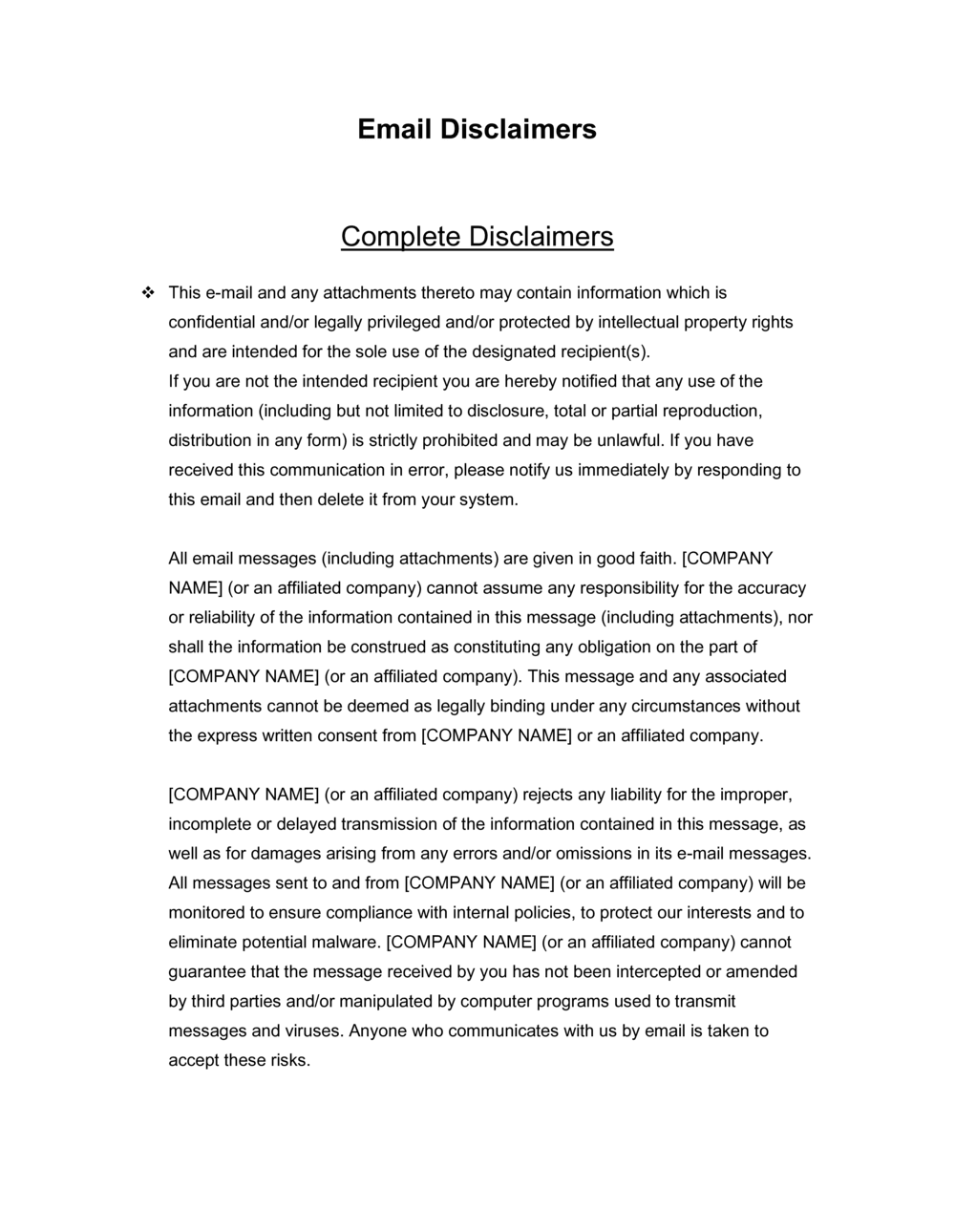
Part of your Business Operating System

This document is one of 3,000+ business & legal templates included in Business in a Box.

  • Fill-in-the-blanks — ready in minutes
  • 100% customizable Word document
  • Compatible with all office suites
  • Export to PDF and share electronically

Create your document in 3 simple steps.

From template to signed document — all inside one Business Operating System.
1
Download or open template

Access over 3,000+ business and legal templates for any business task, project or initiative.

2
Edit and fill in the blanks with AI

Customize your ready-made business document template and save it in the cloud.

3
Save, Share, Send, Sign

Share your files and folders with your team. Create a space of seamless collaboration.

Save time, save money, and create top-quality documents.

★★★★★

"Fantastic value! I'm not sure how I'd do without it. It's worth its weight in gold and paid back for itself many times."

Managing Director · Mall Farm
Robert Whalley
Managing Director, Mall Farm Proprietary Limited
★★★★★

"I have been using Business in a Box for years. It has been the most useful source of templates I have encountered. I recommend it to anyone."

Business Owner · 4+ years
Dr Michael John Freestone
Business Owner
★★★★★

"It has been a life saver so many times I have lost count. Business in a Box has saved me so much time and as you know, time is money."

Owner · Upstate Web
David G. Moore Jr.
Owner, Upstate Web

Run your business with a system — not scattered tools

Stop downloading documents. Start operating with clarity. Business in a Box gives you the Business Operating System used by over 250,000 companies worldwide to structure, run, and grow their business.

Free Forever Plan · No credit card required