- Email Disclaimer
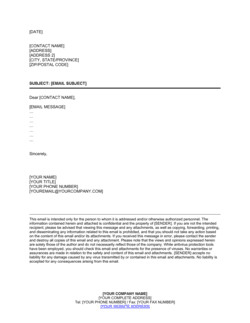
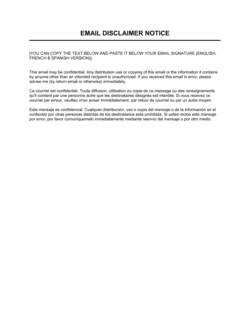
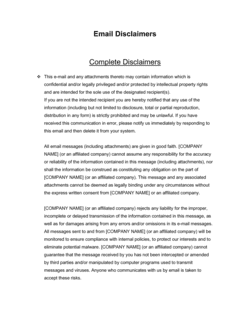
- A block of text appended to outgoing emails that communicates confidentiality, liability, and legal notices to recipients.
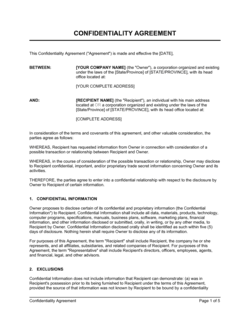
- Confidentiality Notice
- A statement informing the recipient that the email's contents are intended only for the named addressee and must not be disclosed to third parties.
- Attorney-Client Privilege
- A legal protection that keeps communications between a lawyer and their client confidential and generally immune from compelled disclosure in legal proceedings.
- Unintended Recipient
- A person who receives an email by mistake rather than as the intended addressee; disclaimers typically instruct them to delete the message and notify the sender.
- Liability Limitation
- A clause stating that the sender is not responsible for certain consequences — such as data corruption, transmission errors, or actions taken based on unverified information.
- No-Contract Clause
- A statement clarifying that the email and its contents do not constitute a binding offer, acceptance, or contract unless expressly stated.
- Virus Disclaimer
- A notice indicating that while reasonable steps have been taken to ensure the email is free of malware, the sender cannot guarantee the safety of attachments.
- Privilege Waiver
- The unintentional or deliberate loss of legal privilege over communications, which an email disclaimer aims to prevent by notifying unintended recipients to stop reading.
- Governing Language
- In a multilingual disclaimer, the language version that controls interpretation in the event of a conflict between translations.
- Footer Signature Block
- The standardized section at the bottom of a business email that includes the sender's contact details and any required legal or regulatory notices.