Educational Reference Check Letter Template

Free Word download β€’ Edit online β€’ Save & share with Drive β€’ Export to PDF

2 pagesβ€’20–25 min to fillβ€’Difficulty: Standard
Learn more ↓
FreeEducational Reference Check Letter Template

At a glance

What it is
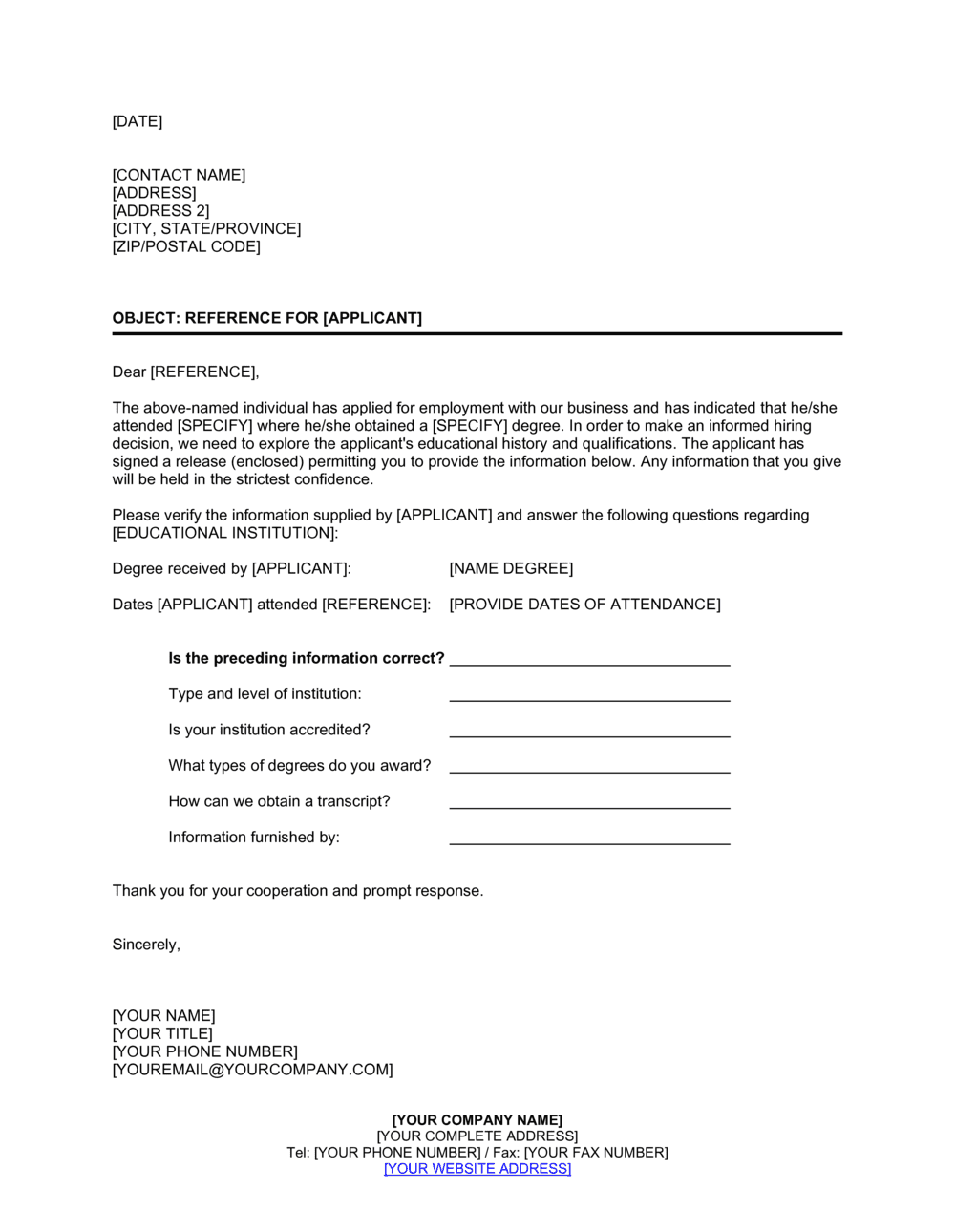
An Educational Reference Check Letter is a formal written request sent by an employer or HR professional to a candidate's previous educational institution asking the registrar or faculty to confirm academic credentials, enrollment dates, and degree completion. This free Word download gives you a ready-to-edit letter you can customize with the candidate's details, send directly to the institution, and retain on file as part of a structured hiring record.
When you need it
Use it during the background-check phase of hiring whenever a role requires a verified degree, diploma, or certification β€” such as professional, licensed, or regulated positions. It is also appropriate when a candidate's resume lists academic credentials that cannot be confirmed through an automated verification service.
What's inside
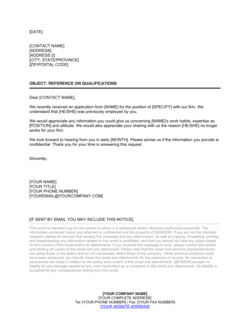
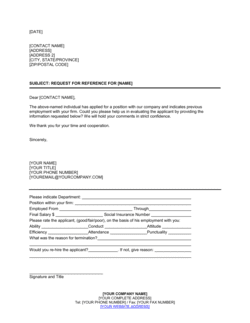
The letter includes sender identification, a formal request for academic verification, the candidate's identifying details and consent reference, specific questions about enrollment and degree completion, a confidentiality statement, and a clear response deadline with return contact information.

What is an Educational Reference Check Letter?

An Educational Reference Check Letter is a formal written request sent by an employer or HR professional to a school, college, or university asking the institution's registrar or records office to confirm a job candidate's academic credentials. The letter identifies the candidate, references their written consent, asks specific questions about enrollment dates, degree awarded, field of study, and graduation date, and provides clear return instructions. It functions as the primary direct-contact method for verifying that the qualifications a candidate lists on their resume or application match institutional records β€” without relying on a third-party consumer reporting agency.

Why You Need This Document

Hiring a candidate based on an unverified degree claim creates real liability: a misrepresented credential discovered after hire can undermine a disciplinary or termination process, expose a regulated organization to licensing penalties, and damage team trust. A structured educational reference check letter closes that gap efficiently. It gives the receiving institution everything needed to locate the record and respond β€” candidate identification, consent documentation, and specific questions β€” reducing back-and-forth and keeping the verification on a defined timeline. Using this template also ensures your process is consistent across every hire, which matters when an adverse-action decision is later reviewed internally or externally.

Which variant fits your situation?

If your situation is…Use this template
Verifying a university degree or postgraduate qualificationEducational Reference Check Letter
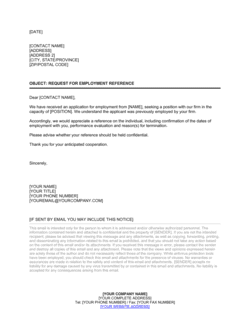
Checking employment dates and job title with a prior employerEmployment Reference Check Letter
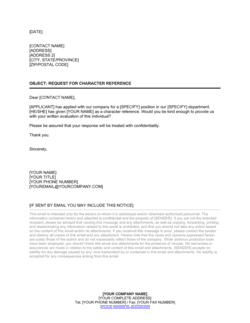
Requesting a character or professional reference from a named refereeProfessional Reference Request Letter
Formally requesting a full background check authorization from the candidateBackground Check Authorization Form
Confirming a professional license or certification with an issuing bodyProfessional License Verification Letter
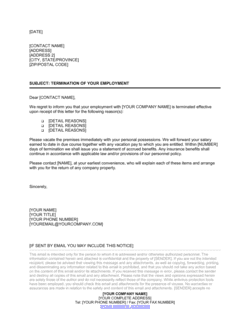
Declining a candidate after a failed background or reference checkCandidate Rejection Letter
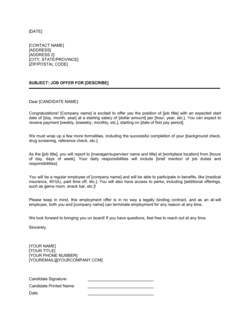
Issuing a conditional offer pending credential verificationConditional Job Offer Letter

Common mistakes to avoid

❌ Sending without candidate consent documentation

Why it matters: FERPA in the US β€” and equivalent privacy statutes in Canada, the UK, and the EU β€” prohibit educational institutions from releasing student records to third parties without written student authorization. The institution will refuse to respond, and you may expose your company to a privacy complaint.

Fix: Collect a signed reference check authorization form from the candidate before dispatching any education verification letter. Reference the consent document by date in the letter body.
❌ Using vague open-ended questions

Why it matters: Registrars respond to specific enumerated questions, not open requests for 'any relevant information.' A vague request will either be returned unanswered or produce a minimal confirmation that does not meet your verification needs.

Fix: Replace open-ended requests with a numbered list of five or fewer yes/no or fill-in-the-blank questions covering exactly the facts you need confirmed.

❌ Omitting a response deadline

Why it matters: Without a stated deadline, the letter sits in a registrar's inbox with no urgency signal. Hiring timelines slip when verification stalls.

Fix: State a specific calendar date β€” at least 10 business days out β€” and include a follow-up contact name so the institution can reach you if there are questions.

❌ Addressing the letter to a generic title instead of the records office

Why it matters: Letters addressed to 'To Whom It May Concern' or a department-general inbox are frequently routed incorrectly, delaying responses by a week or more.

Fix: Spend two minutes on the institution's website to find the Registrar's office contact name and direct email before drafting the letter.

The 9 key clauses, explained

Sender identification and letterhead

In plain language: States the requesting organization's name, address, phone, and email so the recipient knows exactly who is asking and how to respond.

Sample language
[COMPANY NAME] | [ADDRESS] | [CITY, STATE, ZIP] | [PHONE] | [EMAIL] | [DATE]

Common mistake: Sending the letter from a personal email address or without company letterhead β€” institutions may refuse to release records to an unverifiable requestor.

Recipient address and salutation

In plain language: Names the specific office or individual at the institution β€” ideally the Registrar or Records Office β€” to ensure the letter reaches the right person.

Sample language
Office of the Registrar | [INSTITUTION NAME] | [ADDRESS] | Dear Registrar / Records Officer:

Common mistake: Addressing the letter generically to 'To Whom It May Concern' when the institution's registrar contact is publicly listed β€” generic salutations slow routing and response times.

Purpose statement

In plain language: Opens the body of the letter with a clear, one-sentence statement of why the employer is writing and for which candidate.

Sample language
We are writing to request verification of the academic credentials of [CANDIDATE FULL NAME], who has applied for the position of [JOB TITLE] at [COMPANY NAME] and has listed your institution as a source of academic qualification.

Common mistake: Burying the request in a long introductory paragraph β€” the purpose statement should appear in the first two sentences so the recipient immediately knows what action is required.

Candidate identification details

In plain language: Provides the institution with enough information to locate the candidate's record β€” full legal name, date of birth, student ID if known, and years of attendance.

Sample language
Candidate: [FULL LEGAL NAME] | Date of Birth: [DOB] | Student ID (if known): [ID] | Approximate Years of Attendance: [START YEAR] – [END YEAR]

Common mistake: Omitting the date of birth or student ID when the candidate has a common name β€” without a unique identifier, registrars may return a 'no record found' response for the wrong reason.

Consent and authorization reference

In plain language: Confirms that the candidate has provided written consent for this verification, satisfying the institution's privacy obligations before it releases any records.

Sample language
[CANDIDATE FULL NAME] has provided written authorization for [COMPANY NAME] to contact your institution to verify their academic records. A copy of the signed consent form is enclosed / available upon request.

Common mistake: Omitting any reference to candidate consent β€” FERPA and equivalent privacy laws in other jurisdictions require student authorization before a school releases records to a third party.

Specific verification questions

In plain language: Lists the precise facts the employer needs confirmed β€” degree awarded, major, graduation date, and whether the candidate was in good academic standing.

Sample language
Please confirm the following: (1) Did [CANDIDATE NAME] attend [INSTITUTION NAME]? (2) What degree, if any, was awarded? (3) What was the declared major or field of study? (4) What was the graduation or completion date? (5) Did the candidate leave in good academic standing?

Common mistake: Asking open-ended questions like 'Please provide any information you have' β€” most institutions will only respond to specific, enumerated questions for privacy and liability reasons.

Confidentiality statement

In plain language: Assures the institution that the information will be used solely for employment verification and kept confidential within the hiring process.

Sample language
All information provided in response to this request will be used solely for the purpose of employment verification and will be kept strictly confidential within [COMPANY NAME]'s hiring process.

Common mistake: Skipping this clause entirely β€” institutions are more likely to respond fully when they are assured the information will not be shared beyond its stated purpose.

Response deadline and return instructions

In plain language: Sets a specific date by which the employer needs a response and provides clear instructions β€” email, fax, or postal return β€” for how to reply.

Sample language
We would appreciate a response by [DATE β€” typically 10 business days from sending]. Please return your response to [NAME] at [EMAIL] or by fax to [FAX NUMBER]. If you require additional information, please contact us at [PHONE].

Common mistake: Setting an unrealistically short deadline β€” requesting a response within 2–3 business days of a cold letter to a registrar's office routinely produces no response at all.

Closing and authorized signature block

In plain language: Closes the letter with a professional thank-you, the sender's name, title, and company β€” establishing accountability and giving the recipient a named contact.

Sample language
Thank you for your assistance with this verification request. | Sincerely, | [SENDER FULL NAME] | [TITLE] | [COMPANY NAME] | [CONTACT DETAILS]

Common mistake: Closing without a named contact and direct phone number β€” anonymous sign-offs reduce response rates because the registrar has no one to call with questions.

How to fill it out

  1. 1

    Add your company letterhead and the date

    Enter your company's full legal name, mailing address, phone, and email at the top of the document. Set today's date directly above the recipient address block.

    πŸ’‘ Use the same letterhead format as your other official HR correspondence so the document is immediately recognizable as official company communication.

  2. 2

    Address the letter to the institution's registrar

    Look up the specific registrar or records office contact on the institution's website and address the letter to that office by name. Include the institution's full mailing address.

    πŸ’‘ Calling the institution's main number for 60 seconds to confirm the correct records office email saves days of routing delays.

  3. 3

    Complete the candidate identification block

    Enter the candidate's full legal name, date of birth, any known student ID number, and the approximate years they attended the institution.

    πŸ’‘ Ask the candidate directly for their student ID number before sending β€” it is the single most reliable identifier for a registrar lookup.

  4. 4

    Reference the candidate's signed consent

    Confirm in the letter body that the candidate has authorized this contact. Attach or reference the signed authorization form by date.

    πŸ’‘ Collect the candidate's consent form before sending any reference letters β€” without it, the institution is legally prohibited from responding in most jurisdictions.

  5. 5

    List your specific verification questions

    Replace the placeholder questions with the exact facts you need β€” degree type, major, graduation date, and any additional credential details relevant to the role.

    πŸ’‘ Keep the list to five or fewer numbered questions. Longer lists increase the chance that an institution responds partially and you must follow up.

  6. 6

    Set a realistic response deadline

    Enter a response date that is at least 10 business days from the date you send the letter. Include both an email and a fax or postal return option.

    πŸ’‘ Send the letter via email and follow up with a posted copy if you have not received a response within 5 business days β€” dual delivery significantly increases response rates.

  7. 7

    Sign and dispatch

    Insert your full name, title, and direct contact details in the closing block. Send the letter from your official company email address and retain a copy in the candidate's hiring file.

    πŸ’‘ Log the send date and response deadline in your ATS or hiring tracker so the follow-up is automatic β€” manual tracking leads to missed deadlines.

Frequently asked questions

What is an educational reference check letter?

An educational reference check letter is a formal written request from an employer to a school, college, or university asking the institution to confirm a job candidate's academic credentials β€” including the degree awarded, field of study, dates of enrollment, and graduation date. It is used during the background-check phase of hiring to verify that the candidate's resume accurately reflects their academic history.

When should I send an educational reference check letter?

Send it after a candidate has accepted a conditional offer and signed a background check authorization form, but before the offer becomes unconditional. For regulated or licensed roles β€” nursing, engineering, law, education β€” verify credentials before the candidate begins work. For non-regulated roles, verification can run in parallel with final interviews.

Do I need the candidate's permission to contact their school?

Yes. In the United States, FERPA prohibits educational institutions from releasing student records to third parties without written student consent. Canada, the UK, and the EU have equivalent privacy requirements. Collect a signed reference check authorization form from the candidate before sending the letter, and reference that consent document explicitly in the letter body.

What information should I include about the candidate?

Include the candidate's full legal name, date of birth, any known student ID number, and the approximate years of attendance. If the candidate held a different legal name while enrolled β€” for example, before a marriage or legal name change β€” include both names to prevent a false 'no record found' response from the registrar.

How long does it take a school to respond to an educational reference check?

Response times vary from 3 to 15 business days depending on the institution's size and staffing. Large universities with automated verification portals often respond in 2–3 days; smaller institutions with manual records processes can take 2–3 weeks. Setting a 10-business-day deadline in your letter and following up by email on Day 5 if no response has arrived keeps the process on track.

What should I do if the school says it has no record of the candidate?

First, confirm that you provided the correct institution name, candidate legal name, and approximate dates of attendance β€” a simple mismatch in name spelling or date range is the most common cause. If the candidate attended under a different name, re-send with both names. If the institution confirms no record exists after a second attempt, treat it as a discrepancy, document it, and follow your organization's adverse-action policy before taking any hiring decision.

Is an educational reference check letter the same as a background check?

No. An educational reference check letter is a targeted written request to a specific institution for academic credential confirmation. A full background check is a broader process β€” typically conducted by a third-party consumer reporting agency β€” that may include criminal history, employment history, credit, and education verification all in one report. The letter is suitable for direct-contact verification; a CRA-conducted check is required when Fair Credit Reporting Act (FCRA) compliance obligations apply in the US.

Can educational institutions refuse to respond to a reference check letter?

Yes. Institutions may decline to respond if candidate consent is not documented, if the letter does not include enough identifying information to locate the record, or if the institution routes all verifications through a third-party service such as the National Student Clearinghouse. Check the institution's website before sending β€” many now provide a verification portal link that resolves faster than a letter.

How should I handle the response once I receive it?

File the written response in the candidate's hiring record and compare each confirmed fact against what the candidate listed on their resume or application. Document any discrepancy β€” dates off by a year, degree type different from what was claimed, or a major that does not match β€” and follow your organization's discrepancy-review procedure before making a final hiring decision. Retain the response for at least the duration of employment in case of a future dispute.

How this compares to alternatives

vs Employment Reference Check Letter

An employment reference check letter asks a former employer to confirm job title, dates of employment, and performance. An educational reference check letter asks an academic institution to confirm degree, major, and graduation date. Both are part of a complete background-check process, but they go to different recipients and ask for different facts. Use the educational version whenever a claimed degree is material to the role.

vs Background Check Authorization Form

A background check authorization form is completed by the candidate and authorizes the employer to conduct checks. The educational reference check letter is the outbound document the employer sends to the institution after receiving that authorization. The two documents work together β€” the authorization must exist before the letter is sent.

vs Professional Reference Request Letter

A professional reference request letter asks a named individual β€” former manager, colleague, or mentor β€” for a character or performance assessment. An educational reference check letter goes to an institution's records office for factual credential confirmation, not opinion. They serve different verification purposes and should not be substituted for each other.

vs Conditional Job Offer Letter

A conditional job offer letter extends an offer of employment contingent on satisfactory completion of background and credential checks. The educational reference check letter is one of the verification instruments that must be completed before that condition is lifted. The offer letter triggers the verification process; the reference check letter executes it.

Industry-specific considerations

Healthcare

Clinical roles require verified degrees and certifications as a condition of licensing β€” an unverified credential can result in regulatory penalties for the hiring organization.

Education

Schools and universities hiring teachers or faculty must confirm degrees and majors to satisfy accreditation standards and state certification requirements.

Financial Services

Regulated roles under FINRA, the FCA, or equivalent bodies require documented verification of educational qualifications as part of the licensing and registration process.

Technology / SaaS

Engineering and data science roles commonly list advanced degrees β€” verifying credentials prevents misrepresentation in specialized technical hiring.

Template vs pro β€” what fits your needs?

PathBest forCostTime
Use the templateHR managers, small business owners, and recruiters conducting standard academic verification for non-regulated rolesFree10 minutes to customize and send
Template + professional reviewOrganizations hiring for regulated or licensed roles where credential verification is a compliance requirement$0–$100 (HR consultant or compliance officer review)30–60 minutes
Custom draftedEnterprise HR teams processing high-volume verifications or integrating with a consumer reporting agency under FCRA$200–$500 (legal or CRA setup)1–3 days

Glossary

Credential Verification
The process of confirming that a candidate's stated academic qualifications β€” degree, diploma, or certification β€” match institutional records.
Registrar
The administrative office within a school or university responsible for maintaining official student enrollment and academic records.
Conditional Offer
A job offer extended to a candidate that becomes binding only after specified conditions β€” such as education or background checks β€” are satisfied.
Transcript
An official document issued by an educational institution listing the courses a student completed, grades received, and degree awarded.
Candidate Consent
Written authorization from the job applicant permitting the employer to contact third parties β€” including former schools β€” to verify background information.
Degree Attestation
Formal confirmation from an educational institution that a specific degree was awarded to a named individual on a stated date.
Enrollment Period
The calendar dates during which a student was officially registered and attending classes at an institution.
FERPA
The Family Educational Rights and Privacy Act β€” a US federal law restricting disclosure of student records without the student's written consent.
Adverse Action
A hiring decision β€” rejection, withdrawal of offer, or demotion β€” taken in whole or in part because of information obtained during a background check.
Reference Check Waiver
A signed acknowledgment from the candidate authorizing the prospective employer to conduct reference and background checks, including contact with academic institutions.

Part of your Business Operating System

This document is one of 3,000+ business & legal templates included in Business in a Box.

  • Fill-in-the-blanks β€” ready in minutes
  • 100% customizable Word document
  • Compatible with all office suites
  • Export to PDF and share electronically

Create your document in 3 simple steps.

From template to signed document β€” all inside one Business Operating System.
1
Download or open template

Access over 3,000+ business and legal templates for any business task, project or initiative.

2
Edit and fill in the blanks with AI

Customize your ready-made business document template and save it in the cloud.

3
Save, Share, Send, Sign

Share your files and folders with your team. Create a space of seamless collaboration.

Save time, save money, and create top-quality documents.

β˜…β˜…β˜…β˜…β˜…

"Fantastic value! I'm not sure how I'd do without it. It's worth its weight in gold and paid back for itself many times."

Managing Director Β· Mall Farm
Robert Whalley
Managing Director, Mall Farm Proprietary Limited
β˜…β˜…β˜…β˜…β˜…

"I have been using Business in a Box for years. It has been the most useful source of templates I have encountered. I recommend it to anyone."

Business Owner Β· 4+ years
Dr Michael John Freestone
Business Owner
β˜…β˜…β˜…β˜…β˜…

"It has been a life saver so many times I have lost count. Business in a Box has saved me so much time and as you know, time is money."

Owner Β· Upstate Web
David G. Moore Jr.
Owner, Upstate Web

Run your business with a system β€” not scattered tools

Stop downloading documents. Start operating with clarity. Business in a Box gives you the Business Operating System used by over 250,000 companies worldwide to structure, run, and grow their business.

Start freeΒ Β·Β No credit card required