1
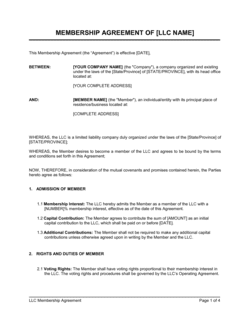
Identify all parties and confirm the membership product
Enter the employer's full registered legal name, the employee's legal name as it appears on payroll, and the membership provider's registered entity name. Describe the specific membership plan being discounted — plan name, tier, and any included features.
💡 If the arrangement is bilateral (employer and employee only, with the employer paying the provider separately), note that the provider is not a signatory but should receive a copy for their records.
2
Define eligibility conditions precisely
State the employment type (full-time, part-time, or both), any minimum tenure, and whether employees on probation, unpaid leave, or reduced hours qualify. Be specific — vague eligibility language generates disputes when edge cases arise.
💡 Add a clause confirming that eligibility determinations are made at the employer's reasonable discretion, which preserves flexibility when circumstances change.
3
Specify the discount rate anchored to a current published rate
Enter the provider's current published membership rate, the corporate discount amount or percentage, and the resulting employee price. Clarify whether the discount is fixed or subject to change if the provider adjusts its published pricing.
💡 Include a 30-day notice requirement before any rate change takes effect, so employees are not surprised by mid-year cost increases.
4
Set the co-payment amount and collection method
State the exact dollar amount the employee contributes per pay period or month, the payroll deduction label that will appear on their payslip, and the effective start date of deductions. If no co-payment applies, state 'nil' explicitly.
💡 Check your jurisdiction's wage-deduction rules before relying solely on this clause — some states and provinces require a separate payroll deduction authorization form.
5
Set the term, renewal, and notice periods
Enter the start date, initial term length (typically 12 months), and the number of days' notice required to prevent auto-renewal. Confirm whether the renewal term matches the initial term or reverts to month-to-month.
💡 Align the agreement's term with your annual benefits review cycle so renewals coincide with any rate or eligibility changes you want to make.
6
Complete the termination-of-benefit and pro-rata refund provisions
Confirm that the benefit terminates on the last day of employment and specify the refund timeline for any pre-paid co-payment that covers a period beyond the termination date.
💡 Process refunds through payroll on the final paycheck where possible — a separate bank transfer creates reconciliation complexity.
7
Add the tax treatment acknowledgment
Include a clear statement that the employee acknowledges the employer's contribution may be a taxable benefit and that the employee bears any resulting personal tax liability. Do not represent the benefit as definitively non-taxable.
💡 Review IRS Publication 15-B (US) or HMRC's Employment Income Manual (UK) for current guidance on the tax treatment of employer-paid fitness or wellness memberships before completing this clause.
8
Execute before the membership start date
Both the employee and the authorized employer signatory should sign before the membership is activated. In three-party arrangements, obtain the provider's signature or countersignature as well.
💡 Use a timestamped eSignature tool so the execution date is independently verifiable — this matters if a dispute arises about when the benefit commenced.