- Deed
- A formal written instrument that is signed, witnessed, and delivered — distinct from a simple contract because it requires no consideration to be binding in most common-law jurisdictions.
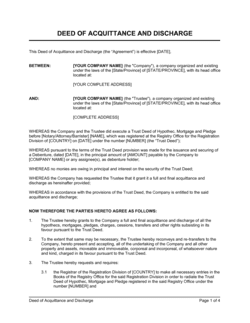
- Discharge
- The legal extinguishment of an obligation, liability, or claim, freeing the obligor from any further duty to perform.
- Obligor
- The party who owes an obligation — a debt, a performance duty, or a guarantee — that is being released by the deed.
- Obligee
- The party to whom the obligation is owed and who grants the release under the deed.
- Consideration
- Something of value exchanged to support a binding agreement; in a deed, consideration is typically recited but not strictly required for enforceability in common-law systems.
- Recitals
- Introductory narrative clauses that set out the background facts and the purpose of the deed, though they do not themselves create binding obligations.
- Surviving Obligations
- Duties or restrictions — such as confidentiality or non-disparagement — that remain in force after the main obligations are discharged.
- Encumbrance
- A charge, lien, or claim registered against an asset — typically real property — that limits the owner's ability to deal freely with it until discharged.
- Release
- The formal relinquishment by the obligee of their right to enforce an obligation, claim, or liability against the obligor.
- Full and Final Settlement
- Language confirming that the discharge extinguishes all present and future claims arising from the underlying obligation, leaving no residual right of action.
- Witness
- An independent adult who observes the signing of a deed and signs to attest that the execution was genuine — required in most jurisdictions for a deed to be valid.
- Estoppel
- A legal principle preventing a party from asserting a position inconsistent with a prior statement or agreement, used here to stop the obligee from later reviving a discharged claim.