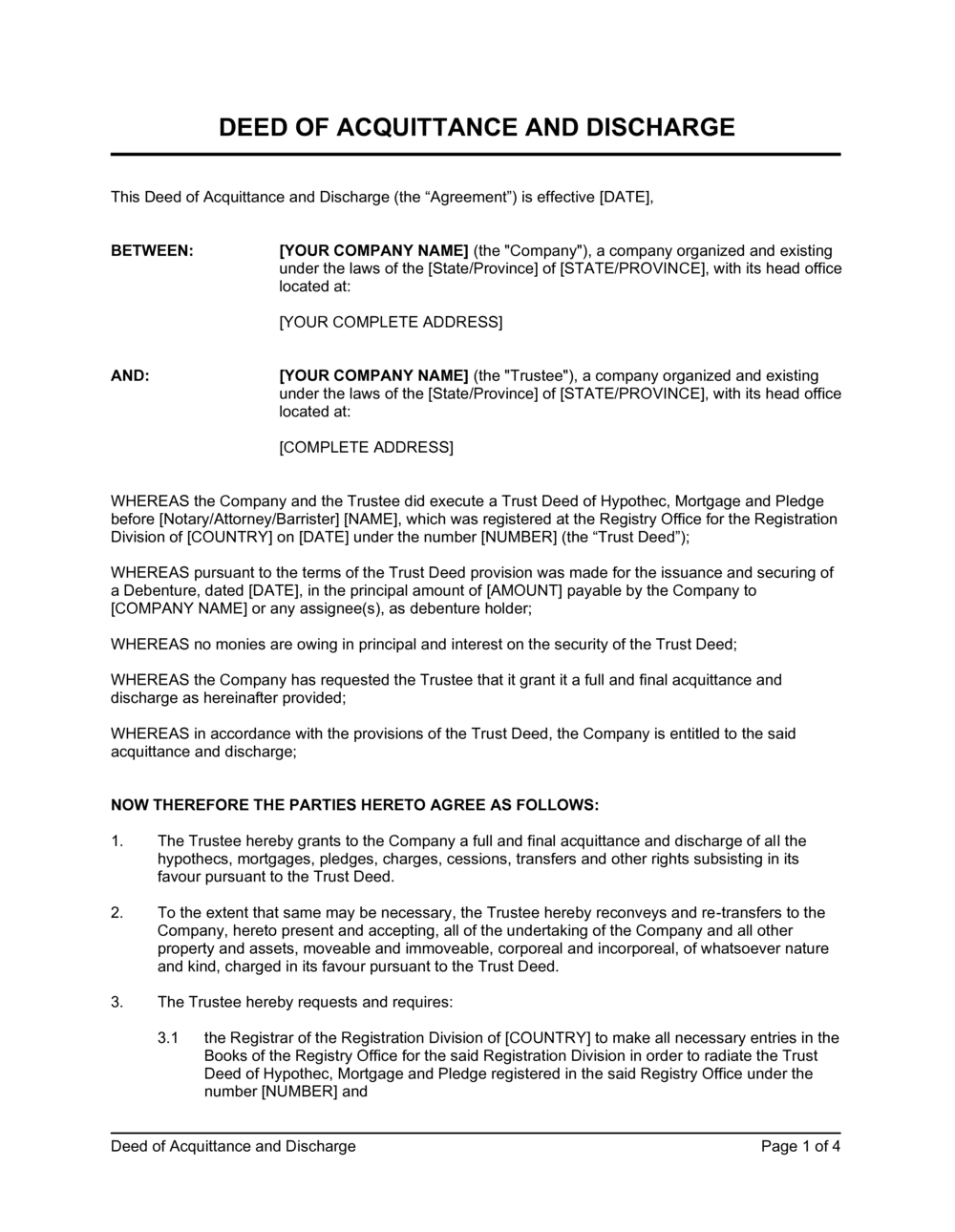
Deed of Acquittance and Discharge Template

Free Word download β€’ Edit online β€’ Save & share with Drive β€’ Export to PDF

4 pagesβ€’20–30 min to fillβ€’Difficulty: Standardβ€’Signature requiredβ€’Legal review recommended
Learn more ↓
FreeDeed of Acquittance and Discharge Template

At a glance

What it is
A Deed of Acquittance and Discharge is a formal legal instrument by which one party (the releasor) permanently releases another party (the releasee) from a specific debt, obligation, claim, or liability. Executed as a deed rather than a simple contract, it carries heightened legal weight and does not require separate monetary consideration to be binding. This free Word download gives you a professionally structured template you can edit online and export as PDF for execution by both parties.
When you need it
Use it when settling a debt in full, closing out a loan, terminating a contractual obligation, or confirming that a counterparty has satisfied all duties owed β€” and you want an enforceable, permanent record of that release. It is also appropriate when winding down a business relationship where one party may otherwise assert residual claims.
What's inside
Identification of both parties and the underlying obligation being discharged, a clear recital of the circumstances and consideration (if any), the operative release and discharge clause, representations and warranties from both parties, confidentiality provisions, governing law, and execution blocks formatted for deed-level signature requirements.

What is a Deed of Acquittance and Discharge?

A Deed of Acquittance and Discharge is a formal legal instrument by which one party β€” the releasor β€” permanently and irrevocably releases another party β€” the releasee β€” from a specific debt, obligation, or liability. Unlike a simple contract, it is executed as a deed, meaning it carries legal force without requiring separate monetary consideration to pass between the parties. The document creates a definitive, court-admissible record that the named obligation has been fully satisfied or forgiven, extinguishing any future claim the releasor might otherwise bring. It typically identifies the original obligation by reference to the underlying agreement, states the scope of the release with precision, includes representations that neither party has assigned rights to a third party, and is executed with witness attestation to meet deed-form requirements.

Why You Need This Document

Without a formal deed of discharge, a satisfied debt or closed obligation leaves an evidentiary gap that can be exploited years later. Creditors who have been paid in full but have issued no formal release can β€” and occasionally do β€” assert that payment was partial, disputed, or applied to a different account. Former counterparties in terminated contracts can argue that residual obligations survive without a clear written discharge. In estate and trust contexts, beneficiaries face personal exposure to claims that were orally settled but never formally extinguished. The consequences range from protracted litigation to credit reporting errors to deal-blocking complications in subsequent financing or M&A transactions. A properly executed Deed of Acquittance and Discharge closes all of these gaps: it is binding on execution, enforceable for up to 12 years in most common-law jurisdictions, and provides a single, unambiguous document confirming that the obligation is gone. This template gives you a professionally structured starting point that covers every essential clause β€” operative release language, scope definition, no-admission recital, governing law, and deed-form execution block β€” so you can close the obligation cleanly and move forward with confidence.

Which variant fits your situation?

If your situation is…Use this template
Releasing a borrower from a fully repaid personal or business loanDeed of Acquittance and Discharge
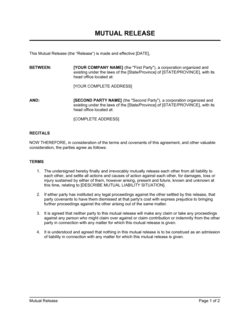
Releasing all parties from any claims following a commercial dispute settlementMutual Release and Settlement Agreement
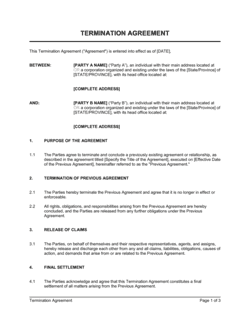
Releasing a party from ongoing contractual duties under a service agreementContract Termination Agreement
Confirming payment and closing a specific invoice or account balanceFull and Final Settlement Letter
Releasing a guarantor from obligations on a loan or contractRelease of Guarantor Agreement
Formally discharging an employee from post-employment obligations upon severanceEmployee Release Agreement
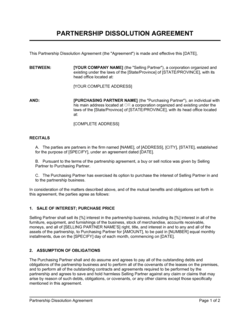
Terminating a partnership with a record of cleared mutual obligationsPartnership Dissolution Agreement

Common mistakes to avoid

❌ Using promissory language instead of operative release language

Why it matters: A clause that says 'the Releasor agrees not to pursue the debt' creates a promise β€” which can be breached. Only operative present-tense language ('hereby releases') creates an immediate, irrevocable discharge.

Fix: Replace all promissory constructions with operative language. The core clause must include the words 'hereby releases and discharges' to perform the legal act at the moment of execution.

❌ Omitting the no-assignment warranty

Why it matters: If the releasor has already assigned the debt to a collection agency or factoring company, a release signed by the original releasor does not bind the assignee β€” leaving the releasee exposed to a second claim for the same debt.

Fix: Include an express warranty that the releasor has not assigned, transferred, or charged any interest in the underlying obligation, and require the releasor to indemnify the releasee if this warranty turns out to be false.

❌ Executing as a simple agreement rather than as a deed

Why it matters: A deed's primary advantage over a contract is enforceability without consideration. If the document omits witness attestation or the 'executed as a deed' label, it may be treated as a simple contract β€” invalid if no consideration was exchanged.

Fix: Always include a formal execution block with the words 'executed as a deed,' an independent witness signature and address for each signing party, and ensure the document is physically delivered or deemed delivered.

❌ Drafting an unlimited scope with no carve-outs

Why it matters: A release of 'all claims whatsoever' without any exclusions can inadvertently discharge obligations that were never intended to be covered β€” including unrelated debts, ongoing duties, or claims the releasor did not know existed.

Fix: Define the scope of the release by reference to the specific obligation, and list any surviving or excluded claims explicitly. Adding a knowledge qualifier β€” 'known claims as of [DATE]' β€” limits unintended scope creep.

The 10 key clauses, explained

Parties identification

In plain language: Names and describes both the releasor (the party giving up the claim) and the releasee (the party being discharged) with their full legal names and addresses.

Sample language
This Deed of Acquittance and Discharge is made on [DATE] between [RELEASOR FULL LEGAL NAME] of [ADDRESS] ('Releasor') and [RELEASEE FULL LEGAL NAME] of [ADDRESS] ('Releasee').

Common mistake: Using a trading name or informal name instead of the full registered legal entity name β€” if the releasee's name doesn't match the original obligation, the discharge may not be effective against the correct legal person.

Recitals and background

In plain language: Sets out the context: describes the original debt or obligation, when it arose, and confirms the circumstances under which the discharge is now being granted.

Sample language
WHEREAS, pursuant to [DESCRIPTION OF UNDERLYING AGREEMENT OR OBLIGATION] dated [DATE], the Releasee was indebted to the Releasor in the sum of [AMOUNT] ('the Debt'); AND WHEREAS, the Releasee has satisfied the Debt in full / the parties have agreed to discharge the Releasee from the Debt on the following terms.

Common mistake: Omitting a clear reference to the original instrument β€” without identifying the source obligation by date and description, the scope of the discharge is ambiguous and may be challenged.

Operative release and discharge

In plain language: The core clause that actually performs the legal release β€” the words that formally discharge the releasee from the specified obligation, permanently and unconditionally.

Sample language
NOW THIS DEED WITNESSES that in consideration of the matters recited above, the Releasor hereby unconditionally and irrevocably releases and forever discharges the Releasee from all claims, demands, actions, and liabilities arising from or in connection with [DESCRIPTION OF OBLIGATION], as if the same had never arisen.

Common mistake: Using permissive language like 'agrees not to pursue' instead of an operative present-tense release. Only operative language ('hereby releases') creates an immediate discharge β€” promissory language creates a covenant that can still be breached.

Scope of the discharge

In plain language: Defines precisely what obligations, claims, and time periods are covered β€” and, equally importantly, what is expressly excluded from the release.

Sample language
This discharge extends to all claims, whether known or unknown, arising on or before [DATE] in connection with [SPECIFIC OBLIGATION]. For the avoidance of doubt, this discharge does not extend to [ANY EXCLUDED OBLIGATIONS OR CLAIMS].

Common mistake: Drafting an unlimited 'all claims ever' scope without carving out unrelated obligations. An overly broad release can inadvertently discharge claims the releasor intended to keep, including claims they did not know existed at signing.

Consideration (if applicable)

In plain language: Records any payment or other benefit given by the releasee in exchange for the discharge β€” not required for deed enforceability, but important as an accurate record.

Sample language
In consideration of the payment by the Releasee to the Releasor of the sum of [AMOUNT] (receipt of which the Releasor hereby acknowledges), and for other good and valuable consideration, the Releasor grants the release set out herein.

Common mistake: Inserting a nominal consideration amount of $1 as boilerplate without reflecting the actual payment β€” if the true amount is later disputed, the recital of a false figure can undermine the document's credibility.

Representations and warranties

In plain language: Both parties confirm they have authority to enter the deed, are not aware of any other claims arising from the obligation, and have not assigned the debt or any related rights to a third party.

Sample language
Each party represents and warrants that: (a) it has full authority to enter into and perform this Deed; (b) it has not assigned, transferred, or charged any right, claim, or interest arising from [OBLIGATION] to any third party; and (c) there are no pending or threatened actions or claims relating to the discharged obligation.

Common mistake: Omitting the no-assignment warranty. If the releasor has already assigned the debt to a debt collector or factoring company, the release signed by the original releasor may be ineffective β€” and the releasee faces a second claim.

Confidentiality

In plain language: Restricts both parties from disclosing the terms of the discharge or the underlying settlement to third parties, except as required by law or regulation.

Sample language
Each party agrees to keep the existence and terms of this Deed strictly confidential and not to disclose them to any third party without the prior written consent of the other party, except as required by applicable law, court order, or regulatory authority.

Common mistake: Making confidentiality one-sided β€” only binding the releasee. Courts in several jurisdictions have held asymmetric confidentiality clauses to be unenforceable as contrary to public policy, particularly in settlement contexts.

No admission of liability

In plain language: Confirms that the discharge does not constitute an acknowledgment of wrongdoing or legal liability by either party.

Sample language
Nothing in this Deed shall be construed as an admission of liability, fault, or wrongdoing by either party in connection with [OBLIGATION] or any related matter.

Common mistake: Omitting this clause entirely. Without it, a signed deed of discharge can be introduced in unrelated proceedings as an implied admission that the obligation was owed and breached.

Governing law and jurisdiction

In plain language: Specifies which jurisdiction's law governs the deed and where any dispute about its interpretation or enforcement will be heard.

Sample language
This Deed shall be governed by and construed in accordance with the laws of [STATE / PROVINCE / COUNTRY]. Any dispute arising under this Deed shall be subject to the exclusive jurisdiction of the courts of [JURISDICTION].

Common mistake: Selecting a governing law that has no connection to either party or the original obligation. Courts may disregard a governing-law clause with no meaningful nexus to the transaction, creating uncertainty about which rules apply.

Execution as a deed

In plain language: The formal signing block confirming the document is executed as a deed β€” requiring signature, witness attestation, and delivery β€” which distinguishes it from a simple contract and removes the need for separate consideration.

Sample language
EXECUTED as a DEED by [RELEASOR LEGAL NAME] acting by [NAME], [TITLE], in the presence of: Witness Signature: ___________ Witness Name: [NAME] Witness Address: [ADDRESS] | EXECUTED as a DEED by [RELEASEE LEGAL NAME] acting by [NAME], [TITLE], in the presence of: Witness Signature: ___________ Witness Name: [NAME] Witness Address: [ADDRESS]

Common mistake: Signing as a simple agreement rather than as a deed β€” omitting witness attestation or the 'executed as a deed' label. A document intended to be a deed but signed as a contract may lack enforceability where consideration is absent, defeating the primary advantage of deed form.

How to fill it out

  1. 1

    Identify both parties with full legal names

    Enter the complete registered legal name and address of both the releasor and the releasee. For corporate entities, use the name exactly as it appears in the company registry or articles of incorporation.

    πŸ’‘ Cross-reference the original agreement or invoice being discharged β€” the party names should match the original instrument exactly to eliminate ambiguity.

  2. 2

    Describe the underlying obligation in the recitals

    Set out a clear, specific description of the original obligation being discharged β€” include the original agreement title, date, and the amount or nature of the duty. This prevents future disputes about what was and was not covered.

    πŸ’‘ Attach a copy of the original instrument as an exhibit if the obligation is complex or high-value β€” it makes the scope of the discharge unambiguous.

  3. 3

    Draft the operative release clause

    Use present-tense operative language β€” 'hereby releases and discharges' β€” not future-tense promises. Confirm the release is unconditional, irrevocable, and covers all claims arising from the named obligation.

    πŸ’‘ If you want to exclude any related claims from the release, list them explicitly in the scope clause rather than relying on implication.

  4. 4

    Define the scope and any exclusions

    State precisely which claims, time periods, and obligations are covered. If there are any surviving obligations β€” such as confidentiality duties from the original agreement β€” exclude them from the discharge expressly.

    πŸ’‘ The phrase 'known or unknown' broadens the release to cover claims the releasor was not aware of at signing β€” include it deliberately only if that is your intent.

  5. 5

    Record the consideration received

    If a payment or other benefit was given in exchange for the discharge, record the accurate amount and confirm receipt. If no consideration was exchanged, note that the deed is given for good and valuable consideration or leave consideration blank β€” the deed form is binding regardless.

    πŸ’‘ Never insert a nominal $1 consideration if a real amount changed hands β€” discrepancies between the deed and payment records create audit and tax complications.

  6. 6

    Complete the representations and warranties

    Confirm both parties have authority to sign, that neither has assigned rights in the underlying obligation to a third party, and that there are no pending related claims. This section protects the releasee from a hidden second claimant.

    πŸ’‘ Ask the releasor to confirm in writing, before signing, that the debt has not been factored or assigned β€” a verbal confirmation is not sufficient for high-value discharges.

  7. 7

    Select the governing law

    Choose the jurisdiction whose law will govern the deed β€” typically the jurisdiction where the original obligation was performed or where both parties are located. Confirm that the chosen law recognizes deed-form instruments.

    πŸ’‘ If the parties are in different jurisdictions, choose the jurisdiction with the clearest deed execution requirements and ensure both parties' signatures comply with that jurisdiction's formalities.

  8. 8

    Execute formally as a deed with witness attestation

    Both parties must sign in the presence of an independent witness who also signs, prints their name, and provides their address. The witness must not be a party to the deed or a family member of a signing party.

    πŸ’‘ Date the deed on the day it is actually signed β€” backdating a deed is legally problematic and can constitute fraud if it affects rights that arose between the backdated date and the actual signing date.

Frequently asked questions

What is a Deed of Acquittance and Discharge?

A Deed of Acquittance and Discharge is a formal legal instrument by which one party permanently releases another from a specific debt, claim, or obligation. It is executed as a deed rather than a simple contract, which means it is binding even without separate monetary consideration passing between the parties. It creates a permanent, enforceable record that the named obligation has been satisfied or waived in full.

What is the difference between a deed of discharge and a simple release agreement?

A simple release agreement is a contract β€” it requires consideration (something of value exchanged) to be enforceable. A deed of discharge operates under seal and is binding without consideration, making it the preferred instrument when no payment is changing hands. Deeds also typically carry a longer limitation period for enforcement: 12 years in many common-law jurisdictions, compared to 6 years for a simple contract.

When should I use a Deed of Acquittance and Discharge?

Use it whenever you want to create a permanent, unconditional record that a debt, obligation, or liability has been fully satisfied or forgiven β€” especially when no new payment is being made in exchange for the release. Common triggers include full loan repayment, settlement of a commercial dispute, closure of a lease, or winding down a business relationship where one party may later assert residual claims.

Does a Deed of Acquittance and Discharge need to be witnessed?

Yes, in virtually all common-law jurisdictions. Execution as a deed requires the signatory's signature to be witnessed by an independent person who also signs, prints their name, and provides their address. The witness must not be a party to the deed, a beneficiary of it, or a close family member of the signatory. Failure to comply with witness requirements is the most common reason a deed is later challenged.

Does a Deed of Acquittance and Discharge need to be notarized?

Notarization is not typically required for domestic deed execution in the US, Canada, or the UK. However, if the deed relates to real property, is to be used in a foreign jurisdiction, or must be filed in a public registry, notarization or apostille authentication may be required. Check the specific requirements of the applicable jurisdiction and transaction type before executing.

Can a Deed of Acquittance and Discharge be reversed or set aside?

Once properly executed and delivered, a deed of discharge is generally irrevocable. Courts can set aside a deed on limited grounds β€” fraud, duress, undue influence, mutual mistake, or a fundamental misrepresentation about the underlying obligation. This is why both parties should conduct basic due diligence before signing: confirm the obligation being discharged actually exists, and that no other parties hold rights in it.

Is consideration required for a Deed of Acquittance and Discharge to be valid?

No. This is one of the key advantages of using deed form. Unlike a simple contract, a deed is binding on the releasor without the releasee providing any payment or benefit in return. The formal execution requirements β€” signing, witnessing, and delivery β€” substitute for consideration. If a payment was made, recording it accurately in the consideration clause is good practice but not a legal prerequisite.

What happens if the releasor has already assigned the debt to a third party?

A release signed by the original releasor does not automatically bind an assignee who acquired rights in the debt before the deed was executed. If the debt has been sold, factored, or assigned, the original releasor may no longer have the authority to release it. The releasee should require the releasor to warrant in writing that no assignment has occurred, and to indemnify the releasee if that warranty proves false. For significant obligations, consider obtaining a separate release from any known assignee.

Do I need a lawyer to draft a Deed of Acquittance and Discharge?

For straightforward debt repayment confirmations between domestic parties, a high-quality template is typically sufficient. Consider engaging a lawyer when the underlying obligation is complex or high-value, when the parties are in different jurisdictions, when the deed relates to real property or a regulated asset, when there is any dispute about what is owed, or when the releasor or releasee is a trust, estate, or regulated entity. A 1–2 hour legal review typically costs $300–$600 and is worthwhile for any discharge above $50,000.

How this compares to alternatives

vs Mutual Release Agreement

A Mutual Release Agreement is a bilateral contract in which both parties simultaneously release each other from all claims β€” typically used after a dispute where both sides may hold grievances. A Deed of Acquittance and Discharge is generally unilateral: the releasor discharges the releasee from a specific, identified obligation. The deed form is also binding without consideration; a mutual release typically requires consideration on both sides to be enforceable as a contract.

vs Contract Termination Agreement

A Contract Termination Agreement ends an ongoing contract and governs the unwinding of remaining obligations β€” notice, handover, payment of outstanding sums. A Deed of Acquittance and Discharge confirms that obligations already owed have been fully satisfied. The two documents often operate in sequence: a termination agreement ends the contract, and a discharge deed closes out any residual financial obligations that follow.

vs Full and Final Settlement Letter

A full and final settlement letter is an informal written record that a payment settles a dispute β€” effective for low-value, straightforward situations. It is a simple letter, not a deed, and requires consideration to be contractually binding. A Deed of Acquittance and Discharge carries greater legal weight, is enforceable without consideration, and is the appropriate instrument where the obligation is significant or the parties want a definitive, court-admissible record.

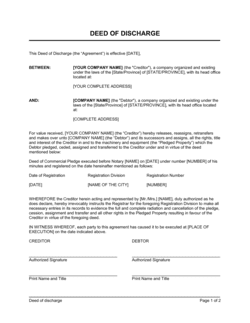
vs Deed of Release

A Deed of Release is a broader instrument used to release any type of right, claim, or interest β€” including rights in property, intellectual property, or guarantees. A Deed of Acquittance and Discharge is more specifically focused on confirming that a debt or financial obligation has been satisfied or forgiven. In practice the terms overlap, but if the release concerns a non-financial right (a property interest, a security charge, or a lien), a Deed of Release or specific discharge instrument for that asset class is more appropriate.

Industry-specific considerations

Financial Services and Lending

Lenders use this deed to formally close a loan facility upon final repayment, creating a clean record that the borrower owes nothing further β€” important for credit reporting and subsequent financing applications.

Real Estate and Property

Landlords and tenants execute this deed to confirm all lease obligations have been satisfied on exit β€” particularly relevant for commercial leases where dilapidation, rent arrears, or fit-out obligations may survive the tenancy.

Professional Services

Law firms, accountants, and consultants use it to close out engagements where outstanding fees were disputed and settled, creating a record that no further claims exist on either side.

Construction and Contracting

Contractors and subcontractors exchange discharge deeds on practical completion or final payment, confirming that all contract sums, retentions, and variation orders have been settled in full.

Jurisdictional notes

United States

Deed execution formalities vary by state. Most states require a witness signature; some (including Florida and South Carolina) require two witnesses. Notarization is not typically required for a deed of discharge unless it relates to real property or must be recorded in a public registry. The limitation period for enforcing a deed is typically 10–20 years depending on the state, compared to 4–6 years for a simple contract. California and New York have specific requirements for corporate deed signatories β€” check that the executing officer has board authorization.

Canada

Deed execution requirements are governed by provincial law. In Ontario, a deed must be signed, witnessed, and delivered to be effective. The limitation period under the Ontario Limitations Act is 10 years for obligations under seal. In Quebec, civil-law concepts apply rather than common-law deed doctrine β€” a release is typically effected by a notarial act or private writing without the need for deed formalities. French-language requirements apply to Quebec-governed documents under the Charter of the French Language.

United Kingdom

Under the Law of Property (Miscellaneous Provisions) Act 1989, a deed in England and Wales must be clearly expressed to be a deed, signed by the party or a duly authorized attorney, witnessed by an independent adult, and delivered. The limitation period for a deed is 12 years under the Limitation Act 1980, compared to 6 years for a simple contract. For Scottish law, different formal validity requirements apply β€” deeds must comply with the Requirements of Writing (Scotland) Act 1995, and independent legal advice is strongly recommended for cross-border transactions.

European Union

The deed concept is a common-law construct and does not translate directly to most EU civil-law jurisdictions. In France, Germany, the Netherlands, and Spain, a formal release of a debt obligation is typically effected by a notarized instrument or a written agreement satisfying the local civil code requirements for extinguishment of obligations. GDPR implications arise if the underlying obligation involved personal data processing β€” the discharge deed should address data deletion or retention obligations where relevant. Parties operating across EU member states should obtain local counsel to confirm the appropriate release mechanism.

Template vs lawyer β€” what fits your deal?

PathBest forCostTime
Use the templateStraightforward debt repayment confirmations and commercial obligation closures between domestic parties where the amount is under $50,000Free20–30 minutes
Template + legal reviewDischarges of significant debts, cross-border obligations, estate-related releases, or situations where assignment of the original debt is possible$300–$6001–3 days
Custom draftedComplex multi-party discharges, regulated-asset releases (real property, securities), disputed obligations, or corporate transactions involving material liabilities$1,000–$4,000+1–2 weeks

Glossary

Acquittance
A written acknowledgment that a debt or obligation has been satisfied in full, releasing the debtor from further claims.
Discharge
The formal termination of a legal obligation, releasing the obligated party from any further duty to perform or pay.
Deed
A formal legal instrument that is signed, witnessed, and delivered β€” binding without the need for separate monetary consideration.
Releasor
The party who holds the right, debt, or claim and is giving up that right by signing the deed.
Releasee
The party who owed the obligation and who is being released from it under the terms of the deed.
Consideration
Something of value exchanged between parties to make a contract binding; a deed does not require consideration to be enforceable.
Operative Clause
The core provision of the deed that performs the actual legal act β€” in this document, the words that formally release and discharge the releasee.
Recitals
Background paragraphs at the start of a deed that describe the parties, the underlying obligation, and the circumstances prompting the discharge.
Without Prejudice
A designation protecting settlement communications from being used as evidence in litigation β€” distinct from a deed, which is an unconditional final release.
Full and Final Settlement
Language confirming that the release covers all past, present, and future claims arising from the specified obligation, with no residual claims reserved.
Execution as a Deed
The formal signing process β€” typically requiring signature, witness attestation, and delivery β€” that distinguishes a deed from an ordinary contract.

Part of your Business Operating System

This document is one of 3,000+ business & legal templates included in Business in a Box.

  • Fill-in-the-blanks β€” ready in minutes
  • 100% customizable Word document
  • Compatible with all office suites
  • Export to PDF and share electronically

Create your document in 3 simple steps.

From template to signed document β€” all inside one Business Operating System.
1
Download or open template

Access over 3,000+ business and legal templates for any business task, project or initiative.

2
Edit and fill in the blanks with AI

Customize your ready-made business document template and save it in the cloud.

3
Save, Share, Send, Sign

Share your files and folders with your team. Create a space of seamless collaboration.

Save time, save money, and create top-quality documents.

β˜…β˜…β˜…β˜…β˜…

"Fantastic value! I'm not sure how I'd do without it. It's worth its weight in gold and paid back for itself many times."

Managing Director Β· Mall Farm
Robert Whalley
Managing Director, Mall Farm Proprietary Limited
β˜…β˜…β˜…β˜…β˜…

"I have been using Business in a Box for years. It has been the most useful source of templates I have encountered. I recommend it to anyone."

Business Owner Β· 4+ years
Dr Michael John Freestone
Business Owner
β˜…β˜…β˜…β˜…β˜…

"It has been a life saver so many times I have lost count. Business in a Box has saved me so much time and as you know, time is money."

Owner Β· Upstate Web
David G. Moore Jr.
Owner, Upstate Web

Run your business with a system β€” not scattered tools

Stop downloading documents. Start operating with clarity. Business in a Box gives you the Business Operating System used by over 250,000 companies worldwide to structure, run, and grow their business.

Start freeΒ Β·Β No credit card required