1
Identify and verify the parties' legal names and ownership
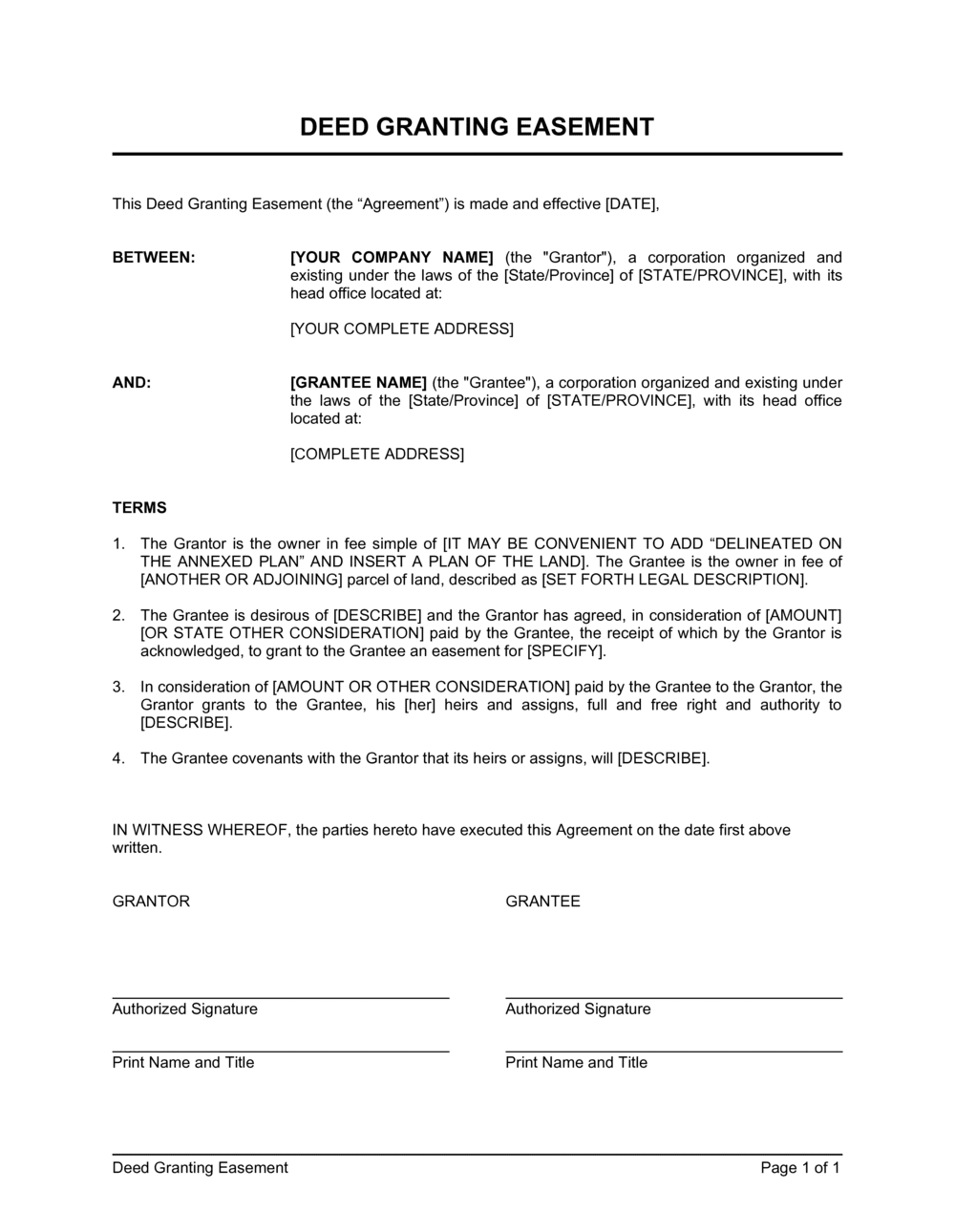
Confirm the grantor's exact legal name as it appears on the current deed of title. Use an entity's full registered name if granting to or from a corporation, LLC, or partnership. Run a title search to confirm the grantor has clear, unencumbered ownership.
💡 A name discrepancy as small as 'John A. Smith' vs. 'John Smith' can cause the county recorder to reject the deed — pull the current vesting deed before drafting.
2
Commission a boundary survey of the easement area
Engage a licensed surveyor to produce a metes-and-bounds description and a plat of the specific strip or area to be encumbered. Attach both as labeled exhibits — typically Exhibit B (legal description) and Exhibit C (survey plat).
💡 An easement described only by reference to an existing road or fence line will be challenged as ambiguous if the physical feature moves or is removed — always use a surveyed description.
3
Define the purpose with specific, limited language
Draft the purpose clause to cover exactly the intended use and nothing more. State the type of access (vehicular, pedestrian, utility), the specific infrastructure permitted, and any restrictions on hours, loads, or activities.
💡 If the easement is for a utility, name the specific type of utility (underground natural gas pipeline of up to [X]-inch diameter) rather than 'utilities' — this limits future scope disputes.
4
Choose the term and draft termination conditions
Decide whether the easement is perpetual or for a fixed term. For perpetual easements, list the specific conditions under which it terminates — merger, abandonment, or material breach with cure period. For term easements, state the exact end date and any renewal mechanism.
💡 Utility and access easements serving a dominant estate are almost always perpetual — a term that expires can cloud the title of the dominant parcel and affect its marketability.
5
State the consideration and document actual payment
Enter the agreed dollar amount the grantee pays to the grantor. For nominal-consideration transactions between related parties, document the mutual benefit that constitutes consideration. Ensure the amount is consistent with any agreed tax treatment.
💡 In many US states, the deed transfer-tax calculation is based on the stated consideration — verify the applicable rate with the county recorder before finalizing the amount.
6
Allocate maintenance, restoration, and insurance obligations
Specify which party maintains the easement area surface and drainage, who is responsible for restoring disturbed land after construction or repair, and the minimum insurance coverages the grantee must carry. Include a restoration timeline — typically 30 days after project completion.
💡 Requiring the grantee to furnish a certificate of insurance naming the grantor as additional insured before any construction activity begins is a non-negotiable protection for the grantor.
7
Execute before a notary and record promptly
Both parties (or at minimum the grantor, per local law) must sign before a commissioned notary public. The grantee should record the executed deed at the applicable county recorder or land registry within the timeframe specified in the deed — typically 30 days of execution.
💡 Recording fees and requirements vary by county — call the recorder's office before finalizing to confirm the exact page-count fee, any required cover sheet, and whether a separate transfer-tax affidavit is required.