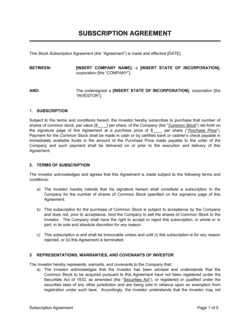
Data License Agreement Template

Free Word download β€’ Edit online β€’ Save & share with Drive β€’ Export to PDF

6 pagesβ€’25–35 min to fillβ€’Difficulty: Complexβ€’Signature requiredβ€’Legal review recommended
Learn more ↓
FreeData License Agreement Template

At a glance

What it is
A Data License Agreement is a legally binding contract between a data licensor and a data licensee that defines the terms under which a dataset, database, or data product may be accessed, used, and redistributed. This free Word download gives you a structured, attorney-reviewed starting point you can edit online and export as PDF β€” covering permitted use, restrictions, IP ownership, confidentiality, fees, and liability in a single document.
When you need it
Use it whenever you share, sell, or receive access to proprietary data β€” including market research datasets, aggregated analytics, location data, financial feeds, or any structured database with commercial value. It is equally necessary for data providers protecting their IP and for data consumers needing clear documentation of what they are permitted to do.
What's inside
Definitions of licensed data and permitted use, grant of license with scope and restrictions, IP ownership and attribution requirements, confidentiality and data security obligations, fees and payment terms, representations and warranties, limitation of liability, term and termination, and governing law.

What is a Data License Agreement?

A Data License Agreement is a legally binding contract between a data licensor β€” the party that owns or controls a dataset β€” and a data licensee β€” the party seeking access to it β€” that defines precisely how the data may be used, who may access it, what restrictions apply, and what rights the licensor retains. Unlike an outright data sale, a license preserves the licensor's underlying intellectual property ownership while granting the licensee a defined set of usage rights for a specified period. The agreement covers permitted use, sublicensing restrictions, IP ownership of derivative works, confidentiality and security obligations, fees, and what happens to the data when the arrangement ends.

Why You Need This Document

Without a data license agreement, sharing or receiving proprietary data creates serious and compounding risks on both sides of the transaction. A licensor who delivers a dataset without written terms has no enforceable restriction on how the licensee uses it β€” including training AI models that encode your data permanently, redistributing it to competitors, or retaining copies indefinitely after the relationship ends. A licensee who receives data without a formal agreement has no documented right to use it, no warranty that the data is fit for purpose, and no recourse if the provider stops delivering or claims misuse. Regulators in the EU, UK, and Canada increasingly expect documented data governance for any data that touches personal information β€” and an absent or inadequate agreement is treated as a compliance failure. This template gives both parties a structured, enforceable foundation that protects IP, clarifies obligations, and withstands the scrutiny of an audit, a dispute, or a regulatory inquiry.

Which variant fits your situation?

If your situation is…Use this template
Two parties jointly contributing and sharing data with each otherMutual Data Sharing Agreement
Sharing personal or health data under regulatory obligationData Processing Agreement
Granting a one-time transfer of data with no ongoing licenseData Transfer Agreement
Licensing an API that delivers data in real timeAPI License Agreement
Protecting confidential data before negotiations beginNon-Disclosure Agreement
Licensing software alongside an embedded datasetSoftware License Agreement
Providing data as part of a broader SaaS subscriptionSaaS Subscription Agreement

Common mistakes to avoid

❌ No restriction on AI and ML model training

Why it matters: Without an explicit prohibition, a licensee can legally train a machine learning model on your proprietary dataset and use that model commercially long after the license expires β€” effectively keeping your data forever in encoded form.

Fix: Add an explicit clause prohibiting use of the licensed data to train, validate, or fine-tune AI or ML models unless separately agreed in writing with additional compensation.

❌ Vague permitted-use language

Why it matters: Terms like 'internal business purposes' are interpreted broadly by licensees and narrowly by licensors β€” courts have found that 'internal use' permits a much wider range of activities than licensors intended, including product development and customer-facing analytics.

Fix: List permitted uses affirmatively and exhaustively in Schedule A, then add a catch-all: 'Any use not expressly permitted is prohibited.'

❌ No data-return or destruction obligation on termination

Why it matters: Without it, a licensee who does not renew can retain and continue using copies of the licensed data indefinitely β€” the license terminates but the data does not disappear.

Fix: Include a clause requiring the licensee to certify in writing, within 30 days of termination, that all copies of the licensed data have been deleted or returned, including backup copies and derivatives.

❌ Licensor warrants data accuracy without qualification

Why it matters: An unqualified accuracy warranty creates strict liability if the licensee makes a business decision based on erroneous data β€” damages claims for bad data can far exceed the license fee.

Fix: Limit the warranty to 'best efforts to maintain accuracy as of the delivery date' and disclaim all implied warranties. Include a consequential-damages exclusion covering data-based decisions.

❌ Auto-renewal with no practical cancellation window

Why it matters: A 30-day notice window on an annual license that bills on January 1 means the licensee must decide by December 1 whether to cancel β€” before they have received most of the year's data. Disputes arise when licensees miss the window and are billed for a year they did not intend to renew.

Fix: Use a 60–90 day notice window and send an automated renewal reminder 120 days before the renewal date. Include a mutual convenience-cancellation right with pro-rata refund.

❌ Omitting governing law and arbitration seat

Why it matters: Without a governing-law clause, courts apply complex choice-of-law analysis β€” the outcome is unpredictable and expensive. Data license disputes often involve parties in different countries, making venue even more critical.

Fix: Specify governing law, arbitration forum, seat city, and language of proceedings. For cross-border deals, ICC or LCIA arbitration with a neutral seat is generally preferable to litigation.

The 10 key clauses, explained

Definitions

In plain language: Establishes precise meanings for key terms used throughout the agreement β€” Licensed Data, Permitted Use, Authorized Users, Derivative Works, and Confidential Information β€” so no party can later claim ambiguity.

Sample language
'Licensed Data' means the dataset(s) described in Schedule A, as updated by [LICENSOR NAME] from time to time. 'Permitted Use' means use of the Licensed Data solely for [DESCRIBE PURPOSE] by Authorized Users within [FIELD OF USE / GEOGRAPHY].

Common mistake: Defining 'Licensed Data' by reference to a URL or live feed without versioning. If the licensor modifies the dataset, the licensee has no record of what they originally licensed or paid for.

Grant of License

In plain language: Specifies whether the license is exclusive or non-exclusive, the scope of authorized use, which users may access the data, and what the licensee may not do β€” including restrictions on sublicensing, redistribution, and resale.

Sample language
Licensor grants Licensee a [non-exclusive / exclusive], non-transferable, revocable license to access and use the Licensed Data solely for the Permitted Use. Licensee may not sublicense, sell, redistribute, or make the Licensed Data available to any third party without Licensor's prior written consent.

Common mistake: Granting a 'non-exclusive' license without clarifying whether the licensor can license the same dataset to the licensee's direct competitors β€” leaving the licensee exposed to competitive harm with no contractual remedy.

Permitted Use and Restrictions

In plain language: Enumerates exactly what the licensee can and cannot do with the data β€” permitted analytical uses, prohibited commercial resale, restrictions on training AI or machine learning models, and limits on combining the data with other sources.

Sample language
Licensee may use the Licensed Data for internal business analytics and reporting only. Licensee shall not: (a) use the Licensed Data to train machine learning or AI models; (b) combine the Licensed Data with personal data of Licensee's customers; or (c) publish or publicly display the Licensed Data in identifiable form.

Common mistake: Omitting an explicit restriction on using the data to train AI or ML models. Without it, the licensee can legally build a competing product trained on the licensor's proprietary data.

Intellectual Property Ownership

In plain language: Confirms that the licensor retains all ownership rights in the licensed data and any underlying databases, and addresses who owns derivative works created by the licensee.

Sample language
All right, title, and interest in the Licensed Data, including all intellectual property rights, remain exclusively with Licensor. Licensee acquires no ownership rights by virtue of this Agreement. Derivative Works created by Licensee from the Licensed Data shall be owned by Licensee, provided they do not incorporate the Licensed Data in identifiable form.

Common mistake: Failing to address derivative works ownership entirely. Courts will then apply default IP rules β€” which vary by jurisdiction β€” often awarding ownership to the party that created the derivative, not the original data owner.

Confidentiality and Data Security

In plain language: Obligates the licensee to treat the licensed data as confidential, restricts disclosure to authorized personnel, and requires specific technical and organizational security measures proportionate to the sensitivity of the data.

Sample language
Licensee shall maintain the Licensed Data in strict confidence and shall not disclose it to any party other than Authorized Users with a need to know. Licensee shall implement and maintain security measures at least equivalent to [ISO 27001 / SOC 2 Type II / industry-standard encryption at rest and in transit].

Common mistake: Referencing vague 'reasonable security measures' without specifying a standard. If a breach occurs, 'reasonable' is litigated β€” a named standard sets a clear benchmark and reduces the licensor's exposure.

Fees, Payment, and Audit Rights

In plain language: Sets out the license fee structure β€” one-time, recurring, or usage-based β€” payment timing, late-payment interest, and the licensor's right to audit the licensee's usage to verify fee calculations and compliance.

Sample language
Licensee shall pay Licensor a license fee of $[AMOUNT] per [year / quarter], due within [30] days of invoice. Licensor may, on [30] days' written notice, audit Licensee's use of the Licensed Data no more than once per calendar year. Underpayments revealed by audit shall be due within [15] days with interest at [1.5]% per month.

Common mistake: Setting a flat annual fee with no mechanism to adjust if usage scales significantly. Licensors end up subsidizing a high-volume user at a rate negotiated for modest use.

Representations and Warranties

In plain language: States what each party promises to be true β€” the licensor warrants it has the right to license the data and that the data does not violate third-party rights; the licensee warrants it will use the data only as permitted.

Sample language
Licensor represents and warrants that: (a) it has full authority to grant the rights in this Agreement; (b) the Licensed Data does not infringe any third-party intellectual property rights; and (c) to the best of Licensor's knowledge, the Licensed Data does not include personal data of EU data subjects without appropriate legal basis. EXCEPT AS EXPRESSLY STATED, THE LICENSED DATA IS PROVIDED 'AS IS.'

Common mistake: The licensor warranting data accuracy or completeness without qualification. Data is inherently imperfect β€” an unqualified accuracy warranty creates strict liability for downstream decisions the licensee makes based on the data.

Limitation of Liability and Indemnification

In plain language: Caps each party's total liability under the agreement β€” typically at fees paid in the prior 12 months β€” and allocates responsibility for third-party claims arising from IP infringement, privacy violations, or misuse of the licensed data.

Sample language
In no event shall either party's aggregate liability exceed the fees paid by Licensee in the [12] months preceding the claim. Each party shall indemnify the other against third-party claims arising from its own breach of this Agreement, including any claim that the Licensed Data infringes a third party's intellectual property rights.

Common mistake: Applying the liability cap symmetrically when the licensor's IP infringement exposure is far larger than the licensee's. Consider carving out IP indemnification from the cap on the licensor's side.

Term, Termination, and Data Return

In plain language: Defines the agreement's initial term, renewal mechanics, each party's termination rights (for cause and β€” optionally β€” for convenience), and what happens to the data after termination, including deletion certification obligations.

Sample language
This Agreement commences on [START DATE] and continues for [1] year, renewing automatically for successive [1]-year terms unless either party gives [60] days' prior written notice. Upon termination, Licensee shall, within [30] days, destroy or return all copies of the Licensed Data and certify destruction in writing.

Common mistake: Auto-renewal without a notice window that works in practice. A 60-day notice window in a license that auto-renews annually means the licensee must decide whether to cancel before they have experienced even half the license year.

Governing Law and Dispute Resolution

In plain language: Specifies the jurisdiction whose law governs the agreement and how disputes are resolved β€” litigation, arbitration, or mediation β€” including venue and language of proceedings.

Sample language
This Agreement is governed by the laws of [STATE / COUNTRY], without regard to conflict-of-law principles. Any dispute shall be resolved by binding arbitration administered by [AAA / ICC / LCIA] in [CITY], conducted in [LANGUAGE], except that either party may seek injunctive relief in any court of competent jurisdiction.

Common mistake: Choosing governing law based on where the licensor is incorporated without considering where enforcement will actually occur. A New York governing-law clause in an agreement with a European licensee may require expensive cross-border enforcement proceedings.

How to fill it out

  1. 1

    Identify the parties and describe the licensed data

    Enter the full legal names of the licensor and licensee, and attach a Schedule A describing the dataset precisely β€” format, volume, update frequency, delivery method, and any version or snapshot date.

    πŸ’‘ A vague description like 'company data' creates disputes. Reference the specific dataset name, file format (e.g., CSV, API feed, SQL database), and the date range of records covered.

  2. 2

    Define the permitted use and field of use

    Write out specifically what the licensee may do with the data β€” internal analytics, resale to end users, training statistical models β€” and explicitly list prohibited uses. Include any geographic or industry-sector restrictions.

    πŸ’‘ If you are unsure whether a use case should be permitted, prohibit it explicitly and address it in a separate addendum with its own fee. Ambiguous permissions create licensing disputes.

  3. 3

    Choose the license type and exclusivity

    Decide whether the license is exclusive (only this licensee may use the data in this field of use) or non-exclusive (the licensor can license the same data to others). Price and duration should reflect the exclusivity decision.

    πŸ’‘ Exclusive licenses in a narrow field of use command a significant premium β€” typically 3–5Γ— the non-exclusive fee β€” and should include minimum revenue or usage commitments from the licensee.

  4. 4

    Set the fee structure and audit mechanism

    Enter the license fee amount, payment frequency, and whether fees are flat, tiered, or usage-based. Include the audit-rights clause with a specified notice period and frequency cap.

    πŸ’‘ For usage-based fees, require the licensee to provide a monthly usage report. Self-reported usage without an audit right is practically unenforceable.

  5. 5

    Address IP ownership of derivative works

    Decide whether derivative works β€” reports, models, or products built using the licensed data β€” belong to the licensee, the licensor, or are jointly owned. Document this clearly in the IP clause.

    πŸ’‘ If the licensee will build AI or ML models using the data, address model ownership explicitly. Courts in most jurisdictions have not yet settled whether training a model on licensed data creates a derivative work.

  6. 6

    Specify confidentiality and security requirements

    Reference a named security standard (ISO 27001, SOC 2 Type II, or equivalent) rather than generic 'reasonable measures.' List which internal roles qualify as Authorized Users and whether contractors are included.

    πŸ’‘ Require the licensee to notify you within 72 hours of any suspected unauthorized access β€” this mirrors GDPR breach notification windows and creates a consistent compliance posture.

  7. 7

    Set the term, renewal, and data-return obligations

    Enter the start date, initial term, and auto-renewal mechanics. Include a data-return or destruction clause requiring written certification within 30 days of termination.

    πŸ’‘ If the data is delivered incrementally over time (e.g., a daily data feed), specify whether the licensee may retain historical snapshots after termination or must delete all accumulated data.

  8. 8

    Execute before data access is granted

    Both parties must sign the agreement before any data is transferred or API credentials are issued. Retroactive agreements are harder to enforce and create a gap in IP protection.

    πŸ’‘ Use a click-wrap acceptance mechanism for self-serve data products β€” a signed PDF is better for negotiated enterprise licenses. Never deliver data access credentials in the same email as an unsigned draft.

Frequently asked questions

What is a data license agreement?

A data license agreement is a legally binding contract between a data owner (licensor) and a data user (licensee) that defines the terms under which a dataset or database may be accessed, used, and redistributed. It grants specific usage rights while retaining the licensor's underlying intellectual property ownership. Unlike a data sale, a license does not transfer ownership β€” it specifies what the licensee may and may not do with the data for a defined period.

When do I need a data license agreement?

You need one any time proprietary data changes hands commercially β€” when you sell access to a dataset, receive a third-party data feed, share aggregated analytics with a partner, or provide a data product as part of a SaaS offering. Even internal data sharing between affiliated entities benefits from a data license agreement when different legal entities are involved or when regulatory compliance requires documented data governance.

What is the difference between a data license agreement and a data sharing agreement?

A data license agreement is typically a commercial arrangement where the licensor grants usage rights in exchange for fees and retains IP ownership. A data sharing agreement usually describes a non-commercial or reciprocal arrangement between two parties who exchange data β€” common in research partnerships, consortium arrangements, or public sector data programs. Both define permitted use and restrictions, but the license agreement is more focused on IP protection and monetization terms.

Does a data license agreement need to address GDPR?

Yes, if the licensed data includes personal data of individuals in the European Union. In that case, the agreement must identify whether the licensor or licensee is the data controller or processor, reference applicable legal bases for processing, and include data protection obligations aligned with GDPR Article 28 requirements. Transferring personal data outside the EU also requires appropriate safeguards such as Standard Contractual Clauses. A template that ignores GDPR where personal data is involved exposes both parties to significant regulatory fines.

Can a data license agreement prevent a licensee from training AI models on the data?

Yes β€” a well-drafted data license agreement can and should explicitly prohibit the use of licensed data to train, validate, or fine-tune machine learning or AI models unless separately authorized. Without this restriction, a licensee may legally encode your proprietary data into a model that persists and operates commercially long after the license expires. As of 2025, AI training restrictions are one of the most actively negotiated terms in data licensing.

What happens to the licensed data when the agreement ends?

The agreement should require the licensee to destroy or return all copies of the licensed data β€” including backup copies, derivative datasets, and cached versions β€” within a specified period after termination, typically 30 days. The licensee should provide written certification of destruction. Without this clause, a licensee who does not renew can retain and continue using copies of the data indefinitely, undermining the entire licensing arrangement.

Should the license be exclusive or non-exclusive?

An exclusive license prevents the licensor from licensing the same dataset to competitors in the same field of use or geography β€” it commands a significant price premium and is appropriate when the licensee's competitive advantage depends on unique data access. A non-exclusive license allows the licensor to license the same data to multiple parties, which supports broader revenue generation but gives each licensee less protection. Most commercial data licenses are non-exclusive unless the licensee specifically negotiates exclusivity and pays accordingly.

Do I need a lawyer to draft a data license agreement?

For straightforward internal or low-value data sharing, a high-quality template is generally sufficient. Legal review is strongly recommended when the licensed data includes personal information, the deal value exceeds $50,000 annually, the licensee operates in a regulated industry such as financial services or healthcare, or the agreement involves cross-border data transfers. A lawyer familiar with data licensing can typically review and tailor a template in 2–4 hours for $600–$1,500.

What is a field-of-use restriction in a data license?

A field-of-use restriction limits the licensee's use of the data to a defined industry, application, or purpose β€” for example, 'use in financial services risk modeling only' or 'use in North American markets only.' These restrictions allow a licensor to license the same dataset to multiple non-competing parties in different fields, maximizing revenue without granting any single licensee broad rights. Violating a field-of-use restriction is typically treated as a material breach.

How this compares to alternatives

vs Non-Disclosure Agreement

An NDA protects confidential information from disclosure before or during a business relationship but does not grant any usage rights. A data license agreement affirmatively grants specific rights to use data while imposing restrictions. Use an NDA first to protect data during negotiations, then execute a data license agreement before any data is actually transferred.

vs Data Processing Agreement

A Data Processing Agreement governs how a processor handles personal data on behalf of a controller β€” it is a GDPR compliance document, not a commercial licensing instrument. A data license agreement is a commercial contract defining usage rights and IP ownership. When licensed data includes personal data, both documents are typically required simultaneously.

vs Software License Agreement

A software license agreement governs use of executable code and applications. A data license agreement governs use of datasets, databases, and data products. When a SaaS product delivers both software functionality and proprietary data, separate agreements for each are preferable so that data-specific restrictions β€” such as AI training prohibitions β€” are clearly documented and enforceable.

vs API Terms of Service

API Terms of Service govern technical access to a service endpoint and are typically click-wrap agreements applied unilaterally to all users. A data license agreement is a negotiated bilateral contract appropriate for enterprise data supply relationships with custom pricing, audit rights, and tailored restrictions. High-value API data relationships should use a data license agreement rather than relying on standard API terms.

Industry-specific considerations

Financial Services

Licensed market data, credit bureau feeds, and alternative data are subject to exchange rules, FINRA oversight, and strict redistribution restrictions that must be incorporated by reference into the license terms.

Healthcare and Life Sciences

Clinical trial data, patient registries, and claims datasets require HIPAA Business Associate Agreement provisions alongside the data license, with de-identification standards and breach notification timelines clearly defined.

Technology and SaaS

Data vendors supplying enrichment feeds, firmographic data, or behavioral signals to SaaS platforms must address API rate limits, SLA uptime commitments, and restrictions on embedding data into customer-facing outputs.

Advertising and Marketing

Audience segment and intent data licenses must address CCPA and GDPR consent chain documentation, cookie-based data restrictions, and prohibitions on onboarding licensed data into competing identity graphs.

Retail and E-commerce

Location data, transaction data, and foot-traffic analytics licenses require explicit consent documentation for individual-level data, field-of-use limits by retail category, and prohibitions on resale to competitors.

Research and Academia

Research data licenses typically require attribution in publications, restrict commercial use of findings, and impose embargoes on publication until the licensor has reviewed derived outputs for confidential information.

Jurisdictional notes

United States

Database copyright protection in the US is limited β€” facts and raw data are generally not copyrightable, but original selection and arrangement of data may qualify. Trade secret law (Defend Trade Secrets Act) and contractual restrictions are the primary mechanisms for protecting proprietary datasets. The FTC and state attorneys general have increasingly scrutinized data broker practices, and CCPA in California requires specific provisions when licensed data includes California residents' personal information.

Canada

Canada's Personal Information Protection and Electronic Documents Act (PIPEDA) and provincial equivalents govern personal data in commercial contexts. Quebec's Law 25 imposes the strictest provincial requirements, including mandatory privacy impact assessments for cross-border data transfers and data minimization obligations. Database protection in Canada also relies primarily on trade secret and contract law rather than a sui generis database right.

United Kingdom

The UK retained a sui generis database right post-Brexit under the Copyright and Rights in Databases Regulations 1997, providing 15 years of protection for databases representing substantial investment in obtaining, verifying, or presenting data. UK GDPR mirrors EU GDPR for personal data transfers but requires separate adequacy or SCCs for transfers to non-adequate countries. The UK ICO actively enforces data licensing compliance in regulated sectors.

European Union

The EU Database Directive grants a sui generis database right to database makers who demonstrate substantial investment, offering 15 years of protection independent of copyright. GDPR applies whenever licensed data contains personal data of EU residents, requiring a documented lawful basis and, for cross-border transfers, Standard Contractual Clauses or an adequacy decision. The EU Data Act (effective 2025) introduces new rights around industrial data sharing and may constrain certain exclusivity arrangements in data licenses.

Template vs lawyer β€” what fits your deal?

PathBest forCostTime
Use the templateNon-personal, low-value data sharing between known business partners with straightforward permitted-use termsFree30–60 minutes
Template + legal reviewCommercial data products, licensed datasets worth over $10,000 annually, or data involving EU personal data or regulated industries$600–$1,5002–5 days
Custom draftedExclusive data licenses, large-scale data marketplace agreements, cross-border transfers with complex privacy obligations, or AI training data licensing$2,500–$8,000+1–3 weeks

Glossary

Licensed Data
The specific dataset, database, or data product that the licensor authorizes the licensee to access and use under the terms of the agreement.
Permitted Use
The expressly authorized purposes for which the licensee may use the licensed data β€” any use outside this scope is prohibited.
Sublicense
A right granted by the licensee to a third party to use the licensed data β€” typically restricted or prohibited without the licensor's prior written consent.
Derivative Work
A new dataset, model, report, or product created by processing, combining, or transforming the licensed data β€” ownership of derivative works is a critical negotiation point.
Data Controller
Under GDPR and similar privacy laws, the party that determines the purposes and means of processing personal data β€” relevant when licensed data includes personal information.
Anonymization
The irreversible process of removing or altering identifying information so that individuals cannot be re-identified β€” often a condition for exemption from privacy regulations.
Audit Rights
A contractual right allowing the licensor to inspect the licensee's systems or records to verify compliance with usage restrictions and fee calculations.
Attribution
A requirement that the licensee credit the licensor as the data source in reports, publications, or products derived from the licensed data.
Residual Data
Information retained in the unaided memory of employees who have been exposed to licensed data β€” most agreements cannot practically prohibit its use, but many restrict its deliberate recording.
Field of Use
A defined industry, geography, or application area within which the licensee is permitted to use the data β€” restrictions by field of use allow licensors to license the same dataset to multiple non-competing parties.
Data Escrow
An arrangement where a copy of the licensed dataset is held by a neutral third party, to be released to the licensee if the licensor ceases to maintain or deliver the data.

Part of your Business Operating System

This document is one of 3,000+ business & legal templates included in Business in a Box.

  • Fill-in-the-blanks β€” ready in minutes
  • 100% customizable Word document
  • Compatible with all office suites
  • Export to PDF and share electronically

Create your document in 3 simple steps.

From template to signed document β€” all inside one Business Operating System.
1
Download or open template

Access over 3,000+ business and legal templates for any business task, project or initiative.

2
Edit and fill in the blanks with AI

Customize your ready-made business document template and save it in the cloud.

3
Save, Share, Send, Sign

Share your files and folders with your team. Create a space of seamless collaboration.

Save time, save money, and create top-quality documents.

β˜…β˜…β˜…β˜…β˜…

"Fantastic value! I'm not sure how I'd do without it. It's worth its weight in gold and paid back for itself many times."

Managing Director Β· Mall Farm
Robert Whalley
Managing Director, Mall Farm Proprietary Limited
β˜…β˜…β˜…β˜…β˜…

"I have been using Business in a Box for years. It has been the most useful source of templates I have encountered. I recommend it to anyone."

Business Owner Β· 4+ years
Dr Michael John Freestone
Business Owner
β˜…β˜…β˜…β˜…β˜…

"It has been a life saver so many times I have lost count. Business in a Box has saved me so much time and as you know, time is money."

Owner Β· Upstate Web
David G. Moore Jr.
Owner, Upstate Web

Run your business with a system β€” not scattered tools

Stop downloading documents. Start operating with clarity. Business in a Box gives you the Business Operating System used by over 250,000 companies worldwide to structure, run, and grow their business.

Start freeΒ Β·Β No credit card required