1
Define the purpose and audience before filling in any data
State clearly whether the matrix is for investor due diligence, procurement evaluation, internal strategy, or sales enablement. The purpose determines which criteria matter, how detailed competitor profiles need to be, and what confidentiality restrictions apply.
💡 A matrix built for an investor audience needs public, verifiable data. One built for internal strategy can incorporate proprietary intelligence — but the two versions should never be merged into a single document.
2
Select and define the competitive set
List the competitors you will include and write one sentence explaining why each was selected. Exclude companies that operate in adjacent but non-competing markets unless you explicitly include a 'substitutes' row.
💡 Aim for four to eight competitors. Fewer than four suggests an underdeveloped market read; more than eight makes the grid too wide to be actionable in a presentation or decision meeting.
3
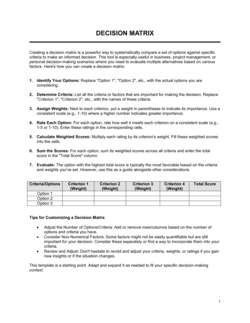
Set evaluation criteria and weights before scoring
List every criterion you will use to compare competitors, then assign a percentage weight to each that sums to exactly 100%. Lock the weights before entering any scores — changing weights after you see the scores introduces bias.
💡 Have the decision-maker or buying committee agree on weights before you score. Criteria chosen unilaterally by the analyst are easier to challenge later.
4
Complete competitor profile summaries with dated sources
For each competitor, complete the profile block — founding year, headquarters, target market, product description, pricing model, and key customers. Next to every data point, note the source and the date it was accessed.
💡 Use the competitor's own public documentation (website, pricing page, press releases) as the primary source. Third-party analyst reports are acceptable as secondary confirmation.
5
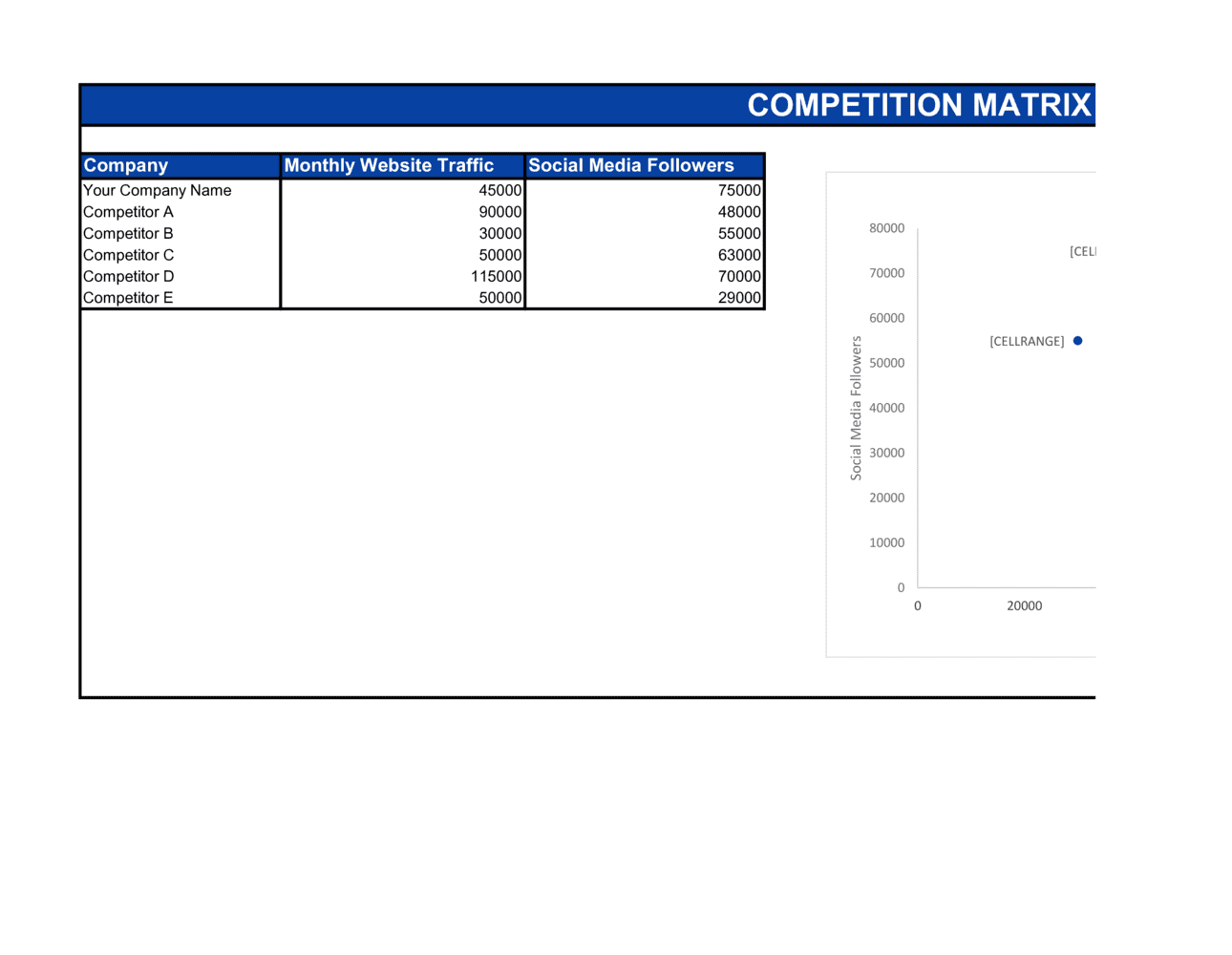
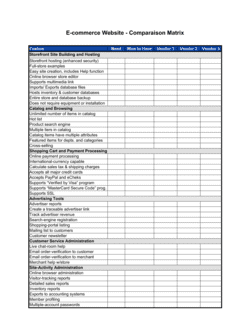
Populate the comparison grid and flag estimates
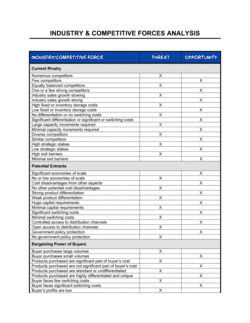
Fill in each cell of the feature and pricing grid. Use a consistent notation: confirmed data (Y/N or verified price), estimated or inferred data (marked with an asterisk), and not available (N/A). Never present an estimate as a confirmed fact.
💡 Color-code the grid: green for confirmed, yellow for estimated, grey for N/A. This lets any reader instantly distinguish your certainty level without reading footnotes.
6
Add the confidentiality clause and permitted-use restriction
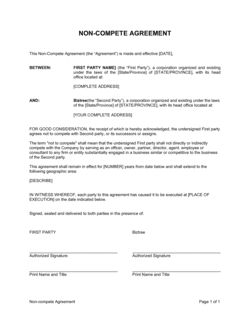
Insert the confidentiality and permitted-use clause before distributing any draft. Name the authorized recipients explicitly, state the purpose for which the document may be used, and mark the header or footer with the classification level.
💡 If the matrix will be shared outside your organization — with investors, advisors, or board members — add a watermark with the recipient's name to each exported PDF copy.
7
Record the sign-off and version number
Complete the authorization block: preparer name and title, reviewer name and title, approving executive, date of approval, and version number. Every subsequent revision gets a new version number and a new sign-off.
💡 Store all prior versions with their sign-off blocks. In a procurement dispute or regulatory inquiry, being able to show version history and authorization at each stage materially strengthens your position.
8
Set a review date and distribute only the approved version
Add a next-review date — typically 6 to 12 months, or sooner if the market moves fast — to the footer. Distribute only the version that has passed through the authorization block; never share working drafts as if they were final.
💡 Archive the finalized PDF with its sign-off intact in a central document repository. If an investor or auditor requests the version used in a specific decision, you need to produce the exact document — not a reconstructed one.