E-Commerce Solution Providers Comparison Matrix Template

Free download β€’ Use as a template β€’ Print or share

1 pageβ€’20–30 min to useβ€’Difficulty: Standardβ€’Signature requiredβ€’Legal review recommended
Learn more ↓
FreeE-Commerce Solution Providers Comparison Matrix Template

At a glance

What it is
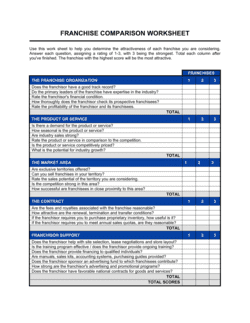
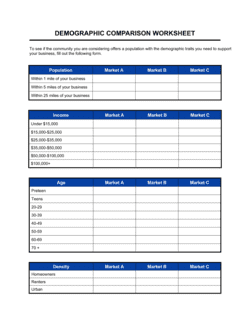
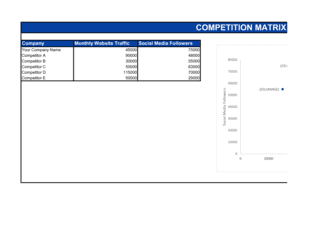
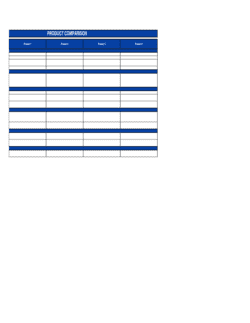
An E-Commerce Solution Providers Comparison Matrix is a structured evaluation document that enables businesses to assess, score, and compare multiple e-commerce platform vendors side by side before committing to a contract. This free Word download organizes vendor criteria β€” including pricing tiers, feature sets, security standards, SLA terms, integration capabilities, and contractual obligations β€” into a consistent scoring framework you can edit online and export as PDF for internal approval or board sign-off.
When you need it
Use it when selecting a new e-commerce platform, migrating from an existing solution, or renegotiating vendor contracts β€” any time you need a defensible, documented rationale for a platform decision that affects revenue, data security, and long-term vendor lock-in.
What's inside
Vendor identification details, evaluation criteria with weighted scoring, pricing and total cost of ownership analysis, feature and integration requirements, security and compliance standards, SLA and uptime benchmarks, support terms, contractual obligations, and a final recommendation section with sign-off fields for the approving stakeholders.

What is an E-Commerce Solution Providers Comparison Matrix?

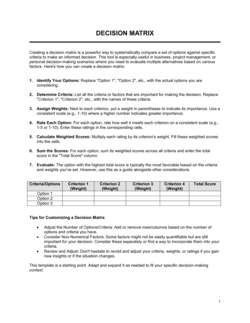
An E-Commerce Solution Providers Comparison Matrix is a structured evaluation document that enables businesses to assess, score, and rank multiple e-commerce platform vendors β€” such as Shopify, BigCommerce, Magento, and WooCommerce β€” against a consistent set of weighted criteria before committing to a contract. It captures every dimension of the vendor decision in a single auditable record: total cost of ownership, feature completeness, security certifications, SLA uptime guarantees, API integration capabilities, data portability terms, and contractual obligations. Unlike an informal side-by-side comparison, the matrix assigns percentage weights to each criterion based on business priority, producing a final score that reflects strategic needs rather than a simple feature count. The completed document, signed by the approving stakeholders, becomes the formal record of the selection decision.

Why You Need This Document

Choosing an e-commerce platform without a formal comparison process exposes your business to four concrete risks: selecting a vendor whose transaction fees make the platform unaffordable at scale, signing a multi-year contract with inadequate data portability that locks you in at renewal, accepting SLA terms that provide no meaningful remedy when the platform goes down during peak sales periods, and making a decision that cannot be defended to auditors, boards, or losing vendors. A signed comparison matrix eliminates all four risks by forcing a documented, defensible evaluation before any contract is signed. It also shifts the contract negotiation dynamic in your favor β€” when you arrive at the table with scored, weighted evidence that a competitor outperforms the preferred vendor on pricing or SLA terms, you have a specific basis for demanding better terms rather than accepting the vendor's standard agreement. This template gives you the structure to run that process in a single afternoon.

Which variant fits your situation?

If your situation is…Use this template
Comparing SaaS e-commerce platforms for a mid-market retailerE-Commerce Solution Providers Comparison Matrix
Evaluating enterprise ERP vendors with e-commerce modulesSoftware Vendor Evaluation Template
Selecting a payment gateway provider specificallyPayment Gateway Comparison Matrix
Assessing third-party logistics and fulfillment providersThird-Party Logistics Provider Comparison Matrix
Documenting the final vendor selection decision for legal recordsVendor Selection Justification Report
Formalizing the agreement after vendor selection is completeSoftware Services Agreement
Conducting a broader IT systems vendor reviewIT Vendor Assessment Template

Common mistakes to avoid

❌ Comparing only headline subscription pricing

Why it matters: Transaction fees, API overage charges, and migration costs can increase actual Year 1 TCO by 40–200% above the advertised monthly fee, reversing the apparent cost ranking entirely.

Fix: Build a TCO model using your actual order volume and integration requirements for every vendor before scoring the pricing criterion.

❌ Accepting vendor feature claims without sandbox testing

Why it matters: Features marked 'available' in a vendor's marketing materials frequently require paid add-ons, developer customization, or a higher pricing tier β€” creating a budget and timeline surprise after contract signature.

Fix: Test every required feature in a trial environment and document the result with screenshots before finalizing your score.

❌ Missing the auto-renewal notice deadline

Why it matters: Most enterprise SaaS contracts auto-renew for 12 months unless written cancellation notice is provided 30–90 days before the renewal date, locking you into another full year of fees.

Fix: Record each vendor's auto-renewal notice deadline in your contract management system the day the contract is signed, and set a calendar reminder 120 days before that date.

❌ No documented sign-off on the final selection decision

Why it matters: An undocumented vendor decision is vulnerable to challenge from losing vendors, internal auditors, or board members β€” and provides no protection if the chosen platform underperforms.

Fix: Require dated signatures from at least two approvers on the final recommendation section before any contract negotiations begin.

❌ Ignoring data portability and exit terms

Why it matters: Vendors that lock customer and order data in proprietary formats can charge $5,000–$50,000 in migration fees at contract end, or provide unusable export files that require months of data transformation.

Fix: Confirm the specific export formats available and the data retention period post-termination in writing from each vendor before scoring the exit terms criterion.

❌ Setting equal weights for all evaluation criteria

Why it matters: Treating PCI DSS compliance and the availability of a mobile app builder as equally important produces a score that does not reflect your actual business risk or priorities.

Fix: Convene a brief stakeholder session to agree on criterion weights before scoring begins β€” even a rough prioritization (high, medium, low) is better than uniform weighting.

The 10 key clauses, explained

Vendor Identification and Contact Details

In plain language: Records the full legal name, address, and primary contact for each vendor being evaluated, creating an auditable record of who was assessed.

Sample language
Vendor: [VENDOR LEGAL NAME] | Address: [VENDOR ADDRESS] | Primary Contact: [NAME, TITLE] | Email: [EMAIL] | Evaluation Date: [DATE]

Common mistake: Using a brand name instead of the vendor's registered legal entity name β€” this creates a mismatch if a contract dispute arises and the legal entity differs from the trading name.

Evaluation Criteria and Weighting

In plain language: Defines the categories being scored β€” such as pricing, features, security, and support β€” and assigns a percentage weight to each based on business priority, ensuring the final score reflects what actually matters to the organization.

Sample language
Criteria: [CRITERION NAME] | Weight: [X]% | Max Score: [10] | Notes: [RATIONALE FOR WEIGHTING]. Total weights must sum to 100%.

Common mistake: Assigning equal weight to all criteria. A platform's uptime guarantee matters far more to a high-volume retailer than its email marketing integration β€” failing to weight criteria produces scores that do not reflect real business risk.

Pricing and Total Cost of Ownership

In plain language: Captures all cost components for each vendor: monthly subscription, transaction fees, setup costs, integration development, training, and annual price escalation clauses.

Sample language
Monthly Platform Fee: $[X] | Transaction Fee: [X]% per order | Setup / Migration Fee: $[X] | Estimated Year 1 TCO: $[X] | Annual Price Escalation Cap: [X]%

Common mistake: Comparing only the advertised monthly subscription price and ignoring transaction fees, migration costs, and API call limits β€” these can increase actual Year 1 TCO by 40–200% over the headline figure.

Core Feature Requirements

In plain language: Scores each vendor against a defined list of must-have and nice-to-have platform features β€” such as multi-currency support, inventory management, subscription billing, and B2B pricing tiers.

Sample language
Feature: [FEATURE NAME] | Required (Y/N): [Y/N] | Vendor Score (0–10): [SCORE] | Gap / Notes: [DESCRIPTION OF LIMITATION OR WORKAROUND]

Common mistake: Scoring features a vendor claims to have without testing them in a sandbox. Vendors frequently mark features as 'available' when they require a paid add-on, a developer build, or a higher pricing tier.

Security and Compliance Standards

In plain language: Evaluates each vendor's security certifications, data residency options, PCI DSS compliance level, GDPR data processing controls, and breach notification commitments.

Sample language
PCI DSS Level: [1/2/3/4] | SOC 2 Type II Certified: [Y/N] | Data Residency Options: [REGIONS] | GDPR DPA Available: [Y/N] | Breach Notification Period: [X hours]

Common mistake: Accepting a vendor's self-reported compliance status without requesting the actual certification reports or third-party audit letters β€” self-reporting without documentation is not a defensible due-diligence record.

Integration and Technical Architecture

In plain language: Documents each vendor's available API types (REST, GraphQL), pre-built connectors to ERP, CRM, and logistics systems, headless commerce support, and API rate limits that could constrain operations.

Sample language
API Type: [REST / GraphQL / Webhook] | ERP Connector: [SYSTEM NAME, Native or Third-Party] | API Rate Limit: [X calls/minute] | Headless Support: [Y/N] | SDK Languages: [LIST]

Common mistake: Evaluating integrations based on a vendor's marketplace listing rather than confirming whether the specific version of your ERP or CRM is supported β€” connector compatibility often lags behind ERP updates by 6–18 months.

SLA, Uptime, and Support Terms

In plain language: Records each vendor's contractual uptime commitment, maintenance window policy, support tier included in the proposed pricing, and the financial remedies β€” typically service credits β€” available when SLA levels are breached.

Sample language
Uptime Guarantee: [X]% | Planned Maintenance Window: [DAY/TIME/FREQUENCY] | Support Tier Included: [Email / Chat / Phone / Dedicated CSM] | SLA Breach Credit: [X]% of monthly fee per [Y] hours downtime

Common mistake: Treating a vendor's 99.9% uptime guarantee as equivalent to a 99.99% guarantee. The difference is 8.7 hours versus 52 minutes of annual downtime β€” for a high-volume retailer, that gap directly translates to lost revenue.

Data Portability and Exit Terms

In plain language: Captures what data formats are available for export, how long the vendor retains data after contract termination, and any migration assistance or fees associated with leaving the platform.

Sample language
Export Formats Available: [CSV / JSON / XML] | Data Retention Post-Termination: [X days] | Migration Assistance: [Included / $X fee] | Data Deletion Confirmation: [Y/N] | Escrow Provision: [Y/N]

Common mistake: Not confirming data portability terms before signing β€” some vendors lock customer records and order history behind proprietary formats or charge migration fees of $5,000–$50,000 to export data at contract end.

Contractual Obligations and Termination Conditions

In plain language: Summarizes the proposed contract length, auto-renewal terms, minimum commitment, notice period required to cancel, and any penalties for early termination.

Sample language
Contract Term: [X months / years] | Auto-Renewal: [Y/N, notice period: X days] | Minimum Commit: $[X] | Early Termination Fee: $[X] or [X]% of remaining contract value | Governing Law: [JURISDICTION]

Common mistake: Missing an auto-renewal clause until after it triggers. Most enterprise SaaS contracts auto-renew for 12 months unless cancellation notice is provided 30–90 days before the renewal date β€” missing this window locks you in for another full year.

Final Scoring, Recommendation, and Sign-Off

In plain language: Aggregates each vendor's weighted scores into a final comparative ranking, documents the recommended vendor with a written rationale, and captures approver signatures to create an auditable decision record.

Sample language
Recommended Vendor: [VENDOR NAME] | Weighted Total Score: [X/100] | Rationale: [2–3 sentence summary of decision drivers] | Approved by: [NAME, TITLE] | Date: [DATE] | Secondary Approver: [NAME, TITLE]

Common mistake: Documenting only the winning vendor's score without recording the scores of evaluated alternatives. If the decision is later challenged β€” by a losing vendor, auditor, or internal stakeholder β€” the absence of comparative records weakens your defensibility.

How to fill it out

  1. 1

    Define your evaluation criteria and assign weights

    List every criterion that matters to your business β€” pricing, features, security, integrations, support, and contract terms. Assign a percentage weight to each so they sum to 100%, reflecting your actual business priorities.

    πŸ’‘ Involve both your technical lead and a business stakeholder in the weighting exercise β€” IT teams routinely overweight API flexibility while business owners underweight TCO, and both blind spots are costly.

  2. 2

    Identify and document all vendors under evaluation

    Enter each vendor's full legal name, address, and primary contact. Limit the matrix to three to five vendors β€” evaluating more dilutes the quality of your research and rarely changes the outcome.

    πŸ’‘ Confirm the vendor's registered legal entity name against their corporate registry filing before you start β€” brand names and legal names frequently differ.

  3. 3

    Request formal RFI or demo materials from each vendor

    Send each vendor a written request for information covering your defined criteria before scoring. Schedule a structured demo with the same scenario for each vendor so scores reflect comparable conditions.

    πŸ’‘ Require vendors to answer your RFI in writing β€” verbal claims during a sales call are not documentable evidence of capability.

  4. 4

    Score features and capabilities in a sandbox environment

    For every feature marked 'required,' test it directly in a trial account or vendor sandbox. Record the actual score (0–10) against each criterion and note any gaps, workarounds, or add-on costs required.

    πŸ’‘ Ask the vendor to demonstrate your three highest-volume use cases specifically β€” generic demos hide limitations that only surface under your actual workflow.

  5. 5

    Calculate total cost of ownership for each vendor

    Add the monthly platform fee, transaction fees at your projected order volume, integration development costs, migration costs, and training costs to arrive at a Year 1 and Year 3 TCO for each vendor.

    πŸ’‘ Use your actual average order volume from the past 12 months to calculate transaction fee impact β€” this single line item often shifts the TCO ranking significantly.

  6. 6

    Review and record all contractual terms

    Obtain the full draft contract or terms of service from each vendor and enter the key commercial terms β€” contract length, auto-renewal notice, termination fees, SLA credits, and data portability β€” into the matrix.

    πŸ’‘ Have a lawyer or senior procurement officer review any contract where Year 1 TCO exceeds $25,000 or the term exceeds 12 months before you score the contractual terms section.

  7. 7

    Calculate weighted scores and document the recommendation

    Multiply each criterion score by its weight, sum the results for each vendor, and rank them by total weighted score. Write a two-to-three sentence rationale explaining why the top-ranked vendor is the recommended choice.

    πŸ’‘ If the weighted top scorer is not the team's preferred vendor, document the specific non-scored factors β€” such as an existing relationship or a strategic partnership β€” that influenced the final recommendation.

  8. 8

    Obtain approver signatures before proceeding to contract

    Route the completed matrix to all required approvers β€” typically the project sponsor, IT lead, and finance or procurement officer. Collect dated signatures before any contract negotiations begin.

    πŸ’‘ Store the fully signed matrix alongside the executed vendor contract so both documents are retrievable together during any future audit or dispute.

Frequently asked questions

What is an e-commerce solution providers comparison matrix?

An e-commerce solution providers comparison matrix is a structured evaluation document that scores multiple platform vendors against a consistent set of weighted criteria β€” including pricing, features, security, integrations, SLA terms, and contractual obligations β€” to produce an objective, auditable basis for a vendor selection decision. It replaces informal side-by-side comparisons with a repeatable process that protects the business legally and operationally.

When should I use a comparison matrix instead of just testing platforms?

Use a formal comparison matrix whenever the vendor decision involves a multi-year contract, a total cost of ownership above $10,000 per year, or a platform that will handle customer payment data. Informal testing catches feature gaps but does not capture contractual terms, data portability risk, or total cost β€” the three factors most likely to cause regret after signing. A documented matrix also provides a defensible record if the decision is later questioned by auditors or leadership.

How many vendors should I include in the matrix?

Three to five vendors is the practical range for a rigorous evaluation. Fewer than three limits competitive pressure and may cause you to miss a better option. More than five creates diminishing returns β€” the incremental research quality drops while the evaluation timeline expands. Start with a long list of eight to ten candidates, screen them against your non-negotiable requirements, and bring the top three to five through the full matrix process.

Does this document require signatures to be legally valid?

The comparison matrix itself is an internal decision record, not a binding contract. However, obtaining dated signatures from approvers creates an auditable record of who authorized the vendor selection, which is important for procurement compliance, board reporting, and dispute resolution. The binding legal relationship is established by the vendor contract signed separately after the matrix process is complete.

What criteria should I weight most heavily in an e-commerce platform evaluation?

For most businesses, security and compliance (PCI DSS, GDPR), total cost of ownership, and SLA uptime guarantees should carry the highest weights β€” typically 15–25% each. Feature completeness and integration capability are secondary but important. Support quality and contractual exit terms are frequently underweighted and become the biggest sources of post-signing regret. Adjust weights based on your industry, order volume, and technical capabilities.

How does this matrix relate to the actual vendor contract?

The comparison matrix documents the evaluation and selection decision; the vendor contract formalizes the legal relationship. The matrix should be completed and signed off before contract negotiations begin so that the agreed-upon criteria β€” SLA levels, data portability terms, pricing caps β€” become the basis for contract negotiation rather than being discovered and accepted for the first time during contract review.

Is a comparison matrix legally required for procurement?

No law mandates a comparison matrix for private-sector procurement, but public sector and regulated industries (financial services, healthcare, government contractors) typically require documented vendor evaluations as part of their procurement policies or regulatory compliance obligations. Even where not required, the matrix provides protection against future challenges to the selection decision and is considered best practice by most procurement and internal audit standards.

How often should I update the comparison matrix after initial vendor selection?

Revisit the matrix at contract renewal β€” typically every one to three years β€” or when a significant platform change (new pricing structure, acquisition of the vendor, major feature deprecation) materially alters the original scoring. Many businesses run a lightweight annual review to confirm the selected vendor still leads on the highest-weighted criteria, even if they do not conduct a full re-evaluation.

What should I do if two vendors score within five points of each other?

A near-tie in weighted scoring typically means your weighting does not yet fully reflect your true priorities. Re-examine the two or three criteria that most directly affect your business risk β€” usually uptime, TCO, and data portability β€” and confirm that their weights are set correctly. If the scores remain tied after re-weighting, document the non-scored factors (existing relationships, strategic roadmap alignment, reference checks) that break the tie and include them in the recommendation rationale.

How this compares to alternatives

vs RFP (Request for Proposal)

An RFP is a formal document you send to vendors asking them to propose solutions and pricing against your specifications. A comparison matrix is the internal scoring tool you use after RFP responses arrive. The two documents work in sequence β€” the RFP generates vendor responses; the matrix evaluates and ranks them.

vs Vendor Evaluation Form

A vendor evaluation form typically assesses a single vendor against your standards for an ongoing relationship β€” quality, delivery, responsiveness. A comparison matrix evaluates multiple vendors simultaneously against weighted decision criteria specifically to support a selection decision. Use the evaluation form for ongoing supplier management; use the matrix for the initial selection.

vs Software Services Agreement

A software services agreement is the binding contract signed with the chosen vendor after selection. The comparison matrix is the pre-contract evaluation record that documents why that vendor was chosen. Completing the matrix before contract negotiations gives you a documented basis for negotiating SLA levels, pricing caps, and data portability terms.

vs Due Diligence Checklist

A due diligence checklist verifies facts about a vendor β€” financial health, legal standing, reference checks β€” before finalizing any commercial relationship. A comparison matrix scores and ranks vendors on operational criteria. For high-value platform contracts, both documents should be completed: the matrix selects the vendor; the due diligence checklist validates them before signing.

Industry-specific considerations

Retail and E-Commerce

High-volume transaction fee analysis, multi-storefront and multi-currency requirements, and peak-season SLA verification are the dominant evaluation drivers.

Manufacturing and Wholesale

B2B pricing tiers, ERP integration depth, and minimum order quantity enforcement capabilities require specialized scoring criteria not present in standard retail evaluations.

Professional Services

Subscription billing, digital product delivery, and client portal functionality are critical features that vary significantly across platforms and require hands-on testing.

Healthcare and Life Sciences

HIPAA-compliant data handling, restricted product catalog controls, and identity verification integrations add compliance-specific criteria that must be weighted heavily in the matrix.

SaaS and Technology

API flexibility, headless commerce support, and developer documentation quality are typically weighted above pricing for technical teams building custom storefronts.

Food and Beverage

Perishable inventory management, age-verification integrations, and state-by-state regulatory compliance for alcohol or supplement sales require platform-specific capability checks.

Jurisdictional notes

United States

PCI DSS compliance is contractually mandatory for any platform processing US credit card transactions β€” non-compliant vendors expose you to card network fines and breach liability. Data residency requirements vary by state: California's CCPA and emerging state-level privacy laws impose data processing obligations that must be confirmed in the vendor's data processing addendum before contract signature.

Canada

PIPEDA and provincial privacy laws (notably Quebec's Law 25, which came into full effect in 2023) require that any vendor processing Canadian customer data have a signed data processing agreement specifying data residency and breach notification timelines. Quebec's Law 25 imposes some of the strictest consent and data localization requirements in North America and should be a scored criterion for any vendor serving Quebec customers.

United Kingdom

Post-Brexit, UK GDPR applies independently of EU GDPR, requiring vendors to have a UK-specific data processing addendum and adequate data transfer mechanisms for any data transferred outside the UK. The UK ICO expects businesses to conduct documented vendor due diligence for any processor handling personal data β€” a completed and signed comparison matrix supports this obligation.

European Union

GDPR Article 28 requires a written data processing agreement with any vendor acting as a processor of EU personal data β€” this must be in place before the vendor processes any customer data. Transfers of EU personal data to vendors based outside the EEA require appropriate safeguards such as Standard Contractual Clauses. Member states including Germany and France additionally have sector-specific e-commerce regulations that may impose local data residency requirements.

Template vs lawyer β€” what fits your deal?

PathBest forCostTime
Use the templateBusinesses selecting an e-commerce platform with Year 1 TCO under $25,000 and a standard SaaS contractFree4–8 hours to complete the full evaluation
Template + legal reviewMid-market retailers with TCO above $25,000, multi-year contracts, or complex data portability and integration requirements$300–$800 for a procurement or technology lawyer to review the vendor contract alongside the matrix2–5 business days
Custom draftedEnterprise platform migrations, regulated industries (healthcare, financial services), or contracts with significant customization, escrow, or indemnification requirements$2,000–$8,000 for a custom vendor evaluation framework and contract review2–4 weeks

Glossary

Comparison Matrix
A structured table that evaluates multiple vendors or options against a consistent set of weighted criteria to produce an objective, comparable score.
Total Cost of Ownership (TCO)
The full lifecycle cost of a platform including licensing fees, implementation, integration, training, maintenance, and transaction fees β€” not just the monthly subscription price.
SLA (Service Level Agreement)
A contractual commitment from a vendor specifying minimum uptime, response times, and remedies β€” such as service credits β€” when those levels are not met.
Vendor Lock-In
A situation where switching away from a provider becomes prohibitively expensive or technically difficult due to proprietary data formats, migration fees, or integrated dependencies.
Weighted Scoring
An evaluation method that assigns a percentage weight to each criterion based on its business importance, so the final score reflects strategic priorities rather than a simple average.
PCI DSS Compliance
Payment Card Industry Data Security Standard β€” a mandatory set of security controls any platform processing credit card transactions must meet to avoid fines and liability.
Headless Commerce
An e-commerce architecture that decouples the customer-facing frontend from the backend commerce engine, allowing custom storefronts while reusing vendor payment, inventory, and order management.
API Integration
A software connection that allows an e-commerce platform to exchange data with other business systems β€” such as ERP, CRM, or inventory management β€” without manual data entry.
Uptime Guarantee
A vendor's contractual commitment to platform availability, expressed as a percentage β€” for example, 99.9% uptime allows approximately 8.7 hours of downtime per year.
Data Portability
The ability to export your product catalog, customer records, and order history from a platform in a standard format, which is critical for avoiding lock-in and meeting GDPR obligations.
Escrow Clause
A contractual provision requiring a vendor to deposit source code or data with a neutral third party, ensuring the buyer can access it if the vendor ceases operations.

Part of your Business Operating System

This document is one of 3,000+ business & legal templates included in Business in a Box.

  • Fill-in-the-blanks β€” ready in minutes
  • 100% customizable Word document
  • Compatible with all office suites
  • Export to PDF and share electronically

Create your document in 3 simple steps.

From template to signed document β€” all inside one Business Operating System.
1
Download or open template

Access over 3,000+ business and legal templates for any business task, project or initiative.

2
Edit and fill in the blanks with AI

Customize your ready-made business document template and save it in the cloud.

3
Save, Share, Send, Sign

Share your files and folders with your team. Create a space of seamless collaboration.

Save time, save money, and create top-quality documents.

β˜…β˜…β˜…β˜…β˜…

"Fantastic value! I'm not sure how I'd do without it. It's worth its weight in gold and paid back for itself many times."

Managing Director Β· Mall Farm
Robert Whalley
Managing Director, Mall Farm Proprietary Limited
β˜…β˜…β˜…β˜…β˜…

"I have been using Business in a Box for years. It has been the most useful source of templates I have encountered. I recommend it to anyone."

Business Owner Β· 4+ years
Dr Michael John Freestone
Business Owner
β˜…β˜…β˜…β˜…β˜…

"It has been a life saver so many times I have lost count. Business in a Box has saved me so much time and as you know, time is money."

Owner Β· Upstate Web
David G. Moore Jr.
Owner, Upstate Web

Run your business with a system β€” not scattered tools

Stop downloading documents. Start operating with clarity. Business in a Box gives you the Business Operating System used by over 250,000 companies worldwide to structure, run, and grow their business.

Free Forever PlanΒ Β·Β No credit card required