1
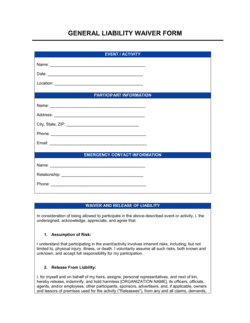
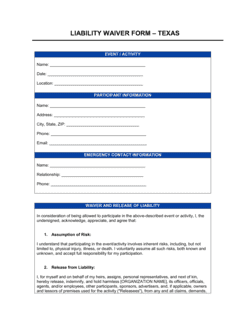
Identify the correct legal entity as the releasee
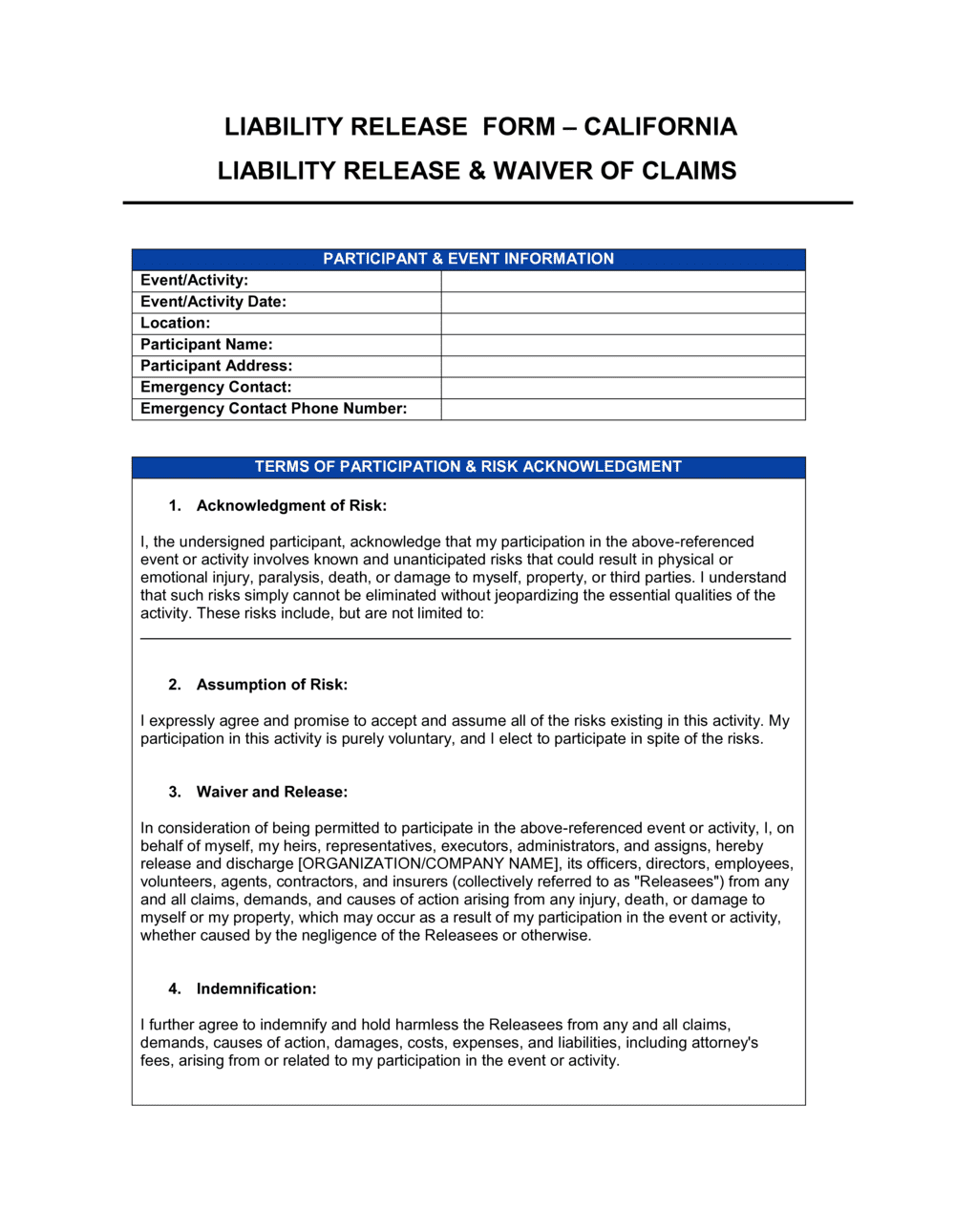
Enter your registered business name — LLC, corporation, or sole proprietorship — exactly as it appears in your state or California registration filings. Add your principal address.
💡 If your business operates under a DBA, include both the legal entity name and the trade name in the releasee block to cover both.
2
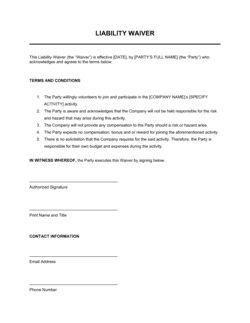
Describe the specific activity and its date and location
Name the event or activity precisely — 'beginner rock-climbing session,' not 'outdoor activity.' Include the date and venue address so the release is tied to a specific occurrence.
💡 For recurring activities like weekly classes, use date-range language ('all sessions from [START DATE] through [END DATE]') rather than re-signing for every class.
3
List the specific, foreseeable risks of the activity
Itemize the material risks participants actually face — falls, equipment failure, physical exertion, weather exposure, contact with other participants — rather than copying a generic list.
💡 Review your incident reports or insurance underwriter's risk assessment to ensure your list reflects the actual hazard profile of the activity.
4
Confirm the Civil Code §1542 waiver text is complete and verbatim
Do not paraphrase or summarize the §1542 statutory language. The full quoted text must appear in the document exactly as it reads in the California Civil Code, followed by the participant's express waiver.
💡 Bold or set the §1542 paragraph in a slightly larger font so it is visually prominent — courts and opposing counsel look for it immediately.
5
Remove or strictly limit any gross-negligence language
Delete any attempt to release the organizer from gross negligence or willful misconduct — these waivers are void under California law. Confirm the release covers ordinary negligence only.
💡 Have a California-licensed attorney confirm that no clause in your draft crosses into gross-negligence territory before you use the form with participants.
6
Add the indemnification clause tailored to your activity
Complete the indemnification block with the activity name and confirm it does not extend to claims the release itself cannot cover. Include an attorneys' fees provision if you want fee-shifting in a dispute.
💡 Indemnification from a participant who is an individual (not a business) may be hard to enforce if they lack assets — understand that this clause is more protective in B2B contexts.
7
Obtain a dated wet or electronic signature before the activity begins
Present the form to each participant before they arrive at the venue or start the activity. Obtain a legible signature, printed name, and date. For minors, obtain the parent or guardian's signature.
💡 Electronic signatures are valid under California law and the federal E-SIGN Act. Use an e-signature tool that timestamps execution and stores the signed copy automatically.
8
Retain signed copies for at least the applicable statute-of-limitations period
In California, personal injury claims have a two-year statute of limitations; claims involving minors may extend until two years after they turn 18. Retain signed releases for at least that period.
💡 Store releases in a searchable digital format linked to the participant's name and event date — paper-only storage creates retrieval problems when a claim arises years later.