Florida Liability Waiver Form Template

Free Word download β€’ Edit online β€’ Save & share with Drive β€’ Export to PDF

3 pagesβ€’20–25 min to fillβ€’Difficulty: Standard
Learn more ↓
FreeFlorida Liability Waiver Form Template

At a glance

What it is
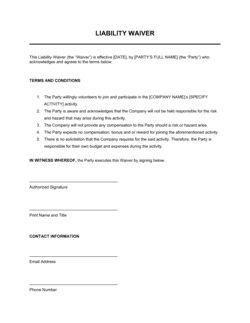
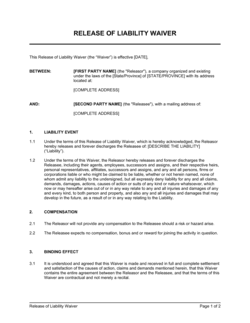
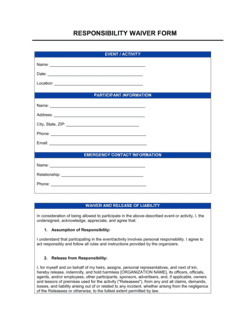
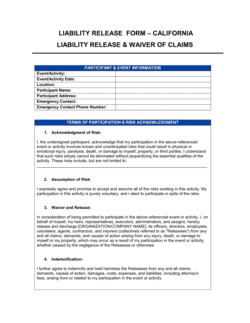
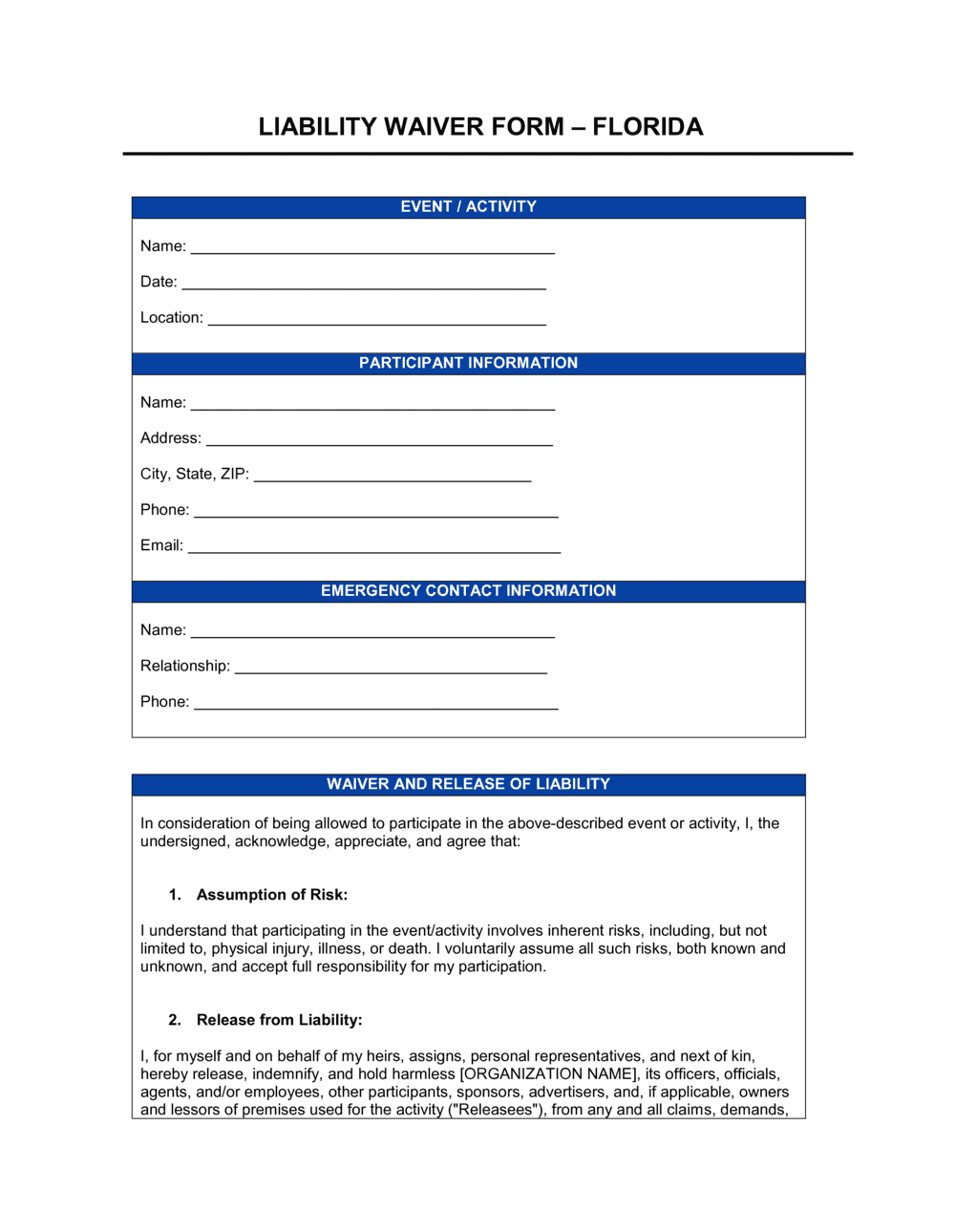
A Florida Liability Waiver Form is a written document in which a participant voluntarily agrees to release a business or operator from legal claims arising from injuries, accidents, or property damage connected to a specific activity or service. This free Word download is pre-structured for Florida use β€” covering assumption of risk, release of liability, and indemnification β€” and can be edited online and printed or signed digitally in minutes.
When you need it
Use it before any activity, event, or service where participants face a foreseeable risk of injury or property damage β€” such as fitness classes, outdoor adventures, sports camps, equipment rentals, or on-site tours. Collecting a signed waiver before participation establishes a documented record that the participant understood and accepted the risks involved.
What's inside
Participant and business identification, a plain-language description of the activity and its inherent risks, an assumption-of-risk acknowledgment, a broad release of liability covering the operator and its agents, an indemnification clause, a medical authorization for emergency treatment, and a signature block with date.

What is a Florida Liability Waiver Form?

A Florida Liability Waiver Form is a pre-participation document in which a person voluntarily acknowledges the risks of a specific activity and releases a business or operator from legal claims arising from injuries, accidents, or property damage connected to that activity. It combines three core elements β€” an assumption-of-risk acknowledgment, a release of claims, and an indemnification clause β€” into a single signed record that establishes the participant understood and accepted the terms before taking part. Florida courts generally enforce well-drafted waivers covering ordinary negligence when the language is specific, conspicuous, and signed before participation begins.

Why You Need This Document

Operating any activity that carries physical risk without a signed liability waiver leaves your business fully exposed to injury claims, medical cost disputes, and the legal fees that come with them β€” even when the participant knew the risks and chose to participate anyway. Florida's two-year personal injury statute of limitations means a claim can arrive long after the incident, and without a signed waiver on file, your only defense is a credibility contest. A properly formatted Florida liability waiver establishes a documented record, deters opportunistic claims, and signals to participants that your operation takes safety and accountability seriously. This template gives you the structure, conspicuous formatting, and Florida-specific language you need to collect enforceable waivers from day one β€” without starting from a blank page.

Which variant fits your situation?

If your situation is…Use this template
General activity or event with adult participantsFlorida Liability Waiver Form
Minor participant requiring parental consentMinor Liability Waiver and Parental Consent Form
Participant waiving claims against another private individualGeneral Release of Liability Form
Contractor or vendor entering a client's propertyHold Harmless Agreement
Vehicle use or test drive by a customerVehicle Release of Liability Form
Medical or clinical procedure informed consentMedical Consent and Release Form
Settlement of an existing personal injury claimSettlement Agreement and Release

Common mistakes to avoid

❌ Using a waiver from another state without Florida-specific language

Why it matters: Florida has specific case law on waiver enforceability, conspicuous language requirements, and gross negligence exceptions that differ from other states. A generic waiver may not meet Florida's standards.

Fix: Use a waiver drafted with Florida law as the governing jurisdiction and reviewed against Florida's enforceability requirements.
❌ Burying the release clause in unformatted text

Why it matters: Florida courts have invalidated waivers where the release language was not visually prominent. A participant who signs without noticing the release can successfully argue the waiver is unenforceable.

Fix: Bold, capitalize, or box the release and indemnification clauses so they are the first things a reader sees on the page.

❌ Allowing participants to sign after the activity begins

Why it matters: A waiver signed mid-activity or after an incident occurred provides very limited protection because the risk the waiver covers has already materialized.

Fix: Build waiver collection into your pre-participation check-in process with a clear policy that no one begins until a signed form is on file.

❌ Omitting the parental consent block for activities open to minors

Why it matters: Minors lack legal capacity to contract in Florida. A waiver signed only by a minor is unenforceable, leaving the operator fully exposed for any injury claim.

Fix: Add a mandatory parent or guardian co-signature block and verify the adult's identity before accepting the waiver for a minor participant.

The 9 key fields, explained

Participant and business identification

Activity description

Assumption of risk acknowledgment

Release of liability clause

Indemnification and hold harmless clause

Medical authorization

Governing law and severability

Participant signature and date

Parent or guardian signature block (minors)

How to fill it out

  1. 1

    Enter the operator's legal business name and address

    Fill in the full registered name of your business β€” not a trade name or DBA β€” and your physical address in the header of the form.

    πŸ’‘ Using your exact registered entity name ensures the release runs in favor of the correct legal party and avoids enforcement gaps.

  2. 2

    Describe the specific activity and location

    Replace the placeholder activity description with the name of the specific service or event, the address where it takes place, and the date or date range covered.

    πŸ’‘ If your business runs multiple activity types, create a separate waiver for each rather than combining them β€” specificity is a key factor in Florida enforceability.

  3. 3

    List the inherent risks in plain language

    In the assumption-of-risk section, name the actual physical hazards a participant faces β€” falls, equipment failure, weather exposure, collision, or similar risks specific to your activity.

    πŸ’‘ Avoid copying generic risk lists from unrelated industries. A judge reviewing a kayaking waiver expects kayaking-specific risks, not a general sports disclaimer.

  4. 4

    Make the release language visually prominent

    Bold or capitalize the core release clause and the indemnification paragraph so they stand out from surrounding text. The participant should not be able to plausibly claim they missed these provisions.

    πŸ’‘ A font size of at least 12pt and a bold heading such as 'RELEASE OF LIABILITY β€” READ CAREFULLY' above the clause significantly strengthens enforceability.

  5. 5

    Add the medical authorization if your activity involves physical risk

    Complete the medical authorization section with the operator name and confirm the participant agrees to bear treatment costs.

    πŸ’‘ For youth programs, add the parent or guardian's preferred emergency contact and any known medical conditions on a separate intake line below the authorization.

  6. 6

    Add the parental consent block for minor participants

    If any participants may be under 18, activate the parent or guardian signature block and require a separate signature from the adult before the minor participates.

    πŸ’‘ Keep signed minor waivers in a dedicated file separate from adult waivers β€” commingling them creates recordkeeping problems if a claim arises years later.

  7. 7

    Collect and store signed copies before participation begins

    Have the participant sign and date the form before the activity starts β€” not after, and not during check-in while distracted. Store a digital or physical copy for at least three years.

    πŸ’‘ A digital signing workflow with a timestamp creates a cleaner record than paper β€” the date and time of signature cannot be disputed.

Frequently asked questions

Are liability waivers enforceable in Florida?

Yes, liability waivers are generally enforceable in Florida when they are clear, unambiguous, and presented conspicuously so the participant understands what they are giving up. Florida courts will typically uphold a waiver covering ordinary negligence if the language is specific about the risks and activity involved. However, waivers that attempt to release a party from liability for gross negligence or intentional misconduct are not enforceable under Florida law.

Can a Florida liability waiver cover injuries to minors?

A minor cannot sign a binding liability waiver in Florida because minors lack legal capacity to contract. A parent or guardian may sign on the minor's behalf, but Florida courts have historically been reluctant to fully enforce parental waivers for injuries to children β€” particularly for commercial operators. For activities involving minors, combining a parental waiver with strong safety protocols and adequate insurance is the most protective approach.

What activities commonly require a Florida liability waiver?

Fitness studios, gyms, yoga classes, rock climbing facilities, go-kart tracks, paddleboard and kayak rentals, escape rooms, trampoline parks, sports camps, zip-line operators, and outdoor adventure tours are among the most common users of liability waivers in Florida. Any business where participants face a foreseeable risk of physical injury or property damage benefits from having a signed waiver on file before participation begins.

Does the waiver need to be notarized in Florida?

No, notarization is not required for a standard liability waiver to be enforceable in Florida. A clear signature and date from the participant β€” or a parent or guardian for a minor β€” is sufficient. Digital signatures are also accepted under Florida's Electronic Signature Act, provided the signing process produces a reliable record of when and by whom the document was signed.

How long should I keep signed liability waivers on file?

Florida's general statute of limitations for personal injury claims is two years from the date of the injury. For claims involving minors, the clock typically does not start until the minor turns 18. To be safe, retain all signed waivers for a minimum of three to five years from the date of signing, and for waivers involving minors, keep records until the minor reaches age 21 at minimum.

Can I use a digital signature on a Florida liability waiver?

Yes. Florida's Electronic Signatures Act recognizes electronic signatures as legally valid for most contract and waiver purposes. A digital signing workflow that records the signer's name, date, time, and IP address provides a stronger and more tamper-evident record than a paper signature that can be backdated or disputed.

What makes a Florida liability waiver unenforceable?

Florida courts have found waivers unenforceable for several reasons: release language that is not visually conspicuous, overly vague activity descriptions that do not put the participant on notice of specific risks, attempts to waive liability for gross negligence or intentional conduct, signatures obtained from minors without parental consent, and situations where the participant had no meaningful opportunity to read the document before signing. Using clear formatting and specific language addresses most of these vulnerabilities.

How this compares to alternatives

vs General Release of Liability Form

A general release of liability is a broad document used to settle existing disputes or release claims after an incident has already occurred. A Florida liability waiver is a pre-activity form that documents risk acknowledgment before participation begins. The timing and purpose are fundamentally different β€” waivers prevent claims; releases resolve them.

vs Hold Harmless Agreement

A hold harmless agreement is typically used in contractor or vendor relationships where one party agrees not to hold another responsible for losses connected to a project or property. A liability waiver is designed for participant-facing businesses where members of the public accept personal risk. Hold harmless agreements tend to be bilateral; waivers are signed by participants only.

vs Informed Consent Form

An informed consent form is most common in medical, clinical, and research settings where a provider must document that a patient understood a procedure's risks before agreeing to it. A liability waiver covers injury risk in recreational or commercial activity contexts and includes a release of legal claims that informed consent forms typically do not.

vs Event Waiver and Release Form

An event waiver is a narrower form specific to a single event date and venue, often used for races, tournaments, or community gatherings. A Florida liability waiver form is broader and can cover recurring activities, memberships, or multi-session programs. Use the event waiver for one-off public events and the Florida waiver form for ongoing business operations.

Industry-specific considerations

Fitness and wellness

Gyms, yoga studios, and personal trainers collect waivers covering equipment use, physical exertion injuries, and instructor-led class participation.

Outdoor recreation and tourism

Kayak rentals, zip-line tours, and paddleboard operators use waivers to document participant acknowledgment of weather, water, and terrain hazards.

Youth sports and camps

Sports camps and after-school programs require parental co-signatures and often include emergency medical authorization alongside the liability release.

Entertainment and events

Escape rooms, trampoline parks, and go-kart tracks use waivers at point-of-entry kiosks to cover high-volume participation with fast check-in workflows.

Template vs pro β€” what fits your needs?

PathBest forCostTime
Use the templateSmall businesses, fitness studios, event organizers, and rental operators running standard low-to-moderate-risk activities in FloridaFree10–15 minutes
Template + professional reviewBusinesses with high participant volume, activities involving minors, or operations with above-average injury risk$150–$400 for a Florida attorney review1–3 days
Custom draftedHigh-risk operators such as extreme sports venues, medical wellness providers, or businesses facing prior litigation$500–$2,000+1–2 weeks

Glossary

Liability Waiver
A written agreement in which one party voluntarily gives up the right to sue another party for injuries or losses arising from a defined activity.
Assumption of Risk
An acknowledgment by the participant that they understand the specific dangers of an activity and choose to participate anyway.
Release of Claims
The portion of the waiver that formally extinguishes the participant's right to bring a legal action against the releasing party for covered events.
Indemnification
A promise by the participant to compensate the business for any legal costs or damages the business incurs because of the participant's actions.
Gross Negligence
Conduct that goes far beyond ordinary carelessness β€” Florida courts typically refuse to enforce waivers that attempt to release a party from liability for gross negligence.
Enforceability
Whether a court will uphold the waiver as written; in Florida, enforceability depends on clear language, conspicuous presentation, and the participant's capacity to consent.
Conspicuous Language
Waiver text that is visually prominent β€” bold, capitalized, or in a larger font β€” so the signer cannot credibly claim they missed the release provisions.
Inherent Risk
Dangers that are a natural and unavoidable part of an activity, such as falls in rock climbing or collision in contact sports.
Medical Authorization
A clause permitting the operator to consent to emergency medical treatment on behalf of the participant if they become incapacitated during the activity.
Indemnitor
The party who agrees to bear costs or losses on behalf of another β€” in a waiver context, the participant who signs the indemnification clause.

Part of your Business Operating System

This document is one of 3,000+ business & legal templates included in Business in a Box.

  • Fill-in-the-blanks β€” ready in minutes
  • 100% customizable Word document
  • Compatible with all office suites
  • Export to PDF and share electronically

Create your document in 3 simple steps.

From template to signed document β€” all inside one Business Operating System.
1
Download or open template

Access over 3,000+ business and legal templates for any business task, project or initiative.

2
Edit and fill in the blanks with AI

Customize your ready-made business document template and save it in the cloud.

3
Save, Share, Send, Sign

Share your files and folders with your team. Create a space of seamless collaboration.

Save time, save money, and create top-quality documents.

β˜…β˜…β˜…β˜…β˜…

"Fantastic value! I'm not sure how I'd do without it. It's worth its weight in gold and paid back for itself many times."

Managing Director Β· Mall Farm
Robert Whalley
Managing Director, Mall Farm Proprietary Limited
β˜…β˜…β˜…β˜…β˜…

"I have been using Business in a Box for years. It has been the most useful source of templates I have encountered. I recommend it to anyone."

Business Owner Β· 4+ years
Dr Michael John Freestone
Business Owner
β˜…β˜…β˜…β˜…β˜…

"It has been a life saver so many times I have lost count. Business in a Box has saved me so much time and as you know, time is money."

Owner Β· Upstate Web
David G. Moore Jr.
Owner, Upstate Web

Run your business with a system β€” not scattered tools

Stop downloading documents. Start operating with clarity. Business in a Box gives you the Business Operating System used by over 250,000 companies worldwide to structure, run, and grow their business.

Start freeΒ Β·Β No credit card required