1
Gather the original deed of trust and recording information
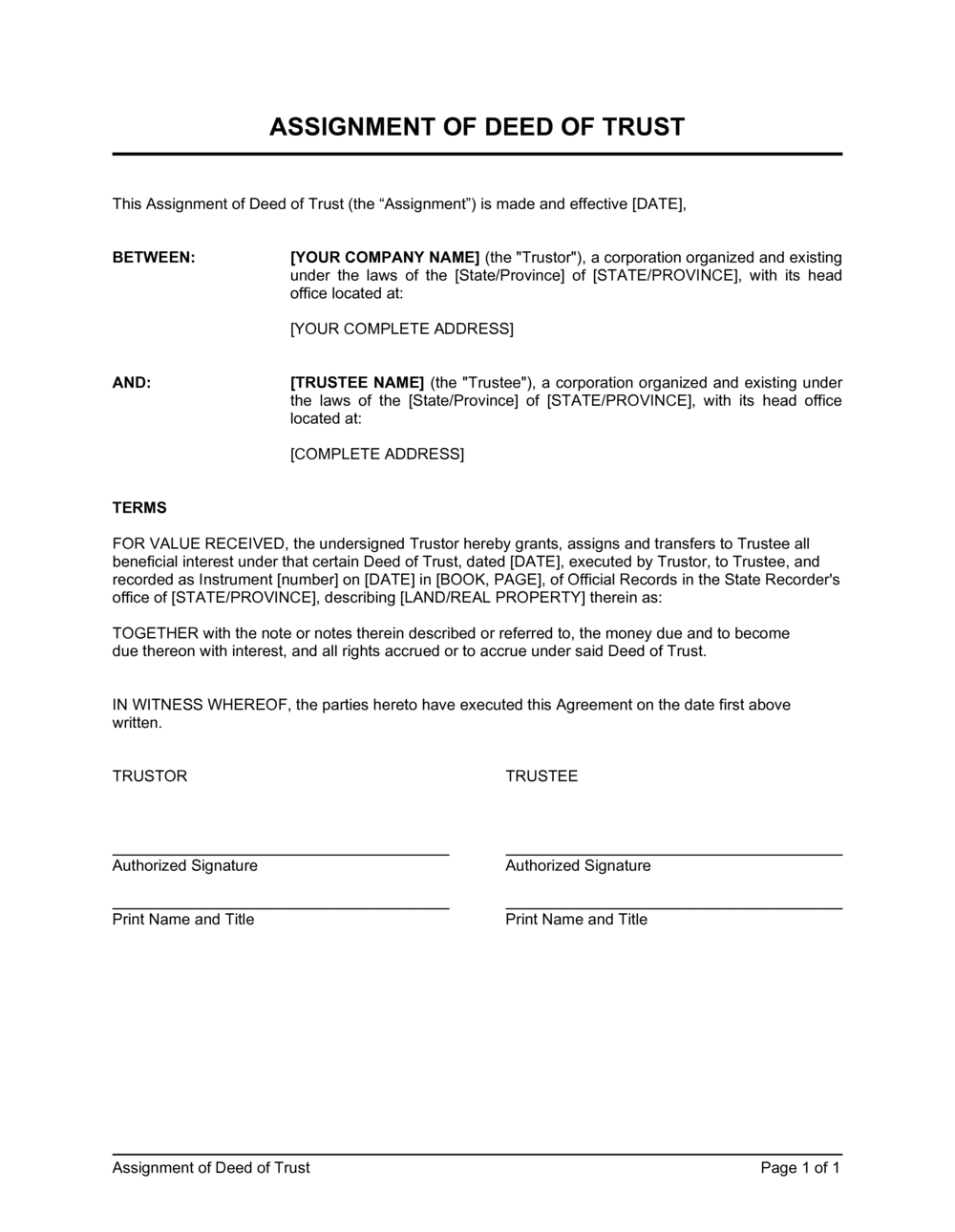
Retrieve the recorded deed of trust from the county recorder's online database or your loan file. Note the exact instrument number, recording date, book and page reference, and the trustor's legal name as it appears on the original instrument.
💡 The county recorder's reference data must be transcribed character-for-character — photocopying the relevant header from the original recorded document and attaching it as an exhibit reduces transcription errors.
2
Confirm and enter the legal entity names of both parties
Use the assignor's full registered legal name exactly as it appears on the original deed of trust — any variation creates a chain-of-title gap. Enter the assignee's full legal name and current mailing address.
💡 Run a quick secretary-of-state entity search to confirm current legal names and good-standing status for both parties before drafting.
3
Insert the complete legal description of the property
Copy the full legal description verbatim from the original deed of trust or the current title report — not from a tax record or online listing. Paste it into the designated clause and verify every lot, block, and plat reference against the county recorder's records.
💡 If the legal description runs multiple paragraphs, mark it clearly as Exhibit A and incorporate it by reference in the body of the assignment to keep the main document readable.
4
Reference the promissory note details
Enter the original note date, original principal amount, and borrower name exactly as they appear on the note. If the outstanding balance as of the assignment date is known, include it in the warranties section.
💡 If you are also endorsing the promissory note, prepare an allonge simultaneously so both instruments are executed and delivered together at the same closing.
5
Confirm consideration and execute the operative assignment language
Review the assignment and transfer clause to ensure it uses present-tense operative language. Fill in the consideration amount — even a nominal $10 recital is sufficient — and confirm the warranty representations are accurate before signing.
💡 Have the assignor's authorized signatory confirm their title (e.g., Vice President, Member, Trustee) in the signature block — many recorders require an entity signatory's title to appear on the instrument.
6
Arrange notarization before signing
The assignor's authorized signatory must appear before a commissioned notary public with valid government-issued ID. The notary verifies identity, witnesses the signature, and completes the acknowledgment block with seal and commission expiration date.
💡 Remote online notarization (RON) is now accepted for recorded real-property instruments in over 40 US states — confirm eligibility in the property's state before scheduling.
7
Submit for recording in the county where the property is located
File the original executed, notarized assignment with the county recorder or register of deeds for the county where the property is situated. Pay the applicable recording fee and any documentary transfer tax if required. Include the return-address information for the conformed copy.
💡 Many counties now accept e-recording through services such as Simplifile or eRecording Partners Network — e-recording typically returns a conformed copy within 24–48 hours versus 2–6 weeks by mail.
8
Deliver the conformed copy and update loan records
Once the county returns the recorded, stamped original, deliver a copy to the new beneficiary (assignee) and update the loan servicer's records to reflect the new beneficial owner. Retain the original recorded assignment in the collateral file.
💡 Send written notice of the assignment to the borrower as required by RESPA — failure to notify within 30 days of a residential mortgage assignment triggers statutory penalties under 12 U.S.C. § 2605.