13 Tips For Using Situational Leadership Effectively

Free to read β€’ Save or share with one click

Free13 Tips For Using Situational Leadership Effectively Template

At a glance

What it is
This document is a structured reference guide outlining 13 actionable tips for applying the Situational Leadership model in day-to-day management. It walks leaders through how to assess employee development levels, match the right leadership style to each situation, and adjust their approach over time. Available as a free Word download, it can be edited online and exported as PDF for use in training sessions, manager onboarding, or ongoing leadership development programs.
When you need it
Use it when onboarding new managers, rolling out a leadership development program, or coaching existing team leads who struggle to adapt their style to different team members or task types. It is equally useful when a team is underperforming because managers are applying a single fixed leadership approach regardless of context.
What's inside
The guide covers the four leadership styles (directing, coaching, supporting, and delegating), employee development-level assessment criteria, and 13 concrete tips for diagnosing the situation and selecting the right response. It also includes guidance on how to avoid common pitfalls such as over-delegating to inexperienced staff or micromanaging capable employees.

What is a Situational Leadership Guide?

A Situational Leadership Guide is a structured management reference document that helps leaders apply the Hersey-Blanchard Situational Leadership model in real-world day-to-day interactions. Rather than prescribing a fixed management approach, it walks leaders through a diagnostic process β€” assessing each employee's competence and commitment on specific tasks β€” and maps that diagnosis to one of four leadership styles: directing, coaching, supporting, or delegating. This template presents 13 concrete, actionable tips organized across the full model, from initial situation diagnosis through style selection, communication, and long-term employee development planning.

Why You Need This Document

Managers who apply the same leadership style to every employee and every task consistently underperform those who adapt β€” over-directing capable employees generates resentment and attrition, while under-directing inexperienced ones produces avoidable failures and erodes confidence. Without a structured reference, most managers default to whichever style feels natural to them, regardless of what the situation actually requires. The cost is measurable: talented employees disengage when they are not given appropriate autonomy, and new hires flounder when they are delegated to before they have the skills to succeed. This template gives individual managers and training teams a concrete, customizable framework to close that gap β€” complete with a self-assessment, a per-employee action plan, and 30-day implementation milestones that turn the model from theory into observable management behavior.

Which variant fits your situation?

If your situation is…Use this template
Onboarding new managers for the first time13 Tips for Using Situational Leadership Effectively
Building a full leadership development curriculumLeadership Development Plan
Setting performance expectations for team leadsPerformance Improvement Plan
Documenting coaching conversations with direct reportsEmployee Coaching Plan
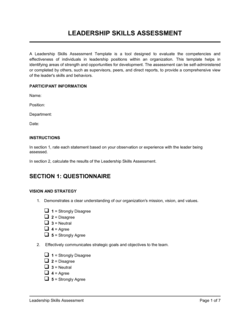
Assessing individual employee skill and motivation levelsEmployee Performance Review
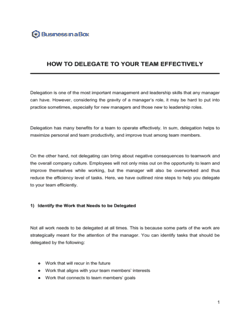
Creating a delegation framework for senior contributorsTask Delegation Worksheet
Designing a team-wide training program around adaptive leadershipTraining Plan

Common mistakes to avoid

❌ Assigning a global development level instead of a task-specific one

Why it matters: A single D-level label for an employee leads to over-delegating on tasks they haven't mastered and under-supporting on new responsibilities β€” both outcomes reduce performance.

Fix: Assess development level separately for each major task or project area. A two-column table (task, D-level) per employee makes this practical to maintain.
❌ Defaulting to a single leadership style regardless of diagnosis

Why it matters: Managers who apply only S1 create dependency and reduce morale among capable employees. Those who apply only S4 leave new or struggling employees without the structure they need to succeed.

Fix: After completing the self-assessment, identify your least-used style and deliberately practice it with one employee on one task for 30 days.

❌ Changing style without communicating the reason to the employee

Why it matters: Unexplained increases in oversight feel like distrust; unexplained removal of direction feels like abandonment. Both erode the psychological safety needed for honest performance conversations.

Fix: When shifting styles, name the shift explicitly and explain the task context driving it β€” not a general comment on the employee's overall performance.

❌ Treating the guide as a one-time training artifact rather than a working reference

Why it matters: Situational leadership requires ongoing diagnosis as employees change, tasks evolve, and team composition shifts. A guide reviewed once and filed away produces no lasting behavior change.

Fix: Schedule a quarterly review of the action plan table against actual observations. Update D-level assessments and style choices based on what you have seen in the past 90 days.

❌ Over-delegating to a newly promoted employee

Why it matters: Promotion changes the task context entirely β€” a D4 individual contributor is often a D1 manager. Delegating fully to a new manager before they have built managerial competence produces avoidable failures and damages their confidence.

Fix: Reset the development-level assessment to D1 for any new role or significant scope change, regardless of the employee's track record in their previous position.

❌ Skipping the self-assessment section

Why it matters: Without knowing your own default style and flexibility gaps, you cannot deliberately apply the framework β€” you simply layer new vocabulary onto existing habits.

Fix: Complete the self-assessment before your next 1-on-1 cycle and ask one trusted direct report to give you candid feedback on which style they most often experience from you.

The 10 key sections, explained

Introduction to the situational leadership model

The four leadership styles defined

Employee development levels (D1–D4)

Tip 1–3: Diagnosing the situation accurately

Tip 4–6: Matching style to development level

Tip 7–9: Communicating style shifts to your team

Tip 10–11: Developing employees through the levels

Tip 12–13: Common pitfalls and how to avoid them

Self-assessment for managers

Action plan and 30-day implementation checklist

How to fill it out

  1. 1

    Read the model overview before editing

    Review the introduction and four leadership styles sections thoroughly before customizing the document. The tips in sections 4–8 only make sense in context of the D1–D4 and S1–S4 framework.

    πŸ’‘ If you are adapting this for a specific organization, replace 'Hersey-Blanchard' with your internal leadership model name if it uses different terminology β€” keep the underlying logic intact.

  2. 2

    Customize the development-level descriptions with real examples

    Replace the generic D1–D4 descriptions with role-specific examples relevant to your team or industry. A D1 for a sales rep looks different from a D1 for a software engineer.

    πŸ’‘ Pull one real example per development level from your team's recent history β€” grounding the framework in familiar situations accelerates adoption by 30–40% in training contexts.

  3. 3

    Select and annotate the tips most relevant to your team

    Not all 13 tips will be equally relevant to every manager or team. Highlight the three to five tips that address your team's most pressing leadership challenges and add a short annotation explaining why each applies.

    πŸ’‘ If most of your team sits at D1–D2, focus on tips 1–6. If you manage experienced professionals who feel micromanaged, prioritize tips 10–13.

  4. 4

    Complete the manager self-assessment section

    Fill in the self-assessment honestly before using the document in a coaching or training session. Knowing your default style is prerequisite to improving your flexibility.

    πŸ’‘ Have a direct report or peer complete the same assessment about you independently and compare results β€” the gaps between self-perception and observed behavior are your highest-leverage development areas.

  5. 5

    Map each direct report to the action plan table

    For every direct report, identify two or three key tasks and assess their development level on each. Enter the current style you are using and the target style based on the diagnosis.

    πŸ’‘ Do not try to map more than three tasks per employee in the first pass β€” it becomes overwhelming and reduces follow-through.

  6. 6

    Set 30-day check-in milestones

    For each employee-task pairing in the action plan, write one specific, observable 30-day outcome that would confirm the leadership style is working. Schedule the review date before closing the document.

    πŸ’‘ Tie the 30-day outcome to something you can observe directly β€” not 'improved confidence' but 'completed the client report independently and on time.'

  7. 7

    Share and discuss with your manager or HR partner

    Before rolling out your updated approach with your team, walk through the completed action plan with your own manager or an HR business partner to pressure-test your development-level assessments.

    πŸ’‘ A second opinion on D-level assessments is especially important for employees you have known for a long time β€” familiarity bias leads managers to rate tenured employees higher than their current task competence warrants.

Frequently asked questions

What is situational leadership?

Situational leadership is a management model developed by Paul Hersey and Ken Blanchard that holds no single leadership style is universally effective. Instead, leaders should diagnose the development level of each employee on each specific task β€” assessing both competence and commitment β€” and then deliberately apply one of four styles: directing, coaching, supporting, or delegating. The core idea is that leadership flexibility, not a fixed style, drives team performance.

What are the four situational leadership styles?

The four styles are S1 Directing (high task focus, low relationship focus, used with beginners who need clear instruction), S2 Coaching (high task and high relationship, used with developing employees who need both structure and encouragement), S3 Supporting (low task, high relationship, used with capable employees who need confidence rather than direction), and S4 Delegating (low task and low relationship, used with fully capable and motivated employees who can self-manage).

How do I know which leadership style to use?

Diagnose the employee's development level on the specific task first. Ask two questions: can they complete this task competently without close supervision, and do they feel confident and motivated doing so? If both answers are no, use S1. If competence is growing but confidence is inconsistent, use S2. If competence is high but the employee occasionally needs encouragement or input, use S3. If both competence and commitment are high, use S4.

Can the same employee have different development levels for different tasks?

Yes β€” this is one of the most important principles in the model. An experienced employee may be a D4 on tasks they have performed for years and a D1 on a new responsibility introduced by a restructuring or promotion. Assigning a single global development level to an employee leads to systematic mismatches between leadership style and actual need. Always assess development level per task, not per person.

What is the most common mistake managers make with situational leadership?

The most common mistake is defaulting to a single preferred style regardless of the diagnosis. Naturally directive managers over-apply S1 even with capable employees, creating dependency and frustration. Hands-off managers over-apply S4 even with inexperienced employees, leaving them without the structure needed to succeed. Awareness of your default style β€” through the self-assessment section β€” is the first step toward genuine flexibility.

How does situational leadership differ from transformational leadership?

Transformational leadership focuses on inspiring followers through vision, values, and motivation β€” it operates primarily at the team or organizational level and does not prescribe different behaviors for different individuals. Situational leadership is a task-specific, individual-level diagnostic model β€” it tells you what to do differently with each person on each assignment. The two models are complementary: a leader can be transformational in vision while applying situational principles in day-to-day management.

Is situational leadership effective for remote teams?

Yes, though the diagnostic process requires more deliberate effort when you cannot observe employees directly. Remote managers need to build assessment into structured check-ins, use output-based evidence of competence, and be more explicit about communicating style choices since tone and intent are harder to read over video or messaging. The S3 Supporting style in particular requires intentional relationship investment when face-to-face contact is limited.

How often should I reassess an employee's development level?

Reassess whenever the employee's task context changes β€” a new project, a new team, a promotion, a significant process change, or a period of sustained underperformance. For stable ongoing responsibilities, a quarterly review aligned to your performance management cycle is sufficient. The biggest risk is not under-assessing but failing to reassess at all after initial onboarding, which leads to stale assumptions driving current management decisions.

Can this guide be used in group training sessions?

Yes β€” the template is designed to work both as an individual manager reference and as a facilitation guide for group leadership development sessions. The self-assessment and action plan sections work well as workshop activities, and the tips in sections 4–8 can be used as case-study discussion prompts. Customize the D-level examples for your industry before using in a group context for maximum relevance.

How this compares to alternatives

vs Leadership Development Plan

A leadership development plan is a structured multi-month program outlining goals, learning activities, and milestones for growing a specific leader's capabilities over time. The situational leadership tips guide is a diagnostic and tactical reference for day-to-day management decisions. Use the tips guide to inform style choices now; use the development plan to build the long-term skills that make those choices instinctive.

vs Performance Improvement Plan

A performance improvement plan (PIP) is a formal corrective document used when an employee's performance falls below defined standards, typically with consequences tied to outcomes. The situational leadership guide is a proactive management tool used before performance issues arise. If diagnosis reveals an employee is underperforming because they received S4 treatment at D1 or D2, the situational guide is the right intervention β€” a PIP becomes necessary only when leadership adjustments have already been attempted.

vs Employee Performance Review

A performance review documents past performance against goals and sets objectives for the next cycle. The situational leadership guide informs how the manager should support the employee in achieving those objectives going forward. The review tells you what happened; situational leadership tells you how to manage differently in the next period.

vs Training Plan

A training plan schedules specific learning activities, resources, and completion dates to close a skill gap. Situational leadership operates at the management interaction level β€” it addresses how the leader behaves with the employee, not what the employee learns. The two are complementary: a training plan closes competence gaps; situational leadership addresses both competence and commitment through ongoing management style.

Industry-specific considerations

Technology / SaaS

Engineering managers frequently lead teams with a wide skill spread β€” senior engineers at D4 on core tasks and junior hires at D1 on production systems β€” making task-specific development-level diagnosis critical.

Professional Services

Consulting and advisory firms use situational leadership to develop analysts and associates through client-facing roles, shifting from S1 on first client engagements to S4 as they build independent client management skills.

Healthcare

Clinical team leads apply situational leadership when onboarding staff to new protocols or equipment β€” a D4 nurse on general patient care may be a D1 on a newly introduced electronic health records system.

Retail / Hospitality

High staff turnover means managers are perpetually working with D1 and D2 employees on core service tasks, requiring consistent S1 and S2 application while developing team leads toward S3 and S4 independence.

Template vs pro β€” what fits your needs?

PathBest forCostTime
Use the templateIndividual managers, team leads, and small business owners implementing situational leadership independentlyFree1–2 hours to complete self-assessment and action plan
Template + professional reviewHR or L&D teams customizing the guide for a company-wide manager training program$500–$2,000 for facilitation design or L&D consultant review1–2 weeks
Custom draftedOrganizations building a proprietary leadership model or integrating situational leadership into an existing competency framework$5,000–$20,000 for organizational development consulting4–12 weeks

Glossary

Situational Leadership
A leadership model developed by Hersey and Blanchard stating that no single leadership style is best β€” effective leaders adapt their approach based on the task and the development level of the individual.
Development Level
A combined measure of an employee's competence (skill and knowledge) and commitment (motivation and confidence) for a specific task, used to determine which leadership style to apply.
Directing Style (S1)
A high-task, low-relationship leadership approach where the leader provides specific instructions and closely supervises performance β€” suited for employees new to a task.
Coaching Style (S2)
A high-task, high-relationship approach where the leader both directs and supports, explaining decisions and soliciting feedback β€” suited for employees gaining competence but lacking full confidence.
Supporting Style (S3)
A low-task, high-relationship approach where the leader facilitates and encourages rather than directing, sharing decision-making with a capable but sometimes under-confident employee.
Delegating Style (S4)
A low-task, low-relationship approach where the leader transfers responsibility for decisions and execution to a fully capable and committed employee.
Task-Specific Leadership
The principle that a leader may use different styles for the same employee depending on the task β€” a skilled engineer may need delegation on code reviews but direction on project budget management.
Follower Readiness
The degree to which an employee is both able and willing to perform a specific task without close supervision.
Leadership Flexibility
A leader's ability to consciously shift between the four situational leadership styles based on diagnostic assessment rather than habit or preference.
Competence-Commitment Matrix
A 2Γ—2 grid mapping an employee's skill level against their motivation level to identify which of the four development levels (D1–D4) applies to a given task.

Part of your Business Operating System

This document is one of 3,000+ business & legal templates included in Business in a Box.

  • Fill-in-the-blanks β€” ready in minutes
  • Compatible with all office suites
  • Export to PDF and share electronically

Create your document in 3 simple steps.

From template to signed document β€” all inside one Business Operating System.
1
Download or open template

Access over 3,000+ business and legal templates for any business task, project or initiative.

2
Edit and fill in the blanks with AI

Customize your ready-made business document template and save it in the cloud.

3
Save, Share, Send, Sign

Share your files and folders with your team. Create a space of seamless collaboration.

Save time, save money, and create top-quality documents.

β˜…β˜…β˜…β˜…β˜…

"Fantastic value! I'm not sure how I'd do without it. It's worth its weight in gold and paid back for itself many times."

Managing Director Β· Mall Farm
Robert Whalley
Managing Director, Mall Farm Proprietary Limited
β˜…β˜…β˜…β˜…β˜…

"I have been using Business in a Box for years. It has been the most useful source of templates I have encountered. I recommend it to anyone."

Business Owner Β· 4+ years
Dr Michael John Freestone
Business Owner
β˜…β˜…β˜…β˜…β˜…

"It has been a life saver so many times I have lost count. Business in a Box has saved me so much time and as you know, time is money."

Owner Β· Upstate Web
David G. Moore Jr.
Owner, Upstate Web

Run your business with a system β€” not scattered tools

Stop downloading documents. Start operating with clarity. Business in a Box gives you the Business Operating System used by over 250,000 companies worldwide to structure, run, and grow their business.

Start freeΒ Β·Β No credit card required