Customer Retention Templates
★★★★★4.7from 280+ reviews· Trusted by 20M+ businesses
Keep more customers, reduce churn, and build loyalty with the right document for every stage of the relationship.
WordEditable onlinePDF18+ customer retention templates
Other Sales & Marketing categories
Feedback and complaint handling
Customer communication and loyalty letters
Strategy, planning, and service improvement
250K+Clients
20M+Free users
20+Years
190+Countries
10,000+Law firms
50M+Downloads
Trusted across review platforms
- Capterra★★★★☆4.649 reviews
- G2★★★★☆4.713 reviews
- GetApp★★★★☆4.649 reviews
- Google Play★★★★☆4.6179 ratings
- Google Reviews★★★★☆4.567 reviews
Frequently asked questions
What is a customer retention rate and how is it calculated?
Customer retention rate is the percentage of customers who remain active over a given period. Calculate it by subtracting new customers acquired during the period from customers at the end of the period, dividing by customers at the start, and multiplying by 100. For example, if you started the quarter with 200 customers, gained 30, and ended with 210, your retention rate is (210 − 30) ÷ 200 × 100 = 90%.
What is a good customer retention rate?
It depends heavily on the industry. SaaS businesses typically target 85–95% annual retention; e-commerce averages 25–40% because repeat purchase cycles are longer. The most useful benchmark is your own historical rate — if yours is improving quarter over quarter, the strategy is working regardless of industry averages.
What documents does a business need to improve customer retention?
At minimum: a retention strategy worksheet to set direction, a customer service policy to standardize interactions, a complaint resolution policy to handle failures consistently, a feedback form to capture satisfaction data, and an onboarding checklist to reduce early-stage churn. Letters for apologies, appreciation, and win-back outreach supplement those core documents.
How is customer retention different from customer loyalty?
Retention measures whether a customer stays; loyalty measures how actively they advocate, refer others, and resist competitive offers. Retained customers don't churn, but loyal customers actively choose you. A strong retention program builds the foundation; loyalty programs and personalized experiences convert retained customers into advocates.
What is the most common cause of customer churn?
Poor onboarding and unresolved complaints are the two most frequently cited churn drivers. Customers who do not reach value quickly after purchase are more likely to cancel within the first 90 days. Customers whose complaints are ignored or handled badly are more likely to leave than those who never had a problem — which is why complaint resolution policies and apology letters matter operationally, not just relationally.
Do I need a data retention policy even if I'm a small business?
Yes, if you collect customer data — which virtually every business does. Regulations such as GDPR, CCPA, and HIPAA impose specific rules on how long personal data can be kept and how it must be destroyed. A documented data retention policy demonstrates compliance and reduces liability. Consider consulting a lawyer to confirm the rules applicable to your jurisdiction and industry.
Can a customer win-back letter actually work?
Yes, when it is sent promptly, acknowledges the specific reason the customer left, and offers a concrete reason to return — a discount, an improvement, or a personal outreach. Generic re-engagement emails rarely succeed. The Customer Revival template in this folder is structured specifically for personalized win-back outreach.
What is the difference between a customer feedback form and a customer service action form?
A customer feedback form is sent to the customer to capture their satisfaction rating and comments about a product, service, or experience. A customer service action form is an internal document that records what a service rep did to resolve an issue — it tracks the company's response, not the customer's perception. Both feed into retention decisions but serve opposite directions of information flow.
Customer Retention vs. related documents
Customer acquisition focuses on converting new prospects into first-time buyers; customer retention focuses on keeping existing customers buying again. Retention typically costs five to seven times less than acquisition, yet most marketing budgets skew toward acquisition. A retention strategy document works alongside — not instead of — an acquisition plan, with both sharing data on which customers are worth pursuing and keeping.
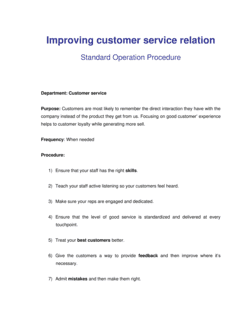
A customer service policy sets the standards and procedures for every front-line interaction — response times, escalation rules, tone. Customer retention strategy is broader: it encompasses marketing, pricing, onboarding, loyalty programs, and win-back campaigns, with service policy being one component. Use the service policy to standardize day-to-day interactions; use a retention strategy worksheet to align the whole business around keeping customers long-term.
Despite the shared word, data retention policy has nothing to do with keeping customers — it governs how long a business stores records, databases, and files before deleting them, typically for legal and compliance reasons. Customer retention is about relationship management. Both live in this folder because organizations need both; do not confuse them.
Employee retention focuses on keeping skilled staff inside the organization, reducing turnover costs and preserving institutional knowledge. Customer retention focuses on keeping buyers coming back. The two are linked — teams with high employee churn tend to deliver inconsistent service, which accelerates customer churn — but they require separate strategies and separate documents.
Key clauses every Customer Retention contains
Across the policy documents in this folder, several clauses and sections appear consistently regardless of whether the document governs customer data, service standards, or complaint resolution.
- Scope and applicability. Defines which customers, departments, or data types the policy covers and who is responsible for enforcing it.
- Retention period or commitment. States how long records are kept or how long a service-level commitment lasts before review.
- Roles and responsibilities. Names which team or individual owns each step — critical for complaint escalation and onboarding checklists.
- Escalation path. Specifies when and how an issue moves from front-line rep to manager or executive, reducing response time.
- Customer communication standards. Sets the tone, channel, and timing for outbound messages — apologies, thank-you letters, feedback requests.
- Data protection and confidentiality. Covers how customer information is stored, accessed, and protected under applicable privacy laws.
- Review and update schedule. Requires periodic review of the policy or strategy, typically annually or after a significant churn event.
- Success metrics. Defines how retention outcomes are measured — net revenue retention, churn rate, NPS, repeat-purchase rate.
How to write a customer retention strategy
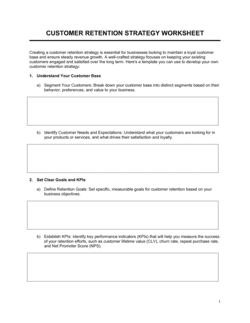
A written retention strategy turns instinct into a repeatable system. Here is how to build one from a blank worksheet.
1
Establish your baseline churn rate
Before setting goals, calculate your current monthly or annual churn rate — customers lost divided by customers at the start of the period.
2
Segment customers by value and behavior
Divide your customer base into groups by revenue contribution, tenure, and engagement level so retention tactics can be targeted, not generic.
3
Identify your top churn triggers
Review exit surveys, support tickets, and cancellation reasons to isolate the two or three factors that most commonly precede churn.
4
Map the customer lifecycle
Document every touchpoint from onboarding through renewal so you can identify gaps where customers disengage or go uncontacted.
5
Define retention tactics for each segment
Assign specific actions — onboarding calls, feedback surveys, loyalty letters, win-back emails — to each segment and lifecycle stage.
6
Set measurable retention targets
State a specific goal: for example, reduce monthly churn from 4% to 2.5% within 12 months, or increase repeat-purchase rate by 15%.
7
Assign ownership and timelines
Name who is accountable for each tactic and set a deadline so the strategy does not stall after the document is written.
8
Schedule a quarterly review
Build in a review cadence to update tactics when churn data, product changes, or market conditions shift.
At a glance
- What it is
- Customer retention templates are ready-made documents — policies, forms, worksheets, letters, and checklists — that help businesses systematically reduce churn and strengthen customer relationships. They give teams a consistent, repeatable framework for handling complaints, collecting feedback, onboarding new clients, and communicating appreciation.
- When you need one
- Any time a customer complains, churns, goes quiet, or a team needs a shared standard for how to treat customers at every touchpoint.
Which Customer Retention do I need?
The right template depends on where in the customer lifecycle the problem or opportunity sits. Match your situation below to find the correct document.
Your situation
Recommended template
Building a formal, company-wide plan to reduce churn
Structures goals, segments, tactics, and success metrics in one working document.Establishing internal rules for how customer data is kept
Sets clear retention periods and data-handling rules required for compliance.Resolving a customer complaint quickly and consistently
Defines escalation paths and resolution standards so every rep handles issues the same way.Collecting structured feedback after a service interaction
Captures satisfaction scores and open comments that feed directly into retention decisions.Onboarding a new customer to reduce early-stage churn
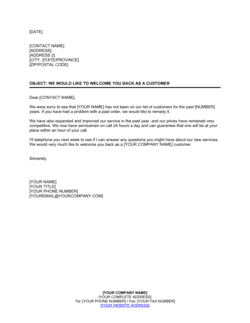
Ensures no step is missed in the first 30–90 days when churn risk is highest.Winning back a lapsed or dormant customer
Scripted re-engagement letter designed specifically for win-back outreach.Apologizing for a service failure that risks losing a customer
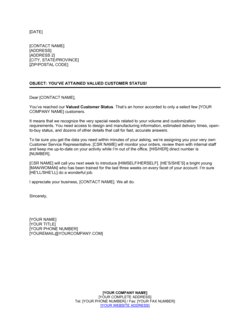
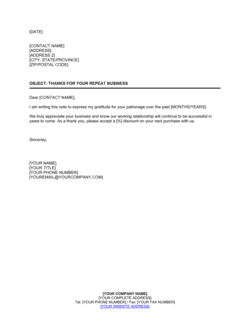
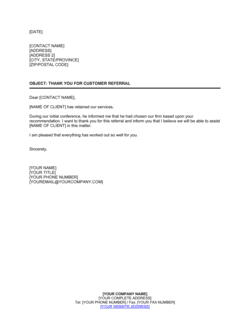
Professionally worded apology that acknowledges the issue and offers a path forward.Rewarding a customer who sent a referral or gave repeat business
Short appreciation letter that reinforces loyalty and encourages continued engagement.Glossary
- Churn rate
- The percentage of customers who stop doing business with a company during a defined period.
- Customer lifetime value (CLV)
- The total revenue a business can reasonably expect from a single customer account over the entire relationship.
- Net revenue retention (NRR)
- The percentage of recurring revenue retained from existing customers after accounting for churn, downgrades, and expansions.
- Onboarding
- The structured process of introducing a new customer to a product or service so they reach value as quickly as possible.
- Win-back campaign
- A targeted outreach effort to re-engage customers who have lapsed or cancelled.
- Customer satisfaction score (CSAT)
- A short survey metric that asks customers to rate their satisfaction with a specific interaction, typically on a 1–5 scale.
- Net promoter score (NPS)
- A measure of customer loyalty based on how likely customers are to recommend a company to others, scored from −100 to +100.
- Escalation path
- A documented sequence of steps that determines when and to whom a complaint or issue is handed up the chain for resolution.
- Data retention period
- The specified length of time a business is required or permitted to keep a particular type of record before deleting it.
- Customer segmentation
- The practice of dividing a customer base into distinct groups based on behavior, value, or characteristics to target communications and tactics more precisely.
- Touch point
- Any interaction between a customer and a business — a purchase, a support call, a marketing email — that shapes the customer's perception of the relationship.
What is a customer retention template?
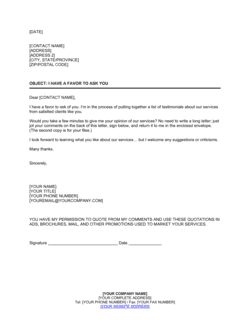
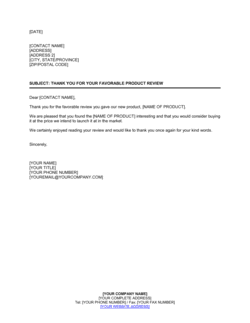
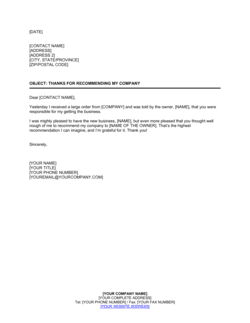
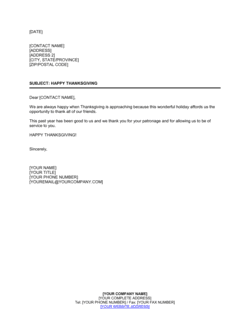
A customer retention template is a structured, ready-to-edit document — policy, worksheet, checklist, form, or letter — that helps a business systematically reduce customer churn and deepen existing customer relationships. Rather than starting from a blank page each time a complaint lands, a new customer is onboarded, or a lapsed buyer needs re-engaging, teams use a retention template to apply a consistent, proven framework across every interaction.
The category spans a wide range of document types because retention is not a single action — it is the cumulative effect of dozens of touchpoints handled well. A data retention policy ensures the business complies with privacy law; a complaint resolution policy ensures a bad experience doesn't become a lost customer; a feedback form closes the loop on satisfaction; a thank-you letter reinforces loyalty after a referral or repeat purchase. Together, these documents form the operational infrastructure of a retention-focused business.
When you need a customer retention template
Retention problems rarely announce themselves until churn has already accelerated. The right moment to reach for a retention template is before the crisis — when you're building a new customer success function, standardizing how complaints are handled, or trying to understand why customers are going quiet.
Common triggers:
- Your monthly churn rate is rising and you have no documented strategy to address it
- A customer has complained and your team has no consistent process for resolving or escalating the issue
- You're onboarding new customers but have no checklist to ensure they reach value in the first 90 days
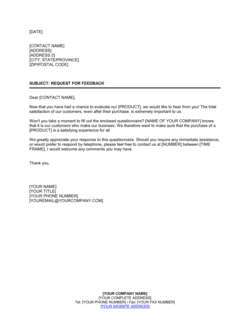
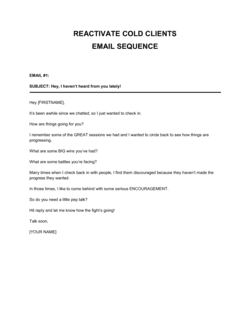
- A long-term customer has gone dormant and you need a structured win-back message
- You want to collect post-purchase feedback but have no standard form
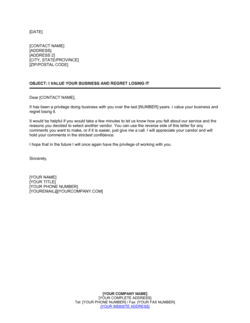
- A service failure requires a professional, written apology that protects the relationship
- Your company collects customer data and needs a documented retention and destruction policy for compliance
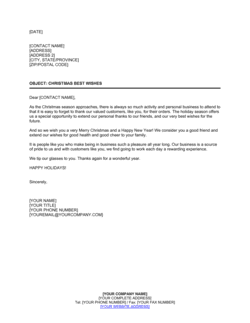
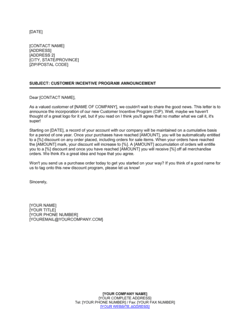
- You want to reward referrals and repeat purchases but have no template for doing so consistently
Skipping these documents doesn't save time — it transfers the cost to customer success teams who improvise every response, and to the revenue column when customers leave without explanation. A set of well-built retention templates converts reactive firefighting into a repeatable, measurable system.
Award-winning platform
- Great Place to Work 2025
- BIG Award — Product of the Year 2025
- Smartest Companies 2025
- Global 100 Excellence 2026
- Best of the Best 2025