Thanks to Customer for Repeat Business Template

Free Word download β€’ Edit online β€’ Save & share with Drive β€’ Export to PDF

1 pageβ€’20–25 min to fillβ€’Difficulty: Standardβ€’Signature requiredβ€’Legal review recommended
Learn more ↓
FreeThanks to Customer for Repeat Business Template

At a glance

What it is
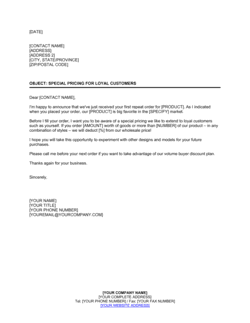
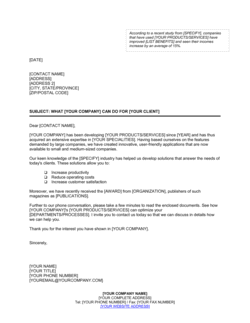
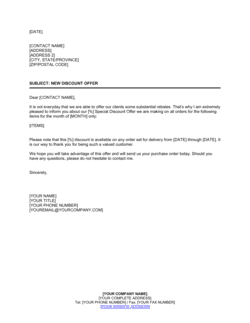
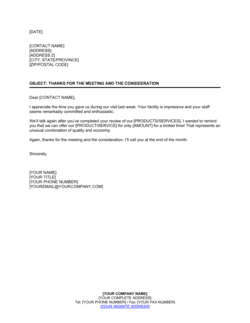
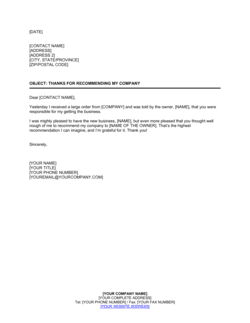
A Thanks To Customer For Repeat Business letter is a formal written communication a business sends to an established client to acknowledge their continued patronage, reinforce the relationship, and express genuine appreciation. This free Word download gives you a professionally structured template you can edit online, personalize with specific transaction or relationship details, and export as PDF or send directly via email.
When you need it
Use it after a returning customer places a second significant order, renews a contract, reaches a tenure milestone (e.g., one year as a client), or when you want to proactively strengthen a relationship before a renewal conversation or upsell opportunity.
What's inside
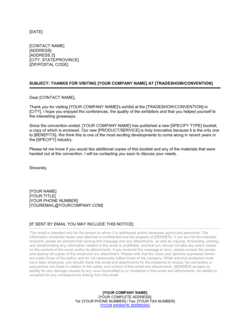
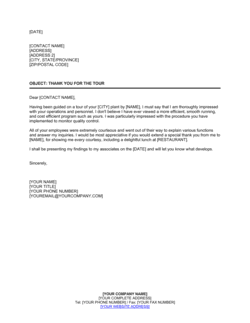
A formal salutation and opening acknowledgment, a specific recognition of the client's loyalty and the business relationship's history, an expression of the value the client brings, a forward-looking statement about continued partnership, and a professional closing with signature block.

What is a Thanks To Customer For Repeat Business Letter?

A Thanks To Customer For Repeat Business letter is a formal written communication that a business sends to an established client to explicitly acknowledge their return patronage and reinforce the value of the ongoing relationship. Unlike a generic marketing email or a bulk seasonal greeting, this letter is tied to a specific triggering event β€” a second significant order, a contract renewal, or a relationship tenure milestone β€” and is signed by a named individual with direct accountability for the client relationship. It functions as both a relational gesture and a documented record of the business's appreciation and commitment to continued service.

Why You Need This Document

Failing to acknowledge repeat business is one of the most common and costly oversights in client retention. Research consistently shows that customers who feel unrecognized are significantly more likely to evaluate competitors at their next renewal or purchase decision β€” and that acquiring a replacement customer costs five to seven times more than retaining an existing one. A formal thank-you letter, sent promptly after a return transaction, closes that recognition gap with minimal effort. It also creates a natural, low-pressure opening for renewal conversations, referral requests, and upsell discussions β€” without the transactional friction of a sales call. This template gives you a professionally structured, legally considered starting point that you can personalize in under 20 minutes, ensuring every returning client receives the acknowledgment that keeps them loyal.

Which variant fits your situation?

If your situation is…Use this template
Thanking a client after their first repeat purchaseThanks To Customer For Repeat Business
Welcoming a brand-new customer for the first timeWelcome New Customer Letter
Acknowledging a long-term client anniversary (5, 10 years)Customer Appreciation Letter
Notifying a loyal customer of an exclusive discount or rewardCustomer Discount Offer Letter
Following up after a client complaint is resolvedCustomer Service Apology Letter
Requesting a testimonial or referral from a satisfied repeat clientCustomer Referral Request Letter
Confirming a contract renewal with an existing clientContract Renewal Letter

Common mistakes to avoid

❌ Generic, non-personalized language

Why it matters: A loyalty letter that could have been sent to any customer signals that the business treats all clients as interchangeable. Repeat customers who feel unrecognized are significantly more likely to evaluate competitors at renewal.

Fix: Reference at least one specific transaction, date, product, or milestone in the opening paragraph. Pull this data from your CRM or order history before drafting.
❌ Including forward-looking commitments without legal review

Why it matters: Phrases like 'we will always offer you our best rate' or 'you will always receive priority service' can be construed as binding promises in commercial correspondence under contract law in several jurisdictions.

Fix: Limit forward-looking language to expressions of intent and aspiration ('we look forward to serving you') rather than specific commitments. Have a lawyer review any letter that includes pricing, service level, or exclusivity language.

❌ Sending the letter weeks after the triggering event

Why it matters: A thank-you letter sent 45 days after a renewal feels like an afterthought or a marketing automation trigger rather than a genuine acknowledgment. The relationship-building value is substantially reduced.

Fix: Send within 5 to 10 business days of the repeat purchase, renewal, or milestone. Build a trigger into your CRM or order management system to flag these moments.

❌ Using an unsigned or team-attributed letter for high-value clients

Why it matters: A letter from 'The [Company] Customer Success Team' carries no personal accountability and reads as a bulk communication. For clients with significant revenue or tenure, this can feel dismissive rather than appreciative.

Fix: Sign with the name and title of the most senior person who has a genuine relationship with that client β€” ideally the account manager, VP, or CEO for your top accounts.

❌ Referencing a benefit or discount not yet authorized

Why it matters: Promising a benefit in writing that your finance or sales team later cannot honor damages trust far more than sending no offer at all. It also creates a potential contractual obligation the business must either honor or formally rescind.

Fix: Get written internal approval for any specific offer β€” percentage discount, free service, extended terms β€” before including it in the letter. Document the approval in your CRM.

❌ Treating the letter as a sales pitch

Why it matters: A thank-you letter that pivots quickly to upselling or cross-selling signals that the appreciation is instrumental rather than genuine. Customers recognize this pattern and it erodes the goodwill the letter was intended to build.

Fix: Reserve the body of the letter for genuine appreciation. If you have a relevant offer, make it brief and frame it as a loyalty benefit rather than a sales opportunity. Separate upsell conversations belong in a follow-up call or email.

The 8 key clauses, explained

Sender and recipient identification

In plain language: States the sender's full business name and contact details, the date, and the recipient's name, title, and address β€” establishing the formal record of who is communicating with whom.

Sample language
[SENDER COMPANY NAME] | [ADDRESS] | [CITY, STATE, ZIP] | [DATE] | [RECIPIENT FULL NAME] | [TITLE] | [COMPANY NAME] | [ADDRESS]

Common mistake: Using only a first name or trade name without the legal business entity β€” if the letter is ever used as evidence of a relationship or a promise, an informal identifier weakens its standing.

Formal salutation

In plain language: Opens the letter with a professional greeting addressed to the specific individual, not a generic 'To Whom It May Concern.'

Sample language
Dear [RECIPIENT FULL NAME],

Common mistake: Using a generic salutation on a personalized loyalty letter. A customer who has done business with you multiple times will notice the impersonal opening and it undercuts the sincerity of the message.

Acknowledgment of repeat patronage

In plain language: The opening paragraph explicitly recognizes that the customer has returned and references the specific nature of their continued business β€” a second order, a renewal, or a tenure milestone.

Sample language
On behalf of everyone at [COMPANY NAME], I want to sincerely thank you for your continued trust in us. Your recent [ORDER / RENEWAL / PURCHASE] on [DATE] marks [X YEARS / X ORDERS] of doing business together, and we do not take that loyalty for granted.

Common mistake: Writing a generic 'thank you for your business' without referencing any specific transaction or timeline β€” it reads as a mass-produced message and fails to make the customer feel genuinely seen.

Expression of relationship value

In plain language: Articulates what the customer's loyalty specifically means to the business β€” not just financially, but in terms of trust, partnership, and shared goals.

Sample language
Customers like you are the reason [COMPANY NAME] continues to grow and improve. Your feedback, your referrals, and your willingness to return to us are what drive us to maintain the highest standards in [PRODUCT / SERVICE AREA].

Common mistake: Quantifying the customer's value in revenue terms in the letter body β€” stating 'you account for $X of our revenue' feels transactional and can embarrass the recipient.

Summary of ongoing commitment

In plain language: Restates the business's commitment to quality, service, and the specific relationship β€” giving the customer a concrete reason to continue choosing you.

Sample language
We remain committed to providing you with [SPECIFIC PRODUCT / SERVICE] at the quality and reliability you have come to expect. Your satisfaction will always be our priority, and we are continuously working to [SPECIFIC IMPROVEMENT OR INITIATIVE].

Common mistake: Making a vague promise like 'we'll always be here for you' without tying it to any specific service commitment β€” vague assurances are quickly forgotten and do nothing to differentiate your business.

Offer of continued support or exclusive benefit

In plain language: Optionally offers the repeat customer a tangible acknowledgment of their loyalty β€” a dedicated contact, priority service, a discount on their next order, or early access to new products.

Sample language
As a valued returning customer, please know that [CONTACT NAME] at [EMAIL / PHONE] is your dedicated point of contact and is always available to assist you with priority scheduling. We would also like to offer you [DISCOUNT / BENEFIT] on your next [ORDER / RENEWAL] as a token of our appreciation.

Common mistake: Offering a benefit you are not authorized to grant or that conflicts with existing pricing agreements β€” always confirm any discount or priority offer with the relevant internal team before including it in a signed letter.

Forward-looking partnership statement

In plain language: Closes the main body by expressing enthusiasm for the continued relationship and gesturing toward future collaboration without making binding commitments.

Sample language
We look forward to continuing to serve you and to finding new ways to support [RECIPIENT COMPANY NAME]'s goals in the months and years ahead. It is a privilege to have you as a partner.

Common mistake: Writing forward-looking statements that imply guaranteed pricing, service levels, or contract terms β€” courts in some jurisdictions have found that repeated assurances in commercial correspondence can create implied obligations.

Professional closing and signature block

In plain language: Signs off with a formal closing (Sincerely, Warm regards, etc.), the sender's handwritten or digital signature, full name, title, company, and contact information.

Sample language
Sincerely, [HANDWRITTEN OR DIGITAL SIGNATURE] | [SENDER FULL NAME] | [TITLE] | [COMPANY NAME] | [PHONE] | [EMAIL]

Common mistake: Sending the letter without a named individual's signature β€” an unsigned or auto-generated letter from 'The [Company] Team' loses the personal authority that makes a loyalty letter meaningful.

How to fill it out

  1. 1

    Enter your business and recipient details

    Fill in your company's full legal name, mailing address, and contact information in the sender block. Then add the recipient's full name, title, company, and address. Double-check the spelling of the customer's name β€” errors here immediately undermine the letter's sincerity.

    πŸ’‘ Pull recipient details directly from your CRM or the most recent invoice to ensure accuracy and consistency.

  2. 2

    Set the date correctly

    Enter the date you plan to send the letter, not today's drafting date if there will be a delay. A date that is weeks in the past makes the letter appear to have been held or forgotten.

    πŸ’‘ If sending by email, schedule the send for the same day you finalize the letter so the date on the letter matches the send date.

  3. 3

    Personalize the acknowledgment paragraph

    Reference the specific transaction, renewal date, or milestone that prompted the letter. Include the customer's name, the approximate length of the relationship or number of transactions, and the relevant product or service.

    πŸ’‘ One specific detail β€” 'your third annual renewal' or 'your order placed on April 14' β€” does more to make a customer feel valued than two paragraphs of generic appreciation.

  4. 4

    Articulate the value of the relationship

    Write two to three sentences explaining what this customer's loyalty means to your business. Focus on trust, quality feedback, and partnership β€” not revenue. Keep the tone warm but professional.

    πŸ’‘ Avoid superlatives like 'most valued customer' if the letter is going to multiple recipients β€” someone who receives the same letter as another customer may compare notes.

  5. 5

    Confirm any offer or benefit before including it

    If you plan to include a loyalty discount, priority contact, or early access offer, confirm the specific terms with your sales or finance team before drafting. Enter the offer clearly β€” dollar amount, percentage, or specific service β€” so there is no ambiguity.

    πŸ’‘ Vague offers ('some kind of discount on your next order') create disputes. State the exact benefit: '10% off your next invoice, valid through [DATE].'

  6. 6

    Write the forward-looking closing

    Draft one to two sentences expressing enthusiasm for the continued relationship. Avoid language that implies guaranteed pricing, SLA commitments, or exclusivity unless those are already in a signed agreement.

    πŸ’‘ Phrases like 'we look forward to supporting your goals' are safe; 'we commit to maintaining current pricing' may create a binding obligation in some jurisdictions.

  7. 7

    Sign and send via the appropriate channel

    Add a handwritten signature for physical mail, or a digital signature for email delivery. Senior-level signatures (CEO, VP, Account Director) carry more relational weight for high-value clients. Send via a channel the customer uses β€” email for most B2B clients, physical mail for formal or traditional relationships.

    πŸ’‘ For top-tier accounts, a handwritten note added below the typed letter body significantly increases the perceived sincerity of the message.

Frequently asked questions

What is a thanks to customer for repeat business letter?

A thanks to customer for repeat business letter is a formal written communication a business sends to an established client to acknowledge their continued patronage and reinforce the relationship. It references the specific history of the relationship β€” a second order, a renewed contract, or a tenure milestone β€” and expresses genuine appreciation for the customer's loyalty. Unlike a generic marketing email, it is signed by a named individual and personalized to the specific customer.

Why should businesses send a formal thank-you letter for repeat business?

Research consistently shows that acquiring a new customer costs five to seven times more than retaining an existing one. A formal thank-you letter reinforces the emotional connection that drives loyalty, signals that the business notices and values the relationship, and gives the customer a concrete reason to continue choosing you over competitors. It also opens a natural, low-pressure channel for renewal conversations and referral requests.

Is a customer thank-you letter legally binding?

A standard thank-you letter expressing appreciation is not itself a legally binding document. However, specific language within the letter β€” promises of preferential pricing, guaranteed service levels, or exclusive access β€” can potentially create enforceable obligations under commercial contract law in many jurisdictions, particularly when the letter is signed and the customer acts in reliance on the promise. It is generally advisable to have a lawyer review any letter that includes specific commercial commitments before sending.

When is the best time to send a repeat business thank-you letter?

Send the letter within five to ten business days of the triggering event β€” the repeat purchase, contract renewal, or milestone date. Letters sent immediately after the event feel genuine; those sent weeks or months later feel automated or obligatory. For major milestones like a five-year anniversary, a scheduled reminder in your CRM ensures the letter arrives close to the actual date.

Should the letter be sent by email or physical mail?

For most B2B clients, a well-formatted PDF sent by email is appropriate and ensures rapid delivery. For high-value, long-tenured, or formally oriented clients β€” particularly in industries like finance, legal, or professional services β€” a printed letter on company letterhead sent by physical mail carries significantly more relational weight. A handwritten note added below the typed letter body further increases perceived sincerity for top-tier accounts.

Can I include a discount or special offer in the thank-you letter?

Yes, and it can be effective when done carefully. The offer should be framed as a loyalty benefit rather than a promotional pitch, should be specific (a defined percentage or dollar amount with an expiration date), and must be authorized internally before the letter is sent. Vague offers create disputes; unauthorized offers create legal and financial exposure. Keep any offer brief β€” one or two sentences β€” so it does not overshadow the letter's primary purpose of genuine appreciation.

What is the difference between a customer appreciation letter and a thank-you for repeat business letter?

A customer appreciation letter is a broader communication used to recognize a customer relationship generally β€” often as part of a seasonal or anniversary campaign. A thanks for repeat business letter is more specific: it is triggered by a particular event (a second purchase, a renewal, or a milestone) and explicitly references that event. The repeat-business letter is typically more transactionally anchored and more immediately tied to a loyalty reinforcement goal.

How long should a customer thank-you letter be?

One page is the appropriate length for virtually all customer appreciation correspondence. Three to four short paragraphs β€” opening acknowledgment, expression of relationship value, commitment and optional offer, forward-looking close β€” is the standard structure. A letter longer than one page risks losing the reader's attention and diluting the core message of appreciation.

Should the letter be signed by the CEO or the account manager?

The ideal signer is the most senior person who has a genuine, direct relationship with that client. For small businesses or high-value accounts, a CEO or owner signature is appropriate and carries significant relational weight. For enterprise clients managed by a dedicated account team, the account director or VP of Customer Success is typically the right choice. Avoid having someone sign who has had no direct contact with the client β€” the recipient will notice the disconnect.

How this compares to alternatives

vs Customer Appreciation Letter

A customer appreciation letter is a general goodwill communication not tied to a specific transaction or renewal event. A thanks for repeat business letter is triggered by a defined return purchase or milestone and explicitly references that event. Use the appreciation letter for seasonal or periodic outreach; use this template when a specific repeat transaction has occurred.

vs Welcome New Customer Letter

A welcome letter is sent to first-time customers to introduce the relationship and set expectations. A repeat-business thank-you is sent to established clients to reinforce an existing relationship. The tone, content, and goals differ significantly β€” onboarding vs. retention.

vs Contract Renewal Letter

A contract renewal letter is a formal, transactional document that outlines updated terms, pricing, and conditions for the next contract period. A repeat-business thank-you letter is relational rather than transactional β€” it expresses appreciation without revising or committing to new terms. The two are often sent together but serve distinct purposes.

vs Customer Referral Request Letter

A referral request letter explicitly asks a satisfied client to introduce your business to others in their network. A repeat-business thank-you letter is purely appreciative with no explicit ask. Combining the two in a single letter risks making the appreciation feel instrumental; it is generally better to send them separately, with the thank-you first.

Industry-specific considerations

Professional Services

Law firms, accounting practices, and consulting agencies use repeat-business letters to acknowledge client anniversaries and contract renewals, often tied to annual retainer renewals.

Retail and E-commerce

High-frequency or VIP buyers receive personalized thank-you letters that reference purchase history and often include a loyalty reward or early access to new product lines.

Financial Services

Banks, insurers, and wealth managers use formal appreciation letters on company letterhead to reinforce long-term client relationships and reference specific portfolio or policy milestones.

Construction and Trades

Contractors and tradespeople send repeat-business letters after a returning client commissions a follow-on project, often referencing the prior job by name and date to anchor the appreciation.

Jurisdictional notes

United States

In the US, commercial correspondence containing specific promises β€” guaranteed pricing, priority access, or exclusive terms β€” can be found to create an implied contract if the recipient relies on those representations. Courts in states like California and New York apply a broad promissory estoppel doctrine. Keep forward-looking language aspirational rather than promissory, and include a standard disclaimer that the letter does not alter any existing agreement.

Canada

Canadian courts in common-law provinces similarly apply promissory estoppel to commercial representations made in writing. In Quebec, the Civil Code governs commercial relationships and places greater emphasis on good faith obligations β€” a written promise of preferential treatment to a repeat customer may carry more weight than in other provinces. Ensure any discount or service offer is consistent with existing contractual terms.

United Kingdom

Under English law, a letter containing a specific offer of a benefit β€” a discount, priority access, or extended terms β€” to a returning customer may constitute a binding unilateral offer if the customer acts in reliance on it. The letter should clearly state that any benefits are subject to the terms of the current or forthcoming agreement. UK consumer protection rules also require that any offer communicated in writing be honored if a consumer accepts it.

European Union

EU consumer protection law, including the Consumer Rights Directive, requires that any written offer of a commercial benefit be clearly stated and honored. For B2B correspondence, member state contract law governs, but GDPR compliance is relevant β€” any letter sent as part of a retention program must comply with applicable data processing and consent requirements for marketing communications in the recipient's country.

Template vs lawyer β€” what fits your deal?

PathBest forCostTime
Use the templateSmall businesses and account managers sending standard loyalty letters without specific pricing or service commitmentsFree10–20 minutes per letter
Template + legal reviewLetters that include a discount offer, priority service commitment, or any forward-looking commercial language for high-value clients$100–$300 for a brief legal review1–2 business days
Custom draftedEnterprise accounts where the letter accompanies a contract renewal, includes binding commercial terms, or is sent in a regulated industry$300–$8003–5 business days

Glossary

Repeat Business
A second or subsequent transaction from the same customer, indicating established loyalty and satisfaction with prior dealings.
Client Retention
The practice of taking deliberate actions to keep existing customers purchasing from your business rather than switching to a competitor.
Customer Lifetime Value (CLV)
The total gross profit a business expects to generate from a single customer over the entire duration of the relationship.
Loyalty Acknowledgment
A formal or informal gesture β€” such as a letter, reward, or discount β€” that recognizes a customer's continued patronage.
Relationship Marketing
A strategy focused on building long-term customer engagement and repeat purchases rather than optimizing for single transactions.
Net Promoter Score (NPS)
A metric measuring customer willingness to recommend a business to others, used as a proxy for loyalty and satisfaction.
Churn Rate
The percentage of customers who stop purchasing from a business within a defined period, often used to measure the effectiveness of retention efforts.
Upsell Opportunity
A moment in the customer relationship when it is appropriate to offer a higher-value product, service tier, or add-on to an existing buyer.
Goodwill
The intangible value of a positive business reputation and customer relationships, recognized on a balance sheet in acquisitions and built through consistent service.
Formal Correspondence
Written business communication β€” letter, email, or memo β€” that follows a structured format and is signed or attributed to a named individual or company.

Part of your Business Operating System

This document is one of 3,000+ business & legal templates included in Business in a Box.

  • Fill-in-the-blanks β€” ready in minutes
  • 100% customizable Word document
  • Compatible with all office suites
  • Export to PDF and share electronically

Create your document in 3 simple steps.

From template to signed document β€” all inside one Business Operating System.
1
Download or open template

Access over 3,000+ business and legal templates for any business task, project or initiative.

2
Edit and fill in the blanks with AI

Customize your ready-made business document template and save it in the cloud.

3
Save, Share, Send, Sign

Share your files and folders with your team. Create a space of seamless collaboration.

Save time, save money, and create top-quality documents.

β˜…β˜…β˜…β˜…β˜…

"Fantastic value! I'm not sure how I'd do without it. It's worth its weight in gold and paid back for itself many times."

Managing Director Β· Mall Farm
Robert Whalley
Managing Director, Mall Farm Proprietary Limited
β˜…β˜…β˜…β˜…β˜…

"I have been using Business in a Box for years. It has been the most useful source of templates I have encountered. I recommend it to anyone."

Business Owner Β· 4+ years
Dr Michael John Freestone
Business Owner
β˜…β˜…β˜…β˜…β˜…

"It has been a life saver so many times I have lost count. Business in a Box has saved me so much time and as you know, time is money."

Owner Β· Upstate Web
David G. Moore Jr.
Owner, Upstate Web

Run your business with a system β€” not scattered tools

Stop downloading documents. Start operating with clarity. Business in a Box gives you the Business Operating System used by over 250,000 companies worldwide to structure, run, and grow their business.

Free Forever PlanΒ Β·Β No credit card required