1
Identify and segment your lapsed customer list
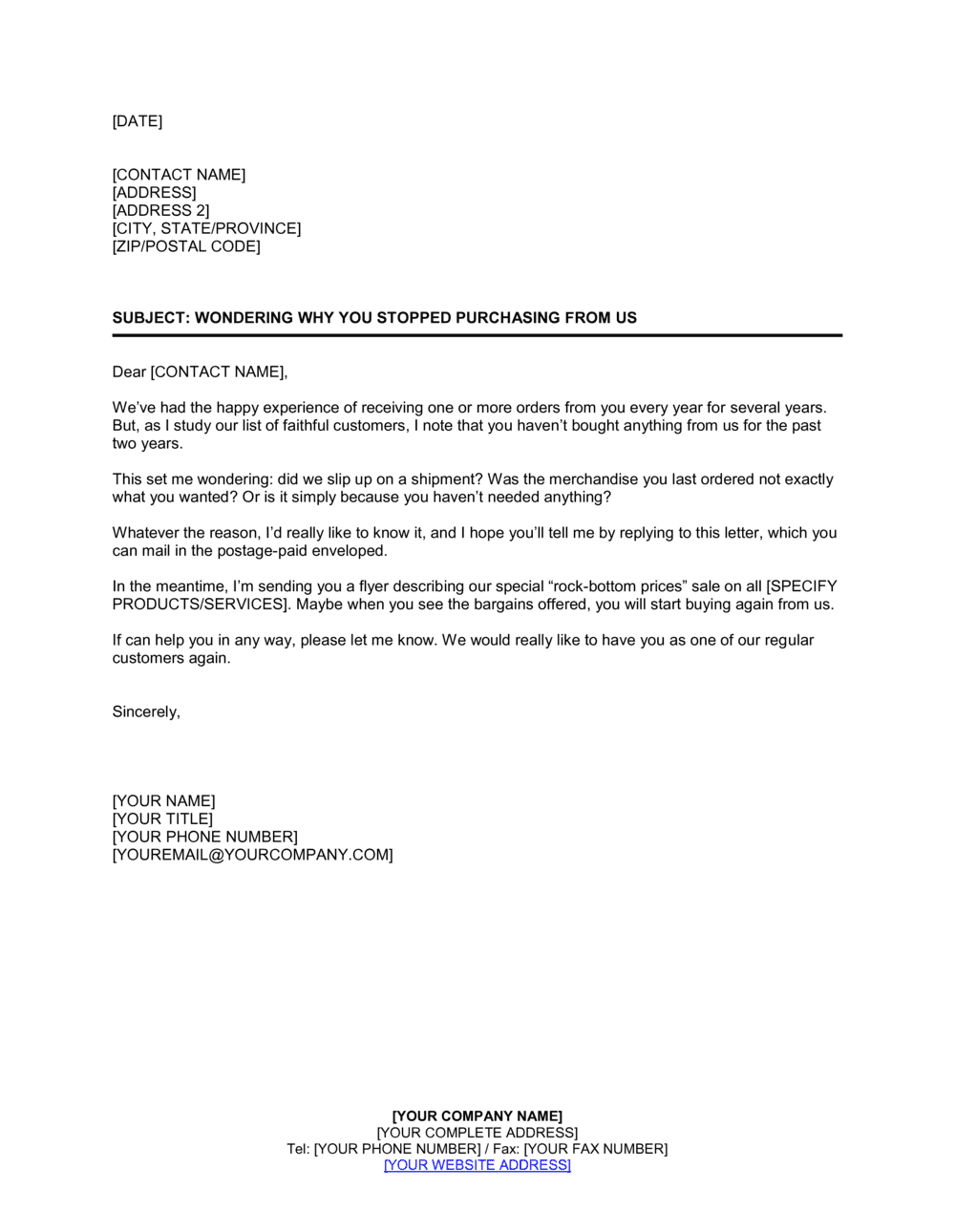
Pull customers from your CRM who have not purchased within your defined lapse window — typically 90 to 180 days for B2B, 60 to 90 days for B2C. Segment by last purchase value so you can prioritize high-CLV accounts for personalized outreach.
💡 Filter for customers with at least two prior purchases. First-time buyers who did not return are a separate re-engagement problem with a different letter strategy.
2
Personalize the salutation and relationship reference
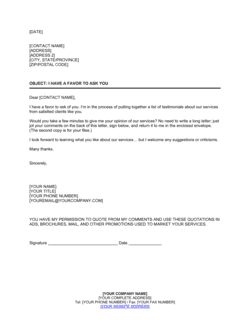
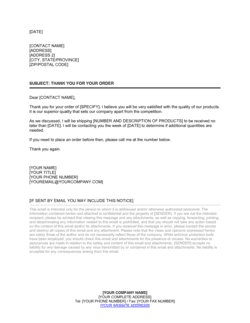
Replace [CUSTOMER NAME] with the individual's name — not their company name alone — and fill in the specific product or service they purchased and their approximate last purchase date.
💡 If your CRM tracks the customer's industry or use case, include one reference to it. 'The inventory management solution you used for your distribution operations' beats 'the software you purchased.'
3
Draft the direct inquiry in plain language
Write the inquiry clause in conversational, non-legalistic language. Avoid 'pursuant to our records' or 'in accordance with our review.' The tone should feel like a letter from a person, not a compliance department.
💡 Read the inquiry clause aloud before finalizing. If it sounds stiff or corporate, simplify it until a 12-year-old could understand it.
4
Decide whether to include a reactivation offer
If margin permits and the customer's CLV justifies it, add a specific incentive with a named expiry date. For high-value accounts, a personalized call from a named account manager may be more effective than a discount.
💡 A discount of 10–15% is sufficient for most B2B win-backs. Going higher devalues your pricing and trains customers to churn intentionally for discounts.
5
Assign a named response contact
Enter the name, direct phone number, and email of a specific person — not a department — who will receive and respond to replies within one business day.
💡 Set the response deadline 30 days from the send date. Any shorter feels pressured; any longer loses urgency entirely.
6
Have the appropriate signatory review and sign
Route the letter to the account manager, sales director, or business owner who has the relationship with this customer. Their signature should match the contact name in the response mechanism.
💡 For top-tier accounts, have the CEO or owner sign personally. A letter from the top of the organization signals that the relationship genuinely matters.
7
Send by tracked physical mail or signed PDF — not bulk email
A physical letter or a personally addressed PDF sent from a named email address carries significantly more weight than a marketing automation sequence. Send individually, not as a mail merge blast.
💡 If sending by post, include a business card from the signatory. The tactile element meaningfully increases open and response rates for B2B audiences.
8
Log the outreach and schedule a follow-up
Record the send date, offer terms, and response deadline in your CRM against the customer record. Set a follow-up task for 7 days after the response deadline to make a brief personal call if no reply was received.
💡 Document the letter and any response in writing. If the customer later raises a dispute about an offer made in the letter, your CRM record and the signed letter serve as contemporaneous evidence.