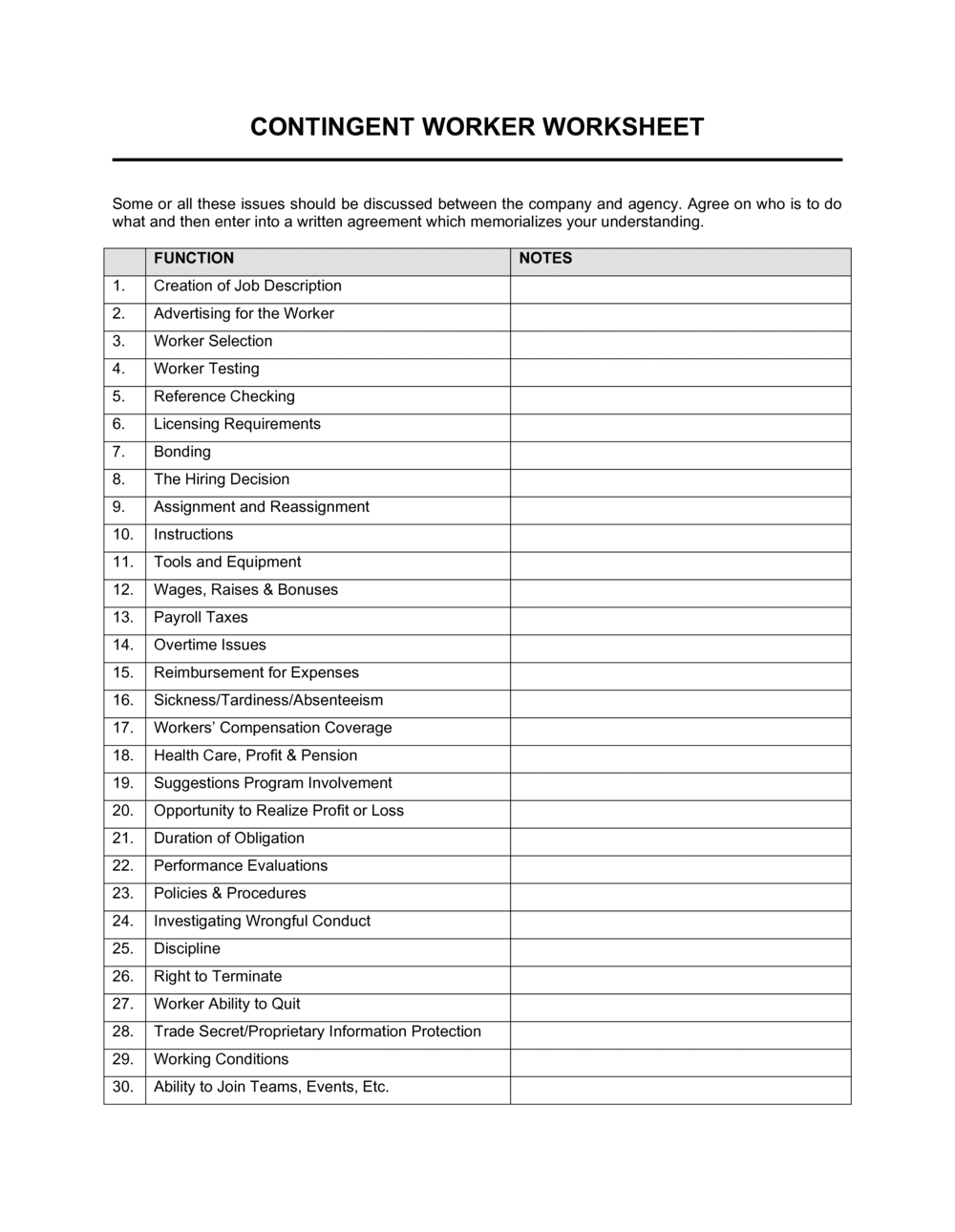
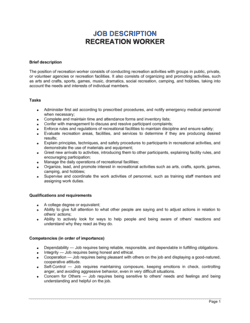
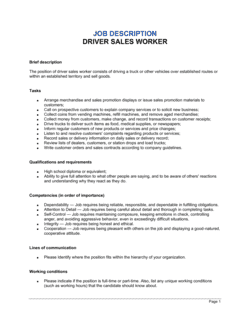
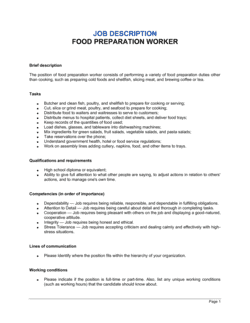
- Contingent Worker
- A worker engaged on a temporary, project-based, or on-call basis who is not a permanent employee — including independent contractors, freelancers, and consultants.
- Worker Classification
- The legal determination of whether a worker is an employee or an independent contractor, based on the degree of behavioral and financial control the engaging company exercises.
- Behavioral Control
- IRS factor assessing whether the company controls how the worker performs their job — including instructions, training, and work sequence — rather than only the result.
- Financial Control
- IRS factor examining whether the company controls the business aspects of the worker's job, such as how they are paid, whether expenses are reimbursed, and whether they can work for others.
- Type-of-Relationship Factor
- IRS category covering written contracts, employee benefits, permanency of the relationship, and whether the work performed is a key part of the company's regular business.
- Misclassification
- Treating a worker as an independent contractor when the legal criteria require classifying them as an employee — triggering back taxes, penalties, and benefit liability.
- IRS Common Law Test
- A multi-factor test used by the IRS to determine worker status, organized into behavioral control, financial control, and type-of-relationship categories.
- ABC Test
- A stricter classification standard used by California, New Jersey, and several other states requiring that contractors (A) work free from company control, (B) perform work outside the company's usual course of business, and (C) operate an independent trade or business.
- Form SS-8
- An IRS form a worker or company can file to request an official determination of worker classification status — commonly triggered by a dispute or audit.
- Safe Harbor (Section 530)
- A US tax provision that protects employers from employment tax liability for worker misclassification if they consistently treated the worker as a contractor and had a reasonable basis for doing so.
- Engagement Letter
- A written document confirming the scope, fee, and terms of an independent contractor engagement — distinct from an employment contract because it does not create an employer-employee relationship.
- Permanency of Relationship
- One of the type-of-relationship factors — if the engagement is indefinite rather than project-specific, courts and tax authorities are more likely to treat the worker as an employee.