Charge Account Terms and Conditions Template

Free Word download • Edit online • Save & share with Drive • Export to PDF

2 pages20–30 min to fillDifficulty: StandardSignature requiredLegal review recommended
Learn more ↓
FreeCharge Account Terms and Conditions Template

At a glance

What it is
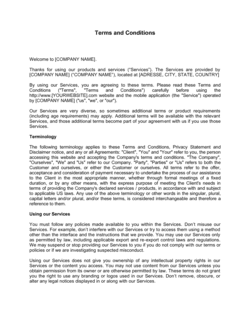
Charge Account Terms and Conditions is a legally binding contract between a seller or service provider and a customer who is granted an in-house credit account — allowing purchases to be billed and paid on a deferred schedule rather than at the point of sale. This free Word download gives you a ready-to-edit template covering credit limits, billing cycles, late fees, interest, default, and dispute resolution in a single document you can customize and export as PDF for customer signature.
When you need it
Use it when you extend in-house credit to business or consumer customers, allowing them to charge purchases to an account and pay on a monthly or agreed billing cycle. It is particularly important before issuing a first statement or allowing any purchase on account.
What's inside
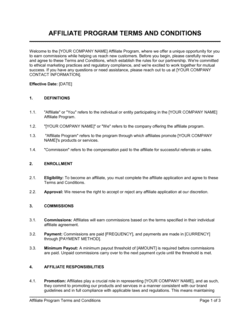
Account application and approval criteria, credit limit, billing and payment cycle, interest and finance charges, late-payment fees, default and acceleration provisions, dispute resolution, and governing law. A signature block confirms the account holder has read and agreed to all terms before using the account.

What is a Charge Account Terms and Conditions?

A Charge Account Terms and Conditions agreement is a legally binding contract between a seller or service provider and a customer who has been approved for an in-house credit account, allowing purchases to be charged and paid on a deferred billing cycle rather than at the point of sale. The document establishes every material rule of the credit relationship: the credit limit, billing and statement schedule, grace period, annual percentage rate, finance charge calculation method, late-payment and returned-payment fees, default triggers, acceleration rights, and dispute resolution procedures. It functions as both a disclosure document — informing the account holder of all costs and obligations before they use the account — and an enforceable contract that supports collections, interest recovery, and, where applicable, security-interest enforcement.

Why You Need This Document

Extending in-house credit without a signed terms and conditions agreement exposes your business to four immediate risks. First, finance charges and late fees become legally contestable — courts routinely refuse to enforce interest and fee provisions that were never disclosed and agreed to in writing. Second, if the account holder is a business entity, you have no personal recourse against the owners without a guarantee clause, leaving you as an unsecured creditor in any insolvency. Third, without a documented dispute process, a customer who challenges even one line item can delay payment on the entire balance indefinitely. Fourth, an acceleration clause — your right to call the full balance due on default — is unenforceable unless the account holder signed an agreement containing it. This template eliminates all four gaps with a single document executed at account opening, giving you a clear legal foundation for every statement you issue, every payment you pursue, and every collection action you may need to take.

Which variant fits your situation?

If your situation is…Use this template
Extending credit to business customers only, not consumersBusiness Credit Application and Agreement
Providing consumer installment financing with fixed monthly paymentsConsumer Installment Loan Agreement
Setting up a revolving credit line with a minimum payment structureRevolving Credit Agreement
Documenting a simple Net 30 trade account without interestCredit Application
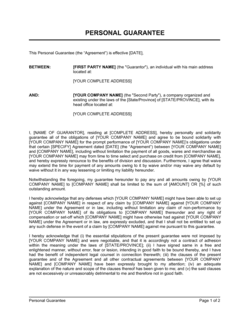
Collecting a signed personal guarantee from the account holder's ownerPersonal Guarantee
Recovering an overdue charge account balance through a formal demandDemand Letter for Payment
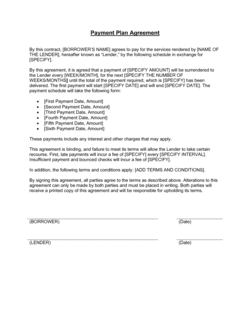
Formalizing a payment plan for a customer who has defaultedPayment Plan Agreement

Common mistakes to avoid

❌ Allowing purchases before the agreement is signed

Why it matters: An unsigned terms-and-conditions document is a one-sided statement of intent. Courts frequently hold that unsigned charge account terms are unenforceable, particularly for finance charges, late fees, and acceleration provisions.

Fix: Require a signed agreement before activating the account or processing any charge. Use a digital signature workflow if in-person signing is impractical.

❌ Setting finance charges or late fees above statutory caps

Why it matters: Consumer credit statutes in many US states, Canadian provinces, and EU member states cap interest rates and late fees. Charging above the cap exposes you to regulatory fines, restitution claims, and voiding of the fee provisions.

Fix: Confirm the applicable usury limit and fee cap for every jurisdiction in which you operate before inserting rate and fee amounts into the template.

❌ Omitting a dispute and billing-error process

Why it matters: Without a documented dispute process, customers who challenge charges can stall collection indefinitely. In consumer accounts subject to the US Fair Credit Billing Act, failure to follow the required investigation procedure can result in forfeiture of the disputed amount.

Fix: Include a written dispute notice requirement with a 60-day window, a 30-day investigation commitment, and language clarifying that undisputed amounts remain due during the review.

❌ Using a security interest clause without perfecting it

Why it matters: An unperfected security interest in goods provides no priority in a bankruptcy proceeding and may be treated as an unsecured claim — leaving you in the same position as any other creditor.

Fix: File a UCC-1 financing statement in the debtor's state of organization within 20 days of the first purchase to perfect a purchase-money security interest.

❌ No personal guarantee on business entity accounts

Why it matters: If the business account holder is a limited liability company or corporation and defaults, you have no recourse against the owners' personal assets without a guarantee.

Fix: Require a signed personal guarantee from the principal owner or officer on every business entity account, particularly for credit limits above $2,500.

❌ Failing to update terms when fee structures change

Why it matters: A signed agreement locks in the terms at the time of signing. If you later raise your APR, add a new fee, or change the billing cycle, you are likely bound by the original terms for existing accounts unless the agreement includes a change-of-terms provision.

Fix: Include a change-of-terms clause allowing you to modify rates and fees with advance written notice (typically 30–45 days) and give existing account holders the right to close their accounts before the changes take effect.

The 10 key clauses, explained

Account identification and parties

In plain language: Names the creditor, the account holder (individual or business entity), the account number, and the effective date of the agreement.

Sample language
This Charge Account Agreement ('Agreement') is entered into as of [DATE] between [CREDITOR LEGAL NAME] ('Company') and [ACCOUNT HOLDER NAME], [ENTITY TYPE / INDIVIDUAL], ('Account Holder'), Account No. [ACCOUNT NUMBER].

Common mistake: Using a trade name instead of the registered legal entity name for the creditor — if enforcement becomes necessary, the party named must match your corporate registration exactly.

Credit limit and account use

In plain language: States the maximum balance permitted on the account, authorizes the creditor to adjust the limit, and restricts use to the creditor's goods or services.

Sample language
The initial credit limit for this Account is $[AMOUNT]. Company reserves the right to increase or decrease the credit limit at any time with [X] days' written notice. Account Holder agrees to use the Account solely for purchases from Company.

Common mistake: Omitting the right to adjust the credit limit unilaterally. Without this reservation, lowering a customer's limit — or raising it — may require a contract amendment.

Billing cycle, statements, and payment due date

In plain language: Defines when statements are issued, the grace period for payment in full, and the minimum payment required if the balance is not paid in full.

Sample language
Statements are issued on the [X]th of each month. Payment in full is due within [30] days of the statement date. If Account Holder does not pay in full, a minimum payment of [X]% of the outstanding balance or $[MINIMUM], whichever is greater, is due by the due date.

Common mistake: Failing to specify both a minimum payment formula and a hard-dollar floor. A percentage-only minimum on a very small balance can produce a legally ambiguous payment obligation.

Finance charges and interest rate

In plain language: Discloses the APR applied to balances carried past the grace period, how interest is calculated (daily periodic rate, average daily balance method), and any promotional zero-interest period.

Sample language
Balances not paid in full by the due date are subject to a Finance Charge calculated at an APR of [X]% ([DAILY PERIODIC RATE]% per day) applied to the average daily balance. No Finance Charge applies if the full balance is paid by the due date.

Common mistake: Stating only an annual rate without the calculation method. In consumer accounts, most jurisdictions require disclosure of both the APR and the balance calculation method under consumer credit statutes.

Late payment fees and returned payment fees

In plain language: Sets a fixed or percentage late fee charged when a payment is received after the due date, and a returned-payment fee if a check or ACH transaction is rejected.

Sample language
A late payment fee of $[AMOUNT] (or [X]% of the past-due amount, whichever is greater) is assessed when payment is not received by the due date. A returned-payment fee of $[AMOUNT] is charged for any payment dishonored by Account Holder's financial institution.

Common mistake: Setting a late fee that exceeds the statutory cap in the governing jurisdiction. Several US states and Canadian provinces cap late fees on consumer accounts — a fee above the cap is unenforceable and may trigger regulatory penalties.

Default and acceleration

In plain language: Defines the events that constitute default — missed payment, exceeding the credit limit, insolvency, false application information — and gives the creditor the right to accelerate the full balance.

Sample language
Account Holder is in default if: (a) any payment is not received within [X] days of the due date; (b) Account Holder exceeds the credit limit; (c) Account Holder becomes insolvent or files for bankruptcy; or (d) any information provided in the credit application was materially false. Upon default, Company may declare the entire outstanding balance immediately due and payable.

Common mistake: Triggering acceleration automatically on any default without a cure period. Courts in many jurisdictions view acceleration without notice or an opportunity to cure as unreasonably harsh, particularly for consumer accounts, and may refuse to enforce it.

Security interest and personal guarantee

In plain language: Optionally grants the creditor a security interest in purchased goods or other assets, and requires a personal guarantee from the business owner if the account holder is an entity.

Sample language
To secure payment, Account Holder grants Company a purchase-money security interest in all goods purchased on the Account until paid in full. If Account Holder is a business entity, the undersigned owner or officer personally guarantees all amounts owing on the Account.

Common mistake: Including a security interest clause without filing a UCC-1 financing statement (or equivalent) to perfect it. An unperfected security interest is unenforceable against a bankruptcy trustee or other creditors.

Dispute resolution and billing errors

In plain language: Requires the account holder to notify the creditor in writing within a specified window to dispute a charge, and outlines the investigation procedure and timeline.

Sample language
Account Holder must notify Company in writing within [60] days of the statement date to dispute any charge. Company will investigate and respond in writing within [30] days. Account Holder's obligation to pay undisputed amounts is not suspended during the dispute period.

Common mistake: Setting the dispute window at less than 60 days for consumer accounts. The US Fair Credit Billing Act requires creditors to accept billing-error notices up to 60 days from the first statement on which the error appeared.

Account suspension, termination, and balance due on closure

In plain language: Reserves the creditor's right to suspend or close the account at any time and requires the full outstanding balance to be paid upon closure.

Sample language
Company may suspend or terminate the Account at any time, with or without cause, upon written notice. Upon termination, the entire outstanding balance becomes due within [30] days. Account Holder may close the Account at any time by written notice, subject to payment of all outstanding balances.

Common mistake: Omitting the obligation to pay upon voluntary closure. Without this clause, a customer who closes an account may argue that normal payment terms — including minimum monthly payments — continue indefinitely.

Governing law and entire agreement

In plain language: Specifies the jurisdiction whose law governs the agreement, sets venue for any disputes, and confirms this document supersedes all prior representations or understandings.

Sample language
This Agreement is governed by the laws of [STATE / PROVINCE]. Any dispute shall be brought exclusively in the courts of [COUNTY / CITY], [STATE / PROVINCE]. This Agreement constitutes the entire agreement between the parties and supersedes all prior representations or agreements.

Common mistake: Choosing a governing jurisdiction that has no connection to where the creditor operates or the account holder resides. Several US states apply consumer-protection statutes regardless of a contrary choice-of-law clause.

How to fill it out

  1. 1

    Identify the parties and assign an account number

    Enter your full registered legal entity name as the creditor and the customer's full legal name or business name as the account holder. Assign a unique account number using your internal numbering system.

    💡 Create a sequential account numbering format (e.g., CA-2026-0001) from day one so your receivables system can match statements to agreements without manual lookup.

  2. 2

    Set the credit limit and authorized uses

    Enter the initial credit limit based on your credit review of the applicant. Clearly state that the limit may be adjusted and that the account is restricted to purchases from your business.

    💡 Start new accounts at 50–60% of the limit you would extend to an established customer of similar profile — you can increase it after three on-time payment cycles.

  3. 3

    Define the billing cycle and payment due date

    Choose a consistent statement date — typically the last business day of the month or a fixed calendar day. Set the payment due date (e.g., 30 days from statement) and specify the minimum payment formula.

    💡 Align statement dates with your own cash-flow cycle. If payroll falls on the 15th, a statement date of the 1st gives you two weeks of float before payroll hits.

  4. 4

    Disclose the APR and finance charge calculation method

    Enter the annual percentage rate and the method used to calculate interest on carried balances — most commonly the average daily balance method. If you offer a promotional zero-interest period, state it explicitly with the expiration date.

    💡 For consumer accounts in the US, confirm your APR and disclosure format comply with Regulation Z (Truth in Lending Act) before issuing the first statement.

  5. 5

    Set late fees and returned-payment fees

    Enter a fixed or percentage late fee and a returned-payment fee. Confirm both amounts fall within any statutory cap in your governing jurisdiction before finalizing.

    💡 A flat late fee ($25–$40) is easier to administer and explain to customers than a percentage, and is less likely to be challenged as a penalty clause.

  6. 6

    Draft the default and acceleration clause

    List all default triggers — missed payment, over-limit, insolvency, false application — and set a cure period of 10–15 days before acceleration takes effect.

    💡 Including a cure period is not legally required in most US states for commercial accounts, but it reduces dispute-driven chargebacks and preserves the customer relationship.

  7. 7

    Add security interest or personal guarantee language if applicable

    For business accounts, include a personal guarantee from the owner or principal officer. If you are extending significant credit, add a purchase-money security interest and plan to file a UCC-1 to perfect it.

    💡 File the UCC-1 financing statement within 20 days of the first purchase to preserve purchase-money priority under Article 9.

  8. 8

    Obtain signature before the first purchase on account

    Both parties must sign — and the account holder must sign — before any purchase is charged to the account. Retain the signed original and provide the account holder with a copy.

    💡 Use a dated signature block with a checkbox confirming the account holder received and reviewed the full terms — this simplifies enforcement if the account goes to collections.

Frequently asked questions

What are charge account terms and conditions?

Charge account terms and conditions are the legally binding rules that govern an in-house credit account extended by a seller or service provider to a customer. They define the credit limit, billing cycle, payment due date, interest rate, late fees, default triggers, and dispute procedures. The account holder agrees to these terms by signing the document before making any purchase on credit.

Who typically uses a charge account terms and conditions agreement?

Retailers, wholesale distributors, building-supply companies, medical and dental practices, auto repair shops, and professional services firms all use charge account agreements when they extend in-house credit rather than requiring payment at the point of sale. The agreement is equally applicable to consumer and business-to-business accounts, though consumer accounts carry additional regulatory requirements under credit protection statutes.

Is a charge account the same as a credit card?

No. A charge account is a bilateral agreement between the account holder and a specific seller — it can only be used for purchases from that seller. A credit card is issued by a financial institution and accepted by a network of merchants. Charge accounts are not subject to the same bank-card regulations but may still fall under consumer credit laws depending on the account holder type and jurisdiction.

What interest rate can I charge on a charge account?

The maximum rate depends on the jurisdiction and whether the account holder is a business or consumer. In the US, state usury laws set ceilings that typically range from 18% to 36% APR for consumer credit, though many states have higher or no caps for commercial accounts. In Canada, the federal criminal interest rate cap is effectively 48% APR. Always confirm the applicable ceiling in your state or province before setting your rate.

Do I need to comply with the Truth in Lending Act for a charge account?

In the US, Regulation Z (which implements the Truth in Lending Act) applies to charge accounts extended to consumers — generally individuals using credit for personal, family, or household purposes. Business-to-business charge accounts are typically exempt. If your accounts are consumer-facing, you must disclose APR, billing cycle, grace period, and minimum payment information in the required format before the account is opened.

Can I change the interest rate or fees on existing charge accounts?

You can change rates and fees only if your agreement includes a change-of-terms clause that permits it. Typically, such clauses require advance written notice of 30–45 days and give the account holder the right to close the account under the existing terms rather than accept the change. In the US, Regulation Z sets specific notice and opt-out requirements for consumer credit accounts. Without a valid change-of-terms clause, the original rates and fees are contractually locked in.

What happens if a customer defaults on their charge account?

If the agreement includes a properly drafted default and acceleration clause, the entire outstanding balance becomes immediately due and payable. You may then pursue collections through internal follow-up, a collections agency, or legal action. If you hold a perfected security interest in the purchased goods, you may also have the right to repossess them. For significant balances, obtaining a judgment and pursuing wage garnishment or bank levy is an option in most jurisdictions.

Should charge account terms and conditions be signed before or after the first purchase?

Always before. A signed agreement is the legal foundation for every enforcement right you hold — finance charges, late fees, acceleration, and security interest. Courts routinely refuse to enforce unsigned or post-facto terms and conditions, leaving the creditor limited to collecting only the undisputed principal balance. Require signature at the time of account application approval, and do not activate the account until the signed copy is in your records.

Do I need a lawyer to set up a charge account agreement?

For straightforward commercial accounts with business customers in a single jurisdiction, a well-drafted template is typically sufficient. Engage a lawyer if your accounts are consumer-facing and subject to Regulation Z or equivalent provincial statutes, if you are operating in multiple jurisdictions with different usury limits, if credit limits are substantial (above $25,000), or if you plan to include security interests that require UCC filing. A template review costs $300–$600 and is worthwhile before you open accounts at scale.

How this compares to alternatives

vs Credit Application

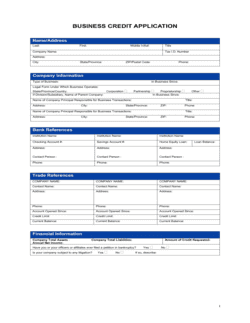
A credit application collects the financial and business information needed to evaluate whether to approve an account — it is the intake form, not the contract. Charge account terms and conditions are the binding agreement that governs the approved account. Both documents are needed: the application for underwriting, the terms and conditions for enforcement.

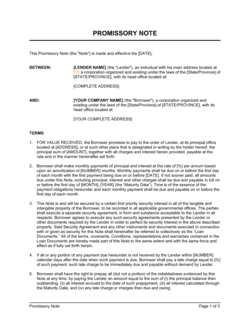
vs Promissory Note

A promissory note is a one-time promise to repay a specific fixed amount by a set date or on demand. Charge account terms and conditions govern a revolving, ongoing credit relationship with a fluctuating balance. Use a promissory note when you are lending a lump sum; use charge account terms when you are extending a reusable credit line for recurring purchases.

vs Payment Plan Agreement

A payment plan agreement restructures an existing overdue balance into fixed installment payments — it is a remediation tool used after a default has already occurred. Charge account terms and conditions are the governing contract for the credit relationship before any default. Once an account holder defaults on charge account terms, a payment plan agreement may be used to formalize the repayment arrangement.

vs Personal Guarantee

A personal guarantee is a standalone document in which an individual unconditionally agrees to pay the obligations of a business entity if that entity fails to do so. Charge account terms and conditions govern the credit terms of the account itself. For business entity accounts, a personal guarantee is typically executed alongside — not instead of — the charge account agreement, to provide individual recourse in the event of business default.

Industry-specific considerations

Retail and wholesale trade

In-store and wholesale charge accounts require clear credit limits, monthly billing cycles, and a personal guarantee on business entity accounts to protect against entity default.

Construction and building materials

Contractor accounts often involve purchase-money security interests in materials and require careful UCC-1 filing to preserve lien priority alongside mechanic's lien rights.

Healthcare and dental

Patient charge accounts are consumer credit arrangements subject to Regulation Z disclosures, state usury caps, and HIPAA-compliant statement handling.

Professional services

Retainer-based and recurring-service accounts benefit from acceleration clauses tied to client insolvency and change-of-terms provisions to accommodate fee adjustments.

Automotive repair and fleet services

Fleet charge accounts for business customers should include a per-vehicle or per-transaction authorization process and a personal guarantee from the fleet owner.

Manufacturing and distribution

High-volume trade accounts typically involve Net 30 to Net 60 terms, volume-tiered credit limits, and security interests in inventory to manage exposure on large orders.

Jurisdictional notes

United States

Consumer charge accounts are subject to Regulation Z (Truth in Lending Act), which requires standardized APR disclosure, billing-error rights, and a minimum 21-day grace period for consumer accounts. State usury laws set maximum interest rates that vary widely — from 18% APR in some states to no cap for commercial accounts in others. Late fee caps apply in several states including New York and California. UCC Article 9 governs perfection of security interests through UCC-1 filings in the debtor's state of organization.

Canada

The federal Criminal Code sets an effective interest-rate ceiling of 48% APR (inclusive of all charges). Consumer charge accounts are regulated provincially under consumer protection legislation — Ontario's Consumer Protection Act and similar statutes in other provinces impose disclosure requirements, cooling-off periods, and caps on certain fees. Quebec requires contracts with Quebec consumers to be in French. Commercial accounts between businesses face fewer restrictions but must still comply with provincial limitations acts for enforcement of unpaid balances.

United Kingdom

Consumer credit agreements in the UK are regulated by the Consumer Credit Act 1974 and the Financial Conduct Authority's Consumer Credit sourcebook. Agreements above £50 and up to £25,000 with consumers must meet specific form and content requirements to be enforceable. The FCA imposes rules on interest-rate disclosure, arrears handling, and default notices. Business-to-business charge accounts are largely unregulated by consumer credit law but are subject to the Late Payment of Commercial Debts (Interest) Act 1998, which implies an 8% above base rate interest right on overdue commercial debts.

European Union

The EU Consumer Credit Directive (2008/48/EC, updated by Directive 2023/2225) sets minimum disclosure standards for consumer credit agreements, including APR, total cost of credit, and borrower rights. GDPR applies to personal data collected in the credit application and account statement process — data handling and retention policies should be referenced in or appended to the terms. Member states implement the Directive differently — France, Germany, and the Netherlands each have additional national rules on fee caps and arrears procedures. Commercial credit between businesses is generally outside the Directive's scope.

Template vs lawyer — what fits your deal?

PathBest forCostTime
Use the templateCommercial charge accounts for business customers in a single jurisdiction with credit limits below $25,000Free30 minutes
Template + legal reviewConsumer-facing accounts subject to Regulation Z, multi-jurisdiction operations, or accounts with security interests requiring UCC filing$300–$6002–5 business days
Custom draftedHigh-volume consumer credit programs, regulated lending environments, or accounts exceeding $50,000 with complex collateral arrangements$1,500–$4,000+1–3 weeks

Glossary

Charge Account
An in-house credit arrangement allowing a customer to purchase goods or services and pay on a deferred billing schedule rather than at the point of sale.
Credit Limit
The maximum outstanding balance a customer is permitted to carry on the charge account at any time.
Billing Cycle
The recurring period — typically 30 days — at the end of which a statement is issued summarizing all charges, credits, and the balance due.
Finance Charge
Interest or fees applied to an unpaid balance carried beyond the grace period, expressed as an annual percentage rate (APR) and calculated on the outstanding balance.
Grace Period
The number of days after the statement date during which the customer may pay in full without incurring a finance charge — typically 21 to 30 days.
Default
A condition triggered when the account holder fails to make a required payment by the due date or violates another material term of the agreement.
Acceleration Clause
A provision allowing the creditor to declare the entire outstanding balance immediately due and payable upon the account holder's default.
Personal Guarantee
A commitment by an individual — typically a business owner or officer — to personally repay the account balance if the business entity fails to do so.
Annual Percentage Rate (APR)
The yearly cost of credit expressed as a percentage, including interest and any recurring fees, used to standardize comparison of credit terms.
Security Interest
A creditor's legal claim against specific assets of the debtor that can be enforced if the debtor defaults, giving the creditor priority over unsecured creditors.
Charge-Off
An accounting entry a creditor makes when a receivable is deemed uncollectible, which does not eliminate the legal debt but removes it from active receivables.
Minimum Payment
The smallest amount the account holder must pay by the due date to keep the account in good standing, typically a fixed dollar amount or percentage of the outstanding balance.

Part of your Business Operating System

This document is one of 3,000+ business & legal templates included in Business in a Box.

  • Fill-in-the-blanks — ready in minutes
  • 100% customizable Word document
  • Compatible with all office suites
  • Export to PDF and share electronically

Create your document in 3 simple steps.

From template to signed document — all inside one Business Operating System.
1
Download or open template

Access over 3,000+ business and legal templates for any business task, project or initiative.

2
Edit and fill in the blanks with AI

Customize your ready-made business document template and save it in the cloud.

3
Save, Share, Send, Sign

Share your files and folders with your team. Create a space of seamless collaboration.

Save time, save money, and create top-quality documents.

★★★★★

"Fantastic value! I'm not sure how I'd do without it. It's worth its weight in gold and paid back for itself many times."

Managing Director · Mall Farm
Robert Whalley
Managing Director, Mall Farm Proprietary Limited
★★★★★

"I have been using Business in a Box for years. It has been the most useful source of templates I have encountered. I recommend it to anyone."

Business Owner · 4+ years
Dr Michael John Freestone
Business Owner
★★★★★

"It has been a life saver so many times I have lost count. Business in a Box has saved me so much time and as you know, time is money."

Owner · Upstate Web
David G. Moore Jr.
Owner, Upstate Web

Run your business with a system — not scattered tools

Stop downloading documents. Start operating with clarity. Business in a Box gives you the Business Operating System used by over 250,000 companies worldwide to structure, run, and grow their business.

Start free · No credit card required