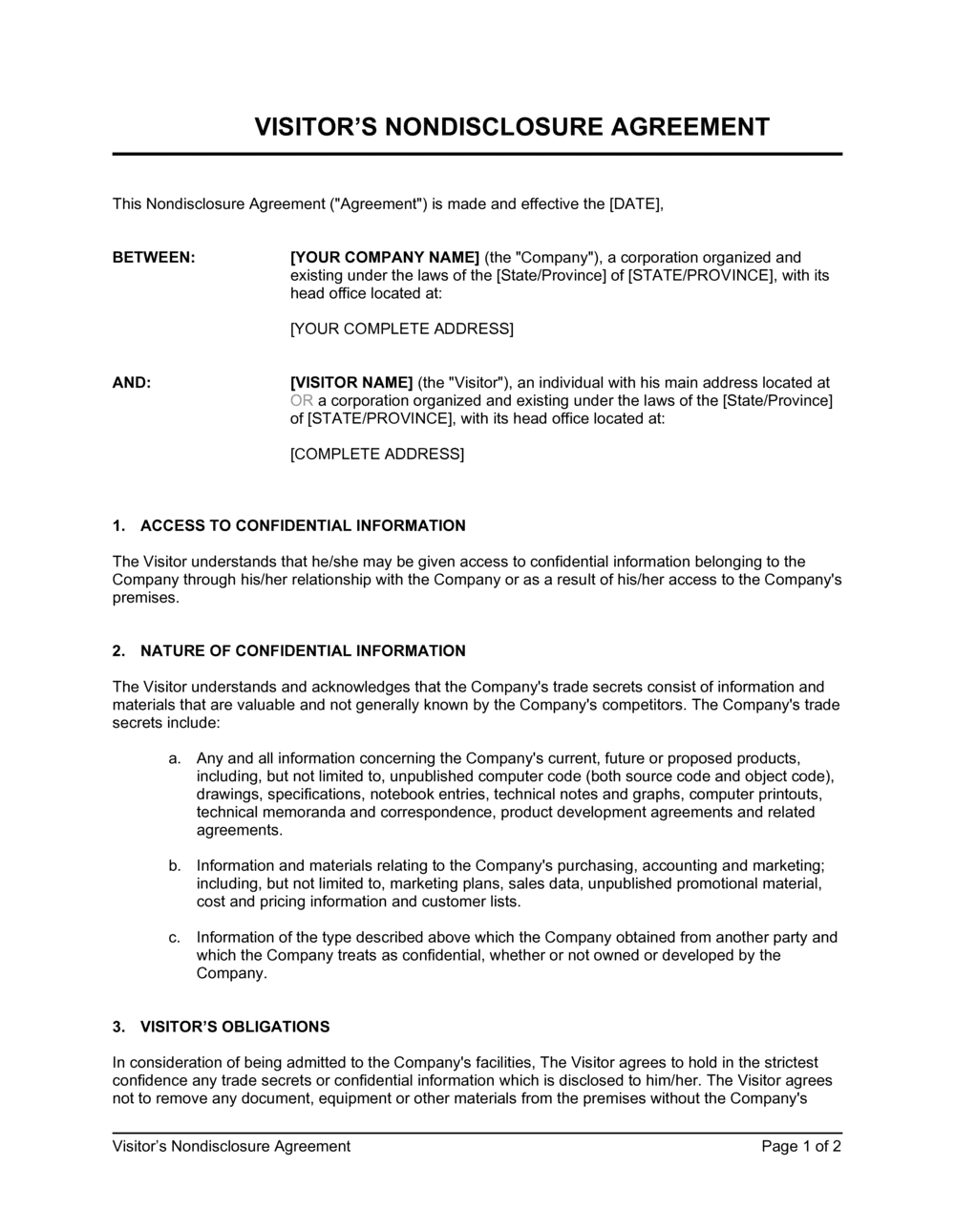
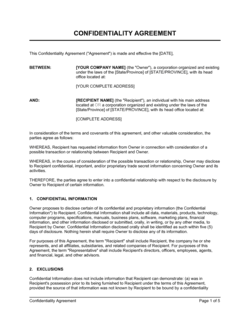
- Confidential Information
- Any non-public data, process, formula, design, or business information the host designates as protected under the agreement.
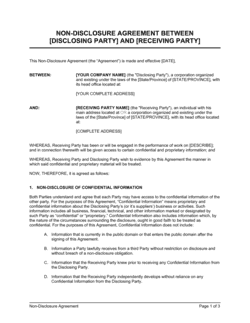
- Disclosing Party
- The company or individual that owns and reveals the confidential information — typically the host of the visit.
- Receiving Party
- The visitor or guest who receives access to confidential information and is bound by the non-disclosure obligations.
- Permitted Purpose
- The specific, stated reason the visitor is on-site, which limits how they may use any confidential information they observe.
- Non-Use Obligation
- A restriction preventing the receiving party from using confidential information for any purpose beyond the permitted visit — distinct from the obligation not to disclose it.
- Exclusions
- Categories of information explicitly carved out of the confidentiality obligation, such as information already in the public domain or independently developed by the visitor.
- Term
- The duration of the confidentiality obligation, typically stated as a number of years from the date of signature or date of the visit.
- Return or Destruction of Materials
- A clause requiring the visitor to return or certify destruction of any documents, notes, or copies containing confidential information upon request or at the end of the visit.
- Injunctive Relief
- A court remedy that stops a breaching party from continuing harmful conduct — NDA clauses typically state the host is entitled to seek it without posting a bond.
- Trade Secret
- Commercially valuable information that derives its value from not being generally known and that the owner takes reasonable steps to protect.
- Governing Law
- The jurisdiction whose laws control interpretation and enforcement of the agreement — should correspond to where the host facility is located.