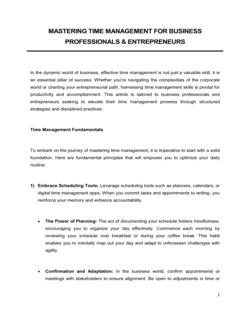
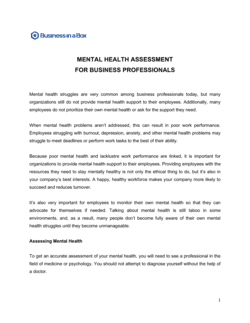
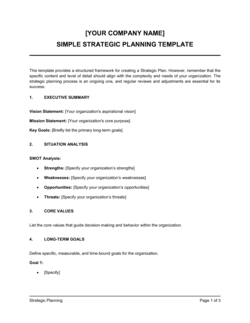
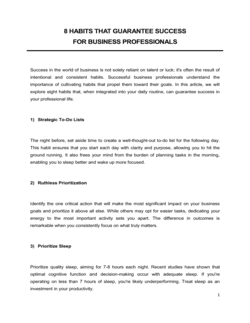
Strategic Investment Considerations For Business Professionals and Entrepreneurs Template

Free download β€’ Use as a template β€’ Print or share

3 pagesβ€’20–25 min to useβ€’Difficulty: Standard
Learn more ↓
FreeStrategic Investment Considerations For Business Professionals and Entrepreneurs Template

At a glance

What it is
A Strategic Investment Considerations document is a structured analytical report that evaluates a business investment opportunity across financial, operational, market, and risk dimensions before capital is committed. This free Word download gives business professionals and entrepreneurs a ready-to-edit framework they can complete online and export as PDF to share with partners, boards, or advisors.
When you need it
Use it whenever you are evaluating a significant capital allocation β€” a new venture, an acquisition target, a product line expansion, or a major infrastructure investment β€” and need to document the rationale, risks, and expected returns in a structured format before committing funds.
What's inside
Investment overview and strategic rationale, market opportunity analysis, financial projections and return modeling, risk assessment with mitigation strategies, operational requirements, exit or liquidity considerations, and a final decision recommendation with supporting assumptions.

What is a Strategic Investment Considerations Document?

A Strategic Investment Considerations document is a structured analytical report that business professionals and entrepreneurs use to evaluate a specific capital allocation decision before funds are committed. It assembles market evidence, competitive analysis, multi-scenario financial projections, a risk register with mitigation actions, operational requirements, and a clear recommendation into a single coherent document. Unlike a general business plan, it is scoped to one defined opportunity β€” whether that is an acquisition, a market expansion, a new product line, or a major capital expenditure β€” and is designed to give decision-makers the information they need to approve, reject, or conditionally approve the investment.

Why You Need This Document

Without a structured investment considerations document, capital allocation decisions rely on incomplete analysis, verbal presentations that cannot be audited, and financial models that have never been stress-tested against a downside scenario. The consequences are concrete: investments approved on optimistic single-scenario projections regularly miss payback targets, boards that approve capital without a formal risk register face governance exposure when things go wrong, and investors who receive unstructured proposals move on to opportunities that are easier to evaluate. This template gives entrepreneurs and finance professionals a consistent, disciplined framework that forces the hard questions β€” market size validation, competitive positioning, downside scenarios, and exit path β€” before a dollar is spent, turning what is often an informal pitch into a credible, defensible investment case.

Which variant fits your situation?

If your situation is…Use this template
Evaluating a target company for acquisitionMergers and Acquisitions Due Diligence Checklist
Raising equity capital and pitching to investorsBusiness Plan
Assessing a real estate or property investmentReal Estate Investment Analysis
Analyzing a new product or service launchNew Product Launch Plan
Summarizing strategic priorities for internal alignmentStrategic Planning Template
Projecting cash flow and returns for a specific ventureFinancial Projections (12 Months)
Presenting a quick investment opportunity summary to stakeholdersExecutive Summary Template

Common mistakes to avoid

❌ Single-scenario financial projections

Why it matters: Presenting only a base case signals to reviewers that the analyst has not stress-tested the investment. Experienced decision-makers immediately probe the downside, and an unprepared response ends the conversation.

Fix: Always present three scenarios β€” base, upside (120% of base), and downside (70% of base) β€” with IRR and payback period calculated for each.

❌ Vague strategic rationale

Why it matters: Rationale like 'diversify revenue streams' or 'capitalize on market trends' does not give a decision-maker the basis to evaluate fit. It also makes it impossible to measure whether the investment delivered on its intent.

Fix: State the strategic rationale as a specific, measurable outcome: 'This investment will increase recurring revenue from [SEGMENT] from 12% to 25% of total revenue by [DATE].'

❌ Omitting the exit or liquidity section

Why it matters: Any investor or capital allocator evaluates an investment against a return-realization timeline. A document that does not address how and when value will be extracted signals either an indefinite hold or a lack of planning β€” both are red flags.

Fix: Include at least a primary and secondary exit path with estimated timing and a realistic valuation multiple based on comparable transactions.

❌ Risk register with no mitigation actions

Why it matters: A list of risks without corresponding responses reads as a liability disclosure rather than evidence of managed decision-making. It raises more concern than it resolves.

Fix: For every risk listed, write one specific, actionable mitigation step β€” even if it is monitoring or early warning indicators β€” so reviewers see a response plan, not just a warning list.

The 9 key sections, explained

Investment overview and strategic rationale

Market opportunity analysis

Competitive landscape and positioning

Financial projections and return analysis

Capital requirements and use of funds

Risk assessment and mitigation

Operational requirements and implementation plan

Exit strategy and liquidity considerations

Decision recommendation and next steps

How to fill it out

  1. 1

    Define the investment and strategic rationale

    Start by naming the specific opportunity, stating the capital amount required, and writing one sentence connecting the investment to a measurable strategic objective. Do not proceed until this connection is explicit.

    πŸ’‘ If you cannot state the strategic rationale in one sentence, the investment thesis is not clear enough to evaluate β€” clarify before filling out any other section.

  2. 2

    Build the market analysis from two independent data sources

    Research TAM using at least two sources (e.g., an industry report and trade association data). Build a bottom-up SAM by counting the number of reachable customers and multiplying by estimated average contract or transaction value.

    πŸ’‘ Your top-down and bottom-up estimates should be within 30% of each other β€” a wider gap signals a flawed assumption that will surface in reviewer questions.

  3. 3

    Map at least four competitors including indirect substitutes

    List direct competitors and the alternatives customers currently use β€” including manual processes or incumbent tools. For each, note one key strength and one key weakness relative to your investment thesis.

    πŸ’‘ A 2Γ—2 positioning matrix (e.g., price vs. capability) makes this section scannable and is more persuasive than a paragraph of prose.

  4. 4

    Build financial projections from unit economics up

    Model revenue as units Γ— price, not as a percentage of market share. Build a base case, a downside case at 70% of base revenue, and an upside case. Calculate IRR, NPV, and payback period for each scenario.

    πŸ’‘ Include a sensitivity table showing how IRR changes when the two or three most uncertain assumptions move by Β±20%. This is the first thing experienced reviewers test.

  5. 5

    Break the capital requirement into specific deployment buckets

    Allocate the total funding request across at least four categories β€” equipment or infrastructure, staffing, sales and marketing, and working capital β€” with a dollar amount and percentage for each.

    πŸ’‘ Tie each spending bucket to a specific output or milestone so reviewers can assess whether the allocation is sufficient to achieve the projected return.

  6. 6

    Complete the risk register with mitigation actions

    Identify at least five risks across market, operational, financial, and regulatory categories. Rate each on probability and impact, and write one specific mitigation action for each risk.

    πŸ’‘ Acknowledge the single biggest risk explicitly and head-on β€” reviewers who do not see it listed assume you missed it, which is worse than documenting it.

  7. 7

    Lay out the implementation plan with phased milestones

    Map the first 18 months of execution into two or three phases, each with a named milestone, timeline, and resource requirement. Identify key dependencies that could delay each phase.

    πŸ’‘ Build at least two weeks of contingency into each phase boundary β€” implementations that appear to require back-to-back execution without buffer are routinely rejected as unrealistic.

  8. 8

    Write the recommendation last and make it explicit

    State a clear go, no-go, or conditional recommendation in the first sentence of the final section. List the conditions for approval, the immediate next steps, and the date by which a decision must be made to preserve the opportunity.

    πŸ’‘ A hedged recommendation that says 'this investment has merits and risks' without a position adds no value. Decision-makers need a recommendation, not a balanced summary.

Frequently asked questions

What is a strategic investment considerations document?

A strategic investment considerations document is a structured analytical report used by business professionals and entrepreneurs to evaluate a capital allocation decision before committing funds. It covers the investment thesis, market opportunity, competitive context, financial projections across multiple scenarios, risk assessment, operational requirements, and a clear go or no-go recommendation. It differs from a business plan in that it is focused on a single investment decision rather than the overall business model.

When should I use this document instead of a business plan?

Use a strategic investment considerations document when you are evaluating a specific capital deployment decision β€” an acquisition, an expansion, a major equipment purchase, or a new market entry β€” rather than describing an entire company. A business plan covers your full business model, team, and multi-year strategy for an external capital raise. This document is narrower and more analytical, designed for internal decision-makers, boards, or investors who need to evaluate one defined opportunity.

What financial metrics should the document include?

At minimum: total capital required, projected revenue by year for the investment horizon, gross margin, IRR, NPV at the applicable discount rate, and payback period β€” calculated for base, upside, and downside scenarios. A sensitivity analysis showing how IRR changes when the two or three most uncertain assumptions shift by Β±20% is also expected by experienced reviewers. Unit economics (CAC, LTV, or cost per unit) should be included wherever the investment generates recurring or scalable revenue.

How many scenarios should the financial projections cover?

Three scenarios are the standard: a base case built on the most probable assumptions, an upside case at roughly 120% of base revenue, and a downside case at 70% of base revenue. Presenting only a base case signals to reviewers that the model has not been stress-tested. The downside case is the one most scrutinized β€” it should still show a positive IRR or a clear path to capital recovery if the investment thesis is sound.

Does this document need to be signed or formally approved?

No signature is required for the document itself to be useful, but many organizations require a formal approval step β€” a board resolution, an investment committee vote, or a signed authorization memo β€” before capital is released. The strategic investment considerations document provides the analytical foundation for that approval. Keep a dated, version-controlled copy on file as part of the decision audit trail.

How detailed should the risk assessment section be?

Identify at least five distinct risks spanning market, operational, financial, and regulatory categories. For each, estimate the probability (high, medium, or low), the potential impact on returns, and at least one specific mitigation action. A risk register that lists risks without mitigation actions reduces, rather than builds, reviewer confidence. The single largest risk should be named directly and addressed head-on.

Can this template be used for real estate investment decisions?

Yes, though real estate investments typically require additional sections covering property-specific factors β€” location analysis, cap rate, NOI, debt service coverage ratio, and comparable transaction data. The core framework of this template applies directly: strategic rationale, market analysis, financial projections, risk assessment, and exit strategy. Adapt the financial metrics section to reflect property-specific return measures.

How long should a strategic investment considerations document be?

For most business investment decisions, 10–20 pages is the appropriate range, not counting financial model appendices. Internal decisions for smaller capital amounts can be as short as 5–8 pages. Documents prepared for institutional investors or boards of directors typically run 15–25 pages. Length should be driven by the complexity of the opportunity and the audience's level of familiarity with the business context.

What is the difference between this document and a due diligence report?

A strategic investment considerations document is typically prepared by the party proposing the investment to build the case for approval. It is forward-looking and analytical. A due diligence report is typically prepared by the investing party β€” or their advisors β€” to verify the claims made in the investment proposal. They are complementary: the investment considerations document presents the thesis; due diligence validates it.

How this compares to alternatives

vs Business Plan

A business plan describes the entire company β€” market, model, team, and multi-year strategy β€” primarily for an external capital raise. A strategic investment considerations document is narrower: it evaluates one specific capital deployment decision. Use a business plan to fund the company; use this document to justify a specific investment within it.

vs Financial Projections Template

A financial projections template models revenue, expenses, and cash flow in numerical detail. This document wraps those numbers in strategic context β€” market analysis, competitive positioning, risk assessment, and a recommendation. Financial projections answer 'what might happen'; this document answers 'whether the investment is worth making and why'.

vs Strategic Planning Template

A strategic plan covers the full 3–5 year roadmap of an existing business β€” goals, initiatives, and resource allocation across the organization. A strategic investment considerations document is focused on a single decision point: one opportunity, one capital allocation, one recommendation. Use the strategic plan to set direction; use this document to evaluate a specific move within that direction.

vs SWOT Analysis

A SWOT analysis is a high-level diagnostic tool that identifies strengths, weaknesses, opportunities, and threats β€” useful for framing strategic context but insufficient for an investment decision. This document builds on that context with quantified financial projections, a detailed risk register, capital requirements, and an explicit recommendation. A SWOT is an input; this document is the output.

Industry-specific considerations

Technology / SaaS

Emphasis on MRR growth rate, churn assumptions, CAC payback, and infrastructure cost scaling β€” reviewers expect unit economics to drive the financial model.

Manufacturing

Capital expenditure breakdown by equipment type, capacity utilization at breakeven, lead times for machinery, and supply chain risk are central to the analysis.

Retail / E-commerce

Average order value, customer acquisition cost by channel, inventory turnover, and fulfillment cost per unit drive the return analysis for new market or product investments.

Professional Services

Billable utilization rate, revenue per professional, and client concentration risk are the key variables when evaluating a practice expansion or service line addition.

Healthcare / MedTech

Regulatory pathway timeline, reimbursement code availability, clinical validation costs, and compliance infrastructure requirements all affect the capital requirement and payback period significantly.

Real Estate and Property

Cap rate, net operating income, debt service coverage ratio, and comparable transaction multiples replace standard revenue metrics in the financial projections section.

Template vs pro β€” what fits your needs?

PathBest forCostTime
Use the templateBusiness owners, entrepreneurs, and internal strategy teams evaluating growth investments under $500KFree1–3 days (8–20 hours)
Template + professional reviewInvestments between $500K and $5M, board-level approvals, or documents shared with outside investors$500–$2,500 for a financial advisor or CFO review3–7 days
Custom draftedAcquisitions, institutional investor presentations, or regulated-industry investments above $5M$3,000–$15,000 for a management consultant or investment banker2–6 weeks

Glossary

Return on Investment (ROI)
Net profit from an investment divided by the total cost of that investment, expressed as a percentage.
Internal Rate of Return (IRR)
The discount rate at which the net present value of all future cash flows from an investment equals zero β€” used to compare opportunity attractiveness.
Net Present Value (NPV)
The current value of all projected future cash flows from an investment, discounted at a required rate of return, minus the initial investment cost.
Payback Period
The number of months or years required for cumulative cash inflows from an investment to equal the initial capital outlay.
Capital Expenditure (CapEx)
Funds spent to acquire, upgrade, or maintain physical or productive assets β€” recorded on the balance sheet rather than expensed immediately.
Risk-Adjusted Return
An investment's return modified to account for the level of risk taken to achieve it, allowing comparison across investments with different risk profiles.
Due Diligence
The systematic investigation of a business opportunity β€” covering financials, legal standing, operations, and market position β€” before committing capital.
Exit Strategy
A planned approach for an investor or business owner to liquidate or monetize their stake in an investment, such as an IPO, trade sale, or buyout.
Opportunity Cost
The value of the next-best alternative foregone when a specific investment decision is made.
Sensitivity Analysis
A modeling technique that tests how changes in key assumptions β€” revenue growth rate, cost structure, or discount rate β€” affect projected returns.
Working Capital
Current assets minus current liabilities β€” the short-term liquidity available to fund day-to-day operations of the investment.

Part of your Business Operating System

This document is one of 3,000+ business & legal templates included in Business in a Box.

  • Fill-in-the-blanks β€” ready in minutes
  • 100% customizable Word document
  • Compatible with all office suites
  • Export to PDF and share electronically

Create your document in 3 simple steps.

From template to signed document β€” all inside one Business Operating System.
1
Download or open template

Access over 3,000+ business and legal templates for any business task, project or initiative.

2
Edit and fill in the blanks with AI

Customize your ready-made business document template and save it in the cloud.

3
Save, Share, Send, Sign

Share your files and folders with your team. Create a space of seamless collaboration.

Save time, save money, and create top-quality documents.

β˜…β˜…β˜…β˜…β˜…

"Fantastic value! I'm not sure how I'd do without it. It's worth its weight in gold and paid back for itself many times."

Managing Director Β· Mall Farm
Robert Whalley
Managing Director, Mall Farm Proprietary Limited
β˜…β˜…β˜…β˜…β˜…

"I have been using Business in a Box for years. It has been the most useful source of templates I have encountered. I recommend it to anyone."

Business Owner Β· 4+ years
Dr Michael John Freestone
Business Owner
β˜…β˜…β˜…β˜…β˜…

"It has been a life saver so many times I have lost count. Business in a Box has saved me so much time and as you know, time is money."

Owner Β· Upstate Web
David G. Moore Jr.
Owner, Upstate Web

Run your business with a system β€” not scattered tools

Stop downloading documents. Start operating with clarity. Business in a Box gives you the Business Operating System used by over 250,000 companies worldwide to structure, run, and grow their business.

Start freeΒ Β·Β No credit card required