Revenue Sharing Agreement Template

Free Word download β€’ Edit online β€’ Save & share with Drive β€’ Export to PDF

6 pagesβ€’25–35 min to fillβ€’Difficulty: Complexβ€’Signature requiredβ€’Legal review recommended
Learn more ↓
FreeRevenue Sharing Agreement Template

At a glance

What it is
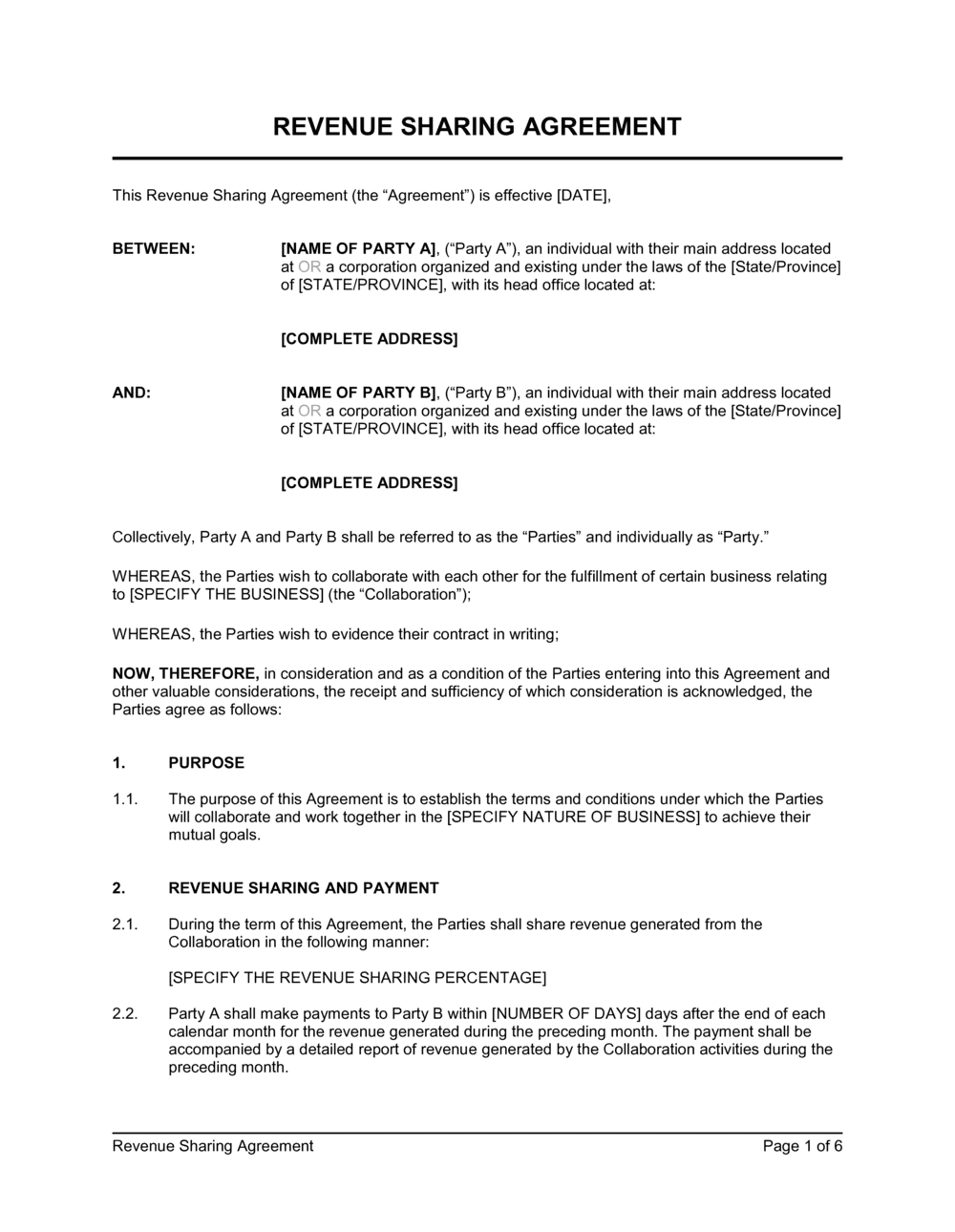
A Revenue Sharing Agreement is a legally binding contract between two or more parties that defines how revenue generated by a specific product, channel, or initiative is calculated, attributed, and distributed. This free Word download covers the revenue definition, sharing percentage, payment schedule, audit rights, dispute process, and term β€” giving both sides a single enforceable document to govern the arrangement.
When you need it
Use it whenever two businesses or individuals agree to split income from a shared effort β€” a joint distribution deal, an affiliate arrangement, a content licensing deal, or a co-developed product β€” before any revenue changes hands.
What's inside
Revenue definition and calculation methodology, sharing percentages or formulas, payment schedule and currency, audit and record-keeping rights, attribution rules for multi-source revenue, term and termination conditions, representations and warranties, and governing law.

What is a Revenue Sharing Agreement?

A Revenue Sharing Agreement is a legally binding contract between two or more parties that defines how income generated by a specific product, channel, or joint initiative is calculated, attributed, and distributed. It establishes the precise definition of "shared revenue" β€” including which deductions are permitted before the split is applied β€” each party's percentage entitlement, the payment schedule, reporting obligations, and audit rights. Unlike a profit sharing arrangement, which splits what remains after costs are deducted, a revenue sharing agreement typically operates on gross or defined net receipts, making the calculation more transparent and easier to verify. The agreement functions as the financial backbone of partnerships, affiliate programs, content licensing deals, reseller arrangements, and co-developed product launches wherever two parties have agreed to share a common income stream.

Why You Need This Document

Without a written revenue sharing agreement, the single most important question in any commercial partnership β€” how much each party gets paid and on what basis β€” exists only as an informal understanding that both sides will interpret differently the moment real money is on the table. Ambiguity about what counts as "revenue," which deductions are permitted, and when payment is due is the leading cause of partnership disputes in co-selling and licensing arrangements. A receiving party with no contractual audit rights has no mechanism to challenge understated figures; a paying party with no reporting obligation has no documented basis for the amounts it has remitted. Beyond payment disputes, the absence of a formal agreement leaves IP ownership, confidentiality of financial terms, and exit rights entirely unaddressed β€” creating exposure that compounds as the commercial relationship grows. This template gives both parties a single, enforceable document that closes each of those gaps before the first dollar changes hands.

Which variant fits your situation?

If your situation is…Use this template
Two businesses co-developing and selling a product togetherRevenue Sharing Agreement
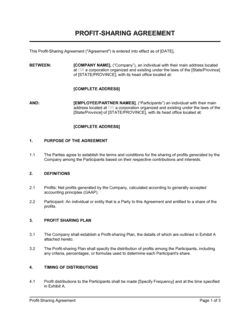
A company paying a percentage of net profits rather than gross revenueProfit Sharing Agreement
Engaging an independent affiliate on a commission-per-sale basisAffiliate Agreement
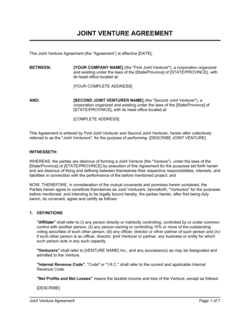
A formal business joint venture with shared equity and governanceJoint Venture Agreement
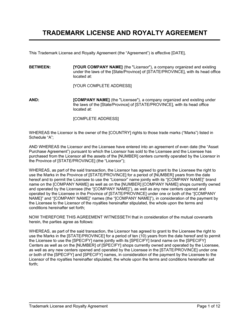
Licensing intellectual property in exchange for ongoing royaltiesRoyalty Agreement
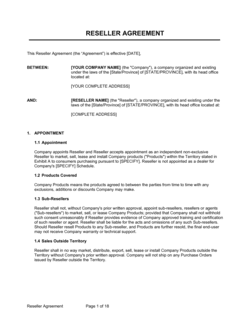
Distributing a software product through a reseller channelReseller Agreement
Splitting revenue from a co-authored work or creative collaborationCo-Authorship Agreement

Common mistakes to avoid

❌ Ambiguous revenue definition

Why it matters: When 'revenue' is not precisely defined, one party calculates the base on gross receipts and the other deducts everything from processing fees to salaries β€” the resulting underpayment claims can exceed the value of the deal.

Fix: Write out gross receipts, then list each permitted deduction by name and, where possible, cap it as a percentage of gross. Attach a worked numerical example as a schedule.

❌ No reporting obligation on the paying party

Why it matters: Without a contractual duty to provide revenue statements, the receiving party has no mechanism to verify payments and cannot effectively exercise audit rights when discrepancies arise.

Fix: Require a written revenue statement with every payment showing gross receipts, each deduction, shared revenue, and the amount remitted β€” and tie audit rights to the content of those statements.

❌ Signing the agreement after revenue has already been generated

Why it matters: Revenue earned before execution may not be covered by the agreement's terms, creating a gap period where the parties have no contractual basis for the split β€” courts treat this as an implied or oral arrangement that is harder to enforce.

Fix: Execute the agreement before the revenue-generating activity begins. If the arrangement is already underway, include an explicit retroactive effective date clause with both parties' written acknowledgment.

❌ Omitting a clawback or holdback provision

Why it matters: Paying out revenue shares on gross receipts that are later reversed through refunds or chargebacks means the paying party absorbs the loss alone β€” or must pursue repayment with no contractual basis.

Fix: Include a holdback clause reserving a defined percentage (typically 5–10%) of each payment for 60–90 days to cover anticipated reversals, or a clawback clause requiring the receiving party to return over-distributed amounts on reconciliation.

❌ No termination clause for underperformance

Why it matters: An agreement with only a for-cause termination clause locks both parties into a deal that generates negligible revenue β€” with no exit until the fixed term expires.

Fix: Add a minimum revenue threshold clause: if Shared Revenue falls below $[X] in any consecutive [3]-month period, either party may terminate on [30] days' written notice without penalty.

❌ Flat percentage with no tiered incentive structure

Why it matters: A fixed split provides no performance incentive for the party driving revenue β€” the distributing partner has no contractual reason to prioritize this channel over others that pay the same flat rate.

Fix: Model a tiered structure where the receiving party's percentage increases at defined revenue milestones, aligning both parties' financial interests with growth.

The 10 key clauses, explained

Parties and recitals

In plain language: Identifies both parties by their full legal names and entity types, and briefly states the commercial purpose of the agreement.

Sample language
This Revenue Sharing Agreement ('Agreement') is entered into as of [DATE] by and between [PARTY A LEGAL NAME], a [STATE/COUNTRY] [ENTITY TYPE] ('Company'), and [PARTY B LEGAL NAME], a [STATE/COUNTRY] [ENTITY TYPE] ('Partner').

Common mistake: Using trade names or brand names instead of registered legal entity names β€” this creates ambiguity about which entity is bound and can complicate enforcement.

Revenue definition and calculation

In plain language: Precisely defines what counts as 'revenue' for sharing purposes β€” gross or net, which products or channels are included, and which deductions are permitted before calculating each party's share.

Sample language
'Shared Revenue' means gross receipts from sales of [PRODUCT / SERVICE / CHANNEL] less (a) sales tax collected, (b) documented refunds and chargebacks, and (c) payment processing fees not exceeding [X]% of gross receipts.

Common mistake: Defining revenue as 'gross revenue' without specifying permitted deductions β€” one party assumes refunds reduce the base while the other does not, generating disputes with every payment cycle.

Sharing percentage and formula

In plain language: States each party's exact percentage entitlement, any tiered thresholds that change the split as revenue scales, and how the formula applies to each revenue category.

Sample language
Company shall pay Partner [X]% of Shared Revenue per calendar month. Upon cumulative Shared Revenue exceeding $[THRESHOLD], the sharing percentage shall increase to [Y]% for all Shared Revenue above that threshold.

Common mistake: Using a single flat percentage without clarifying whether it applies to all revenue categories or only specific product lines, leading to under- or over-payment when multiple revenue streams exist.

Payment schedule and method

In plain language: Sets out how often payments are made, the deadline after each period closes, the currency, and the accepted payment methods.

Sample language
Company shall pay Partner's revenue share within [30] days following the end of each calendar month, accompanied by a written statement showing Shared Revenue and the calculation. Payments shall be made in [USD / GBP / EUR] by [ACH / wire transfer / check].

Common mistake: Failing to specify a payment deadline tied to a defined period-close date β€” 'promptly' and 'within a reasonable time' are routinely interpreted differently and invite late-payment disputes.

Reporting and record-keeping

In plain language: Requires the paying party to provide regular revenue statements in a defined format and to maintain supporting records for a minimum period.

Sample language
Company shall deliver to Partner a written revenue report no later than [15] days after each calendar month-end, itemizing gross receipts, permitted deductions, Shared Revenue, and the amount payable. Company shall retain supporting records for [5] years.

Common mistake: No reporting requirement at all β€” without contractual statements, the receiving party has no way to verify payments and cannot trigger audit rights effectively.

Audit rights

In plain language: Grants the receiving party the right to inspect the paying party's books and records to verify revenue figures, and specifies the audit process, notice requirements, and cost allocation.

Sample language
Partner may, upon [30] days' written notice, audit Company's books and records relevant to Shared Revenue no more than once per calendar year. If an audit reveals an underpayment exceeding [5]% of amounts due, Company shall bear the reasonable cost of the audit.

Common mistake: Granting unlimited audit frequency without notice requirements β€” this exposes the paying party to disruptive, repeated audits and can destroy the commercial relationship.

Term and termination

In plain language: States the initial duration of the agreement, any automatic renewal terms, and the conditions and notice period under which either party may terminate β€” with or without cause.

Sample language
This Agreement commences on [START DATE] and continues for [1 YEAR], renewing automatically for successive [1-YEAR] terms unless either party provides [60] days' written notice of non-renewal. Either party may terminate for material breach if the breach remains uncured for [30] days after written notice.

Common mistake: Auto-renewal clauses with notice periods shorter than the payment cycle β€” a party can become locked into another full year before realizing the renewal window has closed.

Intellectual property and confidentiality

In plain language: Clarifies that each party retains ownership of its pre-existing IP, governs any jointly developed assets, and requires both parties to keep financial terms and proprietary data confidential.

Sample language
Each party retains all rights in its pre-existing intellectual property. Neither party shall disclose the financial terms of this Agreement or the other party's Confidential Information to any third party without prior written consent, except as required by law.

Common mistake: No confidentiality clause in a revenue-sharing deal β€” sharing payment data and revenue figures without protection exposes sensitive commercial terms to competitors or the market.

Representations, warranties, and indemnification

In plain language: Each party warrants it has authority to enter the agreement and that its contributions don't infringe third-party rights; the indemnification clause allocates liability for breaches of those warranties.

Sample language
Each party represents that it has full authority to enter this Agreement and that its performance will not violate any applicable law or third-party agreement. Each party shall indemnify and hold harmless the other from claims arising from its own breach of these representations.

Common mistake: One-sided indemnification covering only the paying party's liability β€” if the revenue source infringes a third party's IP, both parties may face claims and the allocation of that risk should be explicit.

Governing law and dispute resolution

In plain language: Specifies which jurisdiction's law governs the agreement and whether disputes go to arbitration, mediation, or litigation β€” and in which venue.

Sample language
This Agreement is governed by the laws of [STATE / PROVINCE / COUNTRY], without regard to conflict-of-law principles. Any dispute shall first be submitted to non-binding mediation; if unresolved within [60] days, to binding arbitration administered by [AAA / JAMS / ICC] in [CITY].

Common mistake: Choosing a governing law with no connection to either party's location or the revenue-generating activity β€” courts in some jurisdictions will apply local law regardless, making the clause ineffective.

How to fill it out

  1. 1

    Identify both parties with their full legal names

    Enter the registered legal entity name and entity type (LLC, Inc., Ltd.) for each party. Confirm the names match your corporate registry filings and any related agreements.

    πŸ’‘ Cross-check the legal name against your bank account name β€” mismatches between the agreement and payment details delay disbursements.

  2. 2

    Define the revenue scope precisely

    Specify exactly which products, services, channels, or territories generate 'Shared Revenue.' List permitted deductions β€” refunds, chargebacks, taxes, processing fees β€” and cap or define each one numerically.

    πŸ’‘ If multiple product lines are involved, use a schedule attached to the agreement rather than embedding a long list in the body β€” it is easier to amend a schedule than to restate the main agreement.

  3. 3

    Set the sharing percentage and any tiered thresholds

    State each party's percentage entitlement. If the split changes at revenue milestones, define each threshold and the corresponding percentage precisely. Confirm the percentages sum to 100% of the shared pool.

    πŸ’‘ Model two or three revenue scenarios before signing to confirm both parties understand what the formula pays out at low, mid, and high performance levels.

  4. 4

    Establish the payment schedule and reporting format

    Set a specific payment deadline (e.g., within 30 days of month-end) and require a written revenue statement with each payment showing gross receipts, deductions, shared revenue, and the amount due.

    πŸ’‘ Monthly payment cycles work for most arrangements; quarterly cycles are acceptable for low-volume deals but increase the cash-flow risk for the receiving party.

  5. 5

    Draft the audit rights clause with a frequency cap

    Grant the receiving party the right to audit no more than once per year, with 30 days' advance written notice. Specify that audit costs shift to the paying party if underpayment exceeds a defined threshold (typically 5%).

    πŸ’‘ Agreeing on a standard accounting format for records upfront β€” a shared spreadsheet template or a specific accounting system export β€” reduces audit friction significantly.

  6. 6

    Set the term, renewal, and termination conditions

    Define the initial term (typically 1–3 years), any auto-renewal mechanism, and the notice period required to terminate. Include a cure period of 15–30 days for material breaches before termination takes effect.

    πŸ’‘ Align the termination notice period with your payment cycle β€” a 60-day notice period on a monthly payment cycle ensures at least one full reconciliation period before the agreement ends.

  7. 7

    Add the confidentiality and IP ownership terms

    Confirm each party retains its pre-existing IP, address any jointly developed materials, and prohibit disclosure of revenue figures and payment terms to third parties without written consent.

    πŸ’‘ If the arrangement involves sharing proprietary customer data or analytics, add a data processing addendum that complies with GDPR, CCPA, or the applicable privacy law.

  8. 8

    Select governing law and sign before revenue is generated

    Choose the jurisdiction where disputes will be resolved, confirm both parties' designated signatories have authority to bind their entities, and execute before any revenue is generated under the deal.

    πŸ’‘ Use timestamped e-signatures and retain the fully executed copy in a shared document vault β€” undated or unsigned agreements are among the most common enforcement failures in revenue-share disputes.

Frequently asked questions

What is a revenue sharing agreement?

A revenue sharing agreement is a contract between two or more parties that defines how income generated by a specific product, channel, or initiative is calculated and divided. It covers the revenue definition, each party's percentage entitlement, payment timing, reporting obligations, audit rights, and term. It is used in partnerships, affiliate arrangements, content licensing, reseller deals, and co-developed product launches.

What is the difference between a revenue sharing agreement and a profit sharing agreement?

A revenue sharing agreement splits gross or net income before operating costs are deducted. A profit sharing agreement splits what remains after all agreed costs β€” salaries, overhead, marketing β€” have been subtracted. Revenue sharing is simpler to calculate and audit because it depends on fewer variables, but it means the paying party absorbs all operating costs before the split. Profit sharing is fairer when both parties contribute ongoing costs, but disputes over allowable deductions are more common.

Is a revenue sharing agreement legally binding?

Yes β€” a revenue sharing agreement is generally enforceable as a contract when it is signed by authorized representatives of both parties, contains clear terms for the revenue definition and payment obligations, and is supported by consideration (each party giving something of value). As with any commercial contract, enforceability depends on the jurisdiction and whether the terms meet local contract-law requirements. Consider having a lawyer review the agreement before signing, particularly for high-value or cross-border arrangements.

What should a revenue sharing agreement include?

At minimum: parties and their legal entity names, a precise definition of shared revenue with permitted deductions, the sharing percentage or formula, payment schedule and currency, reporting requirements, audit rights with notice and frequency limits, IP ownership and confidentiality terms, term and termination conditions including cure periods, and governing law. Missing the revenue definition or audit rights are the two omissions most likely to generate disputes.

How is revenue sharing percentage typically calculated?

The percentage is negotiated based on each party's contribution β€” capital, technology, distribution reach, or customer relationships. Common structures include a flat split (e.g., 70/30), a tiered split that increases the receiving party's share as cumulative revenue crosses defined thresholds, or a sliding scale tied to performance metrics like conversion rate or customer lifetime value. There is no universal standard; the split should reflect the relative value each party provides to the deal.

Can a revenue sharing agreement be terminated early?

Yes, if the agreement includes a termination clause β€” which it should. Most agreements permit termination for material breach after a defined cure period (typically 15–30 days), and may include a convenience termination right with advance notice (typically 30–90 days). Agreements without any termination provision can be difficult to exit before the fixed term expires, particularly if revenue underperforms. Always include a minimum-revenue threshold that triggers an exit right if the deal is not generating meaningful income.

What are audit rights and why do they matter in a revenue sharing agreement?

Audit rights give the receiving party the contractual ability to inspect the paying party's books and records to verify that reported revenue figures are accurate. Without them, the receiving party must accept the paying party's statements at face value with no recourse if figures are understated. Best practice is to limit audits to once per year with 30 days' advance notice, and to shift the audit cost to the paying party if an underpayment exceeding 5% is confirmed.

Does a revenue sharing agreement need to be notarized?

Notarization is not required for a revenue sharing agreement to be enforceable in most jurisdictions. A signed agreement between authorized representatives is typically sufficient. However, if the agreement forms part of a larger transaction involving real property or certain regulated industries, notarization or additional formalities may be required. Using timestamped e-signatures and retaining the executed copy in a secure document vault is sufficient for most commercial arrangements.

What taxes apply to revenue sharing payments?

Tax treatment varies by jurisdiction and the nature of the arrangement. In the US, revenue share payments to domestic parties are typically reportable on Form 1099-MISC if they exceed $600 annually. Cross-border payments may be subject to withholding tax under bilateral tax treaties. In the UK and EU, VAT implications depend on whether the payment constitutes consideration for a supply of services. Both parties should confirm the applicable tax treatment with an accountant before the first payment is made.

How this compares to alternatives

vs Joint Venture Agreement

A joint venture agreement creates a shared legal entity or formal co-ownership structure with governance rights, shared liabilities, and equity participation. A revenue sharing agreement is a simpler contractual arrangement β€” each party remains legally independent, and the only shared element is a portion of defined income. Use a revenue sharing agreement when the parties want financial alignment without the complexity of shared governance.

vs Royalty Agreement

A royalty agreement pays the IP owner a percentage of revenue generated by the licensee's use of that IP β€” typically tied to unit sales, subscriptions, or usage. A revenue sharing agreement covers broader commercial arrangements where both parties actively contribute to revenue generation and neither is simply licensing an asset. Use a royalty agreement when the arrangement is primarily IP-driven; use revenue sharing when both parties are operational contributors.

vs Affiliate Agreement

An affiliate agreement pays a fixed commission per referred sale or lead, typically based on a tracking link or coupon code. A revenue sharing agreement covers ongoing proportional income from a defined pool β€” not per-transaction commissions. Revenue sharing is more appropriate for deep partnerships with shared revenue streams; affiliate agreements suit high-volume, transactional referral programs where per-sale tracking is operationally simpler.

vs Partnership Agreement

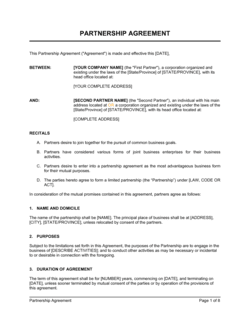
A partnership agreement governs the full relationship between business partners β€” capital contributions, management rights, liability allocation, dissolution, and profit distribution. A revenue sharing agreement is narrower: it covers only the income split from a specific product, channel, or initiative without creating a legal partnership or altering either party's ownership structure. Use a revenue sharing agreement when you need financial alignment on one project without the legal and governance implications of a formal partnership.

Industry-specific considerations

SaaS and technology

Channel-partner and reseller splits require careful delineation between platform fees, support costs, and net software revenue to avoid base-erosion disputes.

Media and publishing

Ad revenue attribution across multiple platforms and content formats requires precise tracking methodologies and holdback provisions for delayed ad-network settlements.

Professional services

Referral fee arrangements between consulting firms must specify whether the split applies to the first contract only or to all subsequent work with the referred client.

Retail and e-commerce

Marketplace and brand co-promotion deals require explicit rules for attributing multi-touch sales and handling return and chargeback deductions from the shared revenue base.

Jurisdictional notes

United States

Revenue sharing payments to US persons exceeding $600 annually are generally reportable on Form 1099-MISC. State-level revenue share arrangements β€” particularly in California β€” may intersect with franchise disclosure laws if the structure resembles a franchise relationship, triggering FTC and state FDD requirements. Non-compete clauses bundled into revenue sharing agreements are unenforceable in California and several other states.

Canada

Cross-provincial revenue sharing arrangements should specify which province's law governs, as contract interpretation and limitation periods vary. Quebec civil law governs contracts executed under Quebec jurisdiction and differs from common-law provinces on interpretation of ambiguous terms. Revenue payments between Canadian and non-Canadian parties may attract Part XIII withholding tax under the Income Tax Act unless a bilateral tax treaty applies.

United Kingdom

Revenue share payments between UK businesses are generally subject to VAT if they constitute consideration for a supply of services β€” both parties should confirm VAT treatment with an accountant before execution. Post-Brexit, arrangements involving EU-based revenue streams may require separate compliance with EU data-transfer and financial-services rules. Limitation periods for contract claims are six years in England and Wales under the Limitation Act 1980.

European Union

If the revenue-generating activity involves processing personal data of EU residents, a data processing agreement compliant with GDPR Article 28 should accompany the revenue sharing agreement. Withholding tax rates on cross-border revenue payments vary significantly by member state; Germany, France, and Italy each have distinct treaty and domestic rates. Some EU jurisdictions β€” notably France and Germany β€” impose mandatory written disclosure requirements for commercial agency or distribution arrangements that closely resemble revenue sharing structures.

Template vs lawyer β€” what fits your deal?

PathBest forCostTime
Use the templateStandard domestic revenue-share arrangements between two parties with a straightforward percentage split and monthly payment cycleFree30–60 minutes
Template + legal reviewDeals involving tiered formulas, cross-border payments, multiple revenue streams, or parties in regulated industries$400–$9002–5 days
Custom draftedHigh-value arrangements with complex waterfall structures, equity-adjacent terms, or significant IP licensing components$1,500–$5,000+1–3 weeks

Glossary

Gross Revenue
Total income received from sales before any deductions for returns, discounts, taxes, or operating costs.
Net Revenue
Gross revenue minus defined deductions such as refunds, chargebacks, sales tax, and payment processing fees.
Revenue Attribution
The process of assigning credit for a sale or transaction to the correct party or channel when multiple sources could claim involvement.
Sharing Percentage
The contractually agreed fraction of revenue β€” expressed as a percentage β€” that each party receives from the defined revenue pool.
Audit Rights
A party's contractual right to inspect the other party's books, records, and accounting systems to verify the accuracy of reported revenue figures.
True-Up
A periodic reconciliation payment made when actual revenue figures, once audited or finalized, differ from the estimates used in prior distributions.
Clawback
A provision requiring a party to return previously paid revenue-share amounts if revenue is later reversed due to refunds, fraud, or accounting errors.
Minimum Guarantee
A floor payment one party must make to the other regardless of actual revenue generated, providing income certainty for the receiving party.
Waterfall Distribution
A structured payment sequence in which revenue is distributed in a defined priority order β€” for example, costs reimbursed first, then preferred returns, then residual splits.
Tiered Revenue Share
A structure in which the sharing percentage increases or decreases as cumulative revenue crosses defined thresholds β€” incentivizing higher performance.
Holdback
A portion of revenue-share payments withheld temporarily by the paying party to cover anticipated refunds, chargebacks, or disputes before final settlement.

Part of your Business Operating System

This document is one of 3,000+ business & legal templates included in Business in a Box.

  • Fill-in-the-blanks β€” ready in minutes
  • 100% customizable Word document
  • Compatible with all office suites
  • Export to PDF and share electronically

Create your document in 3 simple steps.

From template to signed document β€” all inside one Business Operating System.
1
Download or open template

Access over 3,000+ business and legal templates for any business task, project or initiative.

2
Edit and fill in the blanks with AI

Customize your ready-made business document template and save it in the cloud.

3
Save, Share, Send, Sign

Share your files and folders with your team. Create a space of seamless collaboration.

Save time, save money, and create top-quality documents.

β˜…β˜…β˜…β˜…β˜…

"Fantastic value! I'm not sure how I'd do without it. It's worth its weight in gold and paid back for itself many times."

Managing Director Β· Mall Farm
Robert Whalley
Managing Director, Mall Farm Proprietary Limited
β˜…β˜…β˜…β˜…β˜…

"I have been using Business in a Box for years. It has been the most useful source of templates I have encountered. I recommend it to anyone."

Business Owner Β· 4+ years
Dr Michael John Freestone
Business Owner
β˜…β˜…β˜…β˜…β˜…

"It has been a life saver so many times I have lost count. Business in a Box has saved me so much time and as you know, time is money."

Owner Β· Upstate Web
David G. Moore Jr.
Owner, Upstate Web

Run your business with a system β€” not scattered tools

Stop downloading documents. Start operating with clarity. Business in a Box gives you the Business Operating System used by over 250,000 companies worldwide to structure, run, and grow their business.

Free Forever PlanΒ Β·Β No credit card required