- Principal
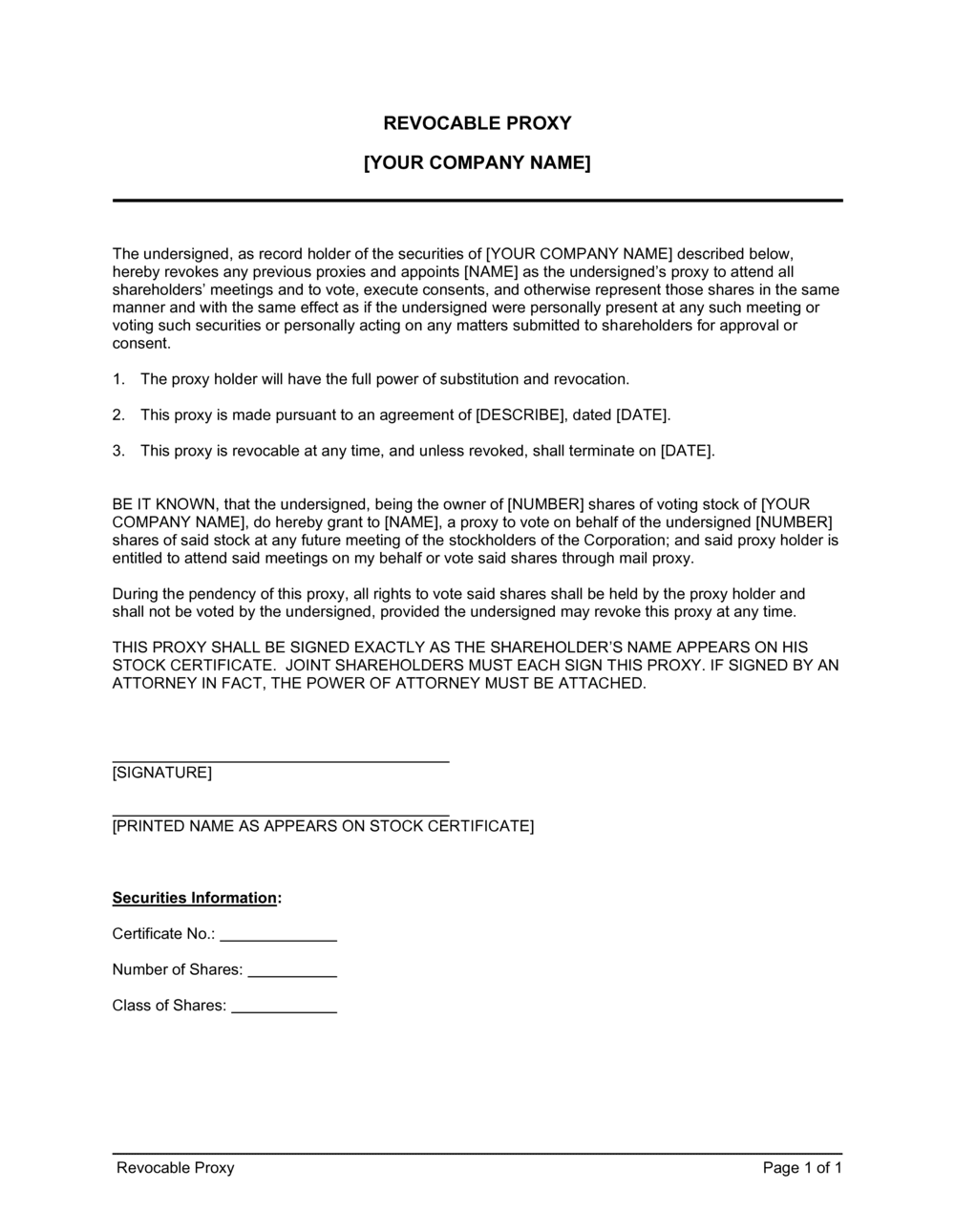
- The person who grants the proxy — typically a shareholder or property owner — who delegates authority while retaining ultimate control.
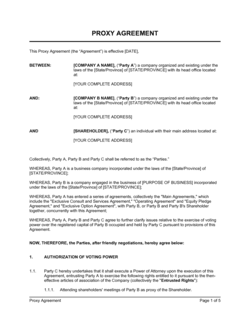
- Proxy Holder
- The individual authorized by the principal to act, vote, or make decisions on the principal's behalf under the terms of the proxy.
- Revocation
- The principal's exercise of their right to cancel the proxy's authority before it is exercised or before its stated expiry date.
- Quorum
- The minimum number or percentage of shareholders or votes required to be present — in person or by proxy — before a meeting can legally conduct business.
- Irrevocable Proxy
- A proxy that cannot be cancelled by the principal before its expiry, typically used when the proxy is coupled with a financial interest in the outcome.
- Coupled with an Interest
- A legal concept where the proxy holder has a financial or property interest in the subject matter, which can make an otherwise revocable proxy irrevocable under statute.
- Record Date
- The date established by a corporation to determine which shareholders are eligible to vote or receive a dividend — only shareholders on record as of this date may issue or receive proxies.
- Proxy Statement
- A disclosure document filed with the SEC (or equivalent regulator) that accompanies proxy solicitations for publicly traded companies, containing material information shareholders need to vote.
- Authority Scope
- The defined range of actions or decisions the proxy holder is permitted to take, which should be explicitly limited to prevent unintended delegation of rights.
- Notice of Revocation
- A written communication from the principal to the proxy holder — and, where applicable, to the company or meeting secretary — formally cancelling the proxy's authority.
- Beneficial Owner
- A person who enjoys the economic benefits of share ownership (dividends, voting rights) even though the shares may be registered in another name, such as a brokerage.