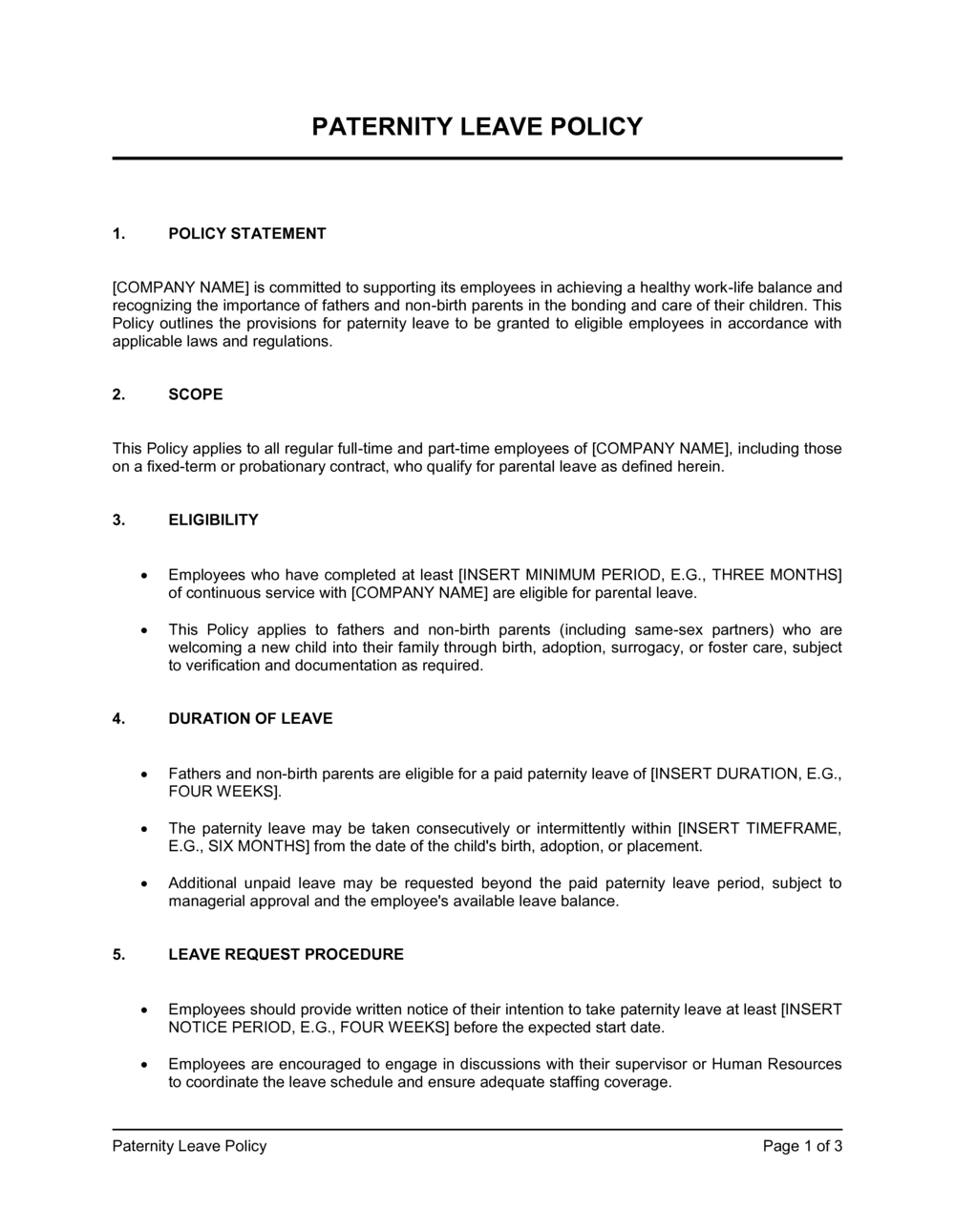
- Paternity Leave
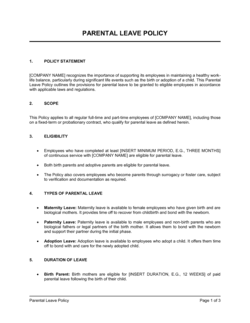
- A period of paid or unpaid time off granted to a father or non-birthing parent following the birth, adoption, or fostering of a child.
- Qualifying Event
- The specific life event — live birth, adoption placement, or surrogacy — that triggers an employee's entitlement to take leave under the policy.
- Continuous Service Requirement
- The minimum length of time an employee must have worked for the company before becoming eligible for a particular leave benefit.
- Pay Continuation
- The employer's commitment to pay the employee at full or partial salary during an approved leave period, separate from any statutory benefit.
- Statutory Leave
- The minimum leave entitlement required by applicable federal, state, or provincial law — the floor below which no employer policy may fall.
- FMLA (Family and Medical Leave Act)
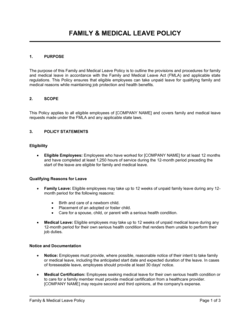
- A US federal law requiring covered employers to provide up to 12 weeks of unpaid, job-protected leave for qualifying family or medical events, including the birth of a child.
- Benefits Continuation
- The maintenance of health insurance, retirement contributions, and other employee benefits at the same level during an approved leave period.
- Return-to-Work Plan
- A documented agreement between the employee and manager outlining the schedule, responsibilities, and any phased-in arrangements upon the employee's return from leave.
- Handover Plan
- A document an employee prepares before leave begins that transfers ongoing responsibilities, key contacts, and project statuses to a colleague or temporary replacement.
- Adoption Leave
- Leave granted when an employee officially takes custody of an adopted child, treated equivalently to birth leave in most modern paternity leave policies.