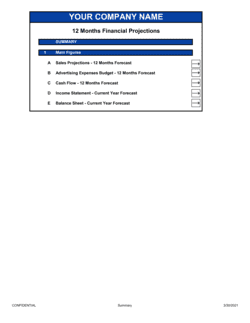
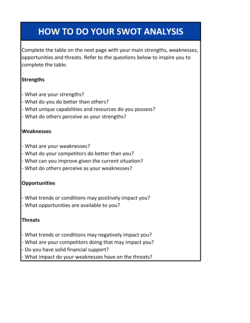
Non-profit Organization Business Plan 4 Template

Free Word download β€’ Edit online β€’ Save & share with Drive β€’ Export to PDF

26 pagesβ€’2h 20m – 3h 5m to fillβ€’Difficulty: Expert
Learn more ↓
FreeNon-profit Organization Business Plan 4 Template

At a glance

What it is
A Nonprofit Organization Business Plan is a structured document that articulates a charitable or mission-driven organization's purpose, target population, programs, governance structure, fundraising strategy, and multi-year financial projections. This free Word download gives nonprofit founders, executive directors, and board members a complete, funder-ready starting point they can edit online and export as PDF.
When you need it
Use it when applying for 501(c)(3) status, seeking foundation grants or government funding, onboarding a new board, or realigning an existing organization around a revised strategic direction.
What's inside
Executive summary, mission and vision statement, programs and services, target population, organizational structure and governance, fundraising and revenue strategy, marketing and communications plan, operational plan, and multi-year financial projections including budget, cash flow, and sustainability assumptions.

What is a Nonprofit Organization Business Plan?

A Nonprofit Organization Business Plan is a structured document that maps a charitable organization's mission, target population, programs, governance model, fundraising strategy, and multi-year financial projections into a single authoritative reference. It functions simultaneously as an internal operating roadmap for staff and board and as an external document submitted to foundations, government agencies, and the IRS. Where a for-profit business plan measures success in revenue and profit, a nonprofit plan measures success in mission impact, program reach, and financial sustainability across diversified funding streams.

Why You Need This Document

Without a formal nonprofit business plan, grant applications stall at the first request for organizational documentation, IRS Form 1023 submissions lack the program narrative and financial projections required for approval, and boards make resource allocation decisions without a shared strategic framework. A foundation program officer who asks for an organizational plan and receives a two-page mission statement will not advance the application. Beyond fundraising, the plan forces leadership to reconcile program ambitions with real staffing and budget constraints before money is committed β€” turning costly mid-year pivots into deliberate planning decisions. This template gives nonprofits of any size a funder-ready structure they can complete, adapt, and update annually without starting from scratch.

Which variant fits your situation?

If your situation is…Use this template
Applying for IRS tax-exempt status for a brand-new organizationNonprofit Organization Business Plan
Planning a single program or initiative within an existing nonprofitProgram Plan
Setting 3–5 year strategic priorities for a mature organizationStrategic Plan
Preparing a grant proposal narrative with budget justificationGrant Proposal Template
Summarizing the organization on one page for donor outreachOne-Page Business Plan
Planning a fundraising campaign with goals and timelinesFundraising Plan
Reporting annual program outcomes and financials to the boardAnnual Report Template

Common mistakes to avoid

❌ Describing programs by activity rather than outcome

Why it matters: Funders allocate grants to organizations that can demonstrate measurable impact. Activity-focused descriptions ('we provide workshops') give no basis for evaluating whether the program works.

Fix: Reframe every program description around the change that occurs for beneficiaries β€” what is measurably different for participants 6 or 12 months after the program?

❌ Using national data to justify local need

Why it matters: A foundation funding programs in Detroit does not accept national homelessness statistics as evidence of need in Detroit. Mismatched geography signals that the organization has not done its homework.

Fix: Source need data from local government reports, state health departments, or municipal census records and cite them explicitly with the year.

❌ Projecting revenue growth without a development infrastructure plan

Why it matters: A plan showing revenue growing from $200K to $800K over three years with no additional development staff, grant pipeline, or donor acquisition budget is internally inconsistent.

Fix: For every $200K increase in projected revenue, account for the staff time, systems, and campaign costs required to generate it.

❌ Omitting an operating reserve policy

Why it matters: Organizations with no stated cash reserve are one delayed grant payment away from payroll failure. Institutional funders routinely require evidence of financial reserves before committing multi-year grants.

Fix: State a target operating reserve of at least three months of operating expenses and show the plan to reach it within the financial projections.

❌ Listing board members without noting relevant expertise

Why it matters: A board of ten members with no financial, legal, or sector expertise signals weak governance β€” a top disqualifier for foundation and government funders.

Fix: Include one sentence of relevant professional background per board member and identify the committees they serve on.

❌ Writing the executive summary before the rest of the plan is complete

Why it matters: An executive summary written in advance will contradict program details, financial figures, and risk assessments finalized later β€” making the document feel uncoordinated to reviewers.

Fix: Write every other section first, then distill the executive summary from the finished plan, pulling the single strongest data point from each section.

The 10 key sections, explained

Executive Summary

Mission, Vision, and Values

Programs and Services

Target Population and Community Need

Organizational Structure and Governance

Fundraising and Revenue Strategy

Marketing and Communications Plan

Operations Plan

Financial Projections and Budget

Sustainability and Risk Assessment

How to fill it out

  1. 1

    Draft the mission, vision, and values first

    Write a one-sentence mission that answers what you do, for whom, and to what end. Then write a vision statement describing the long-term change you want to see. These anchor every other section.

    πŸ’‘ Test your mission statement by reading it to someone outside the sector. If they cannot explain it back in plain language, simplify it.

  2. 2

    Document community need with localized data

    Pull statistics from local government reports, census data, or peer-reviewed studies that quantify the problem in your specific service geography. National averages are insufficient for most funders.

    πŸ’‘ Cite your sources inline with year of publication β€” data older than five years is routinely flagged by program officers.

  3. 3

    Describe each program by outcome, not activity

    For each program, state who it serves, how many per year, what changes for participants, and at what cost per beneficiary. Build a one-paragraph logic model connecting inputs to outcomes.

    πŸ’‘ If you cannot state a measurable outcome for a program, that is a signal to revisit the program design before launching a fundraising effort around it.

  4. 4

    Map your governance and leadership

    List each board member with their professional background and committee role. Identify any expertise gaps β€” finance, legal, HR β€” and note planned board recruitment to fill them.

    πŸ’‘ Funders often score governance as heavily as program quality. A board with financial and legal expertise signals organizational maturity.

  5. 5

    Build the revenue strategy with diversification targets

    Identify every revenue source you plan to pursue, the dollar target for each in Years 1–3, and the specific steps (grant applications, donor campaigns, events) required to achieve each target.

    πŸ’‘ Flag any single source that exceeds 40% of projected revenue β€” that is a concentration risk funders will ask about directly.

  6. 6

    Model the three-year budget from the bottom up

    Build expenses from program delivery costs first: staff time, supplies, space, and technology per program. Add administrative overhead separately. Then set revenue targets that realistically cover those expenses.

    πŸ’‘ A program expense ratio of 75–85% of total expenses is the target range most Charity Navigator-style evaluators use as a benchmark.

  7. 7

    Complete the sustainability and risk section

    List at least three operational or financial risks with a likelihood rating and a specific mitigation action for each. State your operating reserve policy in months of expenses.

    πŸ’‘ Funders read this section to assess organizational resilience β€” organizations that name real risks and have real plans score higher than those that claim minimal risk.

  8. 8

    Write the executive summary last

    Compress each section into one to two sentences, leading with your mission, the scale of the need, your track record, and the specific ask. Keep it to two pages or under.

    πŸ’‘ State the funding amount and its intended use in the first paragraph of the executive summary β€” don't make the reader hunt for the ask.

Frequently asked questions

What is a nonprofit business plan?

A nonprofit business plan is a structured document that defines a charitable organization's mission, programs, target population, governance, fundraising strategy, and financial projections. It serves both as an internal operating roadmap and as an external document for grant applications, IRS 501(c)(3) submissions, and board presentations. Unlike a for-profit business plan, it emphasizes mission impact and revenue diversification rather than profit margins.

Do nonprofits need a business plan?

Yes. Most foundation funders and government grant programs require a current organizational plan as part of the application package. The IRS Form 1023 application for 501(c)(3) status requests a description of programs, governance structure, and a three-year budget β€” all core elements of a business plan. Boards also use the plan to evaluate executive director performance and set annual priorities.

What sections should a nonprofit business plan include?

A complete plan covers ten sections: executive summary, mission and vision, programs and services, target population and community need, organizational structure and governance, fundraising and revenue strategy, marketing and communications, operations plan, financial projections, and a sustainability and risk assessment. Most funders expect 15–25 pages plus financial appendices.

How is a nonprofit business plan different from a for-profit business plan?

The structure is similar, but the emphasis differs in three key areas. Nonprofits replace the profit-and-loss focus with a mission-impact focus, replace investor return analysis with donor and funder accountability, and add a governance and board section that for-profit plans typically omit. Revenue projections emphasize grant pipelines, donor campaigns, and earned income rather than sales forecasts.

How long should a nonprofit business plan be?

For grant applications and funder presentations, 15–25 pages is the standard range. IRS 1023 narrative attachments can be shorter β€” 5–10 pages β€” while major foundation proposals may request more detail. Financial appendices, logic models, and letters of support do not count against the page target. Avoid padding: a concise, evidence-based 20-page plan outperforms a bloated 40-page document every time.

What financial projections should a nonprofit business plan include?

Include a three-year budget with revenue broken out by source (individual donors, foundation grants, government contracts, earned income) and expenses broken out by program and administrative category. Add a cash flow projection for Year 1 and a narrative explaining key assumptions. State the program expense ratio target and the operating reserve goal in months of expenses.

Can I use this template for a 501(c)(3) application?

Yes. The IRS Form 1023 requires a description of current and planned programs, a statement of revenues and expenses for up to three years, and a narrative on organizational structure β€” all of which this template covers. Complete the Programs and Services, Governance, and Financial Projections sections first, then use them as the basis for your 1023 narrative attachments.

How often should a nonprofit update its business plan?

A full plan review aligned to the fiscal year is standard practice, typically completed in the fourth quarter before the new fiscal year begins. Financial projections should be updated against actuals at mid-year. Plans older than 18 months are generally considered outdated by institutional funders and should be refreshed before any major grant application.

Do I need a consultant to write a nonprofit business plan?

For most organizations, a high-quality template combined with input from the executive director and board is sufficient. Engaging a nonprofit consultant ($1,500–$5,000) makes sense when applying for a grant over $250K, when the organization is undergoing a major strategic pivot, or when the leadership team lacks prior business planning experience. A template review by a nonprofit CPA ($300–$800) is worthwhile to validate the financial projections.

How this compares to alternatives

vs For-Profit Business Plan

A for-profit business plan centers on revenue growth, profitability, and investor return. A nonprofit plan centers on mission impact, program outcomes, and funder accountability. The financial section of a nonprofit plan emphasizes revenue diversification and reserve policy rather than EBITDA and valuation multiples. Both require rigorous market analysis and operational detail.

vs Strategic Plan

A strategic plan sets 3–5 year organizational priorities, goals, and KPIs for an existing organization. A nonprofit business plan is broader β€” it includes the founding narrative, program descriptions, governance structure, and full financial projections. New organizations need a business plan first; established organizations typically maintain both documents.

vs Grant Proposal

A grant proposal requests funding for a specific program or project from a single funder, with a budget scoped to that request. A nonprofit business plan covers the entire organization across all programs and revenue sources. The business plan feeds the grant proposal β€” its program descriptions, outcome data, and financials are the source material for individual grant narratives.

vs One-Page Business Plan

A one-page plan is a rapid-alignment tool for internal ideation or early stakeholder conversations. It lacks the program detail, governance documentation, and financial depth required for grant applications or 501(c)(3) submissions. Use the one-page version to test ideas, then build the full plan before approaching funders.

Industry-specific considerations

Education and Youth Development

Programs section documents student-to-staff ratios, grade-level outcomes, and school-district partnership agreements that funders require before committing multi-year grants.

Healthcare and Social Services

Community need section must reference local health data (county health rankings, HRSA data) and the plan must address HIPAA compliance in the operations section.

Arts and Culture

Earned income from ticket sales, memberships, and licensing is a significant revenue line β€” the plan should model each stream separately with attendance and conversion assumptions.

Environmental and Conservation

Government grant dependency is common; the sustainability section must show a credible path to diversify into private foundations and earned income from carbon credits or licensing.

Template vs pro β€” what fits your needs?

PathBest forCostTime
Use the templateNonprofit founders, executive directors, and program managers preparing grant applications or board presentationsFree2–4 weeks (30–60 hours)
Template + professional reviewOrganizations applying for grants above $100K or submitting IRS Form 1023 for 501(c)(3) status$300–$800 for a nonprofit CPA or advisor review3–5 weeks
Custom draftedNew organizations seeking major foundation grants above $250K, or established nonprofits undergoing a significant strategic pivot$1,500–$5,000 for a nonprofit consultant4–8 weeks

Glossary

501(c)(3)
The IRS tax-exempt designation for charitable, religious, educational, and scientific organizations in the United States, which allows donors to deduct contributions.
Mission Statement
A concise declaration of the organization's core purpose β€” what it does, for whom, and to what end β€” that guides all programming and fundraising decisions.
Theory of Change
A logical framework mapping the inputs, activities, outputs, and long-term outcomes an organization expects its programs to produce.
Unrestricted Revenue
Funds donated or earned without donor-imposed conditions, giving the organization flexibility to apply them to any operational need.
Restricted Revenue
Grant or donation funds designated by the funder for a specific program, time period, or purpose β€” cannot be used for general operations.
Program Service Revenue
Income earned directly from delivering the organization's mission-related programs, such as tuition fees, event ticket sales, or training fees.
Earned Income
Revenue generated through commercial activities related to the nonprofit's mission, such as social enterprises, merchandise, or consulting services.
Sustainability Plan
A forward-looking strategy showing how the organization will diversify revenue sources to reduce dependence on any single funder or grant.
Logic Model
A visual or tabular summary linking resources and activities to short-term outputs and long-term impact, commonly required by government and foundation funders.
Fiscal Sponsorship
An arrangement in which an established 501(c)(3) extends its tax-exempt status to a project or emerging organization in exchange for an administrative fee.
In-Kind Contributions
Non-cash donations of goods, services, or time β€” such as volunteer hours, donated office space, or equipment β€” reported as revenue and expense at fair market value.

Part of your Business Operating System

This document is one of 3,000+ business & legal templates included in Business in a Box.

  • Fill-in-the-blanks β€” ready in minutes
  • 100% customizable Word document
  • Compatible with all office suites
  • Export to PDF and share electronically

Create your document in 3 simple steps.

From template to signed document β€” all inside one Business Operating System.
1
Download or open template

Access over 3,000+ business and legal templates for any business task, project or initiative.

2
Edit and fill in the blanks with AI

Customize your ready-made business document template and save it in the cloud.

3
Save, Share, Send, Sign

Share your files and folders with your team. Create a space of seamless collaboration.

Save time, save money, and create top-quality documents.

β˜…β˜…β˜…β˜…β˜…

"Fantastic value! I'm not sure how I'd do without it. It's worth its weight in gold and paid back for itself many times."

Managing Director Β· Mall Farm
Robert Whalley
Managing Director, Mall Farm Proprietary Limited
β˜…β˜…β˜…β˜…β˜…

"I have been using Business in a Box for years. It has been the most useful source of templates I have encountered. I recommend it to anyone."

Business Owner Β· 4+ years
Dr Michael John Freestone
Business Owner
β˜…β˜…β˜…β˜…β˜…

"It has been a life saver so many times I have lost count. Business in a Box has saved me so much time and as you know, time is money."

Owner Β· Upstate Web
David G. Moore Jr.
Owner, Upstate Web

Run your business with a system β€” not scattered tools

Stop downloading documents. Start operating with clarity. Business in a Box gives you the Business Operating System used by over 250,000 companies worldwide to structure, run, and grow their business.

Start freeΒ Β·Β No credit card required