1
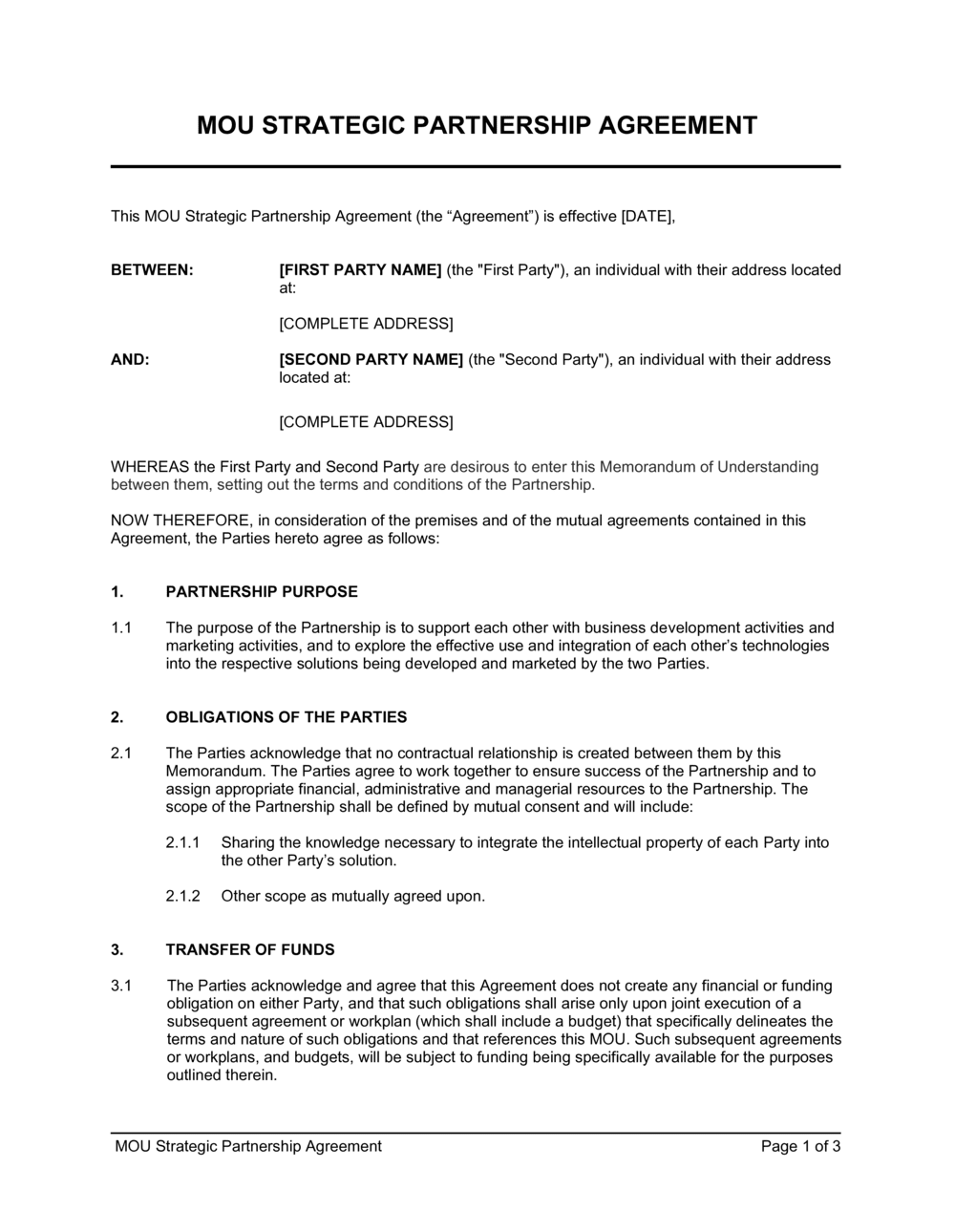
Enter both parties' full legal entity names and jurisdictions
Use each organization's registered legal name — not a brand name or abbreviation — and specify the jurisdiction of incorporation. Include the date of execution.
💡 Cross-check both entity names against the relevant corporate registry before circulation. A name mismatch can create enforceability questions if the MoU is later referenced in a definitive agreement.
2
Define the purpose and strategic goals with measurable outcomes
Write one to three sentences describing the shared objective of the partnership and, where possible, attach a specific milestone or target date that would indicate success.
💡 If neither party can articulate a single concrete goal, the MoU is premature. A clear purpose clause also accelerates board approval at both organizations.
3
Scope the collaboration explicitly — include what is out of scope
List the activities, geographies, and customer segments covered. Then add at least one sentence on what is explicitly excluded to prevent scope-creep disputes.
💡 Use a separate Schedule A for a detailed activity list if the scope is complex — keeping the main body concise makes the MoU more usable as a negotiating reference.
4
Establish the governance structure and steering committee
Name the number of representatives each party will appoint, set a meeting cadence, define how decisions are made (unanimous or majority), and specify the escalation path for disputes.
💡 Name the initial representatives by title rather than by individual name — this avoids an amendment obligation when personnel change.
5
Document each party's contributions specifically
For each party, list the resources being committed — dollar amounts, FTE time, technology access, data sets, or facilities — along with a delivery timeline or milestone trigger.
💡 Vague contribution language is the single most common source of MoU disputes. Fifteen minutes of specificity here prevents months of disagreement later.
6
Allocate IP ownership for both background and foreground IP
Confirm that each party retains its pre-existing IP and grant a limited cross-license for collaboration purposes. Decide and document who owns any jointly created foreground IP before the MoU is signed.
💡 If foreground IP ownership is genuinely unresolved, mark it as 'to be agreed' with a deadline — never leave it entirely blank, as that triggers default ownership rules that may surprise both parties.
7
Set exclusivity scope and duration carefully
Decide whether exclusivity is mutual or one-directional. Define the geographic and subject-matter scope of the restriction, and set a hard expiry date — typically aligned with the MoU term.
💡 A 60–90 day exclusivity window is standard for most MoUs. Longer periods require stronger justification and increase the risk of an implied obligation to complete the deal.
8
Identify the binding clauses and confirm the rest are non-binding
List the clauses that are intended to be legally enforceable — typically confidentiality, exclusivity, governing law, and dispute resolution — and add an explicit statement that all other provisions are statements of intent only.
💡 Use 'shall' only in the binding clauses. Use 'intends to', 'expects to', or 'will endeavour to' in all non-binding provisions to reduce the risk of a court treating them as enforceable obligations.